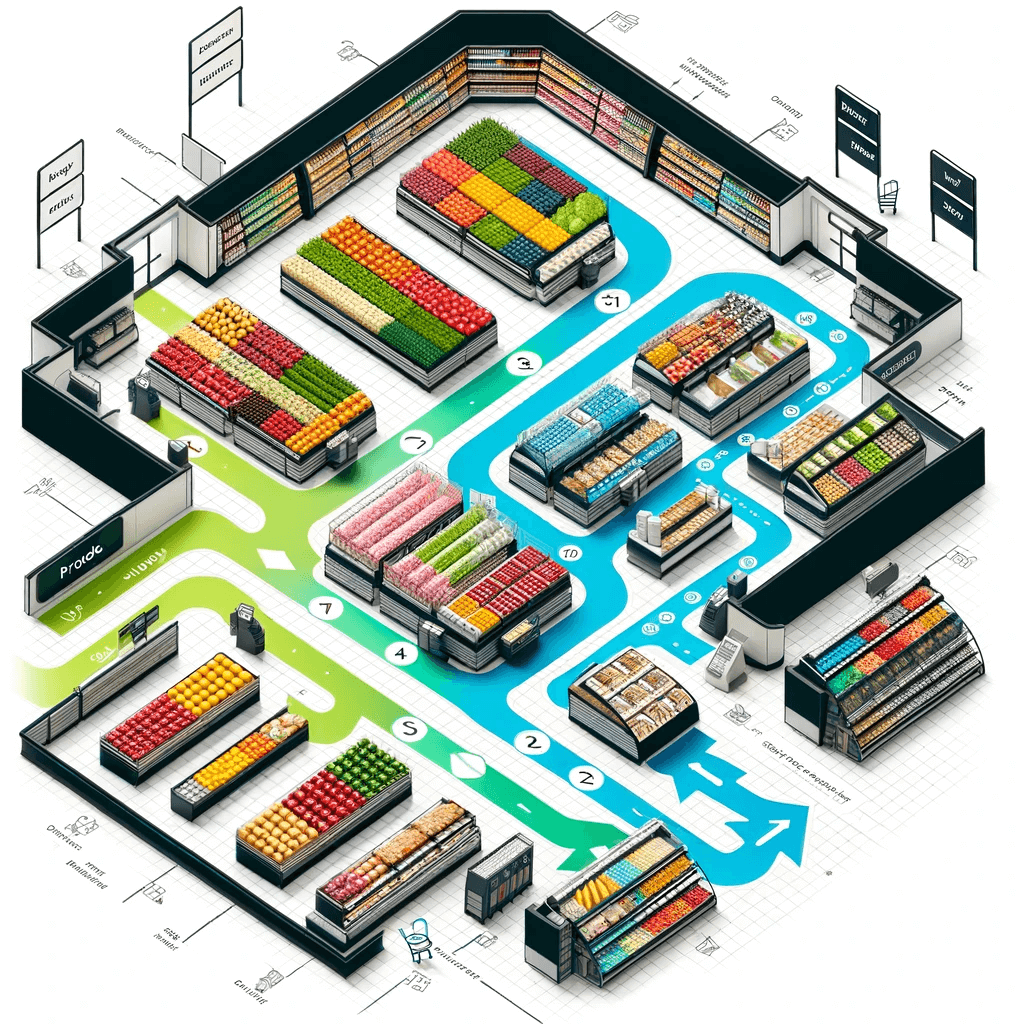
Selling fast-moving consumer goods means working in a highly competitive environment and constantly adapting to changes. One of the challenges is the growing interest of customers in online shopping. For example, online sales are expected to grow by 39% by 2027. What should traditional retailers do in such conditions? Let's talk about the main challenges and tips for building a merchandising strategy.
Key Takeaways
FMCG merchandising requires speed and precision to keep high-turn items stocked.
Focus on shelf availability.
Rotate to avoid expiry.
Use data for shelf share analysis.
Regular planogram checks.
Promotions aligned with shelf visibility.
Main challenges in implementing visual merchandising campaigns
Every retail store operates in a highly competitive environment in addition to the variety of challenges faced by visual merchandising in retail (see below).
Limited shelf space
The assortment is always growing. FMCG retailers need to respond to demand and add new products continuously. As a result, the number of products may exceed the available shelf space. You have to look for other ways, e.g., selection optimization to put the most popular products on the shelves.
High rotation of fast moving consumer goods
Merchandisers in the FMCG sector need to monitor not only the efficient use of shelf space and its replenishment. Constantly updating the assortment is a challenge that needs to be met by regularly making changes to the layout to maintain relevance.
The market dynamics confirm this: according to forecasts, the FMCG market size is to increase by USD 456.6 billion by 2028 as FMCG companies expand. Therefore, you need to set up a flexible inventory management system now and create dynamic planograms that easily adapt to changes.
Demand forecasting
Successful merchandising in the retail industry is dependent on successful demand planning. If you manage to respond to trends and sudden changes in customer needs in a timely manner, then you will be able to stock the shelves with the right products.
Protection against theft
One of the other challenges for sales and marketing FMCG is safety. It's vital to design strategies that are not only aesthetically pleasing and aligned with consumer demand but also effective in mitigating the risk of theft and other forms of customer misconduct.
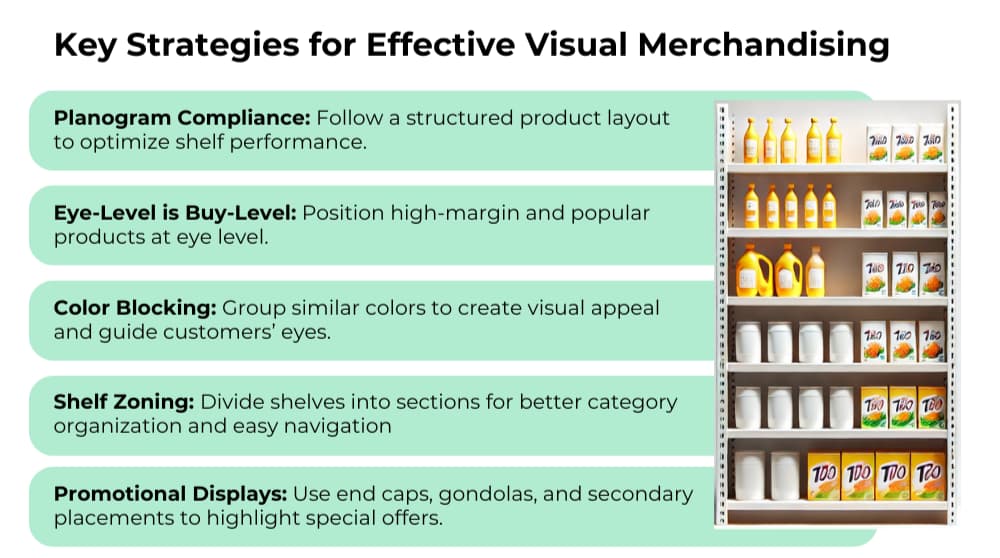
How to build a visual merchandising strategy in FMCG: practical tips
Here are just a few tips on what FMCG companies can do to customize their displays to overcome challenges and maximize benefits.
#1 Storytelling in design
Create conceptual zones that attract consumers' attention with stories. Use colors, graphics, quick response QR code to tell an interactive story about the FMCG industry, FMCG brands or products, emphasize brand presence and brand identity, key values or features.
#2 Clear categories
Turn the user experience of finding the right products into an easy adventure. Set up FMCG merchandising in a way that minimizes the search and makes the shopping process convenient. Clearly categorize your products and create thematic displays to help you.
#3 Impulse purchases
Place discounted, brightly packaged, and low-priced products on promotional counters and at the checkout area to encourage customers to make additional impulse purchases. Use point of purchase POP displays strategically to draw attention to these items.
#4 Adaptation
Adapt your windows and displays to changes in seasons, holidays, and important events. Adjust to fluctuations in demand: this will increase your sales during specific periods. Evaluate examples of visual merchandising and think about your own ideas. Study how consumers react to visual merchandising in FMCG and use it to make future decisions.
#5 Optimize traffic
Consumers visit a store for a reason. You need to incentivize them to add to their desires. Use visual cues to shape the flow of visitors. Use promotional racks, special displays, signs, and other strategic placement elements to direct customers to wherever you need them. The classic principle is to place the most popular products at the end of the FMCG store so that customers pass by other shelves and make unplanned purchases on the way.
#6 Multiple touch points
A successful visual merchandising campaign is based on the use of several channels and points of interaction with consumers at the same time. This increases the reach and boosts sales. At the very least, use visual merchandising principles to create layouts and attractive displays and supplement this with advertising campaigns to attract new and repeat customers.
Improve merchandising in retail stores with LEAFIO AI
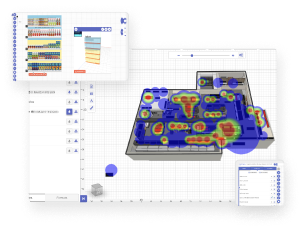
LEAFIO AI's merchandising tools optimize operations through automation and ensure compliance with brand standards through real-time monitoring. By implementing them, you can improve product visibility, increase sales, and improve customer experience for the sake of increased efficiency and profitability. Focusing on the benefits of visual merchandising through software implementation is simply a step that is bound to pay off.
Key Takeaways: FMCG Merchandising in Retail Stores
- Tackle FMCG Challenges: Optimize limited shelf space, adapt to high product turnover, and forecast demand effectively.
- Enhance Displays: Use storytelling, clear categories, and visually appealing layouts to improve customer experience.
- Boost Impulse Buys: Position promotional items strategically to encourage additional purchases.
- Stay Adaptable: Update displays for seasons, trends, and holidays to stay relevant.
- Leverage AI: Tools like LEAFIO AI optimize merchandising with advanced space planning and actionable insights.


Have a question?

Cecilia Flores Castillo
Experta en optimización de estoque