Results at a Glance
30-50% Increase in Individual Order-Picking Speed
80-90% Decrease in Picking Errors
15-25% Staff Reduction Through Process Optimization
20-40% Ability to Increase Stored SKUs Without Losing Picking Speed
35-50% Productivity Growth in Peak Months Without Hiring Additional Employees
Project Overview
Challenge
- Insufficient transparency in goods movement and warehouse stock
- High staff workload due to manual operations and paper document flow
- Delays in shipping and receiving goods due to uncoordinated actions between warehouses and logistics
- The lack of a single digital warehouse management system leads to errors in order picking and time lost on manual record-keeping
Solution
- Pre-project survey and identification of bottlenecks
- Designing the target "To Be" processes and preparing infrastructure
- WMS launch, training, and support
Results
- Individual order-picking speed increased by 30-50%
- Picking errors decreased by 80-90%
- Staff reduction through process optimization of 15-25%
- Ability to increase the number of stored SKUs by 20-40% without losing picking speed
- Warehouse productivity growth in peak months, without hiring additional employees, was 35-50%
About the Client's Business
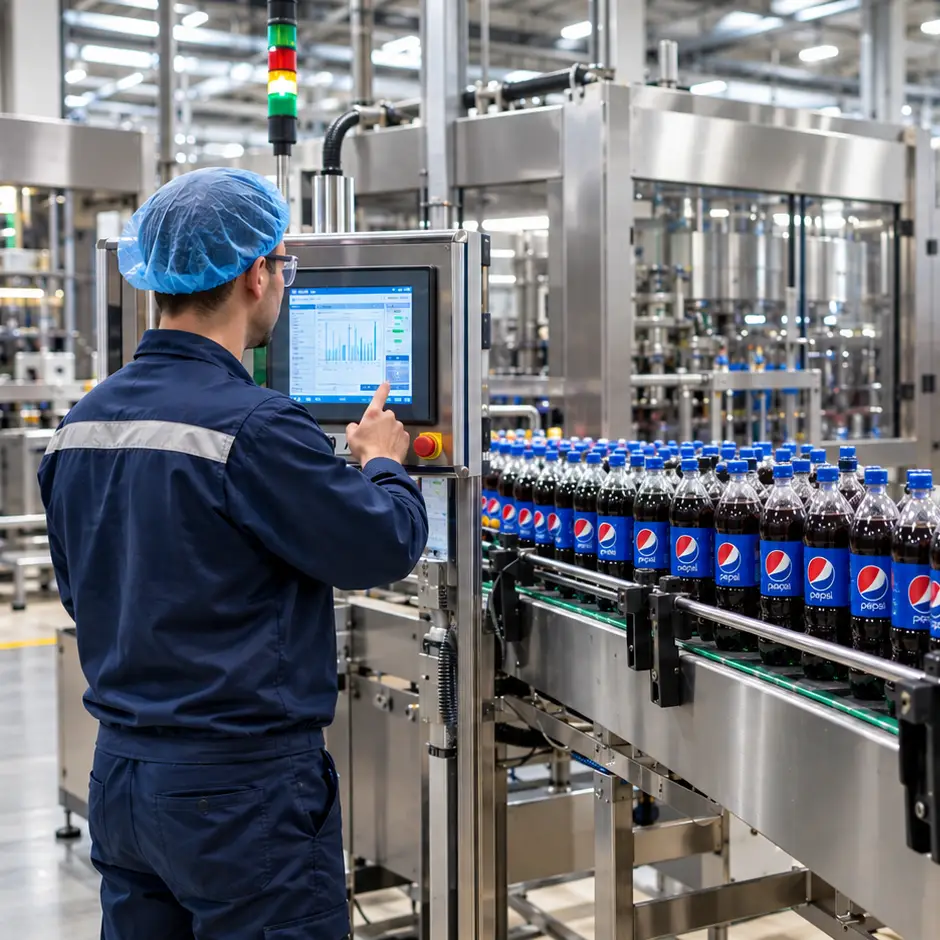
International Beverages (IBT) began operating in 2011. Today IBT is one of the most successful PepsiCo bottlers in the region and is responsible for producing Pepsi, Lipton, Adrenaline Rush, Mountain Dew, Mirinda, and 7UP.
Project Description
Implementation Stages
From the pre-project survey to launch and support: how LEAFIO WMS was implemented at IBT's warehouses.
Stage 1. Pre-project survey and identification of bottlenecks
The project started with a comprehensive survey of IBT's warehouse complex "as is": LEAFIO specialists studied the logistics processes of the raw materials and supplies warehouse (about 14,700 m²) and the finished goods warehouse (about 12,000 m², including the customer orders zone). The survey was conducted through interviews with client representatives and covered all key processes: receiving and putaway, moves to production, picking and shipping, handling of defects and returns, internal warehouse moves, and stocktakes. The survey report recorded the actual warehouse load in the seasonal period: at peak, receiving reaches 70 documents and shipping reaches 300 per day.
At this stage the baseline picture was recorded: processes are not automated, there is no location-based storage, and all document flow is kept on paper. The team identified and systematized a number of bottlenecks: visual search for goods because there is no topology or storage zones, no ABC analysis or product adjacency, no systematic control of expiry dates and bottling time or of pallet labeling (which delayed shipping while the right batch was located), errors caused by manual recording of receiving, and no weight and dimension characteristics or barcodes for the product range. Following the survey, the client received specific recommendations for eliminating the problems before automation.
Stage 2. Designing the target "To Be" processes and preparing infrastructure
Based on the survey results, the target operating model of the automated warehouse (To Be) was designed. The team described how all processes would change after LEAFIO WMS was launched: a hierarchical location topology of the warehouse was developed (a cell structure with unique codes based on a mask of zones, rows, lines, racks, and levels), traversal priorities were set for optimal putaway and picking routes, and the linking of product categories to storage zones and ABC class was worked out. In the target model, expiry control is implemented in WMS: thanks to FIFO/FEFO, the system ensures effective management of storage locations and suggests which batch to pick first.
Two-way integration of WMS with the client's accounting system through an HTTP service was worked out separately, with a clear specification of base documents across five warehouses and of product reference data with barcodes and weight and dimension characteristics. Receiving at the finished goods warehouse in WMS is based on the "Production Plan per Shift" document, which is passed from the accounting system through the configured two-way exchange (a separate requirement in the integration report). Thanks to this, the warehouse knows in advance the expected volume and range of goods arriving from production, and receiving is done in the system, not on paper. For shipment documents, the delivery method is set as a mandatory parameter, and for customer orders a route sheet (visit sheet) is passed. This lets WMS distinguish shipments to customers, customer self-pickup, and internal moves to production, which directly addresses one of the project's prerequisites: uncoordinated actions between the warehouse and logistics.
In parallel, preparatory tasks without which the launch is impossible were handled: developing the topology and physically marking the cells, preparing product reference data linked to categories and ABC class, purchasing and configuring equipment, ensuring seamless Wi-Fi coverage of the warehouse, and organizing workstations for WMS operators. It was also decided that the launch would take place in phases, first the raw materials warehouse and then the finished goods warehouse, in order to work out the business processes and reduce risks during the transition.
Stage 3. WMS launch, training, and support
The final stage was putting the system into operation. It included transferring reference data, configuring LEAFIO WMS for the agreed processes, testing the main scenarios with subsequent adjustment based on the results, and conducting a stocktake during the transition to location-based storage. On the client side, a project team was formed under a project manager, and permanent roles were assigned for operating the system: WMS administrator, WMS operators, and data collection terminal operators.
Training played a key role: employees learned to work in the system and in the new warehouse topology, and "master operators" of WMS and data collection terminals, holders of deeper knowledge whom the rest of the team could turn to for help, were trained separately. After the pilot launch in the first area, the project moved into post-launch support and further rollout to other warehouse zones with LEAFIO's support.
Business Impact
- Receiving, putaway, picking, and shipping are faster thanks to process automation
- Fewer order-picking errors, mis-sorting issues, and product losses
- At any moment you can see where and in what quantity products are located (down to the batch and expiry date)
- Thanks to automated processes, dependence on manual labor is reduced
- Thanks to FIFO/FEFO control (by expiry date), storage locations are managed effectively
Detailed Results
- Individual order-picking speed increased by 30-50%
- Picking errors decreased by 80-90%
- Staff reduction through process optimization of 15-25%
- Ability to increase the number of stored SKUs by 20-40% without losing picking speed
- Warehouse productivity growth in peak months, without hiring additional employees, was 35-50%
Improve the Efficiency of Your Warehouse with LEAFIO WMS
Fill in the form to get a free expert consultation!
Get a consultation



