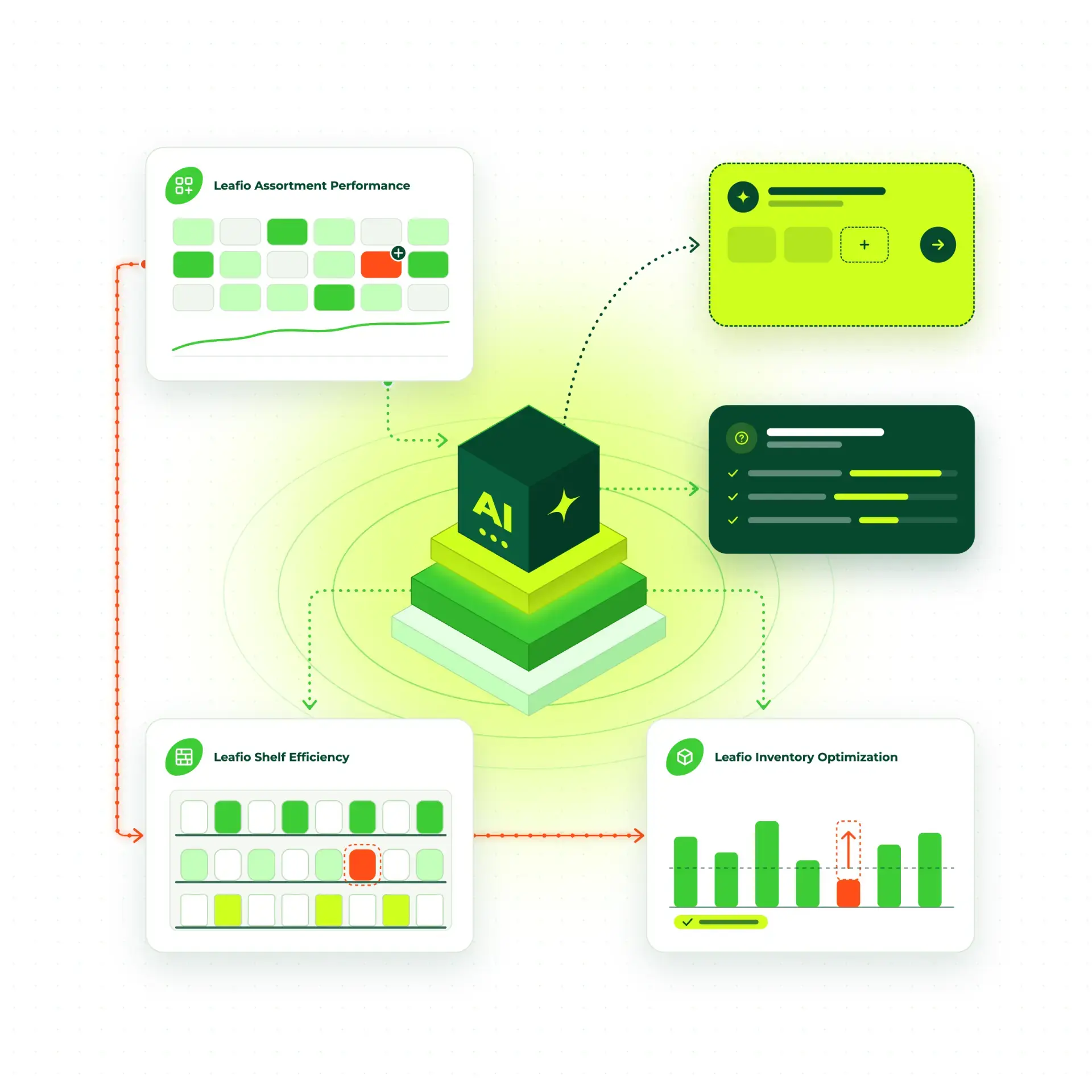
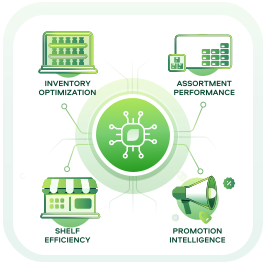
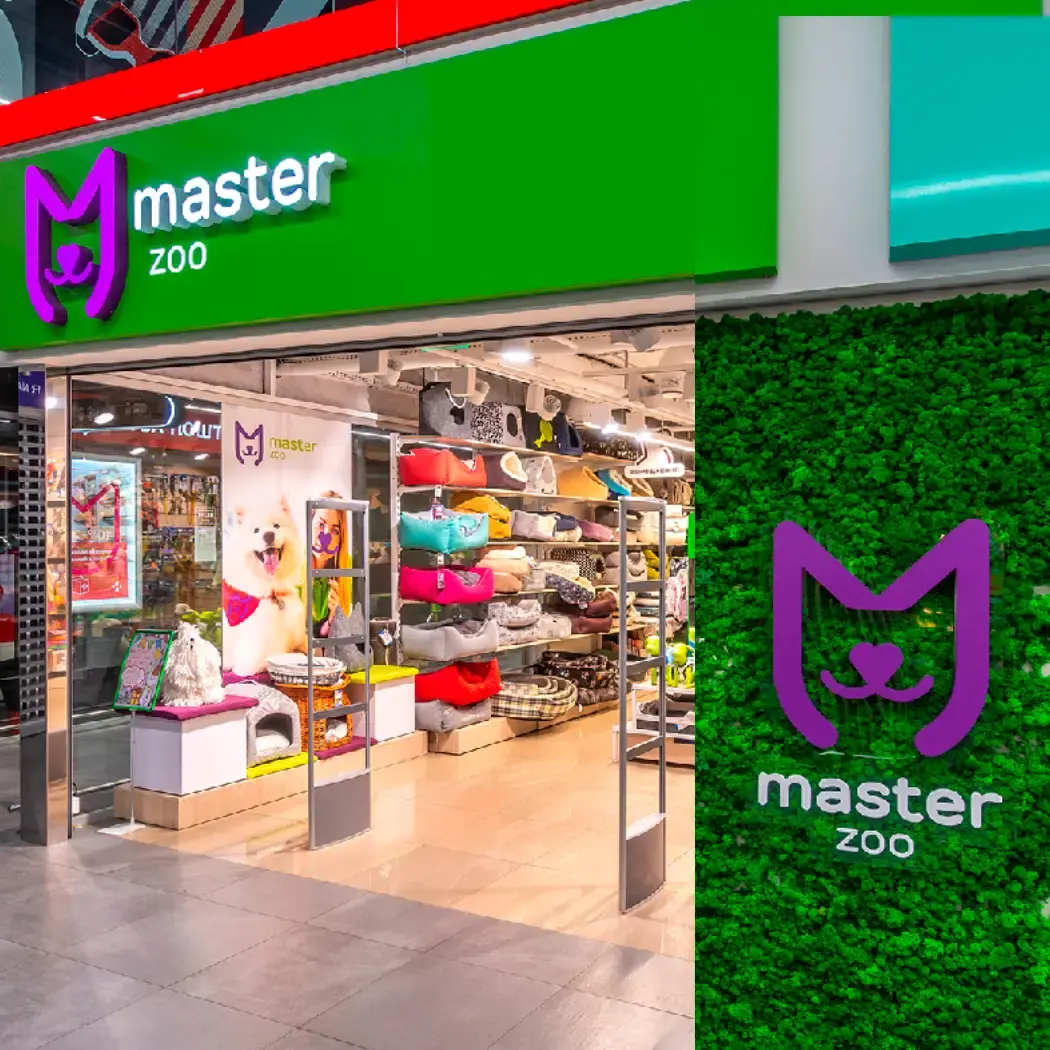
MasterZoo, one of the largest pet retail chains in Eastern Europe, cut lost sales by 37%, reduced overstock by 13%, and improved product availability by 23 percentage points across its 200+ stores after deploying LEAFIO Inventory Optimization. MasterZoo had already implemented LEAFIO Assortment Performance, so every replenishment order runs against a live, store-accurate matrix built from the current assortment. During rollout, MasterZoo's category team worked with LEAFIO to recalibrate the forecasting thresholds, replacing a single fixed averaging period with demand forecasting tuned to each product's real sell-through speed. The figures compare Q2 2026 to Q2 2025, year-over-year on the same store network, roughly a year after replenishment went live.
Results at a Glance
Year-over-year: Q2 2026 vs Q2 2025, compared across the same store network.
| Metric | Change |
|---|---|
| Lost sales | −37% |
| Overstock | −13% |
| Product availability | +23 pp |
| Scale | 200+ stores · 6,000+ active SKUs |
Achieved with LEAFIO Inventory Optimization, running on assortment statuses maintained in LEAFIO Assortment Performance — which delivered its own 150% faster matrix updates and 25% fewer out-of-matrix items (see “How MasterZoo Improves Assortment Agility” for the matrix-and-clustering half of this story).
About MasterZoo
MasterZoo is one of the largest pet store chains in Eastern Europe, serving pet owners for over 15 years through 200+ stores in street-retail and shopping-center formats. Its assortment spans 6,000+ active SKUs, up to 10,000 in its pet-supermarket format, across pet food, treats, accessories, hygiene, and seasonal categories from 150+ brands.
The Challenge: Unstable Auto-Ordering as a 200-Store Pet Chain Outgrew Its Legacy ERP
Before LEAFIO, MasterZoo ran replenishment through a legacy accounting and ERP setup. Orders generated automatically, but the logic was blunt: demand was averaged over a single fixed period and topped up to a minimum stock level, the same way for a fast-selling staple food and a slow-moving seasonal accessory. Roughly 12 people in one department, category managers and their assistants, owned ordering centrally.
As the network passed 200 stores and 6,000+ active SKUs, the system fell behind. Order generation ran with interruptions, and every fix took months to build. Assortment personalization at store level was difficult, safety buffers were inconsistent, and SKU rotation required heavy manual work.
Why Inventory Results Depend on Assortment Being Live First
This is the core mechanic behind the numbers in MasterZoo's own logic: assortment defines what to sell, and inventory determines how much and when. The assortment matrix sets the categories, the SKU count, and the role each item plays at every store. Inventory optimization builds its forecasts directly on that matrix; running inventory first would optimize the wrong set of products with total precision.
That's why MasterZoo implemented LEAFIO Assortment Performance before LEAFIO Inventory Optimization. The two products stay connected in daily operation, too: Assortment passes SKU statuses and activity to Inventory every day, and Inventory generates replenishment orders for exactly what belongs in each store's live matrix. The link runs both ways: Inventory feeds goods-in-transit data back to Assortment, keeping any SKU with stock already en route active automatically. Both systems keep running independently, and the exchange stays invisible to users.
The Solution: Demand Forecasting Tuned to How Each Product Actually Sells
On top of that matrix-aligned foundation, MasterZoo and LEAFIO worked together to refine how orders get calculated.
A Staged, Validated Rollout
Following the same disciplined pattern as the Assortment deployment, MasterZoo piloted automated ordering on a limited set of stores and suppliers first. The pilot let buyers and category managers learn the new process on real data, while keeping any early issues contained to a small scope. From there, LEAFIO scaled ordering across all suppliers over about six months, running in parallel with the legacy system through full migration.
A similarly staged rollout is detailed in our Daily Inventory Optimization case study.
The extra effort that paid off: cleansing the historical data. A replenishment engine forecasts future demand from past sales and stock movements, so distorted history produces forecasts that are mathematically correct but systematically wrong. MasterZoo's commercial team invested extra time up front to hand over clean, verified data, which is a key reason the forecasts held up at scale. This kind of data hygiene follows the same principles covered in our guide to retail inventory cycle counts.
Once the rollout was complete, MasterZoo's team found that the initial configuration needed further refinement to reflect the specific sales patterns of its assortment. Through a detailed analysis of order calculations, the MasterZoo team identified where changes were needed and calculated additional ADU (average daily usage) thresholds for slow-, medium-, and fast-moving products — sharper thresholds that also let the look-back period extend further without losing precision. Since these specific values didn't yet exist in MasterZoo's settings, LEAFIO added support for them, and the two teams worked together to update the system. This combined MasterZoo's category expertise with LEAFIO's product capabilities to better align replenishment calculations with the retailer's operational needs.
- Differentiated forecasting periods, calibrated to MasterZoo's own thresholds. LEAFIO's demand forecasting assigns each product velocity group its own look-back period, based on the ADU thresholds MasterZoo's team calculated for slow-, medium-, and fast-moving products — sharper thresholds also let the calculation span a longer period without losing accuracy. MasterZoo's team singled this out as the clearest improvement over the old auto-ordering logic.
- Alternative-product mechanism and store-level safety buffers. An alternative-product mechanism handles clean SKU rotation, safety buffers are tuned per individual store, and orders can be optimized by value or by quantity depending on the category.
“Assortment came first for a reason — knowing exactly what each store should sell gave inventory a clear target to optimize. Once the two systems were connected, our category managers stopped building and checking orders store by store; the system does it, tuned to how differently our fast- and slow-moving products actually sell. Within the first year we cut lost sales by 37% and overstock by 13%, and availability rose across the network.”
Kirill Chenkalov, Head of Logistics, MasterZoo
Operational Impact
The operational shift was as visible as the numbers. Store teams trust their orders as generated, replacing the manual check that used to happen at each location. Category managers spend far less time building orders, especially the first order for a new line, and decision-making moves faster with built-in supplier service-level reporting close at hand.
The team's most-used tools day to day are:
- The Lost Sales report
- Safety-buffer adjustment
- The promotions module
- A critical-errors panel that flags exceptions before they become stockouts
“Automation reshapes how you plan and manage; it goes well beyond replacing manual work. The LEAFIO team combined a systematic approach with real flexibility, adapting the platform to our processes and priorities. For anyone considering automation: start with a clear understanding of your own processes and goals and involve your key users from day one.”
Kirill Chenkalov, Head of Logistics, MasterZoo
Conclusion
Comparing Q2 2026 with Q2 2025 across the same store network, MasterZoo cut lost sales by 37%, reduced overstock by 13%, and lifted product availability by 23 percentage points — fewer empty shelves and less capital tied up in excess stock, achieved together in the same period.
FAQ
Why did MasterZoo implement assortment management before inventory optimization?
Assortment defines what to sell, and inventory determines how much and when. The assortment matrix sets the categories, the SKU count, and the role each item plays at every store, and inventory optimization builds its forecasts directly on that matrix. MasterZoo implemented LEAFIO Assortment Performance first, then connected LEAFIO Inventory Optimization so every order runs against the live, store-level matrix.
How did MasterZoo reduce lost sales with LEAFIO?
MasterZoo's category team worked with LEAFIO to calculate ADU (average daily usage) thresholds for slow-, medium-, and fast-moving products, replacing single-fixed-period auto-ordering with demand forecasting tuned to each product's velocity and fed by a live assortment matrix. Year-over-year (Q2 2026 vs Q2 2025), lost sales fell 37% while availability rose 23 percentage points
How much did MasterZoo reduce overstock?
Overstock dropped 13% year-over-year, freeing capital tied up in the wrong stock. Availability rose in the same period, so both results improved together.
How do LEAFIO Inventory Optimization and Assortment Performance work together?
Assortment Performance defines what each store should sell and passes SKU statuses to Inventory daily. Inventory Optimization generates replenishment orders only for the active matrix and feeds goods-in-transit data back, keeping items already on the way active automatically. The two run as one connected process.
How long did the inventory rollout take?
After Assortment went live, LEAFIO scaled automated ordering across all suppliers over about six months, starting with a controlled pilot on a limited set of stores and suppliers.