
Planogram Optimization
Category managers make the same handful of expensive mistakes every week, and almost none of them are careless. They delist an item that still has stock. They hold shelf space for a delivery that has not landed. Nobody has a tool that stops them. We open LEAFIO on screen, walk through those mistakes on a real category, and show what the system does about each one.

Format

Duration

Language
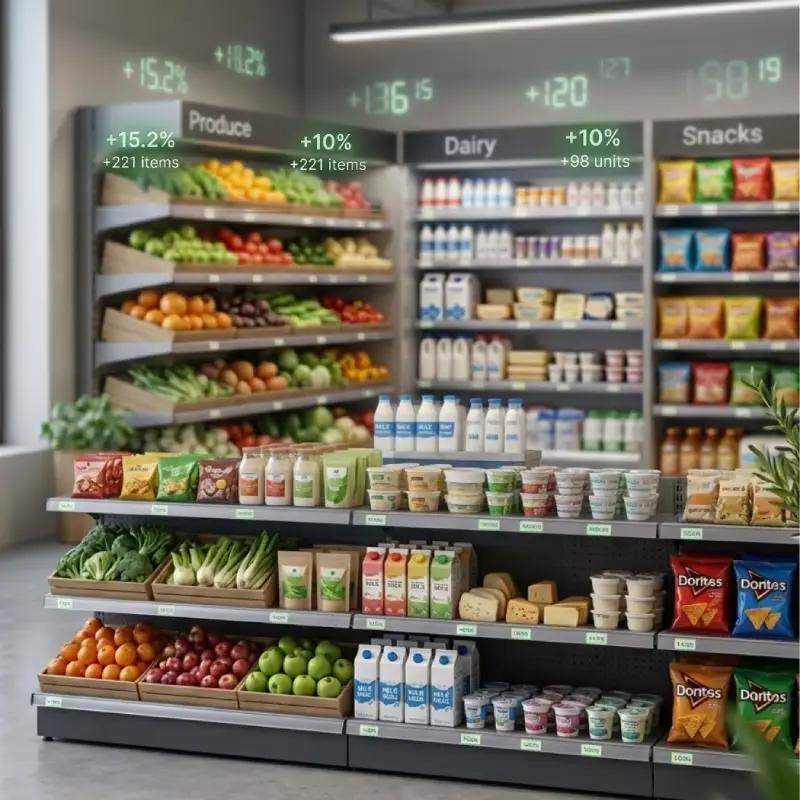
Every retailer we talk to wants the same thing: assortment decisions that run automatically, at scale, without a category manager rebuilding a spreadsheet every Monday. Very few of them get there — and the reason is almost never the technology.
Automation can only execute a decision that has already been defined. If a category has no stated role in the business, no owned KPI, and no boundaries for what belongs in each segment, then no system can calculate the right number of SKUs for it. The algorithm has nothing to optimise toward. So teams fall back on instinct, last year's matrix, and whoever argues loudest in the category review.
The session runs inside the product. In the recording, Julia takes a real category and shows the mistakes as they happen: the delist that should have been blocked, the shelf space held for nothing, the gap nobody saw. Then she goes underneath, to the classifier and the decision tree that make those problems visible in the first place, and to the recommendations that show where a category is still underperforming. The offer from the end of the session still stands: we can do the same thing with a category of yours, one to one.
Five mistakes that happen in category management every week. Delisting a SKU that still has stock. Holding shelf space for an item that has not arrived. Finding a gap in the matrix after the sales are already lost.
Why those mistakes are almost never anyone's fault. Nobody has a tool that says wait, this one still has stock in eleven stores.
What sits underneath the assortment matrix, and why a missing classifier makes the problems invisible rather than merely hard to find. We open ours on screen.
How to segment a category so the rules hold. Segments built on how shoppers choose, not on how your ERP groups items, and what breaks when premium and entry sit in the same bucket.
How the structure gets built for you once the decision tree exists, instead of being maintained by hand.
What changes past twenty stores. Grouping stores by behaviour, and letting the system classify products and cluster locations on its own.
Where the growth is hiding. Recommendations exist for the decisions no person can make at that data volume, and we show what one looks like.
Results from retailers who work this way, with the numbers.


Category managers who are rebuilding the same matrix every season and want a repeatable method instead of a new round of negotiations with suppliers and colleagues.
Commercial and retail directors who have invested in assortment tooling and can't understand why the team still runs on spreadsheets — and who need categories to carry a defined role in the P&L.
Merchandising and assortment planners who own the matrix day to day and want to replace ad-hoc SKU calls with limits the whole team can defend.


