

It is one thing to persuade customers to make their first purchase, but convincing them to come back again and again is a whole different ballgame. This is where effective loyalty program management comes into play. A good customer loyalty program transforms one-time buyers into repeat, loyal customers. The value of loyalty initiatives is undeniable as multiple studies have shown that increasing customer retention by just 5% can boost profits by 25% to 95%.
This article explores top strategies, best practices, and essential components of customer loyalty management. Plus, we’ll look at the powerful tools that support businesses in building enduring customer relationships and reaping the rewards of well-managed loyalty programs today.
Key Takeaways
Effective loyalty management builds lasting customer relationships and drives revenue.
Segment customers for targeted offers.
Track loyalty KPIs continuously.
Personalization is critical.
Omnichannel loyalty ensures reach.
Automation simplifies program operations.
Loyalty Program Management: What It’s All About
Loyalty program management is about creating value that keeps customers in your corner. It involves carefully curating rewards, engagement strategies, and personalized offers that speak directly to your customer base. An effective customer loyalty program becomes a win-win, turning regular buyers into brand advocates while driving growth and solidifying revenue streams.
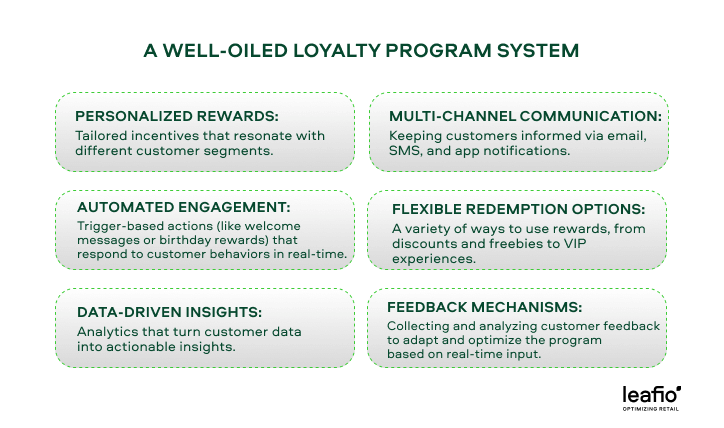
Key Ingredients for a Successful Loyalty Program
Building a loyalty program that makes customers tick requires a mix of strategic elements:
#1 Customer Segmentation
Segmentation is the bread and butter of any loyalty program, grouping customers based on their purchasing behavior, demographics, and preferences. Research shows that targeted campaigns are 50% more likely to reach their mark, making segmentation indispensable for effective engagement.
#2 Personalization
With 80% of consumers more likely to make a purchase when brands offer personalized experiences, crafting a loyalty program that speaks directly to each customer is crucial. Loyalty programs that recognize individual preferences—like offering exclusive discounts or early product access—foster a stronger bond between the brand and its customers.
#3 Flexible Reward Options
Offering a variety of rewards, from points and discounts to exclusive experiences and early product access, means that you’re catering to everyone. After all, not all customers are created equal: one may jump at redeemable points, while another prefers VIP events. A loyalty program should cater to this diversity to maximize its appeal.
#4 Effective Engagement Strategies
Keeping the program fresh and engaging through gamification, referral incentives, and tiered membership levels is essential. These strategies boost customer involvement, turning a simple rewards program into an experience that resonates.
#5 Data Analytics and Continuous Feedback
Data is the pulse of an effective loyalty program. By regularly analyzing program performance and gathering customer feedback, companies can pinpoint what drives loyalty and adapt their strategy. According to McKinsey, data-driven organizations are 23 times more likely to acquire customers, 6 times as likely to retain them, and 19 times more likely to be profitable.
Navigating the Challenges in Loyalty Management
While loyalty programs hold tremendous potential, getting them to run seamlessly requires overcoming several common challenges:
Achieving Effective Personalization
As loyalty programs grow, delivering a consistently personalized experience can become increasingly challenging. With a larger customer base, maintaining individual relevance without losing efficiency requires sophisticated data analysis and segmentation. Many companies struggle to keep rewards meaningful and timely for diverse groups, which can lead to generic offerings that lose customer interest over time. Ensuring every message and offer remains personalized—even for a vast audience—demands advanced technology and a clear strategy.
Data Management Complexity
Managing and analyzing vast amounts of customer data feels like juggling many tasks at once, and a successful loyalty program requires real-time insights into customer behavior and preferences. Businesses face the need for rigorous data hygiene, compliance with privacy regulations, and the proper infrastructure to make sense of raw data. As data volume grows, maintaining accuracy and relevance is key, especially with rising consumer expectations for data transparency. Furthermore, deriving actionable insights from this data requires continuous investment in data processing and analytics tools.
High Maintenance Costs
Keeping a loyalty program engaging and competitive involves ongoing investment in technology, customer support, and compelling rewards. From maintaining a robust digital platform to offering exclusive, high-value rewards, loyalty programs can carry significant expenses, especially as customer expectations rise. Additionally, companies often need to invest in customer service teams that handle loyalty inquiries and troubleshoot issues, further adding to costs. Companies that can’t keep up with these expenses risk offering a lackluster program that fails to resonate with customers.
Avoiding Customer Fatigue
Overloading customers with offers and messages can lead to “loyalty fatigue,” where the sheer volume of communication becomes a turn-off. Studies reveal that 68% of consumers have stopped engaging with a brand due to overly aggressive marketing, making a delicate balance essential. Bombarding customers with offers that feel more spammy than special can damage the relationship and lead to disengagement. Effective loyalty programs need thoughtful timing and genuinely valuable offers, delivered with consideration for frequency and personalization, to avoid overwhelming customers.
Technological Advancements Shaping Loyalty Program Management
Technological advancements have revolutionized loyalty program management, making it easier for businesses to create, manage, and optimize programs that are both engaging and data-driven. Here are some key technologies shaping the future of loyalty management:
#1 Artificial Intelligence and Machine Learning
AI and machine learning enable businesses to analyze vast amounts of customer data in real time, providing valuable insights into customer behaviors, preferences, and purchase patterns. This helps create ultra-personalized loyalty programs, delivering tailored rewards and recommendations based on individual customer actions. For example, an AI-driven system might offer a discount on a frequently purchased item or suggest similar products, increasing engagement and satisfaction.
#2 Data Analytics and Predictive Modeling
Data analytics tools are at the heart of modern loyalty programs, transforming raw data into actionable insights. Predictive modeling goes a step further by forecasting customer needs and behaviors, enabling businesses to preemptively offer rewards or engage customers before they disengage. This proactive approach keeps loyalty programs fresh and relevant, enhancing retention.
#3 Omnichannel Integration
With today’s customers interacting across various touchpoints—mobile apps, websites, in-store, and more—omnichannel integration is essential. Modern loyalty management platforms ensure a seamless experience across all channels, allowing customers to earn and redeem rewards regardless of how they engage. This consistency is crucial for fostering a unified brand experience and increasing program participation.
#4 Automated Trigger Chains
Automation has enabled loyalty programs to be more dynamic and responsive. Trigger chains—automated actions based on specific customer behaviors—allow businesses to engage customers at the right time with the right message. For instance, a purchase might trigger a thank-you email with additional incentives or a reminder about unused points. These automated, real-time responses keep customers engaged without requiring constant manual oversight.
#5 Blockchain for Transparency and Security
Blockchain technology is becoming a valuable tool for enhancing transparency and security in loyalty programs. Blockchain can securely track and record reward points, enabling customers to have clear visibility of their points and ensuring that the points are protected against fraud. Blockchain also makes it easier for companies to implement multi-brand loyalty partnerships by creating secure, transferable points systems.
#6 Mobile Apps and Push Notifications
Mobile apps have become a central hub for loyalty programs, offering users a convenient way to track rewards, receive offers, and engage with the brand. Push notifications further enhance this by delivering timely, personalized messages directly to customers’ smartphones. This immediacy helps keep the program top-of-mind and increases customer engagement, especially for time-sensitive offers or reminders to redeem points.
#7 Gamification
Gamification techniques—such as tiered rewards, points leveling, and badges—create a fun and competitive element in loyalty programs. By integrating game-like features, companies can increase engagement and encourage more frequent interaction. For example, users might receive rewards for reaching a certain spending milestone or referring a friend, adding an enjoyable challenge to the experience.
#8 Advanced Anti-Fraud Mechanisms
As loyalty programs grow more sophisticated, so do potential fraud risks. Advanced anti-fraud mechanisms, often powered by AI, monitor transactions for suspicious activity, ensuring the program's integrity and protecting the brand from financial loss. Real-time fraud detection helps safeguard customer data and rewards, enhancing trust and credibility.
#9 Customer Feedback Loops and Sentiment Analysis
Sentiment analysis and feedback loops allow brands to gauge customer satisfaction continuously. By analyzing customer reviews, feedback forms, and social media sentiments, companies can gain insight into what works and what needs improvement. This real-time feedback loop enables companies to make quick adjustments, improving customer experience and loyalty.
#10 API Integration for Customization and Flexibility
API integrations allow loyalty programs to seamlessly connect with other systems like CRM, ERP, and POS. This connectivity provides flexibility in customizing and scaling the loyalty program, allowing businesses to add features as needed and adapt quickly to changes. APIs also simplify data sharing across systems, making it easier to deliver a consistent customer experience across platforms.
How LEAFIO’s Customer Loyalty Management Solution Drives Loyalty Program Success
LEAFIO Loyalty Management Software is a versatile, cloud-based tool that enables businesses to create and manage highly effective loyalty programs. Focusing on both bonus and discount mechanisms, LEAFIO helps drive customer lifetime value, retention, and, ultimately, revenue.
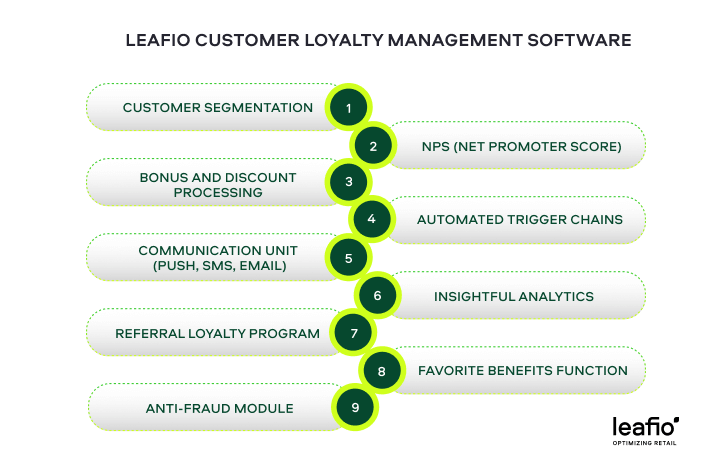
Here’s how LEAFIO can make loyalty management a breeze:
CRM and Customer Segmentation
LEAFIO’s integrated CRM system organizes and manages customer data, ensuring brands can target their messaging and loyalty offers precisely. The platform also incorporates Net Promoter Score (NPS), helping businesses measure loyalty and make data-backed decisions.
Bonus and Discount Processing
This feature enables the accrual and redemption of rewards like bonuses, discounts, and gift certificates. LEAFIO makes it easy to set up program rules and run special offers that fit your customers’ preferences.
Trigger Chains for Targeted Engagement
LEAFIO’s trigger chains initiate sequences of automated actions based on customer behavior, ensuring personalized, timely engagement that keeps customers involved and committed to your brand.
Multi-Channel Communication
LEAFIO supports communication across push notifications, SMS, and email, allowing businesses to deliver personalized messages that boost loyalty and maintain strong customer connections.
Analytics for Strategic Decision-Making
With LEAFIO’s advanced analytics capabilities, businesses can transform raw data into actionable insights. This data-driven approach empowers companies to adapt their loyalty program based on customer feedback and behavioral trends, leading to better results.
LEAFIO’s loyalty management solution consistently delivers significant impact, with most customers observing a 30% boost in company turnover within the first few months post-launch. Additionally, there’s typically a 35% increase in loyalty card purchases, indicating heightened engagement, and a 40% reward redemption rate, reflecting strong customer satisfaction.
Key Takeaways: Best Practices for Loyalty Program Management
These best practices will ensure your loyalty program is set up for success:
- Set Clear Objectives: Define specific goals like higher purchase frequency or improved retention, and design your program to meet these benchmarks.
- Keep Customers Engaged: Utilize gamification, tiered rewards, and referral incentives to make the program dynamic and engaging.
- Stay Adaptable: Regularly analyze program performance and make adjustments based on customer feedback and evolving market trends.
- Consistent Communication: Keeping customers informed of their progress, new offers, and special events boosts loyalty and prevents customer attrition.
- Personalize, Personalize, Personalize: Use customer data to create personalized experiences, track engagement, and refine the program. The better the personalization, the more likely customers are to remain loyal.
Conclusion
In today’s marketplace, loyalty program management is an essential tool for customer retention and revenue growth. A well-managed loyalty program can differentiate a brand from its competitors by offering meaningful value to customers. LEAFIO’s Customer Loyalty Management solution makes it easy for companies to build, manage, and optimize effective loyalty programs by integrating CRM, bonus processing, communication, and data analytics into one cohesive platform. With a robust solution like LEAFIO, businesses can streamline their loyalty efforts, turn customers into lifelong fans, and enjoy the increased revenue that follows.
Ultimately, a loyalty program is more than just a marketing tool. It’s a strategic approach to building a brand community of engaged, repeat customers who feel valued and connected to your brand. When done right, loyalty program management is a pathway to greater gains and stronger bonds.


Have a question?

Kristi Miller
Retail optimization expert