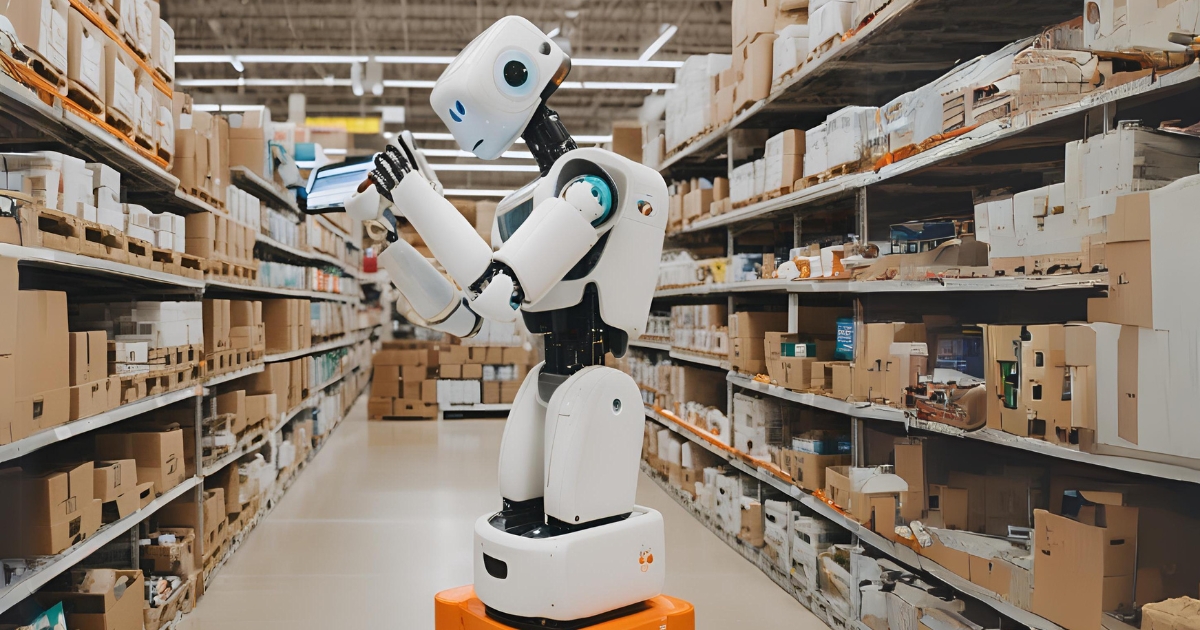

The integration of AI in the supermarket and grocery retail industry is making notable progress. By 2030, AI in grocery is expected to create nearly $136 billion in value for the whole sector. Big retailers are actively implementing AI and robotics to automate in-store, back-office, and warehouse processes. However, many grocers still hesitate to shift from familiar tools to unexplored innovations.
Supermarket AI technology undoubtedly has great potential to improve customer experience and reset the cost structure. Nevertheless, not every smart solution for grocery stores is tailored to each business's current needs and budget. No business can afford to waste time and money.
So, picking the right path and technology is paramount. Now, let's take a closer look at the main supermarket technology trends of 2026. With this comprehensive review, you will find solutions designed to align with your specific business challenges.
Key Takeaways:
Here are five essential AI trends shaping supermarket retail in 2026:
AI-powered forecasting helps grocers reduce stock issues and make faster, data-driven decisions.
Computer vision and mobile tools improve shelf space control and real-time execution.
Machine learning enhances assortment planning and daily category optimization.
AI enables hyper-personalized promotions tied to shopper behavior and smart cart technology in supermarkets.
Dynamic pricing algorithms adjust prices instantly based on demand and market shifts.
What Are AI Grocery Technology Trends?
AI-based technology in grocery stores and supermarkets includes smart devices and services for optimizing the shopping experience and store operations behind the scenes. For example, there are solutions for analyzing sales data, shelf management, and logistics optimization. AI Inventory forecasting and optimization, warehouse automation, and robotics are among the most popular areas where AI is utilized in supply chains.
As for shopper experience, grocery technologies are actively moving towards self-service checkouts, smart carts, robotic assistants, and mobile apps that generate personalized offers and individual shopping lists.
AI for grocery stores is designed to increase shopping efficiency, reduce business expenses, and improve the overall customer experience through data-driven decision-making and automation.

5 Supermarket AI Technology Trends in 2026
Let’s take a look at the top innovations of AI in retail industry that will be relevant for supermarkets in 2026.

#1. AI in Grocery Stores Improves Analytics and Forecasting
Nowadays, while only large and medium-sized enterprises use predictive grocery store analytics and automation methods, a lot of small grocery retailers still use manual calculations and are not informed about the actual stock balances. There is no doubt that future grocery store retailers won't be able to operate without AI forecasts because of the changing world with multiple factors influencing demand.
Integrated artificial intelligence allows optimizing promotions, visual merchandising, product placement, and solving problems in inventory management. Grocery analytics software and demand planning software based on AI algorithms minimize overstocking and shortage issues, enabling the delivery of innovative, personalized AI marketing for grocery store experiences while ensuring effective inventory control. The AI grocery store technology innovations reflect a strategic move toward data-driven decision-making to improve operational efficiency and customer satisfaction.
#2. The “Must Have” Grocery Store Technology: Shelf Space Control
Control over the layout is becoming easier with planogram software, robots and cameras with computer vision scanning goods and recording out-of-stock or misplaced SKUs. Store managers receive reports on their mobile app with photos of the goods that need to be moved or restocked.
Of course, robotics implementation is a long and complex process, but similar and easier new supermarket technology innovations are available already. For example, using the Merchandising Mobile App by LEAFIO AI, store managers can receive tasks from the central office, see planogram changes in real time, scan goods, and send photos of the completed task.
#3. Smart Assortment Management
Grocery store innovation provides effective tools for high-quality product planning. Software based on machine learning grocery algorithms constantly analyzes changes in categories and their effectiveness, offering ways to improve assortment management and make high-quality business decisions. AI-powered solutions, such as LEAFIO's AI Assortment Management system, facilitate the creation and daily assortment management strategies and allow grocery retailers to stay informed about potential improvements in key performance indicators.
#4. The Future of Grocery Stores Lies in Personalized Promotions
AI in retail industry helps to analyze customer behavior, identifying patterns and lifestyle shifts. This data enables the creation of hyper-personalized promotions tailored to individual preferences.
Personalized offers are the future of grocery stores. They work great in tandem with smart carts, which have sensors, weight scales, and barcode scanners that allow them to detect the items. The carts enable users to skip the checkout line by tracking and tallying items up as they’re placed in the cart. Shoppers receive personalized offers and access to loyalty programs through the carts’ display based on their profiles, purchase history, and current store location.
#5. AI in Grocery Retail Powers Dynamic Pricing Strategies
Nowadays, product prices are constantly aligning with demand fluctuations, purchasing power, and the market situation in general. The Food Consumer Price Index in the United Statesrose by 0.2% in August 2023, as it did in the previous month, and the index was even higher for some products.
Dynamic pricing is a clear example of applying the power of grocery retail AI. Leveraging advanced algorithms, AI can analyze millions of price variations across stores depending on demand, season, promotions, and market changes to recommend optimal prices for items. In addition to that, electronic price tags can be used in physical stores to effectively run various pricing strategies such as discounts on overstocked or near-expiry products.
Supermarkets AI Technology and Key Grocery AI Challenges
The following factors slow down the implementation of innovative technologies in the supermarket industry:
- Trust. According to the Dunnhumby Study, only 20% of American consumers "mostly" or "completely" trust AI. So, retailers have to show customers that these innovative solutions or products can help them in daily life and shopping.
- Budget availability.
Procuring equipment, such as cameras or sensors, developing software, and integrating it into store operations all require investment. The latest reports show that grocers' AI budgets will go up by 14 % to 37 %.
- Team training. Store managers need to learn how to use grocery technology in their daily work. That takes time. Additionally, software continues to evolve, requiring retailers to adapt and regularly train employees on new tools.
Best 3 AI Applications in Grocery Retail in 2026
The following short future supermarket technology reviews will give you a basic understanding of the capabilities of the best specialized AI platforms that are successfully used by retailers around the world.
#1. LEAFIO AI Retail Platform

LEAFIO AI Retail Platform has been implementing cloud-based retail software for over 15 years, accumulating in its solutions experience of implementation and use for more than 250 retailers, distributors, and CPG manufacturers worldwide. The LEAFIO AI Retail Platform, backed by AI and machine learning, offers flexibility and customization, as well as a fast 6-12 months of implementation, compared to 2-3 years offered by competitors.
#2. RELEX Solutions

RELEX is a distributor of cloud solutions for retail, wholesale, and manufacturing sectors that helps to align and optimize demand, merchandise, supply chain, and operations planning across the end-to-end value chain. The RELEX platform, backed by AI and machine learning, supports a customizable and user-centric solution without complex coding or costly updates.
#3. Symphony RetailAI

Symphony RetailAI implements innovative solutions based on AI, ML, and voice control technologies to improve the efficiency of various operations in the FMCG and CPG sectors. Pre-packaged AI solutions leverage the predictive intelligence of CINDE and the power of The Eureka ML platform. The product also offers several features for retail inventory management, such as fresh category management technology, tracking goods, waste prevention, etc.
Conclusion: AI is Emerging as the Future of Grocery Store Operations
2026 will show how grocery technology innovation will change the nature of the industry. Undoubtedly, AI will be at the center of this transformation. The innovation's spread will also provide more data on the secondary effects of implementing these solutions.
We can already clearly see thatAI in the food retail industryprovides a significant competitive advantage, optimizes store costs, and changes the way we think about shopping. AI-powered software such as LEAFIO AI is changing the way innovative grocery stores operate internally by facilitating inventory management, forecasting, and dynamic pricing based on analytics. The trends listed above demonstrate the potential of artificial intelligence and the desire of grocers to maximize their competitive advantage.

Supermarket Technology FAQs
What technologies do supermarkets use?
Supermarkets use a variety of technologies to increase sales and improve marketing strategies. These include AI-based analytics software that allows retailers to make better management decisions, create personalized offers, and manage SKU layout and pricing. In addition, retailers use self-checkouts, smart carts, AI and grocery ecommerce platforms, shelf-monitoring robots, and other tools.
What are the new technologies in grocery stores?
The new technologies include IoT devices, self-checkouts, smart carts, analytics services, platforms for inventory and supply chain optimization, and shelf management. Together, all these technologies are shaping the future of AI in supermarkets and food retail.
What system do supermarkets use?
Supermarkets use assortment, shelf, inventory, and supply chain management systems. Each specialized solution can be used separately or implemented on a single platform like LEAFIO. The AI-powered LEAFIO platform helps supermarkets control their stock, create a more efficient shopping experience, analyze sales data, generate accurate forecasts, etc.
How is AI used in groceries?
AI in grocery stores improves the accuracy of sales forecasts, helps to get better results from promotions, and automates retail processes in general. Moreover, artificial intelligence in supermarkets optimizes product assortment for the local markets and helps to use store space more efficiently. As a result, grocery retailers benefit by increasing customer retention and boosting profits.
Is artificial intelligence taking over grocery stores already?
Yes, AI in grocery retail is changing the format of shopping and store operations really fast. However, the implementation of innovation requires time, investment, and step-by-step adaptation. We are also only at the starting line of what AI can do. In the next five years, the transformational power of AI in grocery stores will become even more obvious.
How artificial intelligence is used in shopping?
Automation in grocery stores transforms the shopper experience with self-checkouts, personalized shopping lists, smart shelves and carts, and predictive pricing. It also provides personalized recommendations and promotions based on individual shopping behaviors, chatbots, and virtual assistants.
What is the use of AI among us grocers?
AI-powered solutions help grocers to optimize inventory management and to solve supply chain issues. Using innovative supermarkets technology, retailers have the opportunity to predict demand and reduce waste, to automate shelf restocking and other routine tasks. AI-powered analytics also assist in creating personalized promotions and pricing strategies, making an AI grocery store more competitive.


Have a question?

Jack Larson
Retail Optimization Expert