

A transportation management system is software that connects route planning, carrier selection, shipment tracking, proof of delivery, and cost reporting into one platform. This guide covers the mechanics of TMS software, how to tell the platforms apart when they all claim the same capabilities, and what makes some implementations work while others waste the budget.
A transportation management system is software that connects route planning, carrier selection, shipment tracking, proof of delivery, and cost reporting into one platform. Transportation is one of the largest controllable costs in retail and FMCG operations, and a TMS is the primary tool for bringing it under control. LEAFIO builds two TMS products for this market: Rinkai for last-mile delivery and Movelix for long-haul freight.
Want to see how a retail-focused TMS works in practice? Book a demo of LEAFIO TMS and see route optimization and real-time tracking live.
Book a demoWhat Is a Transportation Management System?
The typical logistics team, before implementing a TMS, is managing freight across half a dozen tools that don't communicate with each other. Routing on a spreadsheet, carriers by email, invoices reconciled at the month's end by whoever has time. Transportation management software replaces this. The global market was $2.08 billion in 2024 and is projected to reach $3.19 billion by 2029, growing at 8.92% annually (Mordor Intelligence). North America holds 36% of revenue. Main users are retailers, grocery and FMCG companies, manufacturers, distributors, and 3PLs.
TMS, WMS, ERP. Three systems, three different jobs. They show up in the same conversations often enough that people start treating them as versions of the same thing. They are not. A warehouse management system covers what happens inside a facility. A TMS covers what happens in transit. An ERP covers the business layer.
TMS vs WMS vs ERP
| System | Primary focus | What it does NOT replace |
|---|---|---|
| TMS (Transportation Management) | Moving goods between locations: route planning, carrier management, freight cost, real-time tracking | Warehouse operations, inventory levels, financial accounting |
| WMS (Warehouse Management) | Operations inside a warehouse or DC: receiving, putaway, picking, packing, loading | Carrier selection, route optimization, in-transit visibility |
| ERP (Enterprise Resource Planning) | Business-wide data: finance, procurement, HR, orders, inventory records | Granular logistics execution, real-time carrier tracking, route planning |
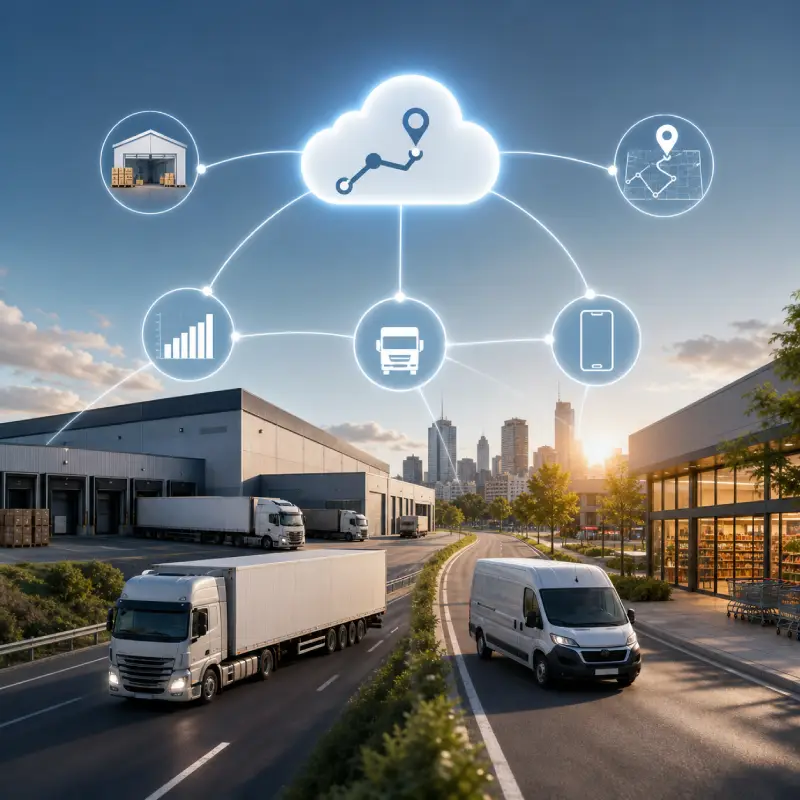
A properly integrated setup works like a relay. ERP generates the order. WMS picks, packs, and loads. TMS takes over when the vehicle leaves. Data passes between them automatically at each handoff. Freight cost data comes back to the ERP when the cycle closes.
How Does a TMS Work?
Every TMS follows the same basic workflow. The differences that matter are how well each stage executes and how cleanly the handoffs work. Going into a vendor evaluation knowing the sequence means you can ask specific questions rather than watching a prepared demonstration.
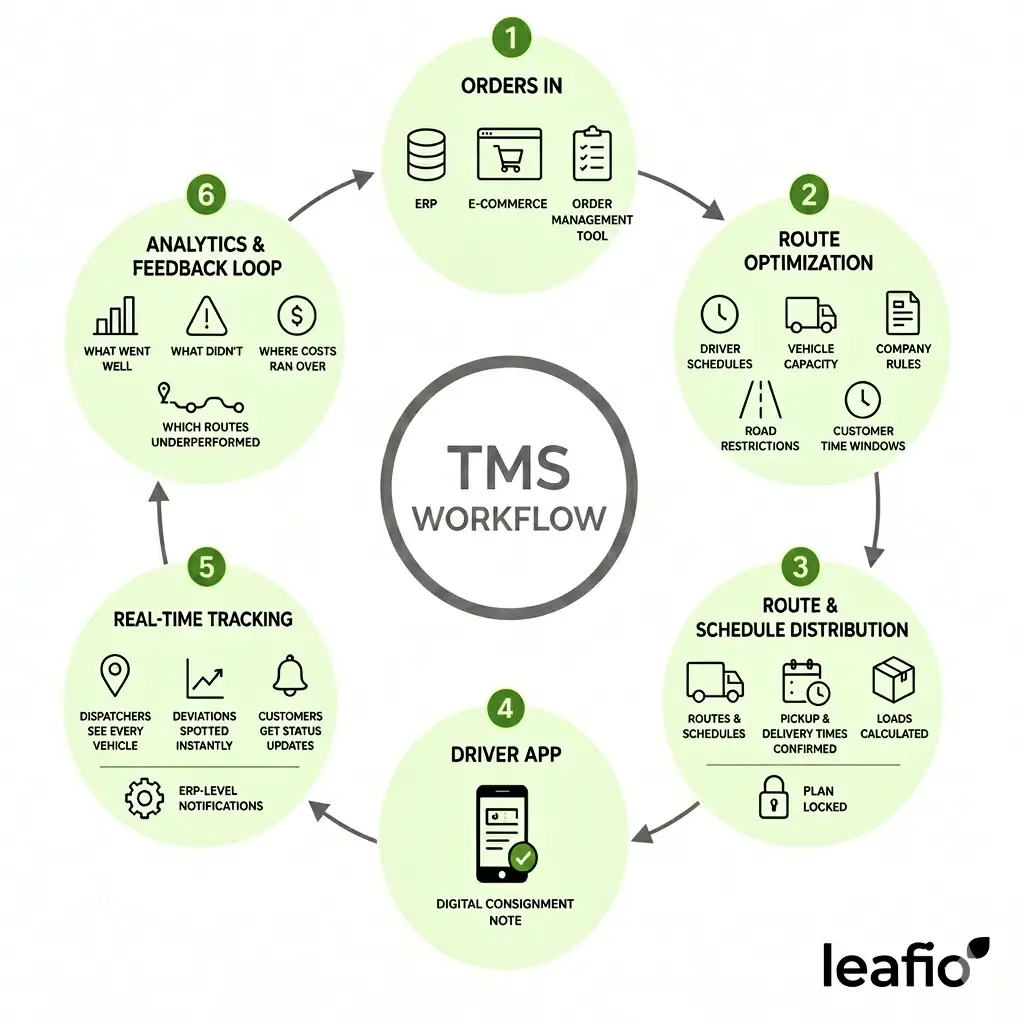
- Orders come in from the ERP, e-commerce platform, or order management tool, each carrying the data needed for routing.
- The system optimizes routes. Not just for one variable like distance or cost. For all of them at once. Driver schedules, vehicle capacity, company rules, road restrictions, customer time windows. Everything gets weighed simultaneously.
- Optimized routes and schedules go out to the selected vehicles and carriers. Pickup and delivery times are confirmed, loads are calculated, and the plan is locked.
- The driver gets a digital consignment note, everything they need for the run, on their phone. No paper. No calls to the office asking what comes next.
- Tracking runs in real time throughout the delivery. Dispatchers see where every vehicle is and spot deviations directly in the system interface. Customers get status updates. ERP-level notifications can be configured separately.
- After delivery, the data feeds into analytics. What went well, what didn't, where costs ran over, which routes underperformed. That feedback loop is how operations actually improve over time.
The best platforms in this category share a few characteristics. They reduce costs by automating decisions that previously required manual judgment. They improve operational efficiency across transportation operations by removing manual steps from dispatchers and planners. And because everything is connected, they do it without creating new data entry requirements at each handoff.
Key Features of a Transportation Management System
TMS vendors describe similar capabilities using identical language, which makes feature comparisons nearly useless on their own. The same term can represent very different levels of functionality depending on implementation depth. The capabilities below are the ones that consistently determine whether a TMS delivers real value in retail and FMCG logistics.
Route planning is where most of the financial value in a TMS gets realized. The system builds optimized routes in minutes. Not optimized for one thing, for all of the relevant constraints at once. Vehicle capacity, customer time windows, driver availability, road restrictions. A system that only optimizes for one variable at a time forces planners to make trade-offs manually. A well-built engine finds the best balance across everything in a single pass. LEAFIO Rinkai handles more than 15 routing restriction types specific to retail and FMCG delivery. Full details on the Rinkai product page.
Automated planning solves the morning problem. The afternoon problem is different: orders change, customers become unavailable, and vehicles break down. The system needs to handle reassignments and re-optimize routes and reassign deliveries. Platforms that cannot do this force dispatchers to manage exceptions manually, which defeats much of the purpose.
Live tracking changes the operational dynamic significantly. Real-time visibility into active deliveries means dispatchers can see every vehicle on a map in real time, and exceptions become manageable rather than chaotic. Customer service can answer delivery questions without calling the driver. Route deviations get flagged immediately. And because the data is timestamped and recorded, billing disputes become much easier to resolve. GPS tracking connected to an open data exchange protocol is what makes this possible at the level of detail that actually matters.
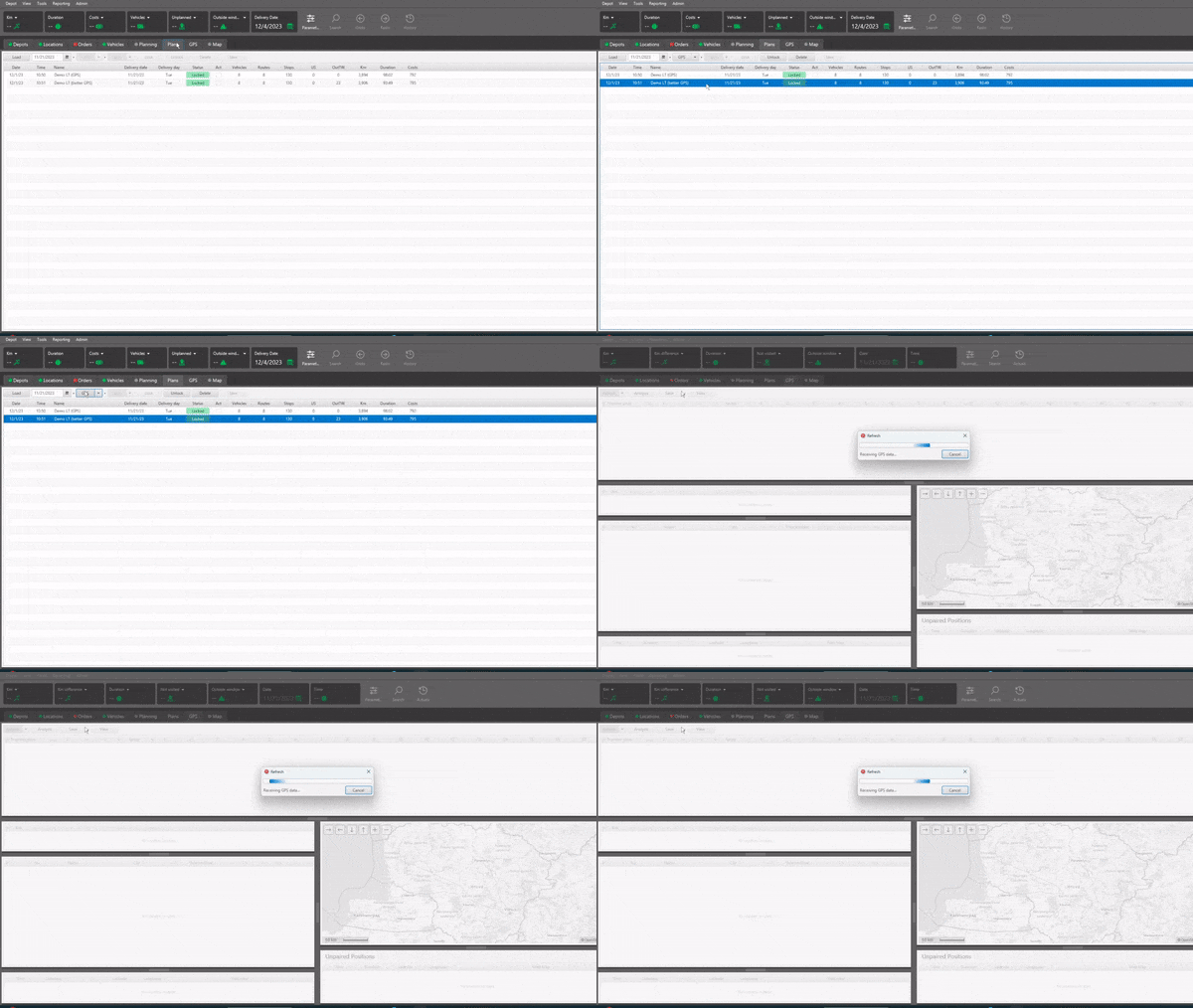
Consumer mapping tools are not built for logistics planning. A serious TMS uses specialized cartography with road network data, speed limits, traffic conditions, and the ability to overlay planned versus actual routes. Two things worth checking: how frequently maps are updated, and whether you can add custom restrictions specific to your operation.
Real-time notifications sound basic, but the execution varies significantly between platforms. Drivers need schedule changes, delay alerts, and cargo updates pushed to their phones as they happen. Supervisors and contractors need the same. The test is not whether the system sends notifications, but whether the right people receive the right information quickly enough to act on it.
Analytics closes the gap between planning and knowing whether the plan worked. The module should let managers pull cost data, track key performance indicators, and spot performance issues without exporting to a spreadsheet. In Rinkai, the dashboard covers logistics expenses, load management, driver performance, customer satisfaction, and branch operations in one view.
The driver app is where a TMS earns its keep in the field. Drivers need current route information, reliable navigation, delivery status updates, and digital proof of delivery capture. The app must work in poor connectivity areas and be simple enough that drivers use it correctly. The LEAFIO Route Sense app handles this and transfers delivery confirmation data directly back to the ERP.
Types of TMS: Last-Mile vs Long-Haul
TMS is not a single category. There are two meaningfully different types of TMS solutions, built around different operational problems. When evaluating TMS solutions, the mistake many companies across the transportation industry make is evaluating a long-haul freight system against a last-mile system without realizing that the comparison does not really make sense. They optimize for different things.
Last-Mile TMS
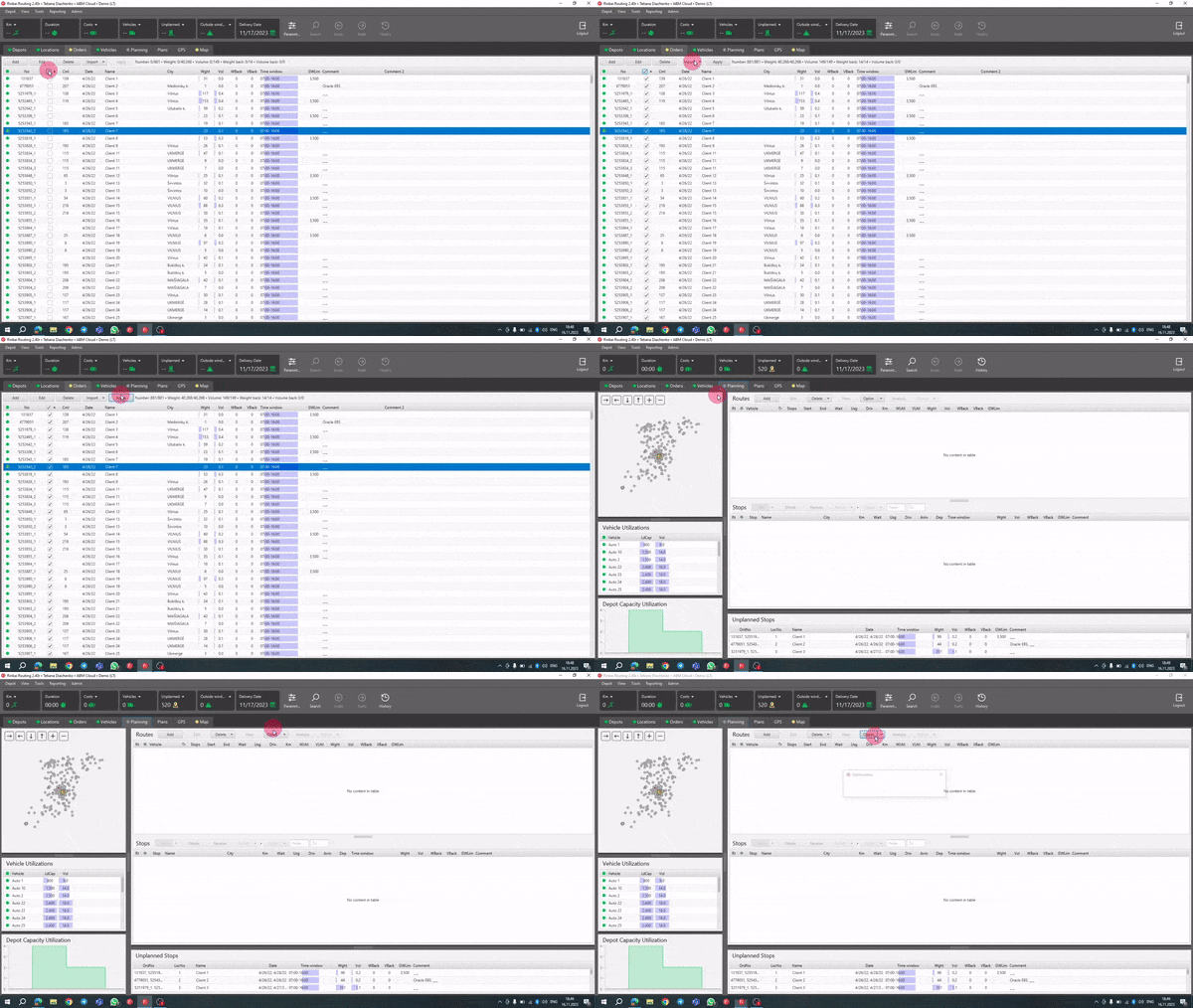
Last-mile covers the final leg: from depot to store, restaurant, or consumer address. It is operationally dense. Many stops per route, narrow time windows, possible temperature requirements, and failed deliveries that need to be handled on the spot without derailing the rest of the run. Platforms built for this use case handle high stop-count routing, live tracking, plan-versus-actual comparison, and mobile proof of delivery. Grocery replenishment, FMCG direct store delivery, e-commerce fulfillment, and food service are the primary applications.
LEAFIO Rinkai is a cloud-based last-mile TMS built specifically for retail and FMCG operations. The routing algorithm handles more than 15 types of restrictions relevant to store delivery and direct store delivery operations. Automated route planning, live execution control, driver mobile tools, and plan-versus-actual tracking are all in one platform.
Long-Haul and Freight TMS
Long-haul is a different operational problem. The freight is inter-city or inter-regional: full truckloads and LTL shipments. Stop-count is not what matters here. Load planning, carrier contracting, freight tendering, documentation, and regulatory compliance are. Cold chain logistics, raw material procurement, and distribution between warehouse locations are the typical use cases.
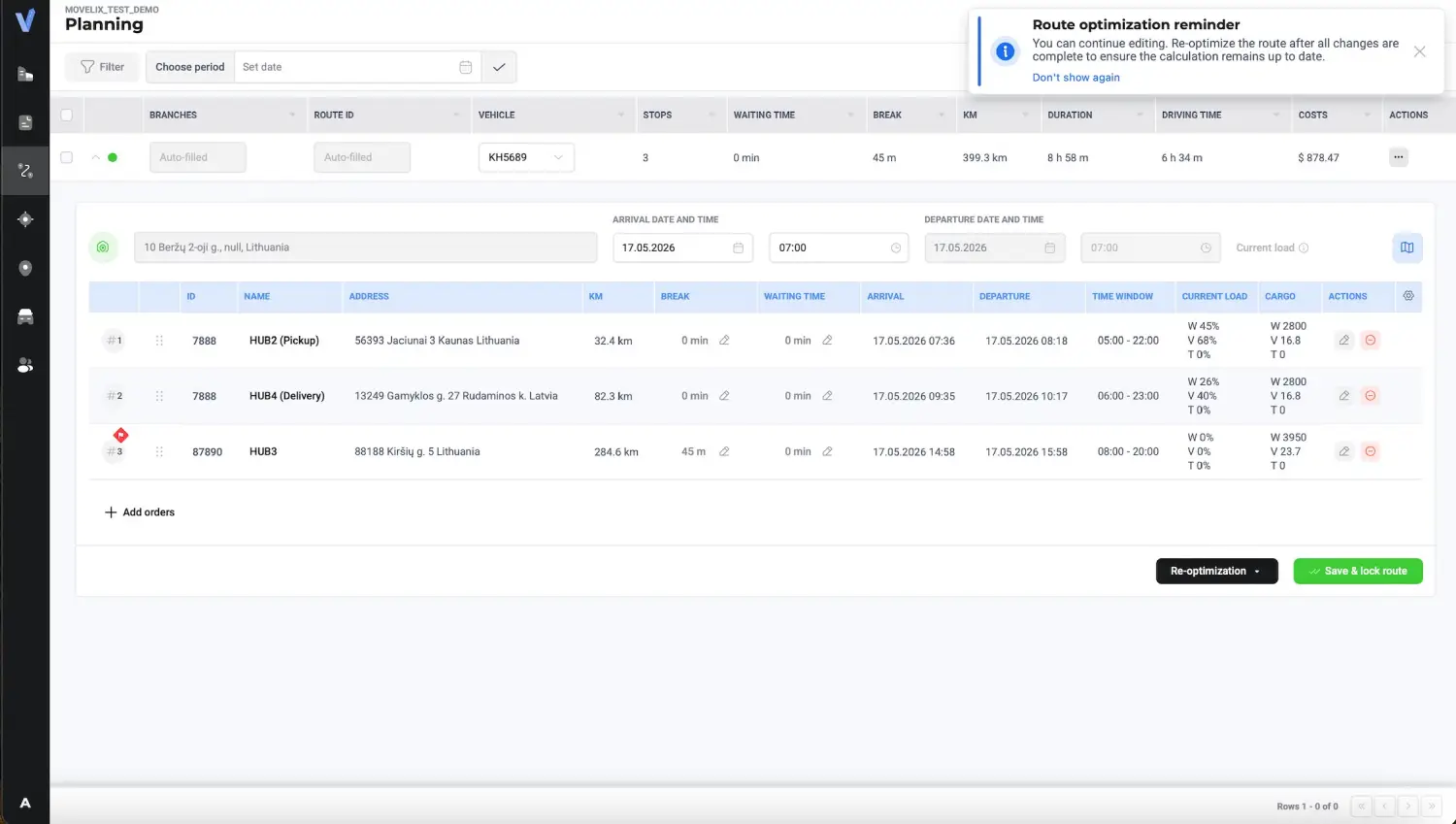
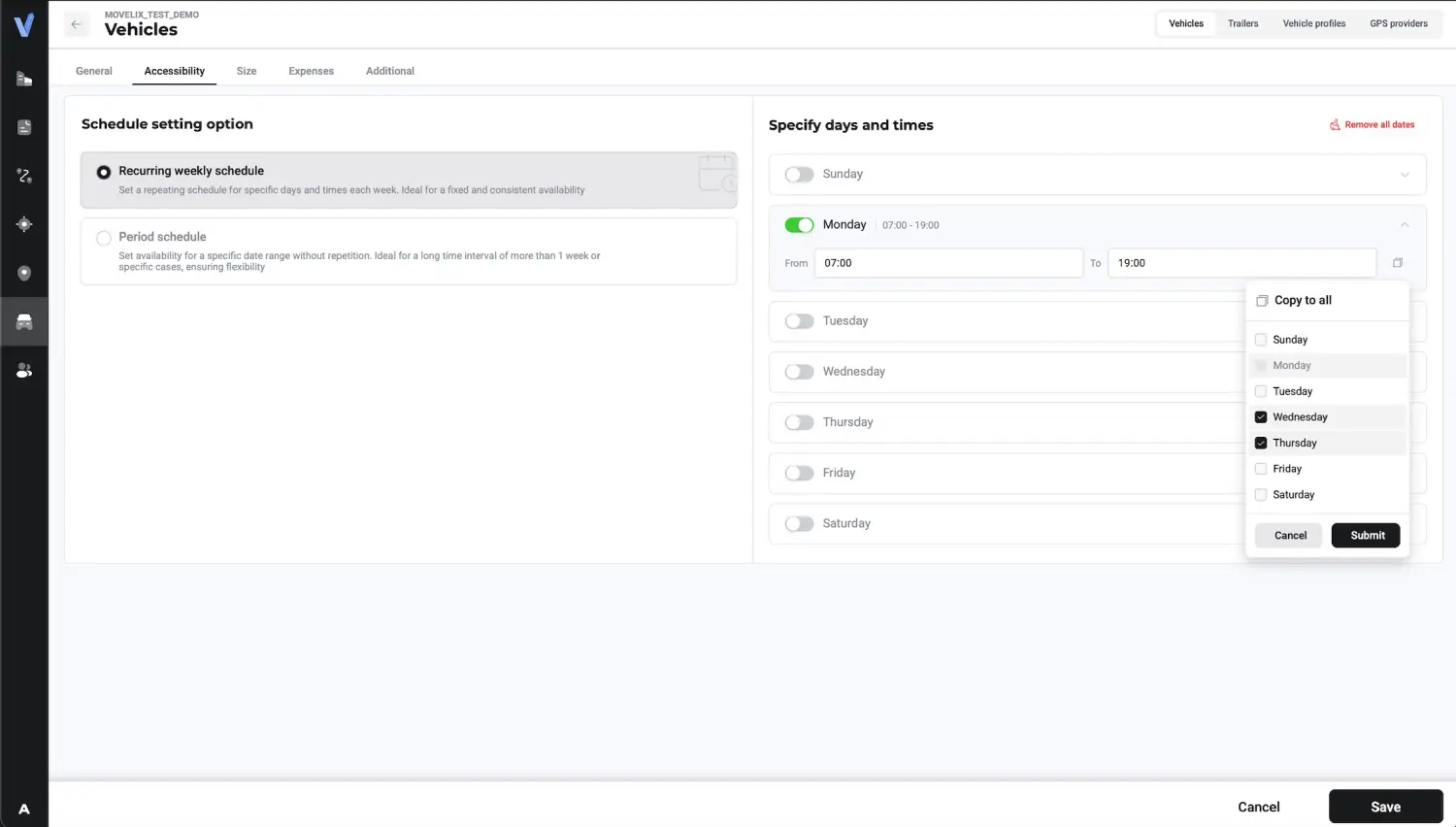
LEAFIO Movelix is a long-haul TMS that optimizes delivery scenarios and manages transportation processes end to end. It plans routes based on distance, driver schedules, number of ramps, customer time windows, weight and size restrictions, and road conditions. Own and hired fleet, trailers, carriers, and drivers are managed from one panel. GPS tracking is live. Plan-versus-actual KPIs are built in. Route updates go to the driver app.
SaaS vs On-Premise Deployment
Cloud deployment has become the standard transportation management solution for mid-market retail and FMCG. Among available TMS solutions, cloud-based platforms offer the fastest path to value. The reasons are practical: implementation takes weeks to a few months rather than the six to twelve months typical of on-premise, costs are lower upfront, the system scales without hardware purchases, and updates happen automatically. On-premise still makes sense for organizations with specific data sovereignty requirements, but for most operations, the cloud option is faster to stand up and avoids the maintenance costs associated with on-premise infrastructure.
Explore last-mile delivery software for retail | long-haul transportation management system
Top Transportation Management Systems in 2026
The TMS category is broad enough to include systems built for very different use cases. A platform built for a global 3PL managing multimodal shipments across a complex transportation network is a different product from one designed for a grocery chain delivering to 150 stores daily. The five platforms below represent the main approaches. Each description is based on the vendor's own product pages. When selecting a TMS provider, match the platform to your logistics model rather than to analyst rankings.
| Platform | Primary target | Transport modes | Last-mile / retail fit |
|---|---|---|---|
| LEAFIO Rinkai | Retail, grocery, FMCG last-mile delivery | Road / last-mile | Purpose-built for retail and FMCG last-mile |
| Oracle OTM | Enterprise shippers and LSPs across global supply chains | All modes: road, air, ocean, rail, multimodal | Retail is a supported industry; not last-mile specific |
| SAP Transportation Management | Enterprise companies managing global transportation | All modes: road, air, ocean, rail, multimodal | Not last-mile specific; focused on strategic freight management |
| Infios TMS (formerly MercuryGate) | Shippers, 3PLs, freight brokers, carriers | All modes including parcel, LTL, TL, intermodal, final mile | Final mile module available; not retail-specific |
| e2open TMS | Shippers, freight forwarders, carriers, LSPs | All modes and regions | Retail is a supported industry; not last-mile specific |
Oracle OTM and SAP TM are the enterprise choices in this list: built for large organizations managing complex global freight and supply chain management at enterprise scale, comprehensive in scope, and typically implemented with dedicated partner support. Infios TMS serves shippers, 3PLs, brokers, and carriers across all freight modes, with a separate final mile module available. e2open is oriented toward global supply chain complexity and operates a carrier network of more than 50,000 partners. LEAFIO Rinkai is the only platform here built from the ground up for retail and FMCG last-mile operations, with routing logic designed specifically for store replenishment and direct store delivery, which explains the customer results in the next section.
TMS Implementation & Requirements
TMS Requirements Checklist
The following 10 requirements are based on the TMS requirements checklist published on the LEAFIO blog.
5-Step Implementation Guide
Document the current state before selecting anything: carrier setup, routing logic, integration points, and KPIs. Without a baseline the post-implementation conversation is a debate. With one, it is a measurement.
Agree on what success looks like in numbers before anyone touches the software: cost per delivery, on-time rate, planning time. Connect the TMS to ERP, WMS, and carrier systems in a test environment. Validate every data flow. Fix problems there.
Start with one depot or region. Get the routing validated against your baseline, find the edge cases, train the people who will use it daily. What goes wrong in a pilot is fixable. What goes wrong after full rollout is an incident. After full rollout, track KPIs monthly for the first quarter. Most of the difference between TMS implementations that work and those that underperform comes down to how actively the first 90 days are managed.
Cloud TMS typically goes live in a few weeks to a few months. Delays almost never come from the software. They come from address data that has never been cleaned, customer time windows that exist in someone's memory but not in any system, and incomplete carrier records. Sort the data before implementation starts.
Benefits of a Transportation Management System
The same five improvements show up in TMS implementations across different sectors of the transportation industry:
LEAFIO Rinkai TMS: Measured Results
LEAFIO Rinkai serves retailers, grocery chains, FMCG distributors, and CPG manufacturers across multiple countries and transportation networks. The platform covers route optimization, real-time delivery control, and logistics analytics, streamlining the shipping process across the full transportation network in one system. The figures below are from actual customer implementations, not projections.
The metrics above represent the documented range of outcomes across Rinkai implementations. The table below shows specific results from five customers in retail and FMCG logistics (LEAFIO customer data, 2024-2025).
Operationally, Rinkai plans daily routes in minutes with all routing restrictions applied, covers everything from standard multi-stop delivery runs to complex multi-depot operations, provides live delivery tracking with current status visibility, and gives dispatchers a dashboard designed for rapid decision-making. Drivers get a dedicated mobile app with navigation and order tools built for field use. After each cycle, the plan-versus-actual view shows where deviations happened and what caused them. Proof of delivery runs through Route Sense, which connects directly to Rinkai.
Route optimization, real-time GPS tracking, and plan-vs-actual analytics — live in a 30-minute demo.
FAQ
1. What is a transportation management system?
Logistics teams without a TMS tend to run transportation the same way: a routing spreadsheet, carrier email threads, and manual invoice reconciliation at month end. A transportation management system replaces that entire setup. It handles route planning, carrier selection, shipment tracking, delivery confirmation, and freight cost management in one platform. It connects to existing ERP and WMS infrastructure, so order data flows in without manual entry, and freight cost data flows back out for reporting. Most companies that make the switch see freight spend come down, on-time rates improve, and logistics teams spend less time on administrative work.
2. What are the 4 types of transportation systems?
Road, rail, ocean, air, four in theory. In retail and FMCG, road does most of the work: store replenishment, inter-depot runs, and last-mile. Rail, ocean, and air come into play when supply chains cross borders or involve container shipping. If your operation mixes modes, it is worth finding a platform that manages them in one place rather than juggling separate tools.
3. What is the difference between TMS and FMS?
Fleet management software is about the vehicles: condition checks, maintenance scheduling, how drivers behave on the road, fuel use, compliance with transport regulations. A TMS is about the cargo: which route, which carrier, current location, and whether delivery was confirmed. Different tools for different questions. Most logistics operations worth their salt run both.
4. What is the difference between a TMS and a WMS?
The boundary is the loading dock. Everything before it, receiving, storage, picking, packing, loading, is managed by the WMS. Everything after, routing, live tracking, delivery confirmation, is managed by the TMS. Connect them properly and you have a complete picture from warehouse floor to the customer's doorstep.
5. How much does TMS software cost?
Cloud TMS runs on subscription, lower upfront, paid over time. On-premise means buying hardware, standing up infrastructure, and staffing IT to keep it running. The actual cost in either case depends on fleet size, number of locations, what features are needed, and how much support is included. Whatever number appears in the vendor presentation, build in implementation, training, and first-year support before comparing.
6. Is TMS an ERP system?
No, though ERPs often include basic logistics features, which creates the confusion. An ERP covers the business layer: finance, procurement, HR, order management. A WMS covers warehouse operations. A TMS covers freight execution between locations. Each one does a job the others were not designed for. They share data through integration, but each one covers ground the others were not designed for.
7. What is the difference between a TMS and a WMS?
The boundary is the loading dock. WMS operates inside it. TMS operates outside it. Run them together and you have visibility across the entire journey. Run them separately and each one has a blind spot at its edge.
8. What are the benefits of a cloud-based TMS?
Implementation speed is the clearest difference. A cloud TMS typically goes live in weeks to a few months. Getting an on-premise installation up and running, hardware, configuration, testing, takes at least six months, usually longer. Beyond that: lower upfront investment, no hardware to maintain, automatic updates, and access from wherever you happen to be working. Both LEAFIO Rinkai and Movelix are built on a cloud-native architecture.
9. Which TMS is best for retail and grocery logistics?
Retail and grocery have a specific set of operational demands that most general-purpose TMS platforms were not built around: fixed store receiving windows, high stop counts, temperature requirements, and same-day changes. LEAFIO Rinkai was built specifically for retail and FMCG last-mile delivery. The routing algorithm handles more than 15 constraint types relevant to store replenishment and direct store delivery operations, building optimized routes in minutes. Documented results from implementations: a prominent European food producer saved 1,000,000 km in its first year with Rinkai and reduced delivery delays by 70%. A food distributor cut mileage by 18% and delivery costs by 11%.


Have a question?

Andrew Ivarsen
Logistics Optimization Expert