


Here is the short answer. Blue Yonder is the heavyweight enterprise suite for the world's largest, most complex supply chains. LEAFIO AI is the retail-native platform built for mid-market and growing enterprise retailers who want results without a multi-year rollout. I've spent time on both platforms, and the gap between them shows up fast: it's speed, focus, and who each tool is actually built for.
They both forecast demand, automate replenishment, and help you hold less stock. But they aim at different buyers, carry very different price tags, and feel different to use day to day. Blue Yonder started life as JDA Software, a name many retail planners already know. LEAFIO AI grew up inside retail from day one, which changes what the product prioritizes.
This guide compares LEAFIO AI and Blue Yonder feature by feature so you can decide which one fits your business in 2026. Searching for a Blue Yonder alternative or a Blue Yonder competitor with a lighter footprint? I'll flag exactly where that case is strongest.
Quick Comparison: LEAFIO AI vs. Blue Yonder
What is the difference between LEAFIO and Blue Yonder? Blue Yonder is a broad enterprise supply chain suite for large, global organizations, sold by custom quote. LEAFIO AI is a mid-market-first retail platform covering the same core functions, faster to deploy and easier to price. Both handle demand forecasting, replenishment, and shelf execution. The split is scale and accessibility, not a feature checklist.
| Feature | LEAFIO AI | Blue Yonder |
|---|---|---|
| Best for | Mid-market & enterprise retailers, distributors, CPG | Large global enterprises, manufacturers, retailers |
| Core focus | Retail supply chain: demand, replenishment, planogram, merchandising | End-to-end supply chain: planning, WMS, TMS, network |
| Deployment | Weeks to a few months | Typically 3+ months, often longer |
| Field execution | Web UI plus a mobile SuperApp for store staff | Planner and analyst dashboards; limited field-level UI |
| Pricing | Two-part: implementation + subscription | Custom quote, enterprise-level |
| Free trial / demo | Demo on request | Demo on request |
| G2 rating | 5.0 / 5 (30 reviews) | 4.1 / 5, Demand Planning (30 reviews) |
| Analyst status | Strong user reviews; planogram and retail niche leader | Gartner Magic Quadrant Leader, 12 years running |
| Key difference | Faster to value, retail-specific, easier for store teams | Broadest functional depth at global scale |
Ratings reflect 2026 data. See the source reviews on Blue Yonder's G2 page and LEAFIO AI's G2 page. If you searched blue yonder vs. LEAFIO instead, this table answers that question either way around.
Overview of Blue Yonder
Blue Yonder is one of the best-known names in supply chain software, and for good reason. The company was formerly JDA Software before rebranding to Blue Yonder in 2020. Panasonic acquired it in 2021 for roughly $7.1 billion, and it now sits under the Panasonic Connect umbrella.
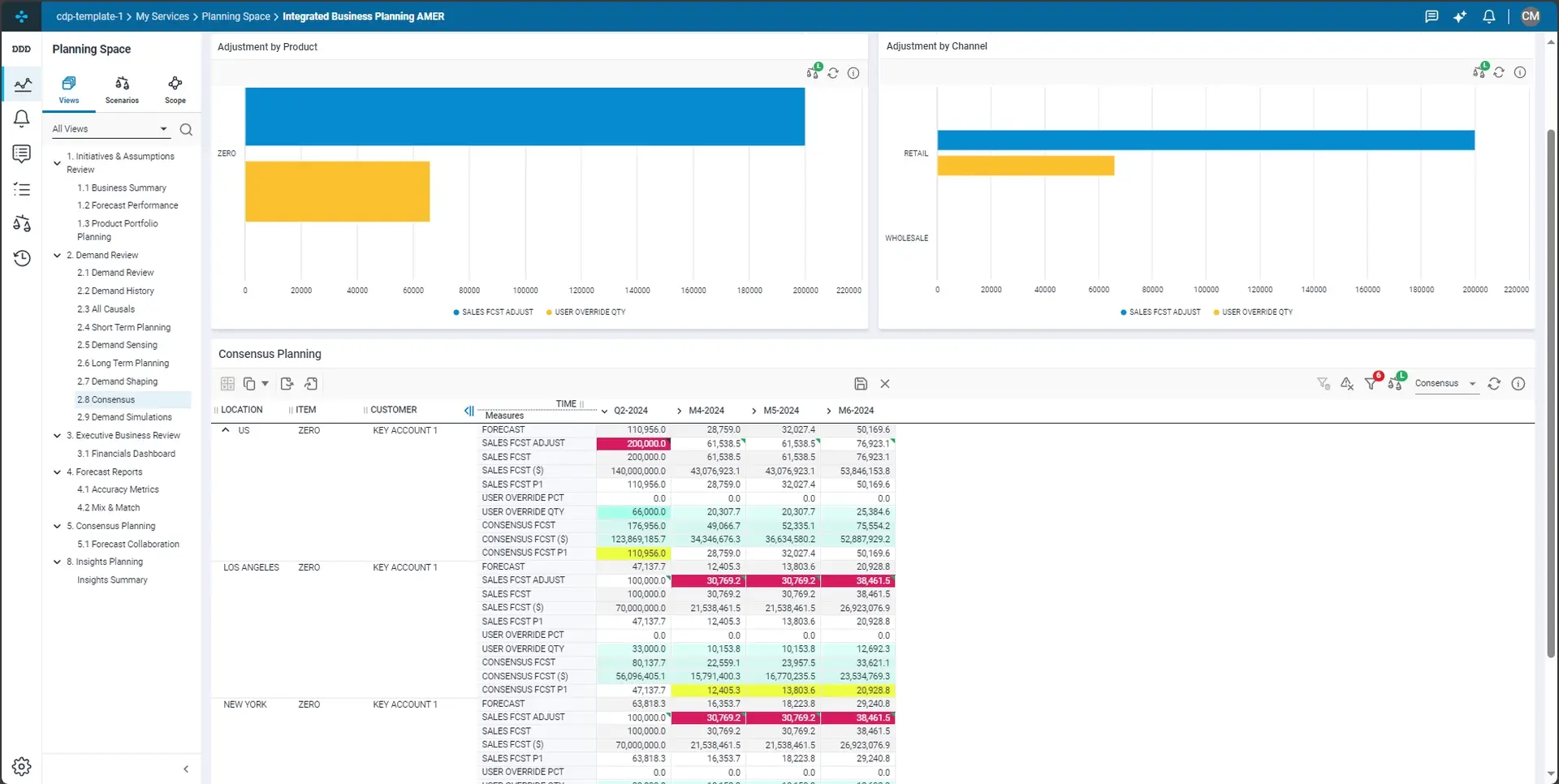
The platform is genuinely huge. It spans demand and supply planning, integrated business planning, allocation and replenishment, warehouse management, transportation management, and a multi-enterprise network layer. Blue Yonder serves more than 3,000 customers, including Coca-Cola's bottling network and Walgreens.
Key Features
- Demand and supply planning: machine-learning forecasting across large, complex, multi-echelon networks.
- Allocation and replenishment: automated ordering built for manufacturers and very large retail chains.
- Warehouse management (WMS): full warehouse operations inside the same supply chain suite.
- Transportation management (TMS): route and carrier planning across a global logistics footprint.
- Multi-enterprise network: a trading-partner layer connecting suppliers, carriers, and retailers.
- Integrated business planning: a broader planning layer that ties supply chain to financial outcomes.
User experience. Blue Yonder is built for head-office analysts and planners. Its dashboards are capable and detailed, but store-level tooling isn't the focus. Reviewers note the platform takes real investment to configure well.
Pricing. Blue Yonder pricing is not public. It uses an enterprise sales motion with a custom quote sized to global deployments. Buyers should expect a scoped procurement cycle before any cost figure appears.
Pros and cons.
| Pros | Cons |
|---|---|
| Broadest functional depth: planning, WMS, TMS, network in one suite | Implementation commonly runs 3+ months, often longer |
| Proven at global enterprise scale, 3,000+ customers | Enterprise pricing, out of reach for most mid-market budgets |
| Gartner Magic Quadrant Leader for 12 consecutive reports | Less field-level tooling for store teams |
| Strong fit for manufacturing plus retail combined | Requires skilled in-house planners to get full value |
Where Blue Yonder Genuinely Wins
To be fair, Blue Yonder is strong where it counts for very large operators. Its functional breadth is hard to match: planning, WMS, TMS, and a trading network share one data model. Its Gartner Magic Quadrant Leader status, 12 reports running, reflects real R&D depth behind that scale.
If you run a global manufacturing and retail operation with deep, multi-echelon planning needs, or you need warehouse and transportation management inside the same suite, this depth earns its cost.
Overview of LEAFIO AI
LEAFIO AI is an AI-powered retail platform built around the jobs retailers do every single day. That includes demand planning software for retail, inventory optimization, automated replenishment, planogram and shelf management, and merchandising.
The company has stayed in one lane since 2014. LEAFIO didn't start broad and narrow down to retail; it started in retail and built outward. LEAFIO's own materials cite 250+ retailers across 40+ countries, spanning grocery, pharmacy, fashion, DIY, and specialty chains.
Key Features
- AI demand forecasting: models seasonality, promotions, new product launches, and fresh goods behavior out of the box.
- Automated replenishment: multi-echelon store and warehouse ordering with most orders generated automatically
- Shelf management: merchandising software, space planning software, planogram software, execution control, and AI shelf-image recognition.
- Assortment planning software: AI matrix recommendations and smart store clustering in one module.
- Promotion management: promo planning and forecasting tied directly to inventory.
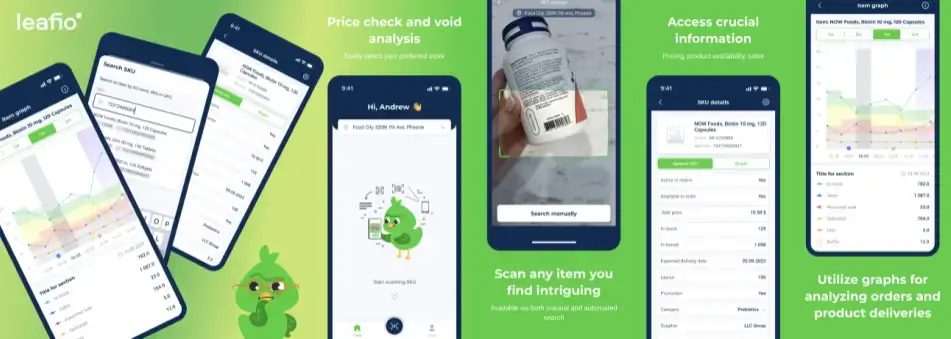
- Mobile SuperApp: a field app for merchandisers and store staff, separate from the analyst web UI.
- Ready-made connectors: prebuilt ERP and POS integrations that cut implementation time.
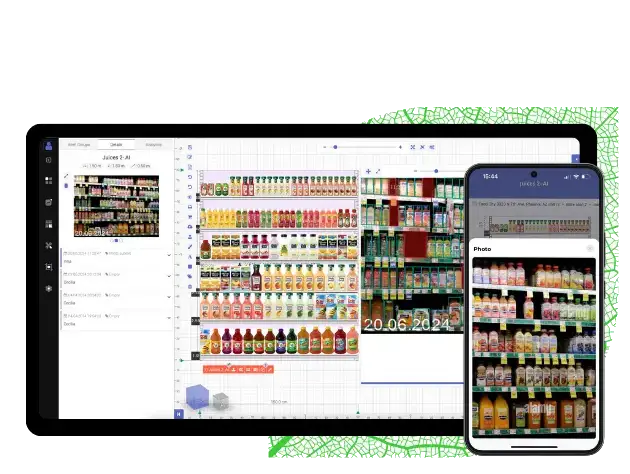
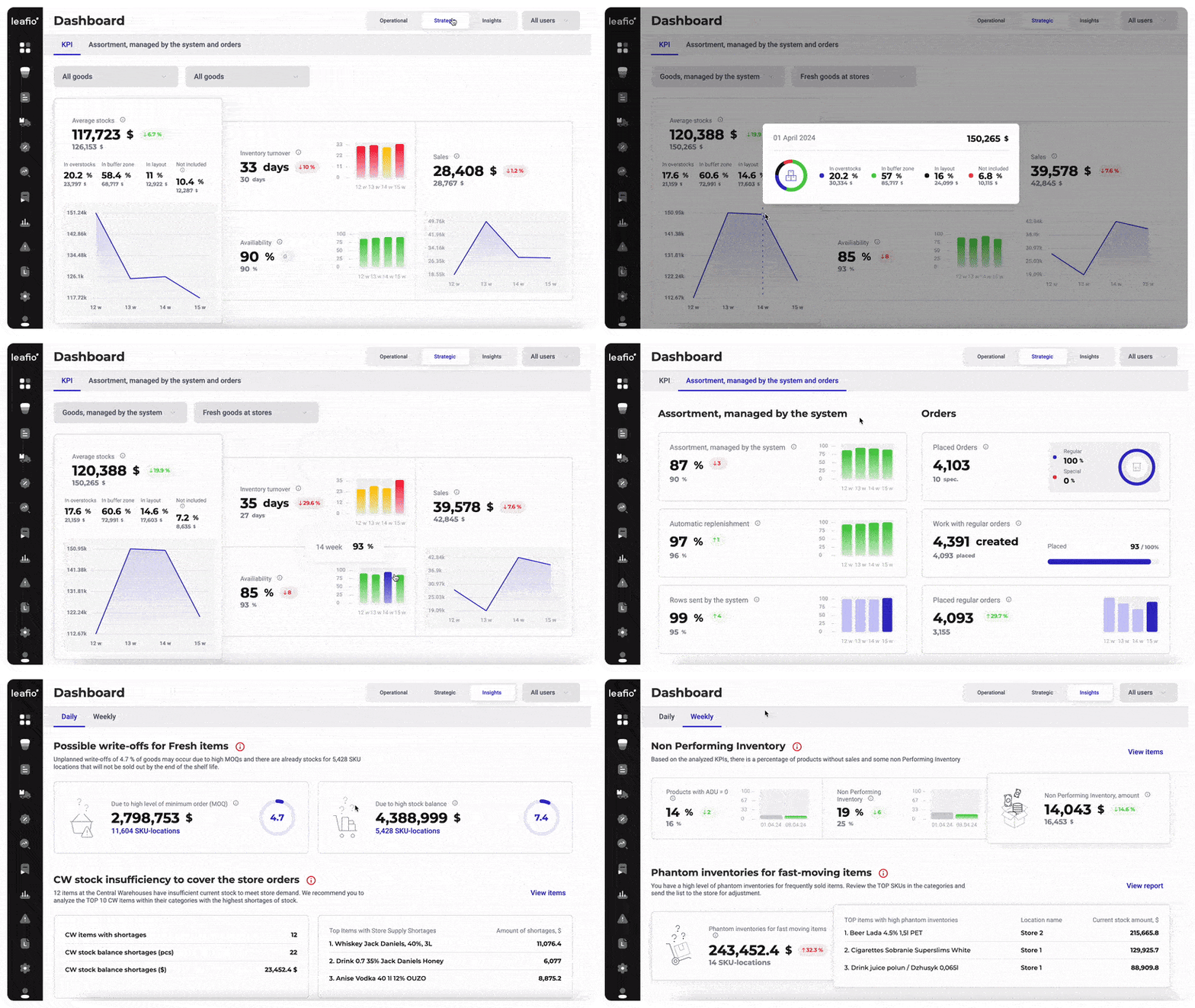
User experience. LEAFIO splits its interface by role. Planners use detailed web dashboards, while field teams use the mobile SuperApp. Reviewers consistently praise the analytics depth and ease of use. The clearest complaint is slower loading on very large datasets.
Pricing. LEAFIO AI's pricing has two components: a one-time implementation fee and an ongoing subscription that scales with store count and SKU volume, quoted on request with a demo available. There is no public free trial, but the sales cycle is lighter than an enterprise procurement.
Pros and cons.
| Pros | Cons |
|---|---|
| Mid-market-first design for 50–1,000+ store networks | Pricing is not published; you need a quote |
| Planogram, replenishment, and demand planning in one platform | Smaller vendor than the largest enterprise suite players |
| Faster, retail-oriented implementation | Loading can slow on very large datasets |
| Strong independent reviews: G2 5.0/5, 30+ reviews | Less warehouse/transportation depth than a full enterprise suite |
| Mobile SuperApp built for store-level field teams |
How LEAFIO AI Makes the Enterprise Stack Accessible
Picture a 60-store grocery chain trying to buy Blue Yonder's full stack. The functions exist, but the internal planning team and the rollout timeline usually don't, and that gap is exactly what stalls the project before it starts. LEAFIO packages the same functional territory into something that a chain can actually deploy this year.
Feature-by-Feature Comparison
I'll compare the two platforms across the areas that drive a real buying decision. In any LEAFIO vs. Blue Yonder call, both are capable systems, so the question is fit, not whether a feature exists.
Demand Planning and Forecasting
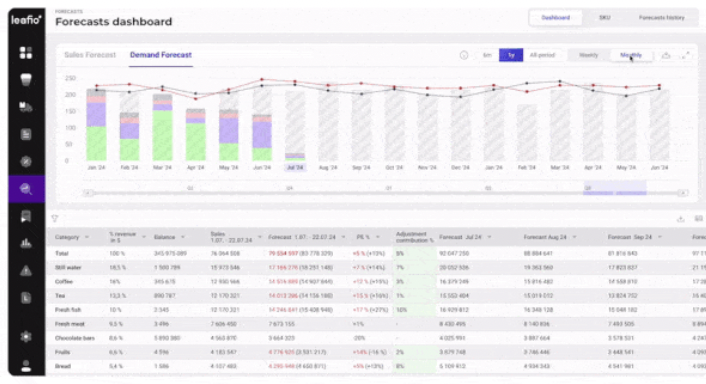
Blue Yonder's forecasting engine is mature and sophisticated. It ingests many demand signals and applies machine learning to large, complex, multi-echelon scenarios. Reviewers consistently praise its accuracy at scale. The trade-off is effort: getting the most out of it takes time and skilled planners.
LEAFIO's demand planning is built around retail realities from the start. It models seasonality, promotions, new-product launches, and fresh-goods behavior with far less configuration. In my view, LEAFIO wins on speed-to-value and retail fit, while Blue Yonder wins on raw configurability for the most complex global networks.
Replenishment and Inventory Optimization
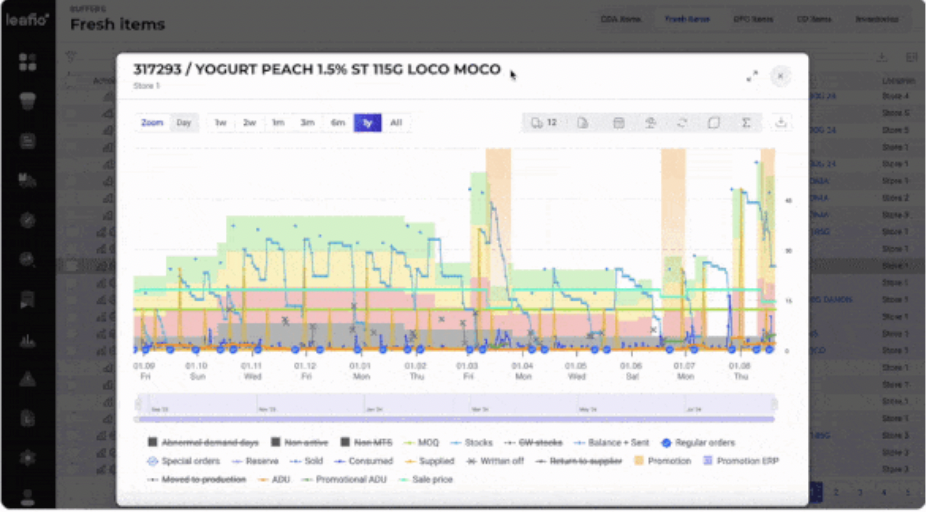
Both platforms automate ordering and balance stock across the network. Blue Yonder offers deep allocation and replenishment inside a much wider planning suite, which suits manufacturers and very large retailers running complex distribution.
LEAFIO focuses tightly on retail replenishment, with close attention to fresh inventory and shelf life. One LEAFIO customer reported a 10% increase in sales and a 15% boost in turnover. The same rollout delivered an 11% reduction in stock and a 98% SKU service level. Results vary by retailer, but the pattern holds: more sales carried on less stock.
Planogram and Merchandising
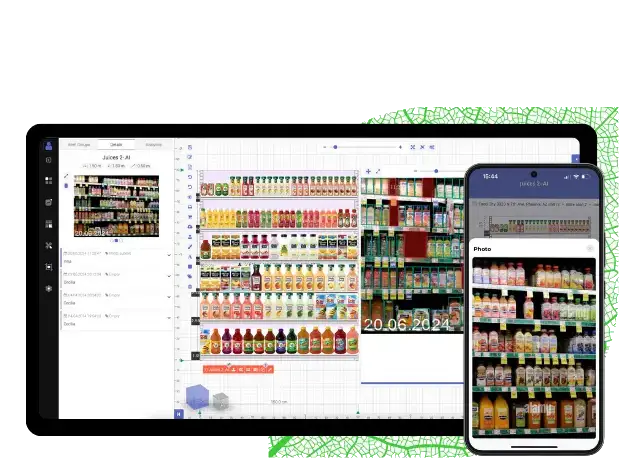
Ask a Blue Yonder rep about shelf compliance and you'll get a shorter answer than you would about warehouse or transportation modules, because it just isn't the headline. The platform's strength sits upstream, in planning and execution across the broader supply chain.
LEAFIO's planogram and shelf efficiency tools sit at the core of the platform, with auto-planogram generation and AI shelf image recognition built in. If shelf and category execution matters to your business as much as forecasting does, LEAFIO has the clear edge here.
Deployment and Time to Value
Blue Yonder implementations are large projects by design, commonly running three months or more, often longer, with significant customization required. LEAFIO is built to go live in weeks to a few months, using ready-made connectors instead of custom integration work. For a mid-market retailer, that difference can mean seeing results this quarter instead of next year.
Usability and Field Execution
Store managers rarely open Blue Yonder. That's not a knock; it's built for head office analysts and planners, and it does that job well. LEAFIO adds the mobile SuperApp so merchandisers and store staff act on the same data in the field, not just planners at a desk. This matters more than people expect when adoption depends on store teams.
Pricing and Trials
Neither vendor publishes pricing; both quote per deployment. In practice, Blue Yonder is priced for the largest enterprise budgets, while LEAFIO AI is positioned for mid-market and growing enterprise budgets, so total cost of ownership is usually more accessible. LEAFIO's pricing splits into a one-time implementation fee plus an ongoing subscription scaled to store count and SKU volume. Always request a tailored quote based on your scope.
Support and Reviews
On G2, Blue Yonder's Demand Planning product scores 4.1 out of 5 across 30 reviews, and close to 70% of those reviews come from enterprise users. LEAFIO scores 5.0 out of 5 across 30+ reviews, with strong marks for support and partnership. LEAFIO reviewers note slower load times on very large data sets; Blue Yonder reviewers point most often to long setup and the in-house expertise needed to run them well.
Where LEAFIO AI Pulls Ahead for Mid-Market Retailers
A heavy enterprise suite isn't the only path for a mid-market retailer, and for most growing chains it isn't even the practical one. LEAFIO covers the same ground that matters day to day, forecasting demand, keeping orders flowing, and getting planograms onto the floor sized for a business you can actually run without a dedicated integration team.
Named results back this up. One LEAFIO customer reported a 10% increase in sales and a 15% boost in turnover after rollout. The same retailer saw an 11% reduction in stock alongside a 98% SKU service level. Results vary by retailer, but the pattern, more sales carried on less stock, shows up across most LEAFIO case studies.
Why LEAFIO AI May Be a Stronger Option
| Why LEAFIO AI stands out | What does it mean for a mid-market retailer? |
|---|---|
| Retail-native design | Built for grocery, pharmacy, and shelf execution from day one |
| Faster rollout | Weeks to months, not a multi-year program |
| Shelf and planogram strength | A recognized leader in this specific niche |
| Field adoption | A mobile SuperApp for store teams, not just planners |
| Proportional pricing | Subscription quote sized to mid-market budgets |
| Stronger review footprint | G2: 5.0/5 from 30+ reviews vs 4.1/5 from Blue Yonder |
See LEAFIO AI for your retail network
If you're evaluating a Blue Yonder alternative because your rollout timeline can't stretch past a few months, book a walkthrough built around your store count and category mix.
Book a free demo →
Final Verdict: LEAFIO AI or Blue Yonder?
Scale is what decides this one, more than any single feature. A very large, global network with a dedicated planning team gets more out of Blue Yonder's breadth than a mid-market chain ever would; its Gartner track record and R&D budget are built for that tier.
Flip the scenario, though, and the calculus reverses. A retailer that needs to see forecasts turn into orders and planograms this quarter, not next year, gets more real value out of LEAFIO, even though the feature list looks similar on paper.
Here's what I've seen play out more than once: retailers shortlist Blue Yonder first for its brand, then choose LEAFIO once they weigh cost, speed, and retail fit against their actual store count. If you want to see how LEAFIO compares with other vendors, read our LEAFIO vs. RELEX comparison, or browse our guides to RELEX alternatives and o9 Solutions alternatives if a broader search for a Blue Yonder demand planning alternative led you here.
Switching doesn't have to be painful
Our implementation team has moved retailers off enterprise suites before and knows where the friction usually hides.
Talk to our team →
Switching From Blue Yonder to LEAFIO AI
Migrating off an enterprise suite sounds daunting, but a structured plan keeps it manageable. Here's the path I'd walk through with any retailer making the move.
- Map your needs: list the workflows you rely on today, forecasting, replenishment, planograms, and the gaps you want to close.
- Export your data: pull historical sales, product and store master data, and supplier terms out of Blue Yonder in a clean format.
- Plan integrations: confirm connectors to your ERP and POS systems before go-live; LEAFIO's ready-made connectors cut this step down.
- Run a pilot: start with one region or category to validate forecasts and order quality before committing further.
- Train your teams: onboard planners on the web interface and store staff on the SuperApp separately.
- Roll out in waves: expand by region or banner once the pilot proves the model works for your data.
- Track results: measure service levels, stock, and sales against your old Blue Yonder baseline.
Most retailers reach live operation in weeks to a few months, not the multi-quarter timelines common with enterprise migrations. For more detail, explore LEAFIO's inventory optimization and replenishment pages.
FAQ
Is LEAFIO AI better than Blue Yonder?
Neither is better for everyone. LEAFIO AI is usually the better fit for mid-market and growing retailers that want fast deployment, strong shelf execution, and easy adoption across store teams. Blue Yonder is better for the largest global enterprises that need the broadest planning, warehouse, and transportation suite in one platform.
What is the main difference between LEAFIO AI and Blue Yonder?
Blue Yonder is a broad enterprise supply chain suite built for global organizations with complex networks. LEAFIO AI is a retail-native platform focused on demand planning, replenishment, planograms, and merchandising, built to go live faster and cost less for mid-market chains.
How much does LEAFIO AI cost compared to Blue Yonder?
Neither vendor publishes prices; both quote per deployment. In practice, Blue Yonder is priced for the largest enterprise budgets, while LEAFIO AI is positioned for mid-market and growing enterprise budgets, so total cost of ownership is usually more accessible. LEAFIO's pricing splits into a one-time implementation fee plus an ongoing subscription scaled to store count and SKU volume.
Can I migrate from Blue Yonder to LEAFIO AI easily?
Yes. Export historical data, connect ERP and POS, and define a pilot region first. Most retailers move onto LEAFIO AI in weeks to a few months, well short of a multi-year program.
Which platform is better for planograms and shelf management?
LEAFIO AI. It treats planogram, shelf efficiency, and merchandising as a core part of the platform, with auto-planogram generation and AI shelf image recognition built in. Blue Yonder focuses more on broad supply chain planning.
Is Blue Yonder a Gartner Leader?
Yes. Blue Yonder has been named a Leader in the Gartner Magic Quadrant for Supply Chain Planning Solutions for 12 consecutive reports, and it also holds Leader status in Gartner's warehouse and transportation management quadrants.
Does LEAFIO AI work for small retail chains?
LEAFIO AI is aimed primarily at mid-market and enterprise retailers. That said, it scales down to smaller chains far better than enterprise suites like Blue Yonder, which are built around very large organizations.