The best ToolsGroup alternatives in 2026 are Leafio AI, Blue Yonder, Kinaxis, o9 Solutions, RELEX Solutions, Netstock, Anaplan, and SAP IBP, each solving different supply chain and retail planning challenges at different price points. If you're a retailer looking for software like ToolsGroup but with faster ROI, lower TCO, or retail-specific workflows like planogram management, several strong options exist. I've compared all eight based on implementation time, retail fit, pricing, and real user feedback from G2 and Gartner.
ToolsGroup is an AI-driven supply chain planning platform founded in 1993, with offices in Boston and Milan. It targets mid-market to lower-enterprise companies across consumer goods, distribution, retail, and manufacturing. Its probabilistic forecasting and demand sensing capabilities are well-regarded, but the platform was built for supply chains, not specifically for store operations. Pricing is enterprise-tier and not publicly disclosed, with a total cost of ownership that can surprise mid-market buyers.
Most people searching for ToolsGroup alternatives or an equivalent substitute for their current supply chain setup run into the same issues: long implementation timelines (6–18 months is typical), a price tag that exceeds mid-market budgets, and a lack of out-of-the-box modules for planogram management, visual merchandising, or fresh-category replenishment. This article covers eight popular ToolsGroup competitors across different segments, from enterprise giants to accessible SMB tools, so you can compare your options and find the right fit.
How I Picked the Best ToolsGroup Alternatives
I focused on solutions that solve real retail planning problems, not just generic supply chain tools with retail branding. When comparing the top ToolsGroup competitors, I prioritized platforms where the retail fit is genuine; not bolted on. Here's what I evaluated for each platform:
- Retail-specific demand forecasting: Does it handle store-level granularity, fresh categories, and seasonal volatility?
- Time-to-value: how long before the system delivers measurable results?
- Retail workflow coverage: replenishment, planogram, merchandising, on-shelf availability
- Mid-market accessibility: transparent pricing and implementation feasible for 50–500 stores
- User reviews: G2 and Gartner ratings from actual practitioners, not vendor claims
- ERP and POS integration — compatibility with SAP, Oracle, 1C, Microsoft Dynamics, and others
- Vertical fit: grocery, pharmacy, fashion, specialty retail requirements
| Solution | Best for | Price range | Free trial? | Key difference vs ToolsGroup |
|---|---|---|---|---|
| Leafio AI | Mid-market retailers, 50–1000+ stores | Custom SaaS | ✅ Demo | Retail-first platform with planogram + merchandising; 3–6 month implementation |
| Blue Yonder | Fortune 500 retailers & CPG, $1M+ budget | $500K–$5M+/yr | ❌ | Broader enterprise SC suite; even more expensive and complex |
| Kinaxis | Enterprise manufacturers & distributors | $300K–$2M+/yr | ✅ Demo | Concurrent planning; stronger in manufacturing than retail |
| o9 Solutions | Fortune 500 seeking demand-to-finance IBP | $500K–$3M+/yr | ❌ | Wider IBP with P&L integration; modern tech stack |
| RELEX Solutions | Enterprise retailers, 500+ stores | $200K–$2M+/yr | ❌ | Deepest retail specialization among enterprise vendors |
| Netstock | Distributors & wholesalers, 10–200 locations | $1K–$5K/mo | ✅ Demo | Much more affordable; focused on distribution, not retail |
| Anaplan | Enterprises connecting FP&A + SC planning | $150K–$1M+/yr | ❌ | Connected planning (FP&A-first); weaker on SC operational depth |
| SAP IBP | Large enterprises on SAP ERP/S4HANA | $500K–$5M+/yr | ❌ | Native SAP ecosystem; overkill for non-SAP companies |
Why Consider Alternatives to ToolsGroup?
Implementation Takes Too Long (and Costs Too Much)
A typical ToolsGroup rollout runs 6–18 months. For a mid-size retailer managing seasonal assortments, that timeline means missing at least one full planning cycle before the system is operational. Add the cost of external consultants — which the implementation almost always requires — and the total bill climbs well above the license fee. If you're running 50–200 stores and need results within a quarter, this pace doesn't work.
Limited Support for Retail-Specific Workflows
ToolsGroup was built around supply chain planning for consumer goods and distribution. Store-level replenishment logic, on-shelf availability tracking, and multi-format retail support are not native strengths. Retailers often end up paying for custom development to bridge the gap between what ToolsGroup does out of the box and what their operations actually need.
No Planogram or Merchandising Capabilities
This is the clearest gap. ToolsGroup has no planogram management, shelf optimization, or visual merchandising automation. If you need to connect inventory decisions to physical shelf space — and most grocery and pharmacy operators do — you'll need a separate system. That means additional cost, integration work, and data silos.
Poor Fit for Fashion and Fresh Categories
Short shelf life products and fast-rotating fashion assortments require a different forecasting logic: high SKU count, rapid markdown cycles, and tight replenishment windows. ToolsGroup's probabilistic forecasting wasn't designed with these verticals as primary use cases. Retailers in fresh food or apparel consistently report that the platform requires significant configuration to handle their category dynamics.
Mid-Market Companies Get Left Behind
ToolsGroup positions itself as a mid-market option, but its pricing and implementation complexity align more with enterprise expectations. Companies with 50–300 stores often find they're not a priority for vendor support or product roadmap investment. Smaller accounts get less attention, and the customization they need costs extra.
Top 8 Alternatives to ToolsGroup
1. LEAFIO AI
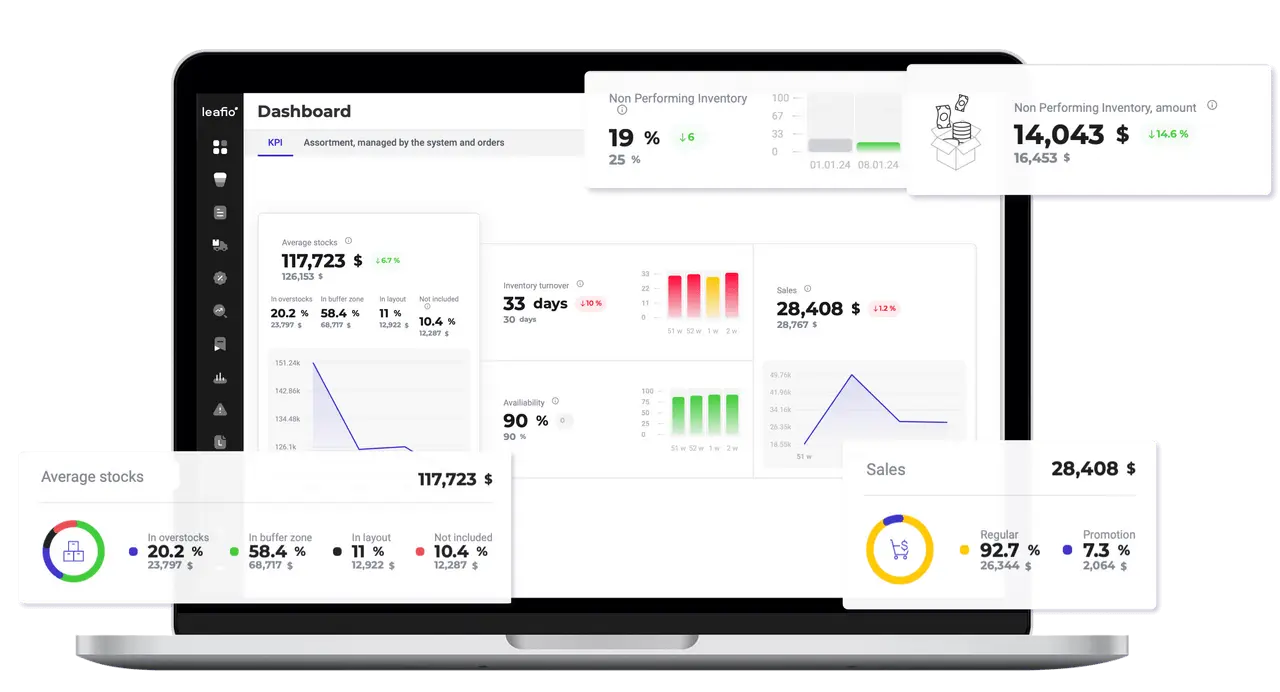
LEAFIO AI is a retail-first planning platform built specifically for grocery, pharmacy, and fashion retailers with 50 to 1,000+ stores. Unlike ToolsGroup, which started as a supply chain tool and added retail modules, LEAFIO AI was designed from day one around store operations. The platform covers the full retail planning cycle: demand forecasting, automated replenishment, planogram management, and visual merchandising, all in one system.
I find LEAFIO's strongest differentiator is its implementation timeline. Where ToolsGroup typically takes 6–18 months to go live, LEAFIO AI's standard rollout runs 3–6 months. For mid-market retailers that need to hit this season's targets, that difference is operational.
Key features:
- AI-driven demand planning with store-level and SKU-level granularity — see Leafio demand planning software
- Automated replenishment with shelf capacity and supplier lead time logic — replenishment software
- Inventory optimization with real-time KPIs: out-of-stock rate, inventory turnover, on-shelf availability
- Planogram management and shelf optimization — functions ToolsGroup doesn't offer
- Visual merchandising automation with compliance tracking
- Multi-format support: grocery, pharmacy, fashion, specialty retail
- ERP connectors for SAP, Oracle, 1C, Microsoft Dynamics — typically 2–4 weeks to integrate
Pros and cons:
| ✅ Pros | ❌ Cons |
|---|---|
| Retail-specific workflows out of the box | Smaller global ecosystem than Blue Yonder or SAP |
| 3–6 month implementation vs. 6–18 months for ToolsGroup | Less coverage for manufacturing and life sciences supply chains |
| Covers demand → replenishment → planogram → merchandising in one platform | Not designed for non-retail verticals (CPG manufacturers, distributors) |
| Significantly lower TCO for mid-market retailers | |
| Real-time on-shelf availability and inventory KPIs |
How it compares to ToolsGroup:
- ✅ Better at: Retail-specific demand planning, planogram and shelf optimization, fresh and fashion category management, mid-market fit, time-to-value, TCO
- ❌ Worse at: Manufacturing supply chain depth, life sciences verticals, global enterprise ecosystem coverage
Real results from LEAFIO AI customers:
- Retailers using LEAFIO AI report average stock reduction of 15–20% within the first two quarters after go-live
- Typical customers see up to 25% reduction in lost sales, with ROI achieved within 6 months of implementation
Best for: Mid-market grocery, pharmacy, and fashion retailers with 50–500 stores that need a replacement for ToolsGroup without an 18-month implementation and an enterprise-sized budget.
Bottom line: Leafio AI is the most direct ToolsGroup alternative for retailers. It covers more of the store planning cycle and gets you to ROI faster at a lower total cost.
Ready to see Leafio AI in action? Leafio works with mid-market retailers across grocery, pharmacy, and fashion. Implementation takes 3–6 months, not 18. You can see the platform applied to your specific category mix and store count before committing. Book a free demo →
2. Blue Yonder
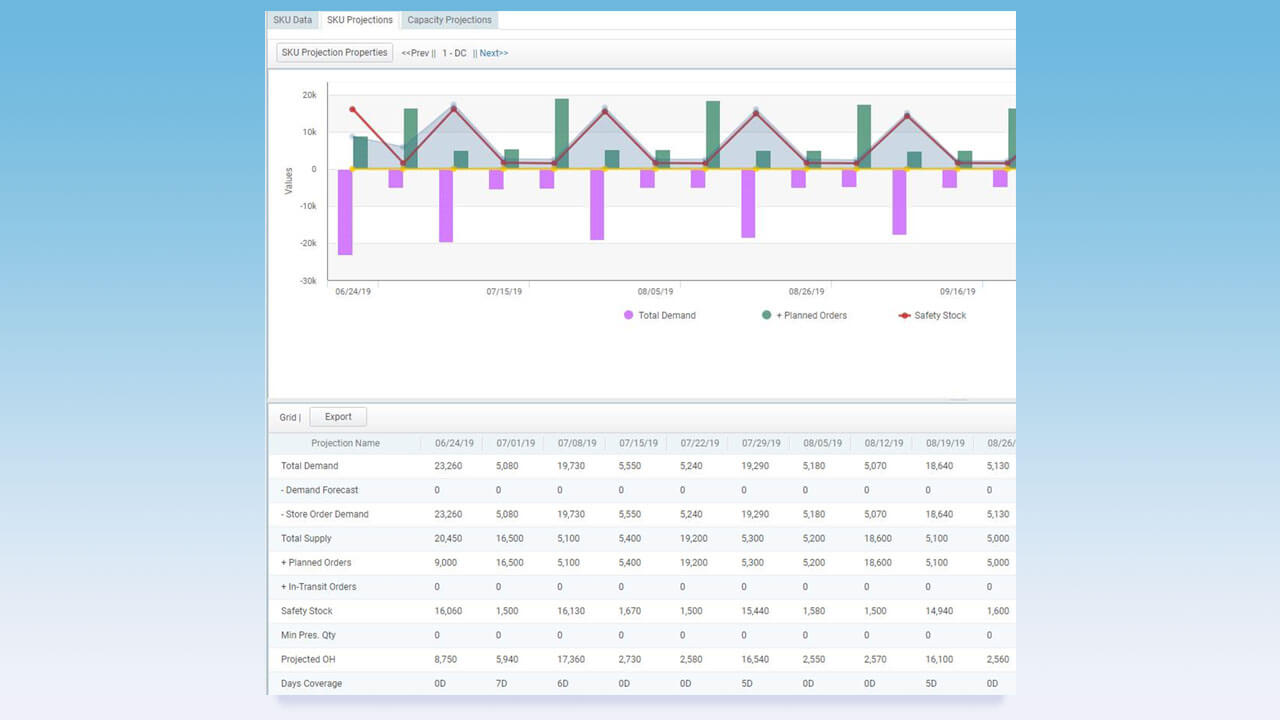
Blue Yonder (backed by Panasonic) is one of the largest supply chain planning vendors in the world. Its Luminate Planning suite covers demand planning, replenishment, inventory optimization, and logistics at enterprise scale. This is the tool Fortune 500 retailers and CPG companies reach for when they need deep SC functionality and have the budget to match.
As a ToolsGroup alternative, Blue Yonder makes sense only if you're stepping up in scale. It solves more complex global supply chain problems — but it costs significantly more and takes longer to implement. I've seen estimates of 12–24 months for full deployment and $500K–$5M+ in annual license fees before consulting costs.
Key features:
- Enterprise demand sensing and probabilistic forecasting
- AI-driven replenishment and inventory positioning
- Omnichannel fulfillment and logistics optimization
- Strong retailer and CPG integration ecosystem
- Workforce management and labor planning modules
Pros and cons:
| ✅ Pros | ❌ Cons |
|---|---|
| Industry-leading enterprise SC functionality | $500K–$5M+/year pricing — out of reach for mid-market |
| Strong brand and ecosystem (Panasonic-backed) | 12–24 month implementation timeline |
| Broad coverage across retail, CPG, logistics | Requires large consulting team to implement |
| Good retail coverage for large networks | Not mid-market friendly in price or complexity |
How it compares to ToolsGroup:
- ✅ Better at: Enterprise scale, SC breadth, brand recognition, global operations support
- ❌ Worse at: Price accessibility, implementation speed, mid-market fit, planogram/merchandising depth
Best for: Fortune 500 retailers and CPG companies with $1M+ software budgets and complex global supply chains. Not a practical ToolsGroup replacement for mid-market.
Bottom line: Blue Yonder is bigger and broader than ToolsGroup — but also more expensive and harder to implement. If scale is your problem, it's worth evaluating. If cost and speed are your concerns, look elsewhere.
3. Kinaxis
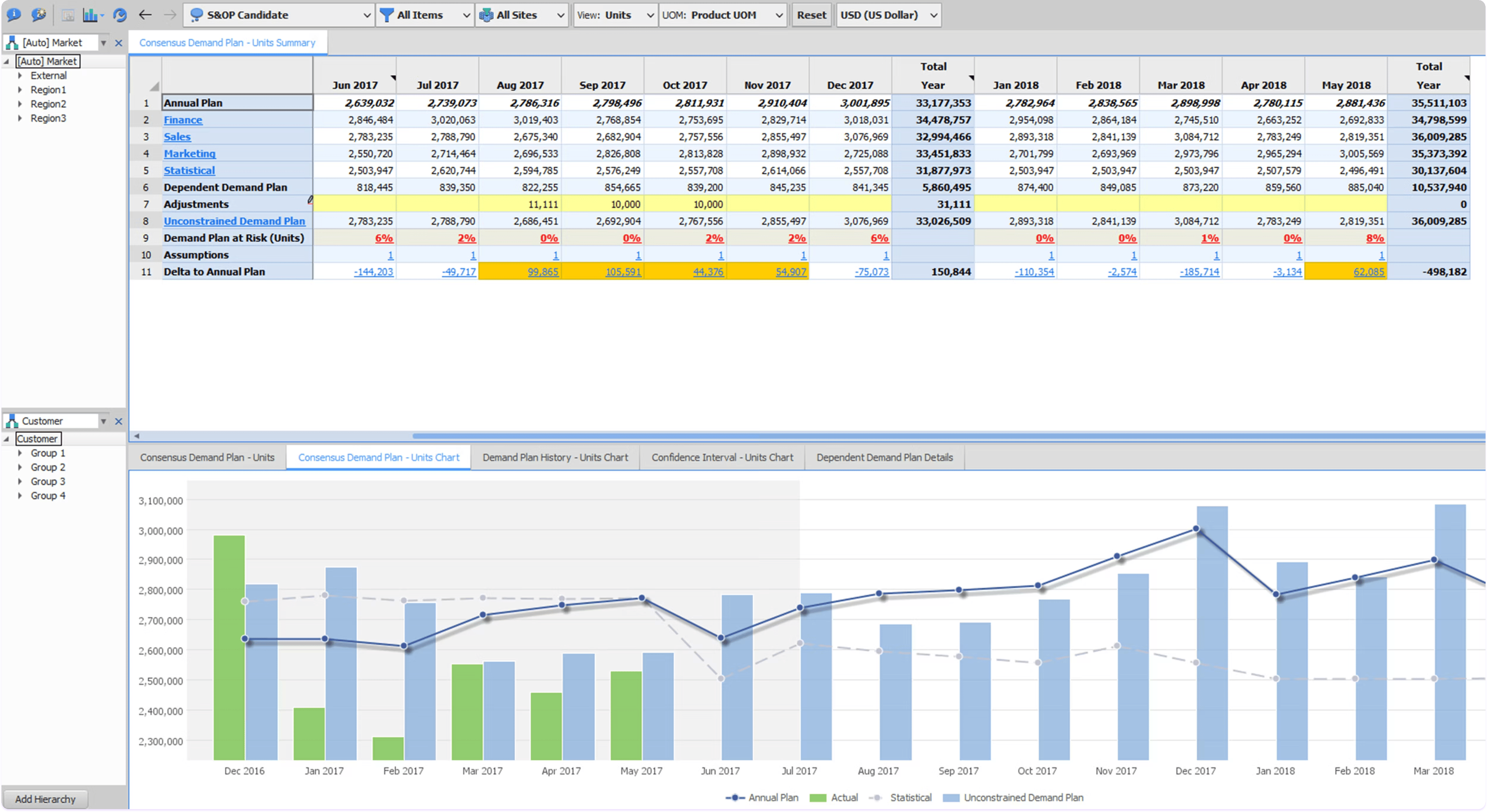
Kinaxis RapidResponse is built around what the company calls "concurrent planning" — a model where every layer of the supply chain (supply, demand, inventory, capacity) is visible and plannable at the same time. This gives enterprise manufacturers and distributors exceptional scenario modeling capabilities. For retailers evaluating ToolsGroup alternatives, Kinaxis is a credible option if your primary need is supply chain visibility and what-if analysis.
That said, Kinaxis's roots are in manufacturing and aerospace, not store operations. If you're a grocery or pharmacy retailer needing planogram integration or store-level replenishment logic, Kinaxis won't give you those out of the box.
Key features:
- Concurrent planning across supply, demand, inventory, and capacity
- Real-time what-if scenario modeling
- Supply chain risk management and disruption response
- Strong enterprise ERP integrations (SAP, Oracle)
- Active product roadmap with regular AI feature releases
Pros and cons:
| ✅ Pros | ❌ Cons |
|---|---|
| Industry-leading scenario planning and SC visibility | $300K–$2M+/year pricing |
| Strong in manufacturing, aerospace, automotive | Steep learning curve; less intuitive UI |
| Active roadmap and good customer success reviews | Weaker retail-specific functionality |
| Better what-if modeling than ToolsGroup | Not suited for planogram or merchandising needs |
How it compares to ToolsGroup:
- ✅ Better at: Supply chain visibility, scenario modeling, manufacturing depth, enterprise integrations
- ❌ Worse at: Retail-specific UX, planogram and merchandising, mid-market accessibility, implementation speed
Best for: Enterprise manufacturers and distributors with complex global supply chains who need real-time scenario planning and disruption modeling.
Bottom line: Kinaxis is a top-rated supply chain tool — but it's built for manufacturing, not retail store operations. It's a lateral move from ToolsGroup for most mid-market retailers.
4. o9 Solutions
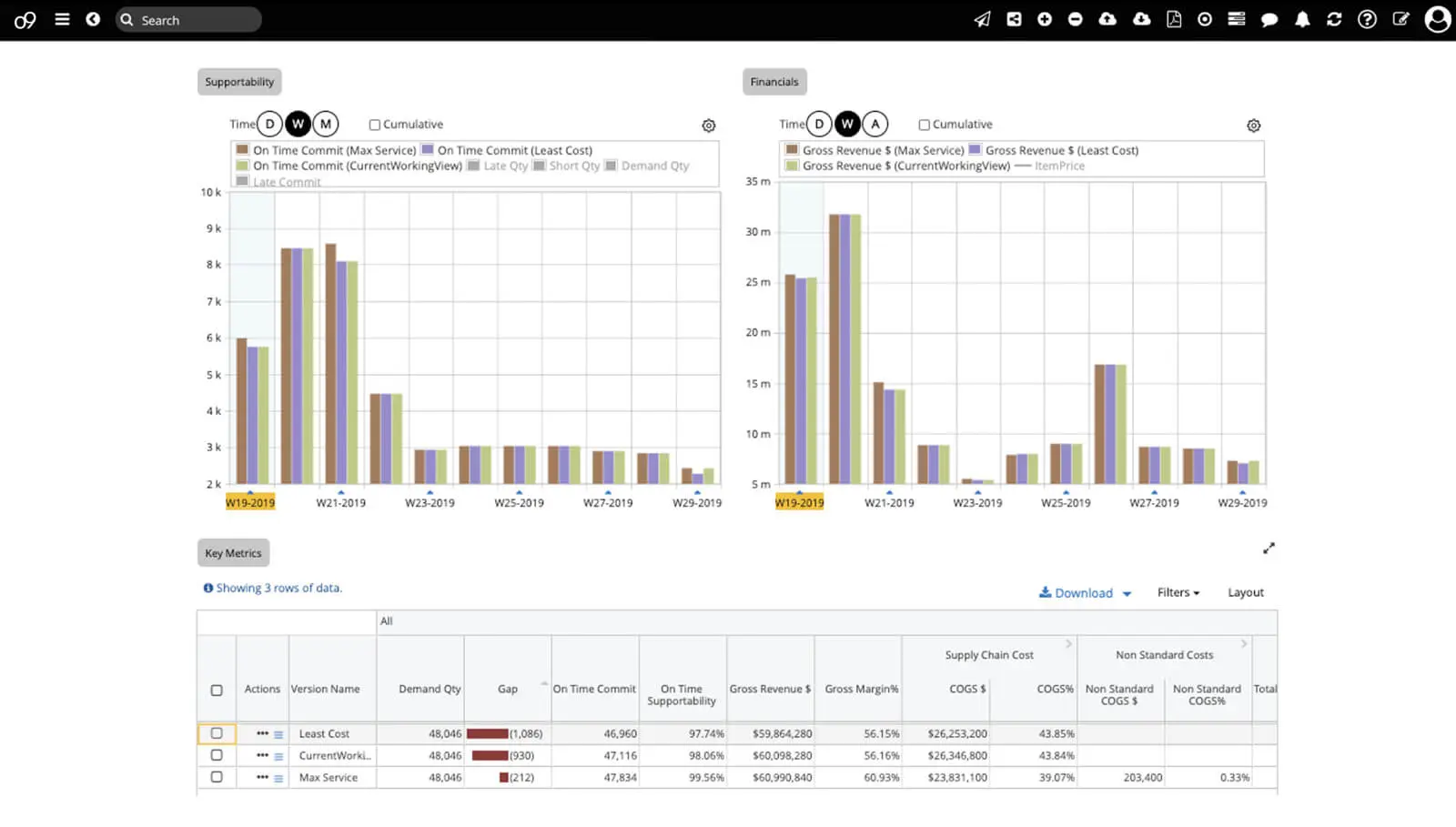
o9 Solutions targets Fortune 500 companies that want a single platform connecting demand planning, supply chain, and financial planning (FP&A). Its modern tech stack and collaborative planning workflows have made it a popular replacement for legacy SAP and Oracle IBP implementations. Among ToolsGroup alternatives, o9 is the most capable option if integrated business planning—demand through P&L—is your primary requirement.
For retail-specific workflows, o9 is less compelling. It covers demand planning and supply chain planning well, but store-level replenishment logic and planogram management are not its focus.
Key features:
- Integrated business planning from demand to financial P&L
- Modern, configurable UI with collaborative workflows
- AI-driven demand sensing and scenario modeling
- Strong analytics and data visualization
- Enterprise ecosystem integrations (SAP, Salesforce, Oracle)
Pros and cons:
| ✅ Pros | ❌ Cons |
|---|---|
| Unified demand-to-finance planning in one platform | $500K–$3M+/year pricing |
| Modern UI vs. ToolsGroup's more dated interface | Complex customization requires expert team |
| Strong Fortune 500 brand recognition | Long implementation timeline |
| Good collaborative planning workflows | Not retail-store focused |
How it compares to ToolsGroup:
- ✅ Better at: IBP breadth, financial planning integration, modern tech stack, UI quality
- ❌ Worse at: Retail-specific replenishment automation, planogram features, mid-market fit, pricing for smaller retailers
Best for: Fortune 500 companies seeking a unified demand-to-finance IBP platform as a ToolsGroup replacement or SAP IBP alternative.
Bottom line: o9 is a strong enterprise IBP platform — but it's priced and scoped for large enterprises. Mid-market retailers should consider it only if financial planning integration is a top priority.
See o9 Solutions on G2 → | Read our full o9 Solutions alternatives →
5. RELEX Solutions
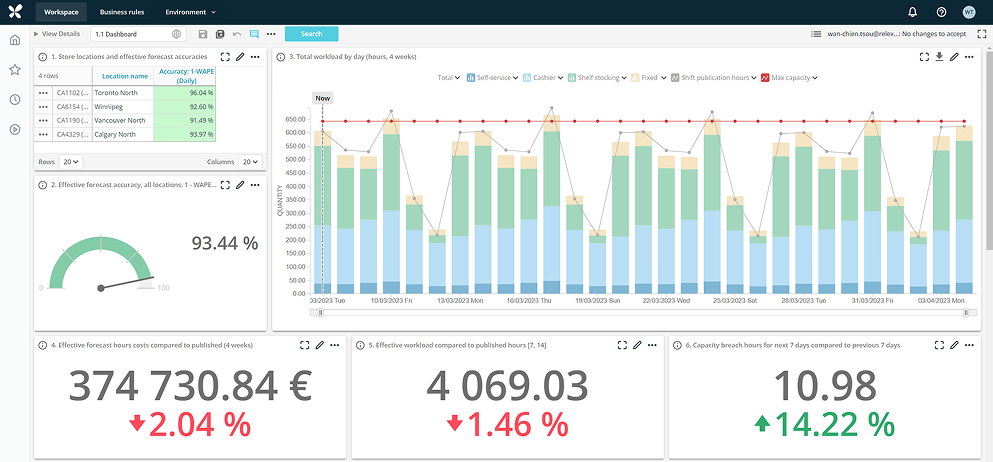
RELEX Solutions is the closest enterprise-grade ToolsGroup alternative for retailers. It covers demand forecasting, replenishment, space management, and workforce planning — all with strong retail-specific logic for fresh food, grocery, and specialty retail. Among the platforms on this list, RELEX comes closest to matching Leafio's retail focus at enterprise scale.
The trade-off is price and implementation time. RELEX starts at $200K/year and typically takes 12–18 months to deploy. For retailers with 500+ stores and the budget to match, it's a well-rated option. For mid-market retailers looking for a faster, more affordable ToolsGroup replacement, Leafio is a better fit.
Key features:
- Retail-specific demand forecasting, including fresh food and short shelf life
- Automated replenishment with store-level logic
- Space management and planogram capabilities
- Workforce planning and labor scheduling
- Strong customer support reputation on G2
Pros and cons:
| ✅ Pros | ❌ Cons |
|---|---|
| Deepest retail specialization among enterprise vendors | $200K–$2M+/year pricing |
| Strong fresh food and grocery capabilities | 12–18 month implementation timeline |
| Good customer support and satisfaction ratings | Expensive and complex for mid-market (50–200 stores) |
| Covers workforce planning alongside SC planning | Less flexible than Leafio for rapid deployment |
How it compares to ToolsGroup:
- ✅ Better at: Retail-specific forecasting, fresh food handling, space management, workforce planning
- ❌ Worse at: TCO for mid-market, implementation speed, accessibility for 50–200 store networks
Best for: Enterprise grocery and specialty retailers with 500+ stores, an 18-month runway, and a budget for a full retail planning overhaul.
Bottom line: RELEX is an excellent ToolsGroup alternative for large retail enterprises but it shares some of the same pricing and implementation challenges. For a detailed comparison, see Leafio vs. RELEX → or our top RELEX alternatives →.
6. Netstock
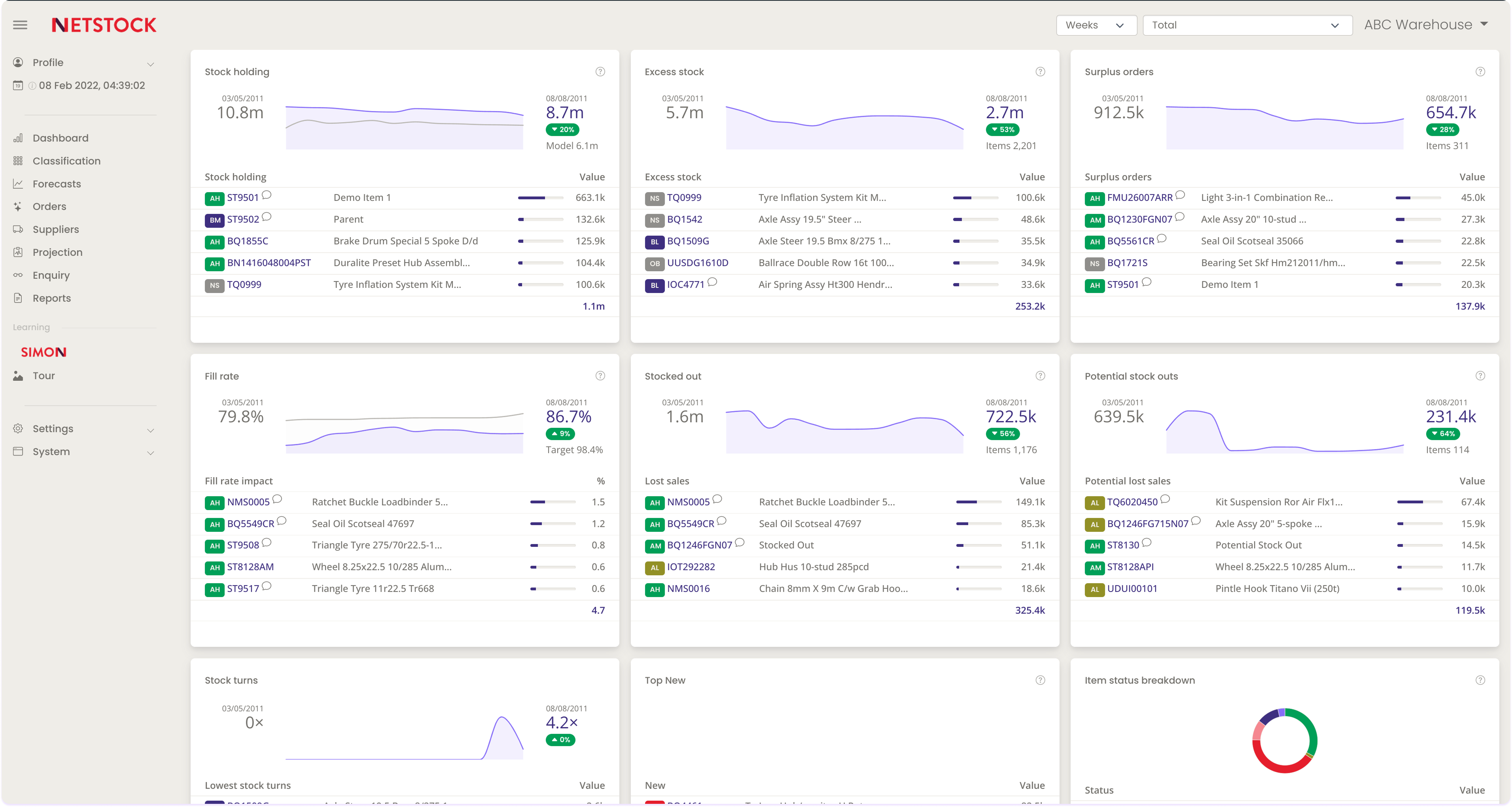
Netstock is a focused inventory planning tool built for distributors and wholesalers with 10–200 locations. It's much more affordable than ToolsGroup ($1K–$5K/month), deploys quickly, and integrates well with mid-market ERPs like Sage, SAP Business One, and NetSuite. For distribution-focused businesses evaluating software like ToolsGroup at a fraction of the price, Netstock is worth a look.
For retailers, especially grocery or pharmacy networks, Netstock doesn't offer the store-level replenishment logic, planogram management, or retail-vertical depth you need. It's a solid tool in its lane, but that lane is distribution, not retail store operations.
Key features:
- Inventory optimization and reorder automation for distributors
- Demand forecasting with ERP sync
- Pre-built connectors: Sage, SAP Business One, NetSuite, SYSPRO
- Intuitive UI with fast implementation (weeks, not months)
- Affordable SaaS pricing for SMB and lower mid-market
Pros and cons:
| ✅ Pros | ❌ Cons |
|---|---|
| Accessible price ($1K–$5K/mo) | Limited retail-specific features |
| Fast implementation vs. ToolsGroup or RELEX | No planogram or merchandising capabilities |
| Good ERP integrations for distribution | Less sophisticated forecasting for retail verticals |
| Simple, intuitive UI | Not built for grocery, pharmacy, or fashion operations |
How it compares to ToolsGroup:
- ✅ Better at: Affordability, implementation speed, ERP variety for distribution
- ❌ Worse at: Retail workflows, planograms, multi-format retail support, forecasting sophistication
Best for: Distributors and wholesalers with 10–200 locations looking for an affordable ToolsGroup replacement focused on inventory and reorder automation.
Bottom line: Netstock is a strong distribution tool, not a retail planning platform. The right fit if you're a wholesaler; the wrong fit if you run grocery or pharmacy stores.
See Netstock on G2 → | Read our top Netstock alternatives →
7. Anaplan
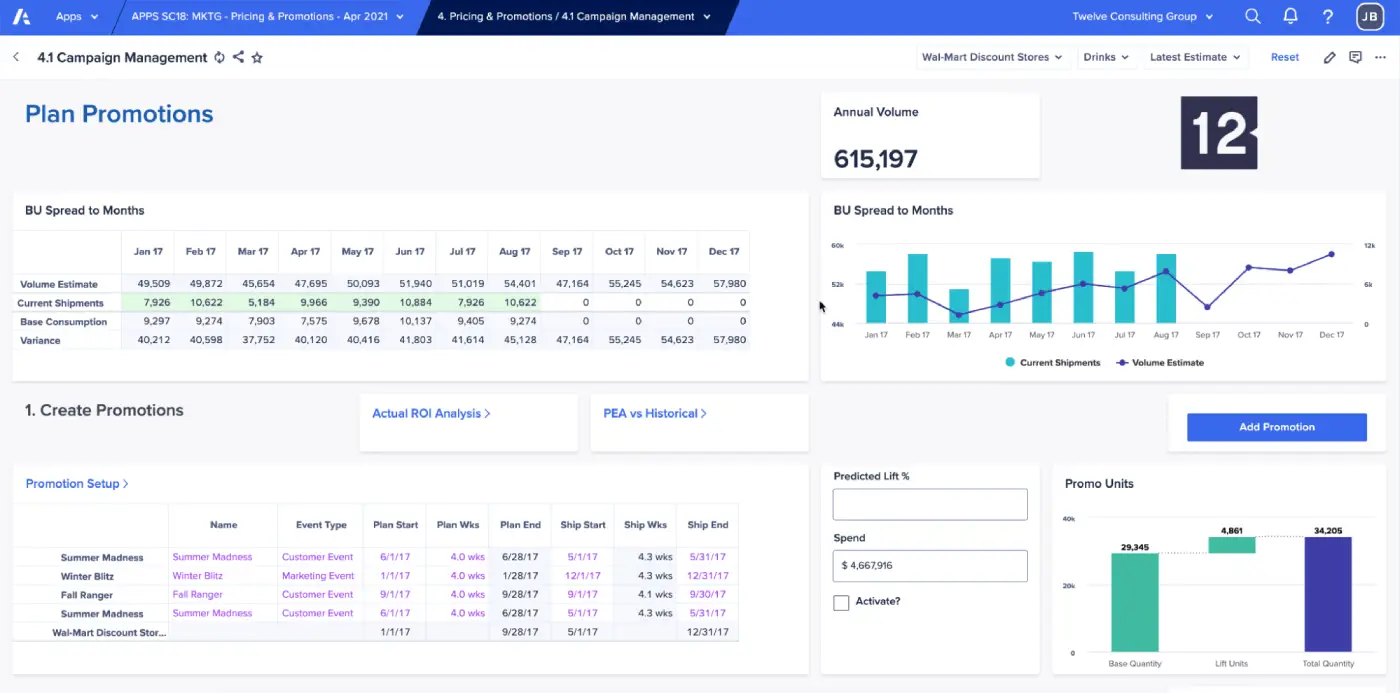
Anaplan is primarily a connected planning platform focused on FP&A — financial planning and analysis — with supply chain modules added on top. Enterprise companies use it to connect finance and operations planning — revenue, costs, headcount, and supply chain — in one model. Among ToolsGroup alternatives, it's the most financially-oriented option.
On the supply chain side, Anaplan's demand sensing and replenishment automation lag behind purpose-built SC tools. Retail-specific logic — store-level forecasting, planogram integration, fresh category handling — isn't where Anaplan invests. Users on G2 consistently flag the platform's complexity and the need for Anaplan-certified experts to build and maintain models.
Key features:
- Connected financial and operational planning (FP&A + SC)
- Collaborative scenario modeling across finance and operations
- Flexible, configurable modeling environment
- Scalable architecture for enterprise companies
- Integration with CRM, ERP, and BI systems
Pros and cons:
| ✅ Pros | ❌ Cons |
|---|---|
| Best-in-class financial planning integration | $150K–$1M+/year pricing |
| Flexible modeling for complex enterprise structures | Requires Anaplan-certified experts to configure |
| Strong collaboration across finance and operations | Steep learning curve |
| Good enterprise brand recognition | Weaker on supply chain operational automation |
How it compares to ToolsGroup:
- ✅ Better at: Financial planning integration, FP&A depth, collaborative modeling, enterprise brand
- ❌ Worse at: Retail-specific replenishment, planogram automation, operational supply chain depth, mid-market pricing
Best for: Enterprise companies that need to connect financial and operational planning in one platform, not a substitute for ToolsGroup if replenishment and demand sensing are your core needs.
Bottom line: Anaplan is a finance-first platform with supply chain features layered on top. It's not the right ToolsGroup replacement for retailers focused on store-level operations.
8. SAP IBP
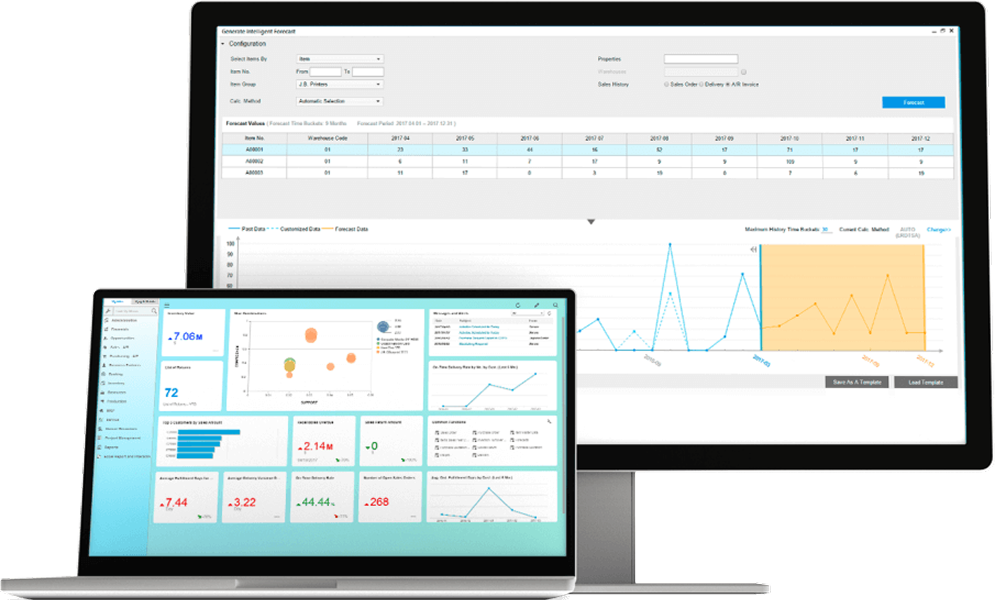
SAP Integrated Business Planning is the logical choice for large enterprises already running SAP ERP or S/4HANA. It offers native integration with the SAP ecosystem, with no data connectors to build and no translation layer, which is a real advantage when your operations already live in SAP. For retailers not on SAP, it's a different story: the implementation complexity and cost ($500K–$5M+/year) make SAP IBP one of the most expensive ToolsGroup alternatives on this list.
G2 users praise its enterprise-grade reliability and deep SAP integration. They also consistently flag the implementation weight: it typically takes 12–18+ months, requires a large SAP-certified team, and delivers a system that's powerful but hard to adapt quickly.
Key features:
- Native SAP ERP and S/4HANA integration
- Demand planning, supply network planning, and sales & operations planning
- Enterprise-grade security and compliance
- Mature product with SAP's global support network
- Strong for manufacturing, CPG, and large retail enterprises
Pros and cons:
| ✅ Pros | ❌ Cons |
|---|---|
| Unmatched SAP ecosystem integration | $500K–$5M+/year among the most expensive options |
| Enterprise reliability and security | 12–18+ month implementation |
| Strong for companies already on SAP | Impractical for companies not on SAP |
| Large global support network | Not retail-store focused; minimal planogram capability |
How it compares to ToolsGroup:
- ✅ Better at: SAP ecosystem integration, enterprise reliability, brand recognition for SAP clients
- ❌ Worse at: Mid-market accessibility, retail UX, replenishment automation, implementation speed, cost
Best for: Large enterprises already fully invested in the SAP ecosystem who need native IBP integration; not a practical ToolsGroup alternative for mid-market or non-SAP retailers.
Bottom line: SAP IBP is the right choice if you're a large SAP shop. For everyone else, the cost and complexity make it one of the harder ToolsGroup replacements to justify.
How to Choose the Right ToolsGroup Alternative
The best ToolsGroup alternative depends on your store count, vertical, budget, and how quickly you need to see results. Use this checklist to narrow your options:
- How many stores do you run, and what vertical? Grocery, pharmacy, and fashion each have different demand patterns. Solutions like Leafio and RELEX are purpose-built for these; Kinaxis and Anaplan are not.
- What is your implementation budget — and how long can you wait for ROI? If 18 months is too long, Blue Yonder, o9, RELEX, and SAP IBP are probably off the table. Leafio's 3–6 month timeline and Netstock's quick deployment are worth comparing.
- Do you need planogram, shelf optimization, or visual merchandising automation? If yes, your list is short: Leafio AI is the only platform on this list that covers the full demand → replenishment → planogram → merchandising cycle.
- Which ERP are you running, and how important is native integration? SAP shops should seriously evaluate SAP IBP. Retailers on Oracle, 1C, or Dynamics should confirm connector availability before committing to any platform.
- Do you have fresh or short shelf life categories? These require specialized forecasting logic. Leafio and RELEX handle this natively; most others require configuration.
- What kind of ongoing support do you need? Mid-market companies often report getting less attention from enterprise vendors. Confirm SLA and support tier commitments before signing.
Switching from ToolsGroup to Leafio AI
Migrating from ToolsGroup doesn't mean starting from scratch. Here's a practical sequence I'd recommend for most mid-market retailers:
- Export your historical data from ToolsGroup. Pull at least 2 years of sales history, supplier master data, SKU hierarchy, and current safety stock parameters. ToolsGroup supports CSV/Excel export; Leafio accepts standard formats directly.
- Document your current planning logic. Map your ToolsGroup demand sensing rules, reorder policies, and safety stock calculations. This becomes the baseline for Leafio configuration; you're not rebuilding from zero, you're translating.
- Connect Leafio to your ERP. Leafio has pre-built connectors for SAP, Oracle, 1C, and Microsoft Dynamics. Integration typically takes 2–4 weeks. Confirm your ERP version with the Leafio implementation team at kickoff.
- Run a pilot on 1–2 categories or one region. Grocery or pharmacy categories work well for pilots because their KPIs (out-of-stock rate, on-shelf availability) are measurable within 4–8 weeks. Start narrow, validate the numbers, then expand.
- Run both systems in parallel for 4–8 weeks. Compare Leafio's replenishment recommendations against your ToolsGroup outputs. This step is how you validate forecast accuracy before cutting over.
- Train your category managers. Leafio's UI is built for retail practitioners, not supply chain engineers. Most teams complete onboarding in 1–2 weeks. Plan training around the pilot phase so the team is ready when you expand.
- Execute the full rollout. After a successful pilot, expand to the full store network. Total timeline from kick-off to full deployment: 3–6 months versus 6–18 months for a new ToolsGroup implementation.
This path is realistic for mid-market retailers. The key is starting with a clean data export, validating with a pilot, and using the parallel-run period to build confidence before full cutover.
Switching doesn't have to be painful. Leafio's implementation team has migrated retailers from ToolsGroup and other enterprise SC platforms. The 3–6 month timeline isn't a promise — it's the typical outcome for retailers that start with clean data and a defined pilot scope. Talk to our team →
FAQ
What are the best alternatives to ToolsGroup?
The best ToolsGroup alternatives in 2026 are Leafio AI (best for mid-market retail), Blue Yonder and Kinaxis (best for enterprise SC complexity), o9 Solutions (best for IBP and financial planning integration), RELEX Solutions (best for enterprise grocery and fresh food), Netstock (best for distributors and wholesalers), Anaplan (best for connected FP&A + SC planning), and SAP IBP (best for SAP-ecosystem enterprises). For retailers with 50–500 stores looking for a direct ToolsGroup replacement with faster ROI and lower TCO, Leafio AI is the most practical option.
Is ToolsGroup suitable for mid-market retailers?
ToolsGroup markets itself to mid-market buyers, but the actual price and implementation experience lean enterprise. Total cost of ownership — including consulting fees, configuration, and ongoing support — often exceeds what a 50–300 store retailer can justify. Mid-market retailers consistently find better fit in Leafio AI (for retail-specific needs) or Netstock (for distribution-focused inventory management).
How much does ToolsGroup cost compared to alternatives?
ToolsGroup does not publish pricing; it's enterprise-tier and requires a custom quote. Based on market estimates, it competes in the $100K–$500K+/year range when consulting costs are included. Leafio AI is a custom SaaS model positioned significantly below enterprise-tier pricing for mid-market retailers. Netstock is the most affordable option at $1K–$5K/month for SMB and lower mid-market. Blue Yonder and SAP IBP sit at the top of the range at $500K–$5M+/year.
Which ToolsGroup alternative is best for grocery retail?
Leafio AI and RELEX Solutions are the strongest options for grocery retail. Leafio is the better fit for retailers with 50–500 stores — faster implementation, lower TCO, and strong fresh-category and on-shelf availability logic. RELEX is the better fit for 500+ store enterprise grocery chains with the budget for an 18-month deployment. Both handle the demand forecasting and replenishment complexity that grocery requires; Leafio adds planogram and merchandising automation that RELEX offers only partially.
Can I easily migrate from ToolsGroup to Leafio AI?
Yes. The migration is straightforward if you start with clean data. Export your historical demand data (minimum 2 years), supplier master records, and SKU hierarchy from ToolsGroup in CSV format. Leafio's pre-built ERP connectors cover SAP, Oracle, 1C, and Microsoft Dynamics. A typical migration — including pilot, parallel run, and full rollout — takes 3–6 months. The Leafio implementation team manages the process; you don't need a third-party consulting firm.
Does ToolsGroup have a free trial?
ToolsGroup does not offer a free trial. Like most enterprise SC platforms, it operates on a demo-and-scoping model. Leafio AI offers a structured product demo tailored to your retail format and store count — request one here. Netstock offers a demo for SMB and distribution companies evaluating more affordable options.
Is Leafio AI better than ToolsGroup for demand planning?
For retail-specific demand planning, yes, particularly for store-level forecasting, fresh and short shelf life categories, and on-shelf availability management. Leafio's forecasting is built around store operations, not generic supply chain logic. ToolsGroup may have an edge for non-retail supply chains — CPG manufacturers, distributors, and life sciences companies with complex multi-echelon networks. If your primary need is retail store-level demand planning with fast time-to-value, Leafio is the stronger choice.


Have a question?

Mary Makarchuk
Retail Optimization Expert