
Effective retail execution is no longer optional—it's the foundation of profitable store operations. In a market where every shelf, display, and promotion matters, retailers increasingly focus on perfect store execution as a strategic advantage. But how to achieve perfect store execution for retail success?
This article breaks down the core challenges in retail execution and offers proven tools, practical steps, and modern AI-driven solutions to help retailers deliver consistent in-store excellence across every location.
Key Takeaways
Execution bridges the gap between plans & profits on store floors.
Clear task ownership reduces misses.
Mobile tools guide staff daily.
Use photos & checklists for compliance.
Tie KPIs to bonuses.
Review execution gaps weekly.
What is retail execution?
To understand in-store execution meaning in a modern retail context, think of it as the complete process of turning strategic decisions—assortment, pricing, merchandising, promotions—into consistent in-store actions that drive sales. In other words, retail execution ensures that everything planned at the head office is accurately implemented across every store.
This process lies at the heart of retail activity optimization, enabling retailers to maximize the effectiveness of layouts, staff performance, displays, and on-shelf availability.
Five essential elements form the backbone of a strong retail execution strategy:
- OOS management or ensuring the availability of goods. Customer satisfaction depends on this, because empty retail shelves cause an outflow of customers and hurt the image.
- Product placement according to planograms. The correct layout increases visibility, provokes impulse purchases, makes navigation easier, and helps to create emphasis on specific products.
- Conducting promotions. Engaging promotional displays, well-designed areas, enough stocks to align with demand and maximize sales opportunities.
- High-quality service. The secret of brand loyalty is competent and friendly staff who quickly resolve issues and provide excellent service stimulating repeat business.
- Price control. The relevance of price tags, their compliance with the online store and approved policy protect against misunderstandings and create the basis for accurate sales data analytics.
Successful retail execution strategy: main challenges and solutions
In theory, everything looks straightforward. But in practice, achieving compliant in store execution is one of the biggest struggles for retail teams. They significantly complicate the processes. 70% of retailers report missed sales opportunities due to supply chain disruptions, lack of stock, non-compliance with planograms, and other reasons. So, let's look at the most common reasons for poor execution.
| Challenge | Solution |
|---|---|
| Insufficient coordination and communication in store execution | Establish clear communication channels between key departments: these can be email, closed corporate chats, or specialized mobile applications. Provide clear and understandable instructions for effective retail execution: service standards, planograms, rules for designing promotional areas, etc. |
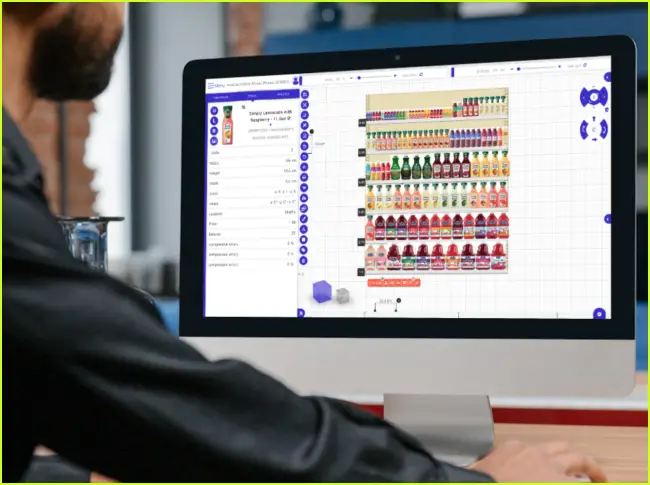
| Inconsistency of planograms and store formats | This is the case when retail execution software solves most of the problems. For example, a special program that visualizes planograms automates this process and can correctly calculate the ratio of consumer packaged goods and shelf sizes. |
| Incorrect inventory management | It is imperative to build retail execution plans around accurate data and all factors that influence demand. Knowing this, you will be able to make accurate pricing, forecasts and adjust the ordering process. |
| Ineffective promotional campaigns | Ensure timely delivery of information to retail stores: a detailed description of the terms and conditions of the promotion. Use AI-powered forecasting to align stocks witn demand. Control the design of promotional areas. Analyze the effectiveness of each promotion to find the best approaches and make adjustments to future activities. |
| Lack of control over stock levels and product placement | Implement key performance indicators and track them regularly. Conduct external and internal store audits, assess the quality of strategy implementation. Automate these processes with the help of software: it will support data collection, analyze it, and identify problems in a timely manner. |
What KPIs are important for strategy
How to meet consumer expectations and understand that you are moving your business in the right direction?
For each of the elements of retail execution, you need to track specific KPIs:
Shelf availability is an indicator of the physically present assortment available to customers. Low percentage of negatively impacted sales.
Planogram compliance. An indicator of layout accuracy. The higher the compliance, the more controlled customer behavior.
Promotional compliance. An indicator of customer engagement among customers who have purchased promotional products. It helps to assess the correctness and attractiveness of marketing strategies.
Out-of-Stock Rate. This is an indicator of the effectiveness of the display, availability of goods, and quality of service.
Revenue per square meter. It demonstrates the efficiency of the retail space and the effectiveness of the strategy.
Developing a retail execution strategy: key steps
Retail execution starts with effective planning. Here are some steps to help you create a clear action plan.
#1 Analyze the current state
Evaluate the processes: what works well and where problems arise. Use data on inventory levels, lost sales, audit reports, and feedback from store staff to assess. Based on the results, identify “pain points”.
#2 Action planning
Determine what you want to achieve in specific measurable units. Plan resources (technology, budget, training materials, etc.). Also, set a time frame for the implementation of the plan.
#3 Define the key principles of product display
Think about the location of shelves, promotional zones, and seasonal displays. Provide teams with coordinated generated planograms. Operational standards may also include:
- Checklists for customer service and/or price tag checks.
- Rules for acceptance, accounting, and storage of goods.
- Coordinated design of the hall with the visual identity of the brand.
- Rules for the placement of POS materials.
- Standards of cleanliness in the hall.
- Setting up the lighting.
- Standards of adaptation to local conditions.
#4 Assign responsibilities
Assign people responsible for each stage of the strategy implementation: both at the office level and directly in the store locations. Make a clear list of tasks for each employee.
#5 Create detailed instructions
Develop clear and comprehensive operational standards: these can be checklists for service or price tag checks, merchandising guidelines, etc. Provide easy access to these documents for retail teams.
#6 Implement regular audits
Periodically check stores' compliance with retail strategies on an agreed schedule. Use checklists and compliance scoring systems. Continually look for areas for improvement.
How technology is changing retail operations
Modern retail execution relies heavily on technology, enabling retailers to act quickly, maintain consistency across stores, and support teams with guided instore execution. Instead of relying on paper instructions or manual checks, store staff now follow step-by-step digital workflows that ensure accuracy and reduce errors.
Today’s retail execution field tools give managers and associates real-time visibility into stock levels, pricing, promotional compliance, and planogram accuracy. These tools enhance collaboration across departments and ensure that every store maintains the same high standards.
Equally important are retail execution apps, which provide store teams with mobile access to essential data at the shelf—allowing them to scan products, check availability, update inventory, and verify promotions instantly.
Here are the most important capabilities:
- Centralized data management to keep all operations consistent. You need to have the right information about products, prices, and inventory across the store or across the entire network.
- A flexible inventory management system. Store managers should be able to create more accurate ordering suggestions based on market trends, historical data, and seasonality. It also regulates retailer's relationships with suppliers and CPG companies.
- Inventory tracking. Inventory monitoring systems allow for timely response and informed ordering decisions.
- Forecasting. How will customer demand change depending on current factors? What does the data indicate? Ideally, the system should provide its own forecasts and conclusions that will facilitate decision-making.
Smarter retail execution with LEAFIO AI
Retail execution is where strategy meets the shelf—and LEAFIO AI ensures that every step, from planning to in-store action, runs seamlessly. As a modern instore retail execution suite, LEAFIO AI brings all retail processes together into one unified ecosystem, helping retailers elevate consistency, speed, and operational accuracy across their networks.
As a leading retail execution solution provider, LEAFIO AI connects assortment, shelf, inventory, and promotion management into a single data-driven platform. This alignment ensures that every department and every store works with the same real-time insights—boosting responsiveness, reducing errors, and improving profitability.
Here’s how it works:
LEAFIO Assortment Performance customizes product selection per store, boosting shelf productivity and cutting underperformers.
Virtual merchandising software delivers accurate planogram execution and AI-based shelf monitoring, making sure every product is in the right place for better customer experience. It ensures precise planogram execution and supports teams with a powerful Merchandising Mobile App.
LEAFIO Inventory Optimization ensures the right products are available at the right time—reducing overstocks, avoiding out-of-stocks, and improving cash flow.
Tying it all together is the LEAFIO SuperApp—a multifunctional mobile app for retail execution. It gives store teams instant access to essential data and urgent updates from all LEAFIO AI solutions. Staff can quickly verify prices and stock levels using the built-in barcode scanner, managing inventory right at the shelf with precision and speed.
With LEAFIO AI, retail execution becomes smarter, faster, and more consistent—driving better retail performance from the back office to the sales floor.
Key Takeaways
A retail execution strategy is a continuous improvement process boosting sales performance, profitability, and customer preferences at multiple locations.
Every element of retail execution matters. In store operations need to be improved: training and motivating staff, monitoring store performance, implementing software solutions and data driven insights, analyzing results.
The strategy needs to be constantly updated in line with market changes and customer's purchasing decisions.
What is retail execution management in fast-moving consumer goods (FMCG)?
Retail execution management in fast-moving consumer goods refers to the process of ensuring that products, promotions, pricing, and merchandising strategies are executed correctly and consistently across all retail locations. Because FMCG categories depend on speed, availability, and precise shelf presentation, execution must be monitored in real time to prevent stockouts, maintain planogram accuracy, and maximize sales opportunities. Retailers and CPG suppliers rely on digital tools, mobile apps, and centralized insights to coordinate tasks, track compliance, and respond quickly to changing demand.
What are common pitfalls when implementing retail execution systems?
Common pitfalls when implementing retail execution systems include poor data quality, lack of staff training, and disconnected tools that don’t integrate assortment, inventory, and planogram data. Many retailers also struggle with unclear task ownership, weak change management, and the absence of consistent performance monitoring. Together, these issues can slow adoption, create execution gaps, and reduce the system’s impact—making structured onboarding, clear communication, and regular KPI tracking essential for success.


Have a question?

Kristi Miller
Retail optimization expert