According to a 2025 study, current visual merchandising standards fail to meet the needs of 73.4 % of consumers. In fact, poor visual merchandising costs US retailers $10 billion per month. Customers expect a seamless shopping experience, but visual merchandisers continue to create ineffective retail displays, resulting in lost sales!
There are explanations for store display ineffectiveness and clear results of such negligence. Continue reading for the best visual merchandising practices that can fix the situation.
What Makes a Display Ineffective
Visual merchandising encompasses a variety of display formats, each designed to encourage customers in unique ways. However, the root causes of any display failure lie in the following mistakes.
Lack of Product Availability
When there's nothing on the shelves, nothing is sold. Empty shelves always reduce the effectiveness of even the most attractive visual displays. To make your visual merchandising truly successful, you need to constantly maintain stock levels and quantities to meet customer demand.
Poor Product Placement
There is no point in having a display that is hidden from customers' view. For example, if you place the display too low, it will significantly reduce the number of shoppers who see it. The same applies if you place it in a distant, dark store corner with very low traffic.
Accordingly, it is very easy to increase the effectiveness of shop windows in terms of location. Place them in high-traffic areas and preferably at eye level.
Ignoring Shopper Behavior and Data
Not taking customer behavior data into account is like walking around with your eyes closed; you're going to hit a lot of walls. If your display does not attract attention, consider all available information, like store traffic and demographic data. The best thing to do is to have your displays factor in demand forecasts, sales, turnover, ABC analysis data, etc. All this data will help you form a strategic vision for creating displays.
Inconsistent Execution Across Stores
When the same campaign is implemented differently in various locations—due to variations in setup, missing elements, or incorrect product placement—it dilutes brand consistency and confuses customers. Shoppers may not recognize the display as part of a coordinated promotion. That means that even a strong design can fail if it’s not executed uniformly across all retail locations.
Displays not Refreshed for Trends or Promotions
A successful retail store must respond to trends and give its audience what it craves when it craves it. Beach umbrellas are simply not going to sell in the middle of winter, and Valentine's Day cards will not fly off the shelves on Halloween, right? Of course, these are just the most obvious mistakes, but not all retailers really pay attention to the relevance of their displays.
For example, when exactly should you start displaying back-to-school merchandise? Most likely, it will be too late in the last days of summer—your competitors will have already attracted parents' attention to this category with bright displays and earned the desired profits by then.
Hidden Costs of Ineffective Displays
Empty, outdated, or ineffective displays result in lost opportunities:
- Lost sales and impulse purchases – Ineffective product displays never realize their full potential in terms of business profits.
- Lower customer satisfaction and loyalty – Half-empty, cluttered, poorly organized displays repel customers, resulting in lower average check sizes and repeat purchases.
- Overstock and markdowns on slow movers – The worse a product sells, the more inventory accumulates, leading to storage costs and forced discounts.
- Wasted staff time fixing mistakes – When in-store or window displays are poorly designed, unclear to assemble, or inconsistently executed, entire store employees have to spend extra hours correcting them.
How Planogram Software Fixes Retail Display Issues
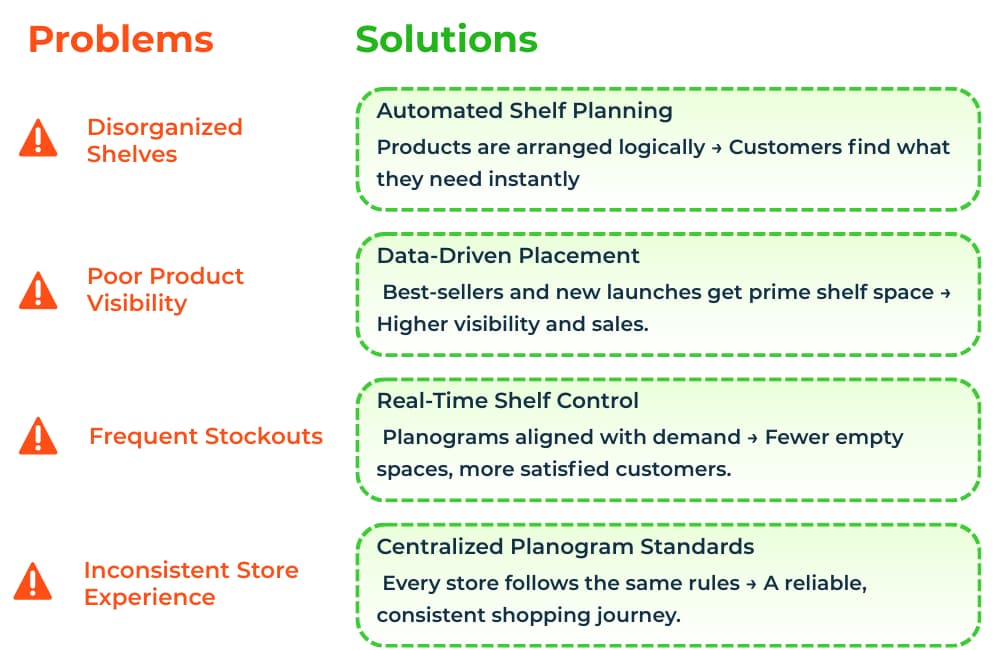
State-of-the-art software for creating effective visual merchandising based on AI is a tool that takes shelf management to a whole new level. Let's take a look at LEAFIO Shelf Efficiency—an innovative solution for creating planograms that helps retailers create visual interest with effective retail displays, implement various visual merchandising strategies, and maintain stock levels at multiple locations.
Data-Driven Design
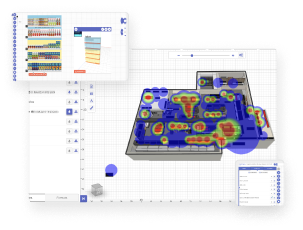
Planogram software uses sales history and forecasting data to design layouts based on data. You can easily create planograms that factor in demand forecasting, sales, turnover, seasonality, local demographics, ABC analysis data, etc.
Optimized Product Placement
The software tests adjacencies and facings to drive cross-sell and increase sales per square foot. For example, it might place pasta next to pasta sauces because customers are most likely to notice them when seeing them side by side.
By analyzing shopper behavior and sales data, the solution can determine the perfect number of facings for each product and the best shelf location to boost visibility and turnover.
Accurate & Fast Execution
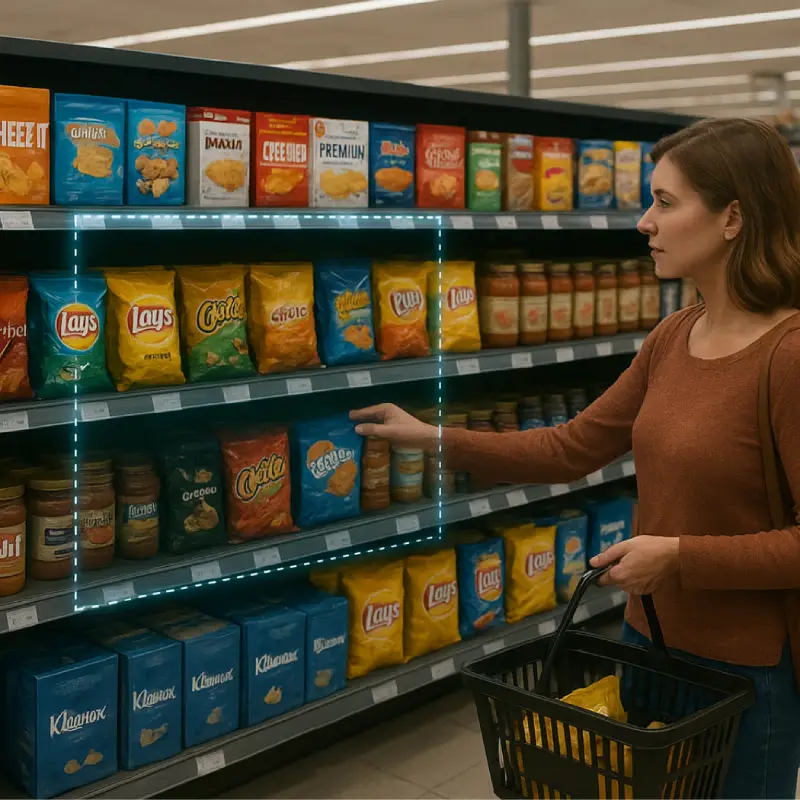
The LEAFIO AI platform provides store-specific layouts, visual instructions, and clear tasks to ensure that shelves are always stocked correctly. It also features AI-based image recognition technology to detect empty shelves, significantly improving the efficiency of shelf management across all stores.
Analytics That Drive Continuous Improvement
The system helps easily monitor product availability, control the correctness of display, sales, and pricing accuracy. All collected data allows you to quickly identify products that are not realizing their full potential. The system itself highlights low-performing SKUs, categories, or shelves with clear reasons: for example, poor placement or lack of stock.
Actionable Recommendations
When the system identifies ineffective SKUs or potential growth points, it suggests re-slotting, space redistribution, or advertising adjustments to improve results.
Visual Merchandising Best Practices: Refresh Displays Frequently
There are no special visual merchandising tips. The best way to maintain display effectiveness in retail space is to refresh it regularly. Even the best display quickly loses its appeal if it ceases to be relevant to shoppers. Therefore, your shelves must quickly adapt to both customer needs and seasonal trends.
It sounds easier than it is in practice, but the problem of refreshing displays can be solved by carefully studying customer feedback and combining this data with advanced digital analytics. Data from planogram software can reveal qualitative insights into the effectiveness of visual merchandising efforts.
Key Takeaways
Common causes of display ineffectiveness include: out-of-stock items, incorrect placement, ignoring data, inconsistency in execution across stores, and failure to update in line with trends or promotions.
Ineffective displays result in lost sales, lower customer satisfaction and loyalty, overstock, markdowns, and wasted staff time.
Core planogram software features help create engaging displays and maintain visual merchandising efficiency: data-driven planogram creation and optimization, clear task formulation for store staff, in-depth analysis, and actionable recommendations.
In 2025, AI-powered merchandising software, such as LEAFIO Shelf Efficiency, means retailers no longer need to guess which display works and which are ineffective—data tells the real story.


Have a question?

Cecilia Flores Castillo
Experta en optimización de estoque