

New product introduction (NPI) cannot be overlooked by retailers aiming to maintain a competitive advantage, as customer preferences and needs are in constant flux. Timely assortment rotation by updating the existing selection or introducing entirely new products to meet these changing demands remains fundamental.
Meanwhile, only about 21% of consumers purchase new products immediately upon launch, while 63% prefer established products. Even with enhanced product quality, customers may remain skeptical. How can you introduce products that won't just gather dust on the shelves? A robust NPI process helps mitigate this risk by carefully planning product introductions to align with customer needs and market trends.
Key Takeaways
Smart NPIs balance hype & execution to protect capital.
Pilot in select stores first.
Use data to predict adoption.
Plan supply to avoid deep markdowns.
Link to seasonal resets.
Monitor cannibalization closely.
In this article, we will look at what needs to be done, and highlight the steps and possible pitfalls of the new product introduction process.
A few pitfalls of a new product introduction process
It is not always worth it to launch a new or improved product just for novelty's sake. Watch out for product cannibalization and the halo effect, where new products reduce demand for the existing ones or boost sales of related products respectively. There's much to be said for selling everything but that approach also risks creating excess stock or SLOB inventory. An effective new product introduction (NPI) process should minimize risks, capitalize on any and all opportunities, and drive sustained business growth.
Vital steps to launch a new product in retail assortment
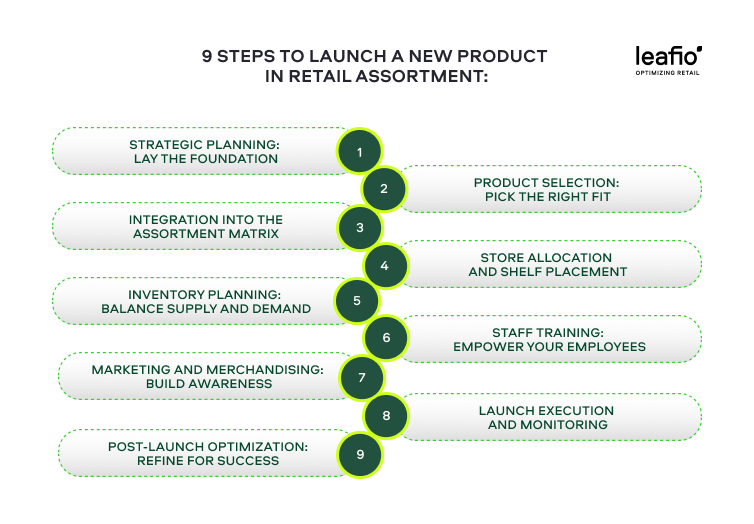
Introducing new products into a retail store’s assortment matrix and onto shelves is a strategic, multi-step process that ensures alignment with market trends, customer expectations, and operational efficiency.
Below, we break the process down into key stages, each critical for a successful launch. These are universal strategic steps that every robust new product introduction (NPI) process involves.
Step #1. Strategic planning: lay the foundation for new product introduction
The NPI process begins with strategic planning, driven by a thorough understanding of market needs and customer behavior. Retailers conduct market research to identify gaps in the assortment of existing products and evaluate emerging trends. For example, a growing demand for plant-based foods might inspire a grocery chain to explore vegan product options.
Competitor analysis also plays a crucial role here in helping retailers position their products effectively. This ensures differentiation and relevance through unique features, pricing, or branding. This strategic planning phase aligns with supply chain management to optimize product delivery from suppliers to stores, ensuring that the new product introduction process is seamless and efficient.
Step #2. Product selection: pick the right fit
Selecting the right product requires close collaboration with suppliers. Retailers assess potential items based on quality, cost, demand potential, and alignment with the brand’s image. This stage may include testing and sampling. For instance, a retailer introducing a new organic beverage might offer samples to customers at select stores to see the level of interest before committing to a full-scale launch.
Market and target audience analysis is crucial to determine whether the product will resonate with the intended customers. An in-depth product concept evaluation helps shape the initial idea generation, ensuring the product aligns with consumer preferences and trends. Quality control is essential to guarantee that the product meets the necessary standards and performs well in the market.
Profitability analysis then ensures that the product launch will contribute to financial goals. Retailers carefully evaluate purchasing costs, pricing strategies, and expected margins. The production process is also critical at this stage to ensure the product can be manufactured efficiently and meet the expected demand.
Step #3. Integration into the assortment matrix
Once a product is selected, it’s integrated into the store’s assortment matrix. This involves categorizing the product appropriately and making sure that it complements the existing range. For example, a premium dark chocolate bar may be positioned as a high-margin, indulgent option within the snacks category.
Retailers often use data-driven tools like XYZ analysis (to assess demand volatility) and ABC analysis (to determine sales contribution) to optimize the product’s role. At this stage, the product introduction establishes its position within the overall assortment, and SKU rationalization checks whether the new product enhances the assortment without negatively impacting existing items.
LEAFIO Assortment Planning streamlines the integration of new products into the retailer's assortment strategy by automating the smooth SKU addition and removal.
Step #4. Store allocation and shelf placement
Deciding which stores will carry the product requires analyzing location-specific demographics and sales trends. For example, gluten-free products might initially be introduced in stores located in health-conscious neighborhoods.
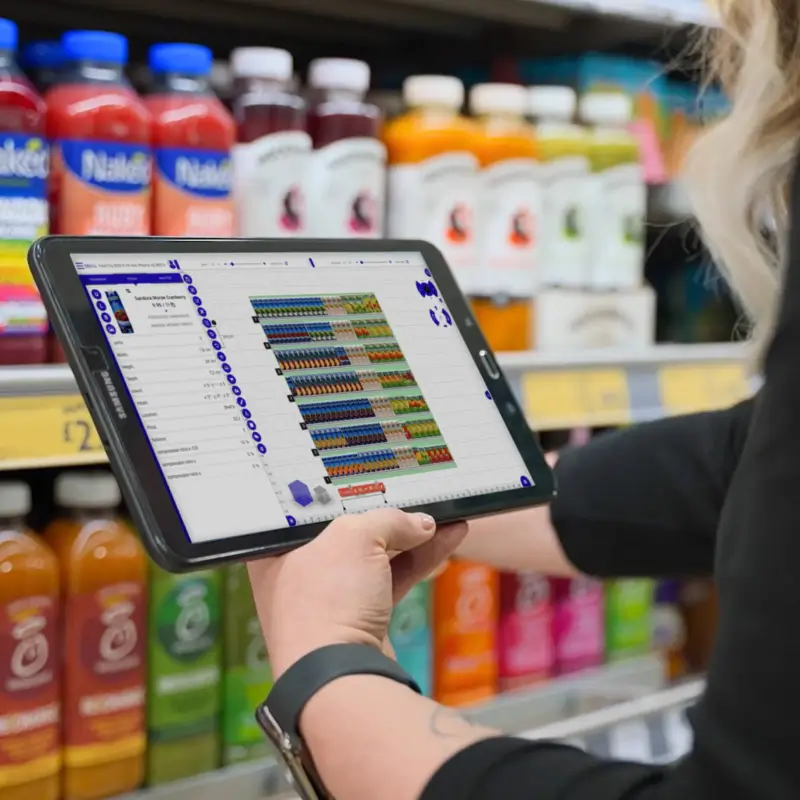
Next, planogram software is used to adjust shelf layouts, allocating space for the new product while maintaining an appealing and organized presentation. This step ensures the product is positioned effectively to attract customer attention and drive sales.
LEAFIO Shelf Efficiency empowers retailers to seamlessly integrate new products into planograms, enabling rapid placement and scaling across multiple stores through the creation of format-specific planograms. This automation facilitates consistent product displays chain-wide, making the product launch process smoother and ensuring regulatory compliance in all markets.
Step #5. Inventory planning: balance supply and demand
Accurate demand forecasting is essential to ensure the product is stocked appropriately. AI-powered tools can predict initial sales volumes based on historical data and trends. For example, a retailer introducing a seasonal product like peppermint-flavored chocolates can prevent overstocking after the holiday season by precisely forecasting demand using sales data from both the entire category and comparable items.
Replenishment strategies—automated or manual—are established at this stage to maintain optimal inventory levels and minimize stock outs or excess stocks. This stage is another critical phase in the new product introduction process, ensuring that supply and demand are balanced to avoid unnecessary inventory accumulation or shortages.
When introducing new SKUs, the forecast of initial orders is based on whether the product is a substitute, an analog, or entirely new to the chain. Similarly, product withdrawals require careful monitoring of stock levels across all supply chain tiers to ensure effective removal from the assortment. Accurate inventory management directly contributes to enhanced product quality assurance through better stock handling and reduced chances of product degradation. Inventory optimization solution streamlines these processes, enabling seamless assortment rotation.
Step #6. Staff training: empower your employees
Store employees are the ones who actually introduce new products to customers. It stands to reason that they must be trained to understand the product’s features, benefits, and target audience. For example, employees in a beauty store launching a new skincare line might receive training to explain its unique ingredients and benefits, enabling them to assist customers effectively and encourage purchases. Empowered staff ensure customer satisfaction by delivering an informed, responsive service that helps build brand reputation and trust in new products.
Step #7. Marketing and merchandising: build awareness
A strong marketing and merchandising strategy is crucial for a successful product launch. In-store promotions such as endcap displays, sampling stations, or limited-time discounts help draw attention to the product. Digital marketing campaigns, including email newsletters, social media ads, and e-commerce banners, amplify this awareness. Market research at this stage can help identify which marketing tactics are most likely to resonate with the target market, ensuring the product is positioned effectively.
Customer loyalty programs can also drive engagement. For example, a supermarket might offer double loyalty points for purchasing a newly launched brand of coffee during the first month of its availability. These promotions can also help meet customer needs by targeting the right segment of consumers. Effective cross-functional communication between marketing, merchandising, and sales teams ensures a cohesive approach to driving product visibility and demand.
Step #8. New product launch execution and monitoring
The launch typically begins with a soft rollout in a limited number of stores or regions to gauge customer reaction. During this phase, retailers monitor key metrics such as sales velocity, inventory turnover, and customer feedback. For instance, if a new frozen meal performs exceptionally well in urban stores but underperforms in suburban areas, marketing efforts and distribution may be adjusted accordingly.
At this stage, careful decision making is needed to ensure that any necessary changes to the marketing or distribution strategy are made in real time. This allows retailers to meet customer expectations and adapt quickly to shifts in demand.
Step #9. Post-launch optimization: refine for success
Based on performance data, retailers refine the product’s placement, pricing, or marketing strategy. Successful products may be scaled to additional stores, while underperforming items could be repositioned or replaced. For example, if a high-end beverage doesn’t meet expectations, it might be reintroduced in smaller packaging or in an updated display.
LEAFIO AI's comprehensive product data provides deep insights, enabling data-driven decisions and effective tracking of new product performance. Additionally, planogram analytics provide insights into the performance of newly introduced products, allowing for comparisons with previous layouts to optimize merchandising strategies.
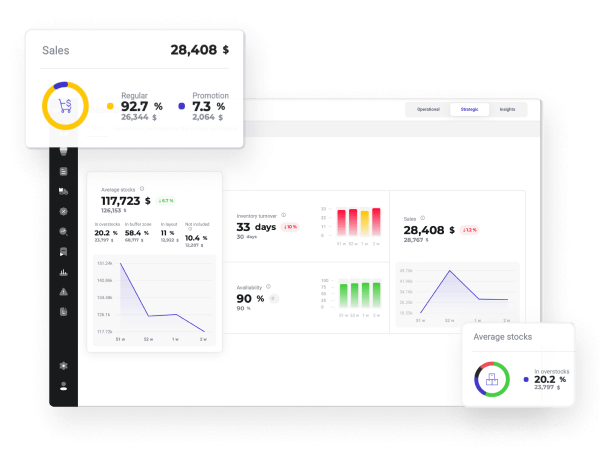
LEAFIO AI Retail Platform: driving success through strategic product introduction
Introducing new products is not just about adding items to the shelf. An effective NPI program involves a meticulous process designed to enhance the overall shopping experience and contribute to long-term business growth. At the same time, it requires collaboration across multiple departments and the coordination of various retail operations.
A major advantage for retailers using LEAFIO AI solutions is that they operate as a unified platform, seamlessly sharing data to create a cohesive ecosystem.
Imagine you’re testing new SKUs. In this unified system, once a category manager adds the products to the assortment, the planogram management module is instantly notified to allocate shelf space. Simultaneously, the inventory optimization module forecasts demand for new products and ensures that orders for these SKUs are placed at the optimal time. This streamlined process empowers the category manager with informed decision-making allowing to quickly evaluate the performance of the new products, making it easy to decide whether to scale them up or remove them from the assortment without delay.
FAQ New product introduction
What does new product introduction (NPI) mean?
New Product Introduction (NPI) refers to the structured process of bringing a new product to market, encompassing everything from initial concept stage development to manufacturing processes, distribution, and launch. It involves market research, product design, manufacturing process, testing to enhance product quality, supply chain preparation, marketing strategies, and analytics to review process performance. Effective NPI ensures that all stakeholders, from the design team to retailers, are aligned to minimize risks and maximize the product's success.
How do the product introduction processes differ in manufacturing and retailing?
The new product introduction NPI process in manufacturing focuses on new product development process, product design, testing, and production readiness, ensuring the product meets technical specifications and quality standards before entering the market. It involves close collaboration between engineering, project manager, R&D, and supply chain management teams to enhance manufacturing efficiency and production speed, which also helps to lower development costs.
In retailing, NPI emphasizes market fit, assortment integration, and customer-centric strategies, such as demand forecasting, merchandising, and retail product marketing. While manufacturing prioritizes the product development process, retailing focuses on positioning, distributing, and promoting it to drive customer adoption and sales.


Have a question?

Jack Larson
Retail Optimization Expert