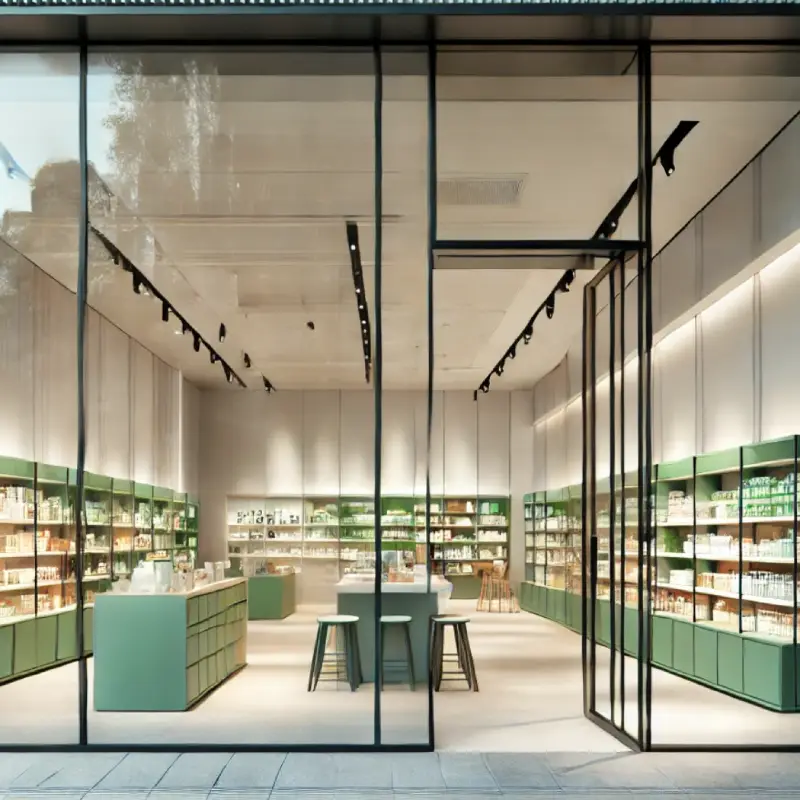


Many blame the growth of e-commerce for the customer outflow from brick-and-mortar stores. However, research tells a different tale, 86% of customers still make more than half their purchases at physical retail stores. The real problem lies in that many retailers have let go of the basic principles of improving customer experience through organized shelves and neatly arranged goods.
It is time to talk about basic facing principles and consider important retail facing tips that are bound to help improve customer satisfaction and increase sales.
Key Takeaways
Proper facing keeps shelves attractive and ensures planogram compliance.
Fill front edges fully.
Align products evenly.
Rotate older stock forward.
Check signage & pricing.
Spot audit for standards.
Understanding the Concept of Facing in Retail
In retail, the term facing is used in two ways. The noun refers to the number of similar products (or identical SKUs) on a shelf that target customers in specific ways, but the verb denotes the process of displaying goods in such a way that they stand neatly on the edge of the shelf with the front facing forward.
In both cases, the idea is the same: the store staff must ensure that the products are properly arranged and looking attractive.
Why Facing is Important in a Retail Environment
Facing is not just something retailers do on a whim, an aesthetic gimmick, or a form of perfectionism. It's part of any solid visual merchandising strategy and an effective way to influence customers. The better the products are displayed, the more attention they attract.
Facing is also part of customer service. In fact, 70% of shoppers reported a negative experience in the last six months at physical retail stores, according to Brick and Mortar Retail Report. Negative shopping experience due to disorganized and empty shelves is one of the main reasons why customers leave a store. In such a situation, facing is the easiest and most obvious way to make this experience more enjoyable and encourage customers to keep coming back.
So why is facing in retail important? It increases sales in the following ways:
- Improving retail visibility. Placing products at the front of the shelf with the label facing forward ensures that customers find them quickly.
- Improving customer experience. When all products are in their place and easily accessible, it is easier for customers to find the right products.
- Creating the appearance of abundance. Well-stocked shelves appeal to customers and encourage them to buy more.
- Leading to impulse purchases. A visually appealing display of bright labels promotes impulse and additional purchases.
- Optimizing inventory management. If staff regularly check the shelves, they can detect product shortages more quickly. Also, they can see certain items that are more popular than usual, or when shelves are staying fully stocked for longer. Or determine if more shelf space needs to be allocated for a particular product or the entire product category.
- Encouraging customers to re-visit. Well-organized, clean, and fully stocked store satisfies customers' needs and increases repeat sales.
6 Tips for Facing Your Store Effectively
Here are some ways to make facing a regular part of your day-to-day store operations.
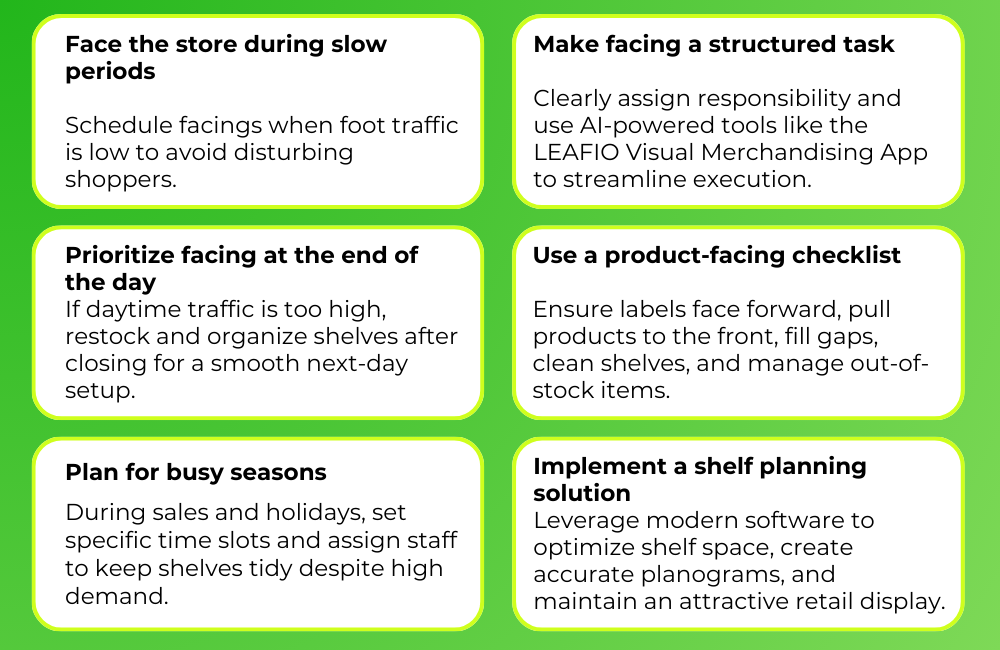
#1 Face the store during slow periods
If you track foot traffic in your store, either manually or with software, you already have an idea of when the store's typical slow periods are. Staff should pay attention to facings when there are fewer customers so it can be done as quietly as possible without disturbing shoppers.
#2 Start facing at the end of the day
If your store experiences heavy traffic and you can't face the store during the working day, prioritize it at the end of each day. This way, you can prepare the shelves for opening the next morning and the visual merchandising phase will go more smoothly thanks to the efforts made the day before.
#3 Schedule facing during busy seasons
During sales and holidays, products sell faster and staff have more workload. Increased customer demand means that there is more store traffic and fewer free windows for displays. Therefore, it is worth creating a special schedule for facing your shelves. For example, allocate several specific time slots during the day and a team member dedicated to each of them. Even during the busiest sales periods, you shouldn't put the facing on the back shelf.
#4 Make facing part of retail tasks
Store staff should be clear about who is responsible for the facing: cashiers, sales associates, or customer service representatives. You can create a schedule for everyone or assign a specific person to take charge. To control the daily execution of this task, retailers can use special consumer facing products based on working with AI to control the sales shelves.
In fact, with the LEAFIO Visual Merchandising App, the central office can send tasks to in-store staff. Tasks can be scheduled or instantly sent to the responsible employee with a single click. When the employee completes the task, they will send a photo of the display through the app for confirmation.
#5 Create a product facing checklist
The more detailed the tasks are, the better the result will be. Here are a few examples of specific daily tasks for your store staff:
- Place the products with the labels facing forward.
- Put back items that have been moved by customers.
- Pull items to the front of the shelf.
- If there are empty spaces on the shelf, fill them.
- Ensure proper shelf space among products.
- If a product is out of stock, replace it with a nearby product or put an “out of stock” label on it.
- Remove dust from the shelf before putting the product on it.
#6 Use a proper shelf planning solution
Modern software is one of the key building blocks for retail success. With an innovative shelf planning solution, a retailer can take better control of shelf space and ensure that products are perfectly displayed. Thanks to these solutions, you can create accurate planograms and visualize attractive retail facings for store employees to reproduce.
Boost Sales with Innovative Retail Facing Tool
LEAFIO Shelf Efficiency is a merchandising software that effortlessly optimizes shelf space and enhances visual merchandising. It helps retailers easily build retail facings using real product models, ensuring accurate and efficient shelf planning.
With its 3D visualization feature, you can preview your future display and determine the optimal number of facings for each shelf. This allows for precise space management and a clear understanding of how products will appear in-store.
Additionally, you can seamlessly integrate these displays into your store floor plan, providing a real-time view of the merchandising layout and making adjustments as needed for maximum efficiency.
Key Takeaways
- Facing in retail is a part of visual merchandising strategy and an effective way to influence customers.
- Retail facing improves product visibility and customer satisfaction. It also promotes impulse buys and makes for easier inventory control.
- For a retailer, it is important to make facing a part of the daily routine. You can create a schedule with defined intervals, check products at the end of the day, or during quiet periods in the store.
- Create a product facing checklist to provide clearer tasks for your staff.
- Modern shelf planning solutions, such as LEAFIO Shelf Efficiency merchandising software, help retailers to control shelf space more efficiently and build facings using real product models.


Have a question?

Jack Larson
Retail Optimization Expert