

The biopharmaceutical sector in the United States alone contributes $1.3 trillion to the global economy each year. This, in turn, means big profits for the cold chain pharmaceutical shipping industry. In fact, the pharmaceutical logistics market was valued at USD 93.23 billion in 2023 and is expected to reach USD 140.83 billion by 2029.
However, big profits always come with big risks and challenges. Medicine delivery requires compliance with strict technical regulations as well as strategic decisions in pharma logistics planning. In this article, we'll take a look at the key challenges in pharma logistics and tips to help you streamline your shipping process.
Key Takeaways
Pharma shipping demands tight controls to ensure quality & compliance.
Requires temperature-controlled logistics.
Strict tracking for chain-of-custody.
Real-time sensors cut spoilage.
Packaging impacts integrity.
Regulatory compliance is non-negotiable.
How to Ship Pharmaceutical Drugs
Pharmacy delivery is no easy task. Last-mile delivery companies must ensure that products arrive on time, safe and sound. In addition, the pharmaceutical shipment sector has strict laws regarding certification, cold storage conditions, and licenses. There are also many aspects that need to be taken into account in the supply chain process to ensure that the drugs remain undamaged and meet transportation standards.
When trying to ship specialized pharmaceutical goods, shippers are required to follow cold supply chain procedures, prevent theft during the shipment, and take special precautions. Improperly organized transportation may not only fail to meet the pharmacies' needs but also put the health of many at risk.
Top Challenges in Pharmaceutical Transportation
Most deliveries involve risks, especially when it comes to expensive pharmaceutical products, and there are some specifics of transporting pharmaceuticals, which can stand in the way of making a profit.
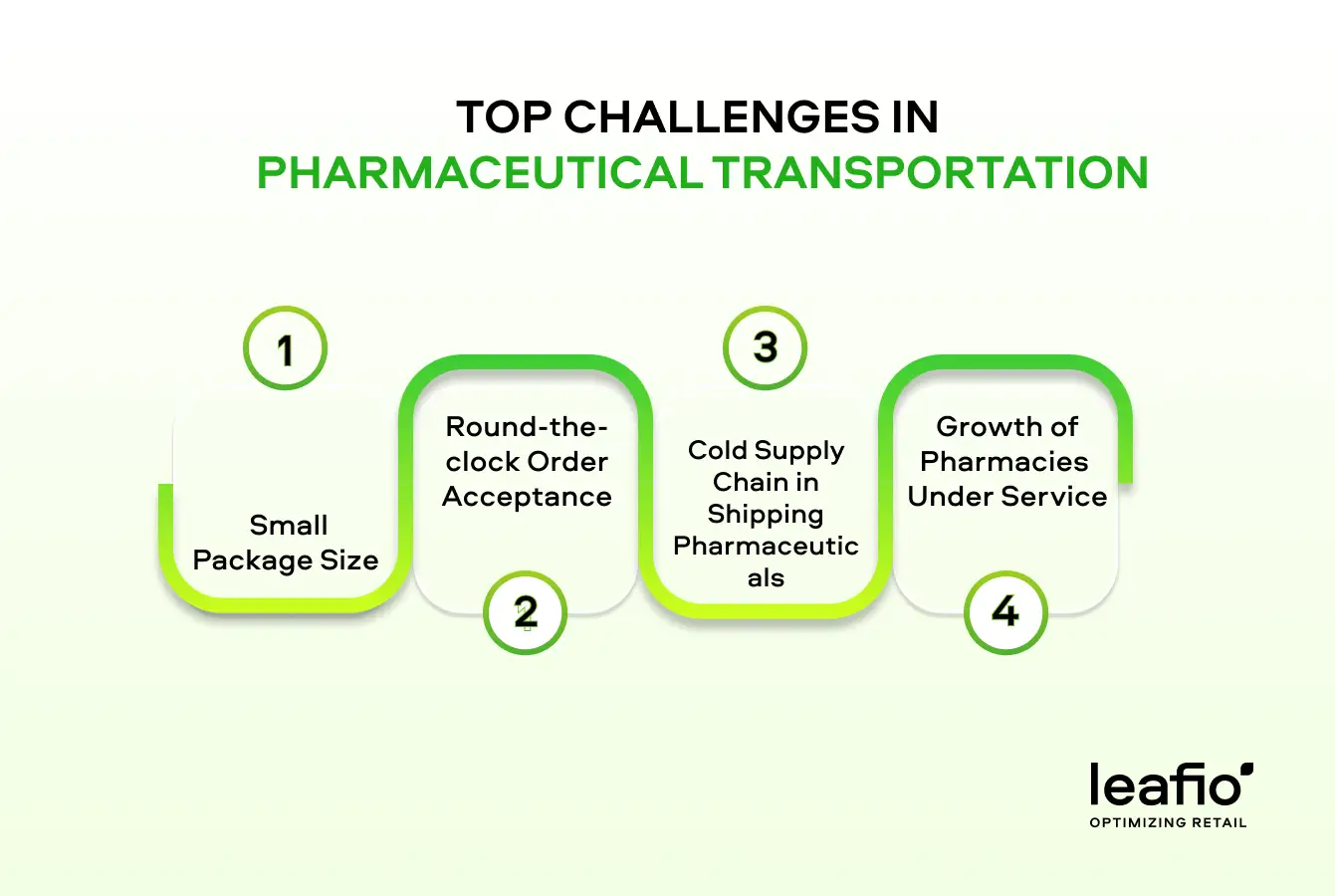
#1 Small Package Size
Pharmaceuticals are always transported in relatively small boxes. On one hand, that's an advantage because only a small truck is required, but on the other hand, the actual average number of orders per shipment is about 40 due to small orders. It is quite unrealistic to plan such high-quality routes manually. That is why routes are usually built around sectors, geozones, or districts.
#2 Round-the-clock Order Acceptance
Medications are ordered around the clock and that results in the need to ship them twice a day. Some orders that are placed in the morning are shipped in the afternoon because pharmacies compete with each other in terms of service. For example, orders for rare medications that are sold only on order can be placed by the customer in the morning and picked up from the pharmacy in the evening to make sure that the pharmacy wins the competition for the customer.
In some countries (e.g., Turkey), pharmacies provide delivery of medicines within 3–3.5 hours from ordering. This approach significantly optimizes the pharmacy's stock as only the best-selling items are kept in stock, and out-of-stock drugs can always be delivered within 3 hours.
Understandably, this is a huge challenge for pharma logistics. As soon as you receive an order, you have to quickly identify the goods in the warehouse, prepare them for pickup, load them into the car, and deliver them within the time frame. Limited time windows are always more expensive in terms of making the shipment happen seamlessly.
#3 Cold Supply Chain in Shipping Pharmaceuticals
Cold supply chain pharma logistics is an essential part of drug delivery, as approximately 70% of medications require correct temperature control. Most drugs need to be stored and transported at a temperature of 55–77 degrees Fahrenheit.
Temperature fluctuations of just a few degrees can spoil some medicines or reduce their effectiveness. Therefore, medications are usually transported in refrigerated or isothermal trucks. The shipper needs to make sure that the vehicle chosen is in good condition and adapted specifically for the pharmaceutical shipment as maintaining the correct temperature control is vital.
#4 Growth of Pharmacies Under Service
If the number of pharmacies served by a distributor is growing dynamically, pharma logistics control becomes much more complicated. It is difficult to manually calculate the cost, the optimal routes, and the number of vehicles. The increasing cost of the services affects both the company's profitability and the quality of the provided services. That is why it is necessary to use pharmacy delivery software that automates most routine processes and helps to make routes as efficient as possible.
Best Practices in Pharmaceutical Shipping
Here are a few tips to help you deliver better and safer while satisfying customers and increasing revenue.

Know Your Products
When transporting pharmaceutical products, the main rule is to know what you are transporting. For example, you must clearly understand which products are sensitive to changes in humidity or temperature, precipitation, and other factors.
Comply With Storage and Transportation Requirements
First, you need to know all of the proper handling practices for each pharmaceutical product that the manufacturer designates. Second, strictly follow federal, state, and local storage and transportation regulations.
Remember that inspections are an integral part of pharmaceutical transportation. After each inspection, you must keep appropriate documentation and records.
Use Drug Shipping Solutions
E-commerce is now the name of the game globally. Soon, expensive or rare medications will not even go to pharmacies but will be on order online and delivered directly to customers as the final destination. That is why there is a need to use a specialized e-pharmacy solution that both optimizes pharma logistics for the time frame required by the customer and ensures the exact time of arrival of the order.
Consider All Options for Controlling Temperatures
For proper transportation, consider using refrigerated or isothermal containers and trucks that undergo routine inspections to ensure they are in optimal condition to maintain inventory at the correct temperatures. You also need built-in cooling units designed to maintain constant temperatures, which are monitored on an ongoing basis, providing a regulated environment to protect medications.
Choose Your Special Packaging Carefully
The transportation of pharmaceuticals requires the use of specific packaging: corrugated shipping boxes, biodegradable air cushions, or insulated foam coolers. In some cases, it is also necessary to comply with the UN requirements for dangerous goods transportation labels.
Use Technologies for Better Safety
Drug theft is not uncommon. That's why it's important to implement effective theft prevention practices when shipping pharmaceuticals. To protect your cargo during the entire journey, use a full-visibility solution to monitor your shipments on a regular basis. You can use surveillance cameras, access control keys, and automatically locking doors. Also, carriers transporting the most valuable drugs should consider providing additional security services for their cargo.
LEAFIO's Innovative Solution for Pharmaceutical Logistics
The LEAFIO Rinkai transportation management system is an innovative cloud-based solution that centralizes the transportation management process and allows you to effectively control all delivery parameters. With this pharmacy solution, you no longer have to worry about the proper transportation of pharmaceuticals. The system works on the basis of a unique algorithm that provides efficient route planning with more than 15 types of restrictions.
Thanks to the introduction of LEAFIO Rinkai TMS, the pharmaceutical company KONEX reduced mileage by 2000 km per week and cut delivery costs by 12%.
If you need to ship medicine, solutions provided by LEAFIO make it possible to organize the pharmacy logistic process so that vehicles leave every hour and a half. This will significantly increase the ability of pharmacies to order medicines, and, accordingly, they will place orders more often. The TMS system can help to optimize the pharma logistics process between retail pharmacies of the same chain and make it as controlled as possible.
Key takeaways
- The delivery of pharmaceuticals involves many challenges, such as temperature control, maintenance of multiple delivery points, same-day delivery, and special packaging.
- Most tasks in the drug delivery industry are difficult to solve manually. Specialized software is needed to automatically plan routes taking into account the number of points, specifics of vehicles and cargo, external factors, etc.
- It is extremely important to know the specifics of each product that you are transporting. What safety measures are required, what storage conditions, and what packaging is needed?
- It is necessary to ensure compliance with both the manufacturer's recommendations and legal regulations for the proper transportation of medications.
- Using a transportation management system, such as the LEAFIO Rinkai TMS, allows you to organize the logistics process to save money on transportation and increase profits.


Have a question?

Andrew Ivarsen
Logistics Optimization Expert