

Staggering annual retail losses of $54.1 billion occur just due to poor visual merchandising. Avoiding them requires a new way of looking at product merchandising for food, beverages, and other goods. Effective storytelling is the best sales tool and building an experience—a journey even—that engages all the senses is the best a retailer can do for the bottom line.
Key Takeaways
Effective product merchandising ties customer needs to store profitability.
Starts with deep shopper insights.
Organizes by category strategy.
Uses focal & impulse areas.
Links displays to seasonality.
Tracks results by SKU & zone.
Visually appealing display: classics or new approaches?
Even just a few months in the retail business teaches you all the classic rules of visual merchandising. It's all about the Golden Triangle, the Right Hand Principle, the rules for placing important products at eye level, creating impulse purchase zones, the depth of passage principle, and so on. These are the classics that work well, but competition and audience expectations are fiercer than ever. Industry leaders cannot rely only on tried and true approaches but need to seek out non-trivial and fresh approaches to display and store layouts instead of sticking with platitudes.
Storytelling in merchandising: add emotion to your presentation
You have only 8 seconds to capture the attention of an average adult customer. A standard display of goods (although aesthetically pleasing) may not reach that level of efficiency. So try creating an atmosphere around high-margin products that tells a story and evokes emotions.
Why it works:
- if merchandising adds emotion, customers can make purchase decisions faster;
- product stories create a sense of authenticity and affinity with the brand;
- specialized store shelves that tell stories show customers how a product fits into their lifestyle or solves a specific problem.
How does this work in specific examples?
Let's take beverage merchandising: for example, you need to boost sales of natural juices. Decorate the window in the spirit of a farmers' market with a fruit basket, wooden boxes, and add promotional materials like photos of farmers who grew the fruit for juice and include short stories about them. Who doesn't like to read the back story on labels?
If you need to enhance the brand visibility of a premium wine producer, create the atmosphere of a luxurious evening for two: beautiful plates, cutlery, glasses, candles, etc. Use themed props to enhance emotions.
One example to illustrate, Coca Cola also uses artificial intelligence to create advertising and presentation materials for its outlets. This is also an interesting element of storytelling and an innovative one at that.
Play on the senses: use color and light
The color scheme affects the mood and can even increase brand loyalty. These are the common associations:
- Warm colors (yellow, red, orange) – comfort, optimism, energy.
- Cool colors (green, blue, purple) – trust, calmness, elegance.
Lighting also matters. Ambient lighting should be used to create a general atmosphere, accent lighting should be used to highlight products and decorative lighting should be used for additional focus. At the same time, keep in mind that well-lit areas are used to attract attention, and dimmed areas are used to create a sense of exclusivity.
Here's how it works in food merchandising. Install bright white lighting over a display of fresh fruits and vegetables: you'll emphasize the brightness of the colors. But illuminate groups of farm products with warm yellow accents, which will create an organic feeling.
Use space strategically: create a “customer journey”
High-quality merchandising in modern conditions means that every customer can go on an intuitive journey through your store. All you need is to design a path that will run through different areas of the sales floor, showing the key products of the assortment as efficiently as possible.
Also, consider organizational nuances. For example, place key products, such as meat, milk, bread, and sugar, separately and close to the warehouse. This is necessary for prompt replenishment of stocks in the sales area. Nobody wants disappointed customers staring at empty shelves.
What do such merchandising solutions look like in practice?
Let's take a typical FMCG store. In areas with less traffic, you can create a kind of stopping point with interactive elements or custom displays: video instructions on screens, mirrors, testers, etc. They prevent people from passing by, draw attention to the products, and encourage action.
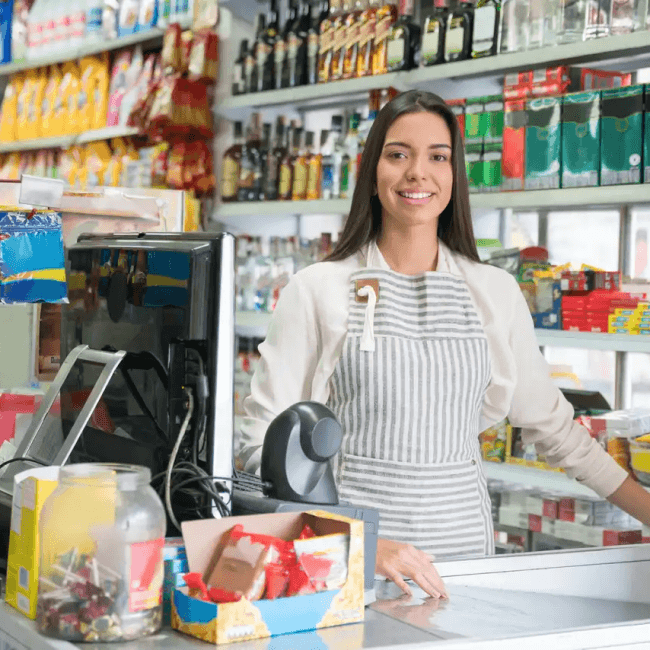
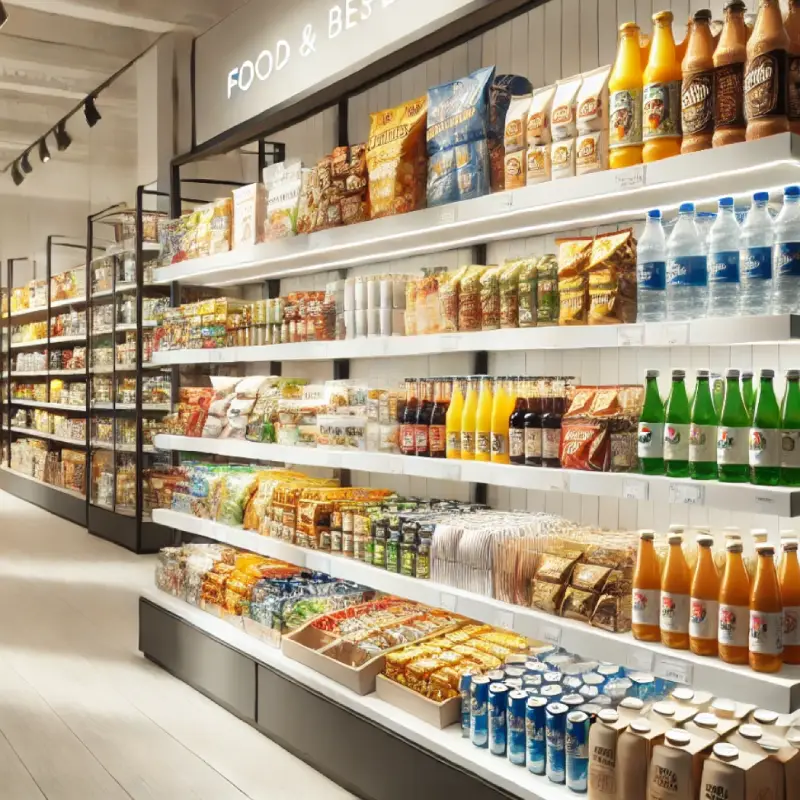
Food and beverage merchandising in convenience stores can look like this: at the beginning of the customer's journey, there are fresh vegetables and fruits (to create the impression of a healthy choice, freshness, quality). Next up are daily necessities, and right in front of the checkout counters, there are display cases with various trinkets that stimulate spontaneous purchases
Engage customers' senses with sensory merchandising
Merchandising efforts are not limited to engaging customers' eyes only. You can also appeal to their sense of smell, hearing, and even touch (if it complies with health and safety regulations). This will help to create a multidimensional experience. A few important nuances:
- stores that allow you to try out products, whether it's gadgets or clothes, create the effect of trust and engagement;
- a pleasant themed scent in the shopping area can influence the purchase decision;
- properly selected music can really regulate the pace of customers and the duration of their stay in the store.
For example, effective beverage merchandising will place a tasting area right in the sales area. A brand consultant stationed nearby is at hand to answer questions and encourage customers. Whether it's tea, coffee, or juices, the experience can be enhanced with appropriate flavors. The drinks can be accompanied by lounge music, jazz, or classical music. Tactile sensations can also be utilized by placing refrigerated beverages stand near the checkout area. Customers are usually thirsty after walking around the store, and touching cold bottles will only increase the desire to make an additional purchase.
Adapt to trends: stay relevant
Changing market trends, fickle consumer behavior, and even social media trends – merchandising strategies depend on many external factors. The beverage industry is constantly changing, and other manufacturers are also adapting to new requirements. You need to come to terms with the fact that nothing can remain static anymore and learn to react flexibly to changes and use new opportunities. Dynamic merchandising is the future.
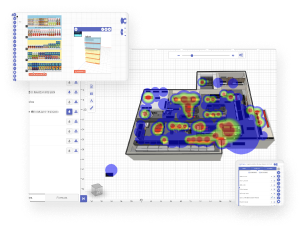
The main element of this transition is in-depth consumer research and the continuous monitoring of market changes. Inside the store, use heat maps to study traffic, analyze sales data, and evaluate the effectiveness of the display in each zone. Be sure to track market trends.
What does this look like in practice? For example, if certain beverage brands have gone viral on TikTok, create an experience space in the store: local photo zones with viral brands' drinks, Instagram installations, etc. Encourage customers to share their experiences on social media.
Collect analytical data and use it for optimization
A good food merchandiser is a specialist who combines creativity with an analytical approach. And rightly so: you need data to make informed decisions. What should you collect? At a minimum, it should be information about customer movement, their reaction to changes in displays, and sales.
Make sure that you test different solutions like lighting, product placement, display compositions, etc. Adjust your merchandising strategy based on the results.
That said, a modern grocery store works with huge amounts of data. How do you organize and analyze it? How do you learn to distinguish between important information and information that can be ignored? What conclusions to draw?
Integration of a modern merchandising system based on artificial intelligence and machine learning will help you. This is a solution that can analyze data here and now and offer solutions based on this analysis and more.
Merchandising support with LEAFIO AI: boost your sales
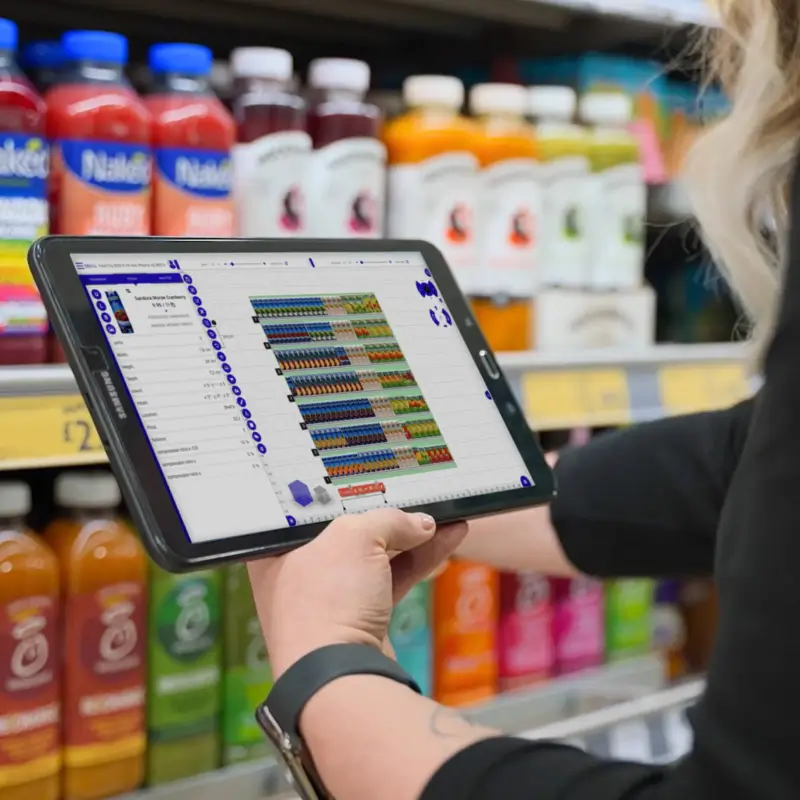
LEAFIO AI is a comprehensive platform of automated digital solutions for retailers. It includes tools for inventory management, demand forecasting, and visual merchandising. In particular, LEAFIO Shelf Efficiency helps you create attractive displays in a few clicks and allows you to improve them using sales data. You can also run experiments and see how the planogram changes key visual merchandising KPIs in visual reports. Among the available features:
- planogram builder for data-driven optimization of shelf space;
- a tool for optimizing the design of macro space and managing it effectively;
- automatic generation of planograms, standardization of displays in the network;
- development of profitable planograms based on inventory, sales, and demand indicators for each individual store;
- evaluating the effectiveness of planograms and obtaining fresh data for prompt decision-making.
5 non-trivial tips for optimizing visual merchandising
Implement the following solutions in your retail space (if you are not already doing so).

The principle of “moving focus”
Change the visual accents every 14 days, even if you don't update the assortment. It could be anything: the color of the design, lighting, or rotation of popular products.
Alternate zones
Leave empty space after the areas that are saturated with goods. For example, after the rows of shelves with goods, there should be a space with floor stands. Visual contrast always works.
Create dynamic zones
Allocate a place on the floor where you will change the concept of the display every week: for trendy goods, seasonal promotions, temporary offers, exclusive products, or thematic combinations.
Change the perspective
Instead of the classic frontal display, try a diagonal or angular one. They will work well in stores with high traffic.
Adapt the layout to micro-moods
They can be influenced by weather, news, local events, etc. Is it cold? Put all the “warm” products in the first contact zone quickly.
Conclusion
Increased sales, brand identity, store popularity – these and other benefits are provided by high-quality visual merchandising. Of course, none of this contradicts classic solutions like the golden triangle. However, it is also worth moving forward and looking for new approaches in a competitive environment. These can be:
- sensory merchandising;
- adaptation to trends;
- principles of storytelling in merchandising;
- data-driven decision-making;
- integration of modern tools into processes.
Implement modern solutions with LEAFIO AI and drive sales!


Have a question?

Jack Larson
Retail Optimization Expert