

Seasonal products occupy an important place in the retail market and they play a key role in increasing profits. In the United States alone, the average check for seasonal merchandise like Christmas goods comes to $902. But how do you attract more customers and maximize revenue? It helps to employ effective visual merchandising to make the most of current approaches to product display.
Key Takeaways
Seasonal merchandising captures demand peaks and refreshes store image.
Highlights new & seasonal SKUs.
Draws in shoppers with themes.
Drives urgency through limited-time displays.
Combines with promos for max impact.
Keeps shopping experience exciting.
Develop a seasonal merchandising strategy with all factors in mind
Seasonal sales are always a risk. Part of the assortment can be planned in advance, but many products are new, and it is very difficult to predict sales. In fact, many factors affect the future interest of customers:
- prices
- trends
- competitors' offers
- the occasion
- availability of promotional offers
- brands (manufacturers of goods)
The challenge is that there are no minor factors on this list. Each one of them can affect sales, both positively and negatively. To overcome these challenges, study customer behavior based on inventory and pricing data, track competitors' actions and trends, and plan discounts, promotions, and seasonal product promotions in advance. Also, be sure to establish relationships with suppliers since your seasonal sales depend on their conditions and efficiency.
Retail demand planning plays a key role here: by analyzing historical sales and seasonal trends, retailers can make more accurate purchasing decisions and avoid the costly mistakes of overstock or lost sales.
Once all the ordering is done and your seasonal items are on their way, you need to do everything you can to attract customers, which is where merchandising seasonal products comes in.

Seasonal merchandise planning: 7 classic and new strategies
If you're planning to sell seasonal merchandise, use the following ideas to increase customer interest and boost sales.
Tell a story through your displays
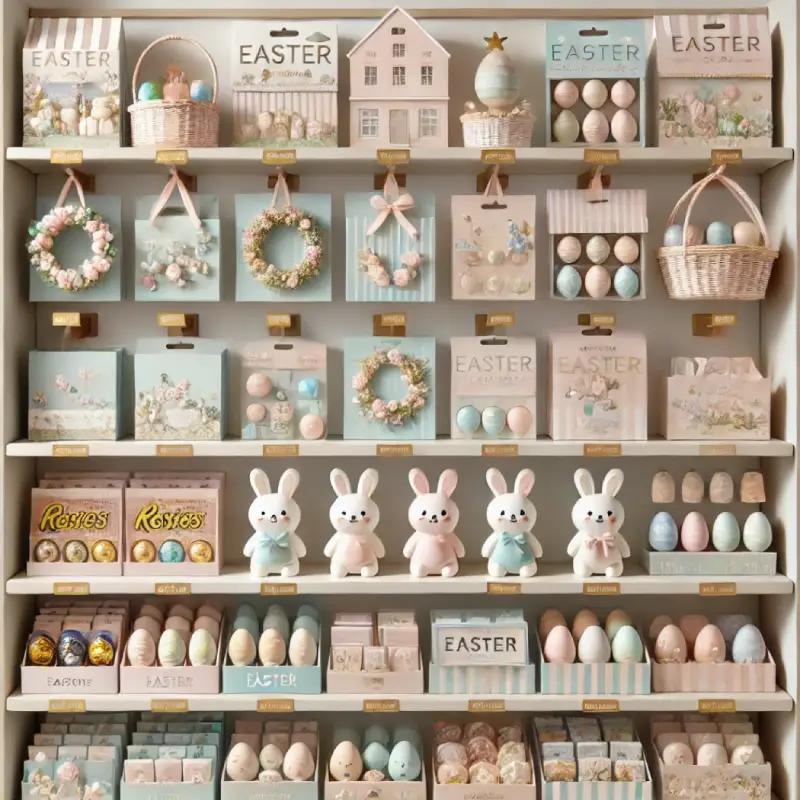
Storytelling is one of the trending areas in visual merchandising. We are talking about creative displays that don't just showcase seasonal products but offer to tell a whole story and get certain emotions. This works especially well during the holidays, when customers are more likely to make impulse purchases.
That's why you should create stories that resonate with your audience and reinforce the value of seasonal products. Do this with additional elements, characters, plot, interactivity, and local context.
A few examples:
- Christmas. A window display in the form of a snowy street, where each product is a small illuminated house.
- Halloween. A window display in the form of a witch's hut and themed products among dried herbs and artificial bats.
- Valentine's Day. The story of two lovers looking for gifts for each other.
Lighting is the most important assistant
Create light accents on seasonal displays, which will enhance the attractiveness of goods and bring additional attention. Warm light is suitable for a cozy atmosphere, and contrasting lighting can be used to highlight products. Don't forget about emotions. For example, subtle lights for Christmas displays or bright accents on vacation product displays. If you need to emphasize the texture, spot LED lamps will do. And if you want to engage the customer further, try integrating an interactive lighting system that will change colors and accents as the customer approaches.
Apply the principle of limited availability
Seasonal merchandise is characterized by a short life cycle. Therefore, it is important to attract maximum customer attention from the first days of sales. A sense of urgency will help: temporary offers, special seasonal promotions, emphasis on a limited number of products, etc. Use countdown timers in your promotional materials, put up “Last chance to buy” signs, and try other similar options.
However, it's important to note that this works only if the offer really is limited or if no new deliveries are planned. Otherwise, you risk neutralizing the effect of urgency and losing brand credibility.
Use ready-made solutions
You can customize your merchandising strategy in such a way that you don't have to spend extra money on seasonal goods. To do this, use shelving that can be easily reconfigured (mobile, flexible). If you use decorations, consider recycling them or adapting them for the next season.
For example, modular stands can be changed depending on the season. In summer, make low open displays for Yu beach products, and cascading shelves for gift sets in winter. Decorations can be versatile as well. For example, the same wooden boxes can be styled in different ways using lighting, textiles, or banners.
Try interactive displays
Modern merchandising of seasonal products can also be gamified. Interactive displays can create an additional level of engagement, make the selection process interesting and even encourage impulse purchases. Here are some examples of such solutions:
- touch screens in a cosmetics store that offer a quick skin type test and sunscreen selection;
- a voice assistant at a stand with sparkling wine for the New Year's. It suggests which products a particular variety goes best with;
- “Easter eggs” hidden everywhere in the sales area before Easter. Anyone who finds an egg can get a discount or bonus on the purchase of a themed holiday product.
Take into account local peculiarities
Optimize inventory levels depending on the specific region. For example, in the southern regions, the demand for beach vacation products starts earlier than in the northern regions. Also, consider regional peculiarities when displaying products: emphasize local traditions, use colors and symbols. Perhaps in a particular city, Halloween is celebrated as a harvest festival, not as an “evening of horror stories”. Be sure to take this into account.
Use dynamic space zoning
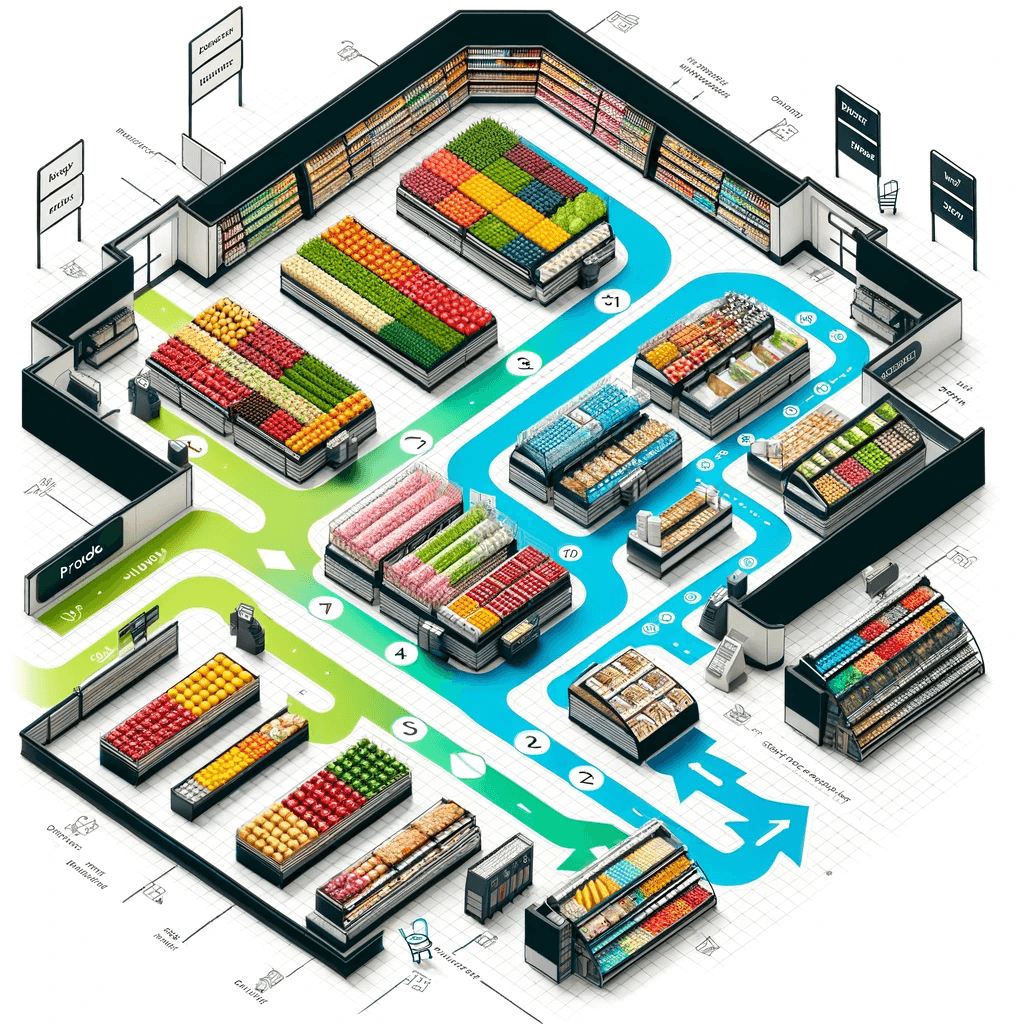
It is better to rebalance seasonal merchandise depending on demand and the actual season. For example, it is better to place holiday gifts and themed products closer to the entrance ahead of Christmas. This creates the right mood and encourages customers to make emotional purchases, but all the things you need for a summer vacation will do better when placed in the central part of the sales area, as there is more space for bright seasonal arrangements and bulky goods there.

Optimize seasonal merchandising with LEAFIO AI
The LEAFIO AI platform offers flexible and efficient digital solutions to increase the efficiency of seasonal merchandising. LEAFIO Shelf Efficiency tool help you create planograms and optimize your retail space based on sales data. The result is increased sales and customer loyalty. Evaluate the benefits:
- create planograms based on seasonal fluctuations in demand, and efficiently use space for seasonal products
- plan and implement planograms as quickly as possible, responding to rapid changes in seasonal demand
- manage planograms in different stores of the chain, taking into account local peculiarities
- effectively check compliance of the display with visual merchandising Mobile APP: online and without paperwork
Key conclusions
Plans for seasonal merchandising are developed based on a variety of factors ranging from competitors' actions to local peculiarities.
Merchandising seasonal goods is about managing customer emotions: storytelling, gamification, limited availability, and other methods.
AI-powered merchandising software optimizes planograms, ensures efficient inventory management, and increases sales efficiency.

Have a question?

Jack Larson
Retail Optimization Expert