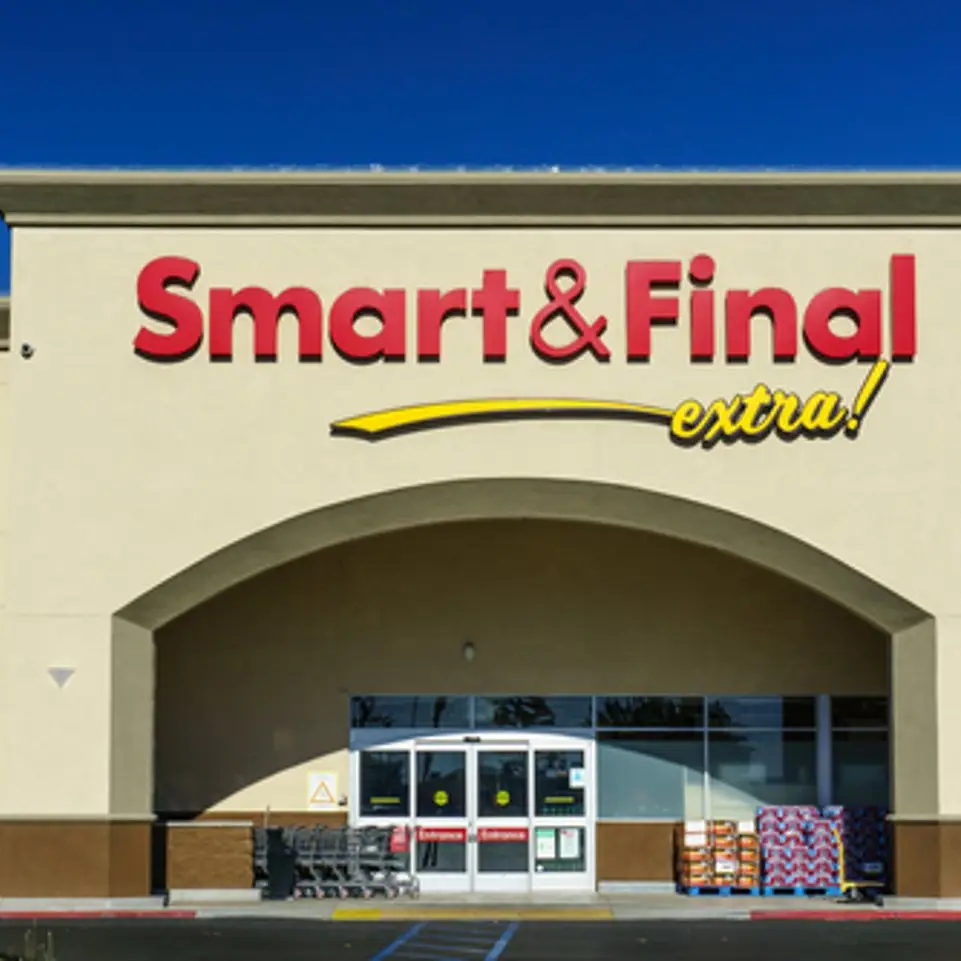
Smart & Final Northeast, a hybrid wholesale-retail chain operating across northwest Mexico with roughly 7,500 SKUs, used LEAFIO Shelf Efficiency to move its shelf-space planning from a manual, imageless legacy tool to a data-driven planogram, category-analysis, and in-store execution platform. According to the Smart&Final Planograms team, average planogram build time fell from 90 minutes to 10–15 minutes; after-the-fact rework dropped by 50–75%; and execution of every planogram built in LEAFIO became fully verifiable in the store. The merchandising team's input shifted from perception-based opinion to a quantitative step now used by procurement, operations, and commercial.
Results at a Glance
Estimates provided by the Smart & Final team.
| Dimension | Before LEAFIO | With LEAFIO Shelf Efficiency |
|---|---|---|
| Planogram build time | ~90 minutes average | 10–15 minutes (team estimate) |
| Rework / after-the-fact corrections | Frequent; issues surfaced only after sales came in | Down 50–75% (team estimate) |
| In-store execution visibility | Effectively none | 100% of Shelf-built planograms verifiable (team estimate) |
| Layout consistency across stores (1–5 scale) | 1 | 4 (team estimate) |
| Decision logic | Trial and error | ABC analysis + facing-change recommendations before placement |
| Analytics | None | BI "Facing Change Recommendations" + category trend data |
| Merchandising team's role | Perception-based input | Quantitative input feeding cross-functional decisions |
About the Client
Smart&Final is a hybrid wholesale-retail chain serving both households and small businesses with no paid membership required. Founded in 1871 in Los Angeles, the company has operated in Mexico for more than three decades and today operates across northwest Mexico, in the Baja California region, carrying roughly 7,500 SKUs.
The Challenge: Planograms Built on Guesswork, Not Data
Before LEAFIO, Smart&Final's merchandising function relied on a single-license legacy space-planning tool. This created a set of compounding problems for a small cross-functional team:
- Manual, imageless planograms: data was entered by hand, and layouts carried no product images, making them hard to review or share.
- No analytical layer behind placement: facings per SKU and category allocation were not tied to any performance data.
- Trial-and-error decisions: layout choices were only validated after sales came in, with no way to course-correct in advance.
- SKU overload without clear criteria: categories grew without a consistent method for deciding what earned shelf space.
- No defensible, cross-functional process: Purchasing, IT, Operations, and Merchandising needed a shared, data-backed basis for shelf decisions, which the legacy tool could not provide.
The Solution: LEAFIO Shelf Efficiency
Smart&Final implemented LEAFIO Shelf Efficiency as its end-to-end merchandising platform, with the Planograms department as primary users for daily maintenance, adjustments, and store task assignment. Capabilities adopted include:
- Image-based, data-driven planograms, replacing manual line drawings.
- A macro-space view used as the team's daily working surface.
- BI "Facing Change Recommendations" surfacing category and item-level trends.
- ABC-style analysis to allocate shelf space by performance rather than habit.
- In-store task assignment with full execution visibility, closing the loop between planning and store-level execution.
Executive Quote
"We have high expectations regarding the quality of information that LEAFIO can generate. This project represents a significant step forward for our Merchandising, Operations, and Commercial teams, enabling us to be more efficient, analytical, and well-informed in decision-making."
— Pedro Calihua, Merchandising Department, Smart&Final
Operational Impact
All figures in this section are estimates provided by Smart&Final's planograms team, led by Pedro Calihua—labeled explicitly as team estimates, not measured BI output.
- Planogram build time: down from an average of 90 minutes to 10–15 minutes per planogram.
- After-the-fact rework: reduced by 50–75%.
- Execution visibility: 100% of planograms built in LEAFIO can now be verified in-store, versus effectively none before.
- Layout consistency across stores: improved from 1 to 4 on a 5-point scale.
- Team changes: Smart&Final reports that its dedicated planogram team doubled from one manager and one supervisor alongside changes and new procedures.
Conclusion
For Smart&Final, LEAFIO Shelf Efficiency moved shelf-space planning from a manual process to decisions supported by data. The team reports shorter planogram build times and fewer corrections, while Procurement and Operations use its quantitative input for buying, campaign, and promotion decisions.
Spending 90 minutes on a single planogram? See how LEAFIO Shelf Efficiency gets it done in minutes with data-backed decisions → Book a 30-min demo
FAQ
What did Smart&Final use for planograms before LEAFIO?
A single-license legacy space-planning tool with manual data entry, no product images, and no analytics.
Which LEAFIO solution did Smart&Final implement?
LEAFIO Shelf Efficiency, covering planogram creation, category analysis, and in-store execution.
How much faster is planogram creation with LEAFIO?
The Smart&Final team estimates average build time fell from 90 minutes to 10–15 minutes per planogram.
Is LEAFIO Shelf Efficiency fully rolled out at Smart&Final?
Rollout is still in progress: the client reports that not all branches are yet using Shelf fully. The team can verify execution of every planogram created in Shelf.
What operational improvements did Smart&Final see?
The team estimates 50–75% less after-the-fact rework, 100% verifiability of Shelf-built planograms, and layout consistency rising from 1 to 4 on a five-point scale.



