

The best NielsenIQ Spaceman alternatives are LEAFIO AI, Blue Yonder, RELEX Solutions, and Quant. These platforms cover planogram creation and space planning, and most of them connect shelf decisions to assortment, replenishment, or store execution. If you run a mid-size retail chain, several of them shorten the path from planogram to compliant shelf without per-seat licensing. I've compared the top Spaceman competitors on automation depth, store-level execution, connection to inventory, and total cost of ownership to help you find the right fit.
NIQ Spaceman (formerly Nielsen Spaceman, renamed NielsenIQ Spaceman after Nielsen's 2021 split) is one of the longest-running planogram and space management suites on the market. It covers planogram building and analysis, rules-based automated planogram generation (Spaceman Automation), data management, and planogram compliance. NIQ says Spaceman is used by more than 600 retailers in 65+ countries. In October 2026, NIQ announced new capabilities: Optiq conversational AI, store-specific planogram automation, AI-powered compliance measurement, and NIQ-managed cloud hosting on Microsoft Azure.
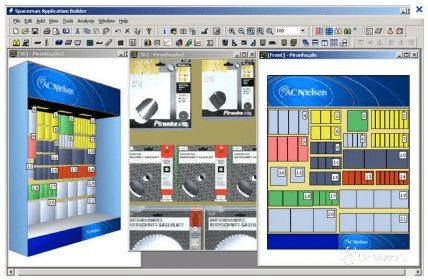
Spaceman is a space planning specialist, not a retail operations platform. The core design environment is desktop-first, licensing is per seat and per module, and demand forecasting and replenishment run in other systems. For retailers who want shelf plans, inventory, and store execution in one loop, that means extra tools, integrations, and manual reconciliation. This guide compares 8 top alternatives to NIQ Spaceman, with a focus on platforms that connect planograms to what happens on the shelf.
How I Picked the Best NIQ Spaceman Alternatives
I evaluated each tool against criteria that matter to category managers, space planners, and store operations teams:
- Planogram automation: rules-based and AI generation of store-specific planograms at chain scale
- Connection to inventory: whether shelf capacity, demand forecasts, and replenishment share one data model
- Store execution: mobile task delivery, photo-based compliance checks, and image recognition
- Space planning scope: macro floor planning as well as micro shelf planning
- Deployment and time-to-value: cloud or desktop, and how fast a mid-size chain can run a pilot
- Pricing model and TCO: per-seat licensing vs subscription, implementation fees, and add-on modules
- Customer reviews: ratings on G2, Capterra, and Gartner Peer Insights
- Integrations: ERP, POS, and master data connections
Retailers should also compare assortment performance tools, because a planogram is only as good as the assortment matrix and store clusters behind it.
Here's how the top options stack up:
| Solution | Best for | Price range | Free trial? | Key difference vs NIQ Spaceman |
|---|---|---|---|---|
| LEAFIO AI | Mid-size & growing retail chains | Two-part: implementation + subscription, built for multi-store retail networks and scaled by store count & SKU volume; no per-seat fee | ✅ Simulation | Planograms connected to forecasting, replenishment, and a mobile compliance app in one cloud platform |
| Blue Yonder | Large enterprise retailers | Enterprise pricing (high TCO) | ✅ Demo | Space planning on one data set with assortment, replenishment, warehousing, and transport |
| RELEX Solutions | Enterprise grocery & convenience chains | Enterprise SaaS, custom quote | ✅ Demo | Store-specific planograms tied to day-level demand and direct-to-shelf replenishment |
| SymphonyAI (CINDE) | CPG manufacturers & category captains | Enterprise custom pricing | ✅ Demo | Assortment, planogram automation, and computer-vision shelf audits built for CPGs |
| Quant | Pharmacy, DIY & specialty chains | Tiered plans; no user limit on Retail Planning plan | ✅ Demo | Template-based store-specific planograms plus floor planning, no per-user fees |
| DotActiv | Small retailers & suppliers on a budget | Free tier; $800–$7,500 per license/year | ✅ Free 14-day trial | Transparent pricing plus optional outsourced category planning |
| One Door | Specialty & non-food retail | Custom pricing | ✅ Demo | Visual merchandising and store execution with AI compliance (Image IQ) |
| PlanoHero | Small and mid-size chains | Custom pricing | ✅ Demo | Lightweight cloud planogram tool with AI layout rules |
Why Retailers Look Beyond NIQ Spaceman
Spaceman is a capable space planning tool, but it doesn't fit every retailer. These are the main reasons teams look for a NielsenIQ Spaceman replacement:
1. Shelf Planning Is Disconnected from Inventory and Replenishment
Spaceman decides how much space each SKU gets, but it has no native demand forecasting or replenishment engine. Planogram data has to be exported to separate systems, so shelf capacity, facings, and order quantities drift apart. A planogram can allocate 6 facings to a SKU while replenishment keeps ordering for 3.
The right planogram software should share one data model with forecasting and automatic replenishment, so a shelf change updates orders automatically.
2. Desktop-First Design Environment
The Spaceman Professional design environment is desktop-first, while the my.spaceman portal handles planogram distribution and compliance rather than full planogram design. NIQ-managed cloud hosting on Azure was announced only in October 2026. For teams that want planners, category managers, and store staff working in the same browser-based tool, this setup adds IT overhead.
3. Per-License, Module-Based Pricing
Spaceman is priced per license and per module. Every additional planner seat, plus add-ons such as automation, raises the bill. Because each extra buyer or store operations user adds cost, access often stays with a small central team, and collaboration slows down.
4. Learning Curve and Dated Interface
Reviewers on Gartner Peer Insights describe the Spaceman Suite interface as dated and ask for a clearer product roadmap and a central resource hub for new users. The review base is small (two ratings as of October 2026), so treat it as a signal to check in your own demo.
5. Store Execution and Macro Space Depend on Add-Ons and Partners
NIQ's AI-powered compliance measurement is newly announced, and macro floor planning is often handled through partner software such as StoreSpace, a third-party tool in NIQ's Connected Partner Network. Retailers that want planogram tasks, shelf photos, and image recognition in one mobile app often end up adding another vendor. A dedicated merchandising app closes that loop.
6. Built Around NIQ Data and CPG Collaboration
Spaceman is strongest where manufacturers and retailers share NIQ market data and run joint category reviews. Mid-size retailers who plan from their own POS and ERP data rarely need that collaboration layer. For them, a retail-native platform built on store-level sales data is usually a simpler fit.
Top 8 Alternatives to NIQ Spaceman
1. LEAFIO AI: Best for Mid-Size Retail Chains That Want Planograms Connected to Inventory
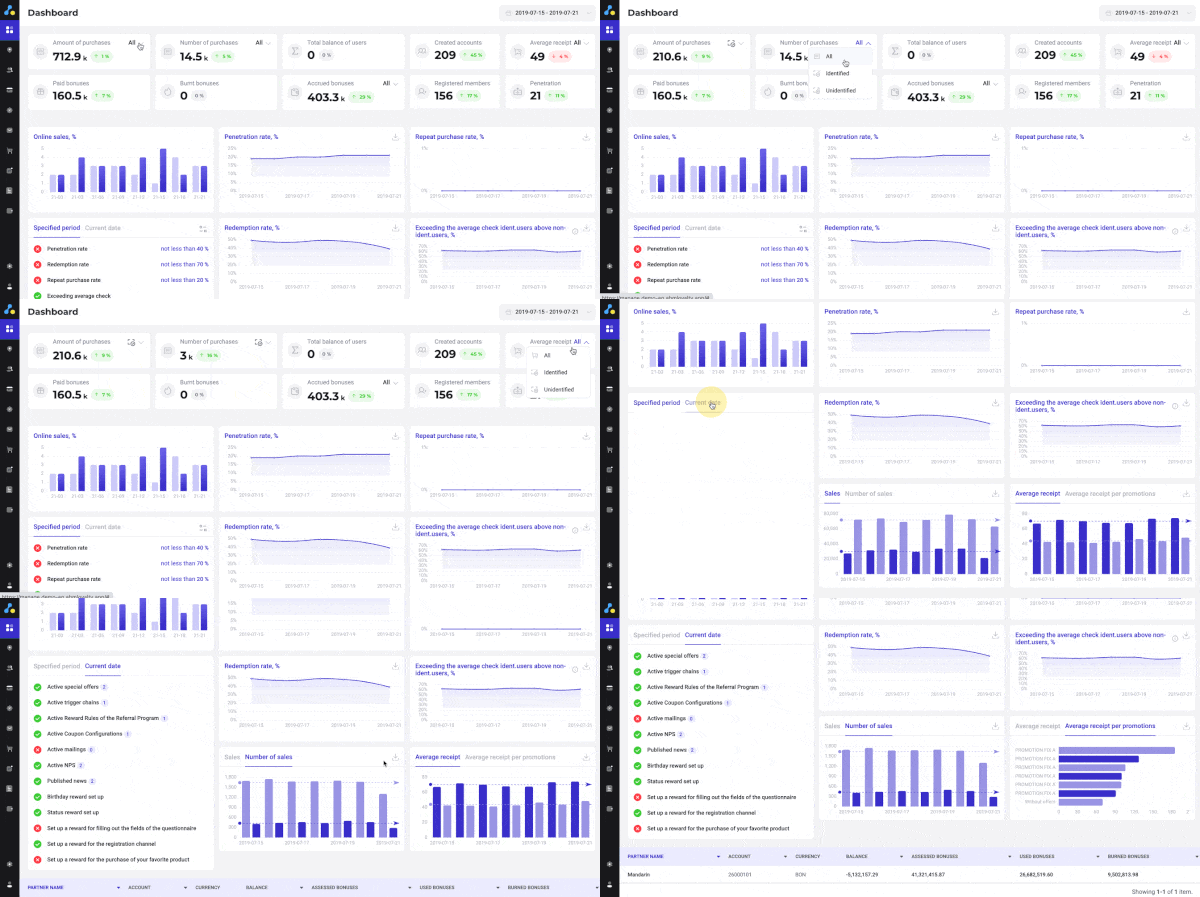
LEAFIO AI is a modular, AI-powered cloud retail platform for small, mid-size, and growing multi-store networks. Its Shelf Efficiency module automates planogram creation and space planning, and connects those decisions to assortment performance, inventory replenishment, and in-store execution, without locking you into a single market-data ecosystem. LEAFIO AI serves 250+ retailers across 30K+ stores in 45+ countries and was named a Leader in G2's Winter 2025 report for Retail Space Planning.
Unlike Spaceman's desktop-first design tool, LEAFIO AI runs in the browser and on mobile, so space planners, category managers, and store associates work in one system. Retailers can start with Shelf Efficiency alone or add inventory optimization so shelf capacity and replenishment stay in sync.
Key features:
- Store-specific shelf planning: one fixture and SKU library, with planogram variations for every store format and size
- Automated planogram generation based on sales velocity, profitability, supplier agreements, ABC classification, and brand priorities
- Zoning and autofill: split shelves into blocks and fill them by sorting rules or category sales insights
- Bulk item management: add, delist, or swap SKUs across the chain, with drill-down to each store
- Floor space planning and micro space management in the same platform
- AI planogram image recognition: store teams receive planogram tasks in the mobile app, send shelf photos, and the system flags missing items and wrong facings
- Shelf analytics with an agentic AI assistant: sales per linear foot, category performance, planogram adherence, and out-of-stock impact
- Native link to demand forecasting and replenishment when used with LEAFIO Inventory Optimization
- Integrations with SAP, Oracle, Dynamics 365, NetSuite, POS, and custom systems through standard APIs; no external systems integrator required
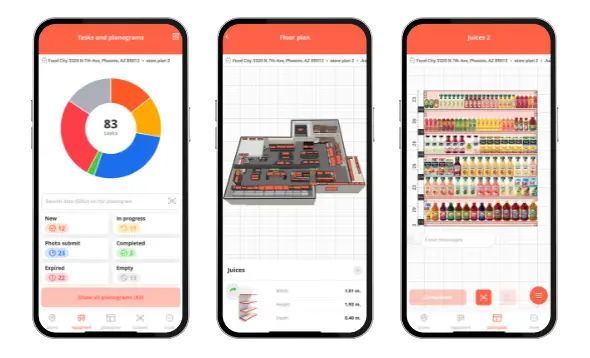
Pricing: LEAFIO AI is built for multi-store retail networks. Pricing has two components: a one-time implementation fee and an ongoing subscription that scales with your store count and SKU volume. There is no per-seat fee, so every planner and store user can access the system. Contact us for a quote sized to your network.
| ✅ Pros | ❌ Cons |
|---|---|
| Planograms, inventory, assortment, and store execution in one cloud platform | Less suited for CPG manufacturers running joint category reviews on syndicated market data |
| Up to 80% less manual planogram work with automated generation | Macro floor planning is less specialized than dedicated CAD-based tools |
| Mobile app with AI image recognition for planogram compliance | Smaller brand footprint than NIQ or Blue Yonder |
| No per-seat licensing, all teams can access the system | Custom pricing requires a discovery call |
| Modular: start with Shelf Efficiency, expand to inventory and assortment | |
| Pilot on a store cluster in a few weeks |
How it compares to NIQ Spaceman:
- ✅ Better in: connection between shelf space, forecasting, and replenishment; store-level execution and photo-based compliance; cloud access for all users; pricing without per-seat licenses; time-to-value for mid-size chains
- ❌ Spaceman is stronger in: CPG–retailer category collaboration on NIQ market data, a large pool of trained Spaceman planners, and long enterprise track record
Results from LEAFIO AI customers:
- Plum Market (25+ US grocery locations): +11.4% sales and +12.3% profit in covered categories (2023 vs 2024, like-for-like); new-store shelf preparation cut from 14 to 4.5 days
- Philip Morris Switzerland (about 4,000 points of sale): 80% faster planogram creation across about 580 unique shelf layouts
- Eco Shop (Malaysian supermarket chain, 250 stores): +32.4% candy sales per meter in a three-category planogram pilot
- Baltic Petroleum (86 fuel and convenience stations): 50% overstock reduction and +62% retail sales with Shelf Efficiency and Inventory Optimization running together
Best for: Mid-size and growing retail chains (grocery, convenience, pharmacy, health & beauty, DIY, specialty) that want automated planograms, store execution, and inventory decisions in one platform without per-seat licensing.
Bottom line: LEAFIO AI is the most direct NIQ Spaceman alternative for retailers who want shelf planning to drive replenishment and in-store execution instead of living in a separate desktop tool. For a feature-by-feature breakdown of the two tools, see our LEAFIO AI vs NIQ Spaceman comparison.
Replace NIQ Spaceman with shelf planning that feeds replenishment. See LEAFIO AI generate planograms on your own data. Request a simulation →
2. Blue Yonder: Best for Large Enterprises Connecting Space Planning to the Supply Chain
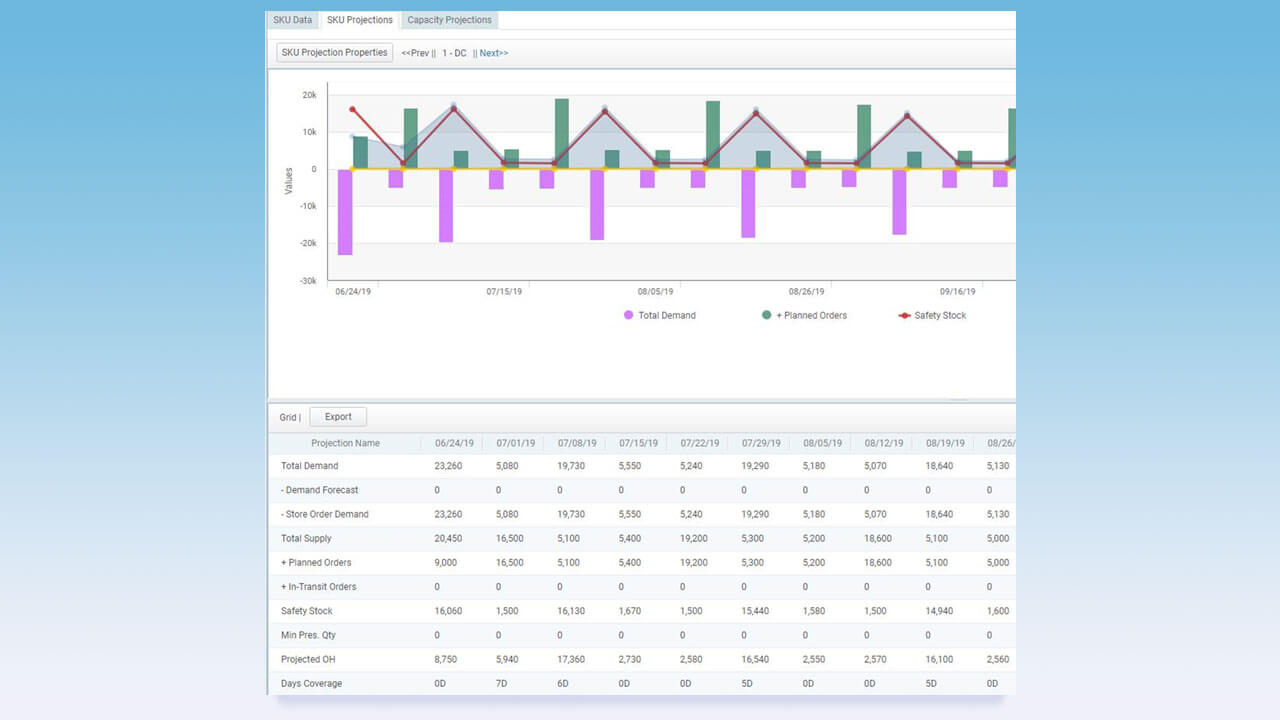
Blue Yonder (formerly JDA Software) is one of the largest supply chain technology providers, backed by Panasonic. Its category management suite, which traces back to JDA's Intactix space planning tools, covers space planning, floor planning, assortment, and category analytics. At ICON 2026 in May, Blue Yonder launched Cognitive Solutions for Space Planning and Category Management, which put planograms on one data set with assortment, allocation, replenishment, warehousing, and transportation.
Key features:
- Space and floor planning for cluster-level and store-specific planograms
- One data set: a change on the shelf flows into forecasts, ordering, and load builds
- Real-time planogram co-creation with suppliers on the Blue Yonder Network
- Mobile store experience with live planograms, step-by-step guidance, and compliance flags
- AI-assisted insight into inventory changes, ordering details, and forecast revisions
- Assortment optimization and category analytics
Pricing: Enterprise pricing with custom quotes. The 3-year total cost of ownership can range from $500,000 to several million dollars depending on scope.
Pros and cons:
| ✅ Pros | ❌ Cons |
|---|---|
| Space planning connected to end-to-end supply chain execution | Very high total cost of ownership |
| Supplier collaboration on one planogram version | Implementations often take 12+ months |
| Proven at global enterprise scale | Usually requires specialized consultants or an SI partner |
| Mobile execution for store associates | Too complex for most mid-size retailers |
How it compares to NIQ Spaceman:
- ✅ Better in: connection to forecasting, replenishment, and logistics; supplier co-creation; store-specific decisions at enterprise scale
- ❌ Spaceman is stronger in: a focused space planning purchase without a wider platform commitment, and integration with NIQ market data
Best for: Large enterprise retailers, often with $1B+ revenue, that already run Blue Yonder for supply chain planning and want space planning on the same platform. See our Blue Yonder alternatives guide for more context.
Bottom line: Blue Yonder suits enterprises ready to invest in a full platform. For mid-size chains, the cost and timeline rarely pay off for space planning alone.
3. RELEX Solutions: Best for Enterprise Grocery Chains Unifying Space and Replenishment
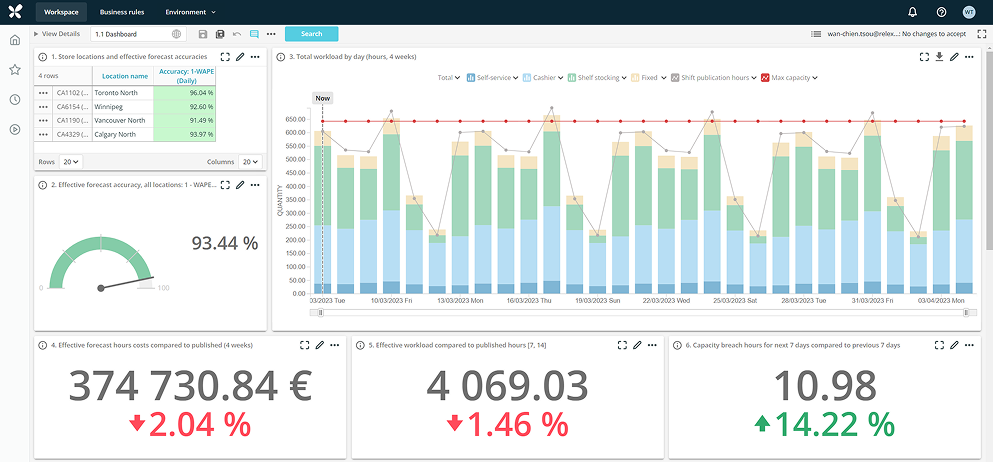
RELEX Solutions is a Finland-based unified supply chain and retail planning platform with 600+ customers. Its space planning offering combines planogram optimization, floor planning, and assortment with RELEX demand forecasting and replenishment. Retailers using RELEX for space planning include Rewe, dm, Kwik Trip, Circle K, and Radstock Co-operative.
Key features:
- Automated, locally optimized store-specific planograms
- AI demand forecasting that keeps shelf space aligned with changing demand
- Planograms tied to local replenishment schedules and day-level demand to support direct-to-shelf replenishment
- RELEX Planogram Delivery: mobile access to planogram changes for store associates
- Floor planning with traffic heatmaps, fixture management, and Power BI reports
- Unified Merchandising linking space and assortment to pricing, promotions, and inventory plans
Pricing: Enterprise SaaS subscription with custom quotes. Costs can grow as modules and scope expand.
Pros and cons:
| ✅ Pros | ❌ Cons |
|---|---|
| Space planning and replenishment in one platform | Enterprise pricing and high implementation cost |
| Strong grocery and fresh expertise | 6–12 month deployments are common |
| Vendor-reported gains of up to 5%+ availability and 3%+ sales from locally optimized planograms | Complex configuration for mid-size teams |
| Large retail customer base | Less emphasis on photo-based compliance tools for field teams |
How it compares to NIQ Spaceman:
- ✅ Better in: link between planograms, forecasting, and replenishment; demand-driven store-specific automation; unified retail planning
- ❌ Spaceman is stronger in: standalone space planning, CPG collaboration on NIQ data, and a larger pool of trained planogram users
Best for: Enterprise grocery, convenience, and drugstore chains with 300+ stores that want space planning and supply chain planning on one platform. See our RELEX Solutions alternatives guide for a deeper look.
Bottom line: RELEX is one of the strongest Spaceman competitors for large grocers, but it's a long, costly project. Mid-size chains usually get to the same connected result faster with LEAFIO AI.
4. SymphonyAI (CINDE): Best for CPG Manufacturers and Category Captains
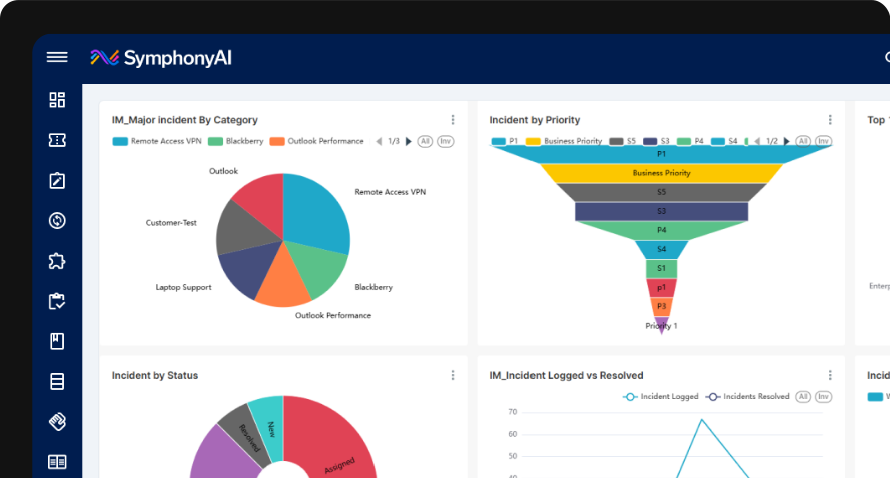
SymphonyAI is an enterprise AI company with 2,000+ enterprise customers and a long history in grocery category management. In June 2026 it launched CINDE, an AI-powered assortment and space platform for CPG manufacturers that links assortment strategy, planogram execution, and in-store compliance. CINDE is sold as a standalone Assortment-as-a-Service offering or as part of the CINDE CPG Enterprise Suite.
Key features:
- Store Intelligence: computer vision reads SKUs, facings, and out-of-stocks from shelf photos and assigns corrective tasks
- Space-aware assortment: assortment and planogram planning share one data model
- Planogram automation across banners, countries, languages, and regulatory contexts
- Assortment optimization with incrementality scoring, need-state analysis, and cannibalization modeling
- Store clustering based on store-level transaction patterns
Pricing: Enterprise custom pricing.
Pros and cons:
| ✅ Pros | ❌ Cons |
|---|---|
| Deep AI assortment and space science; 500+ global CPG deployments | Built primarily for CPG manufacturers, not retailers |
| Computer-vision shelf audits built in | Enterprise pricing and long implementation timelines |
| Category review cycles cut from 4–6 weeks to days (vendor claim) | Replenishment and store ordering are outside CINDE's scope |
| G2: 4.2/5 (SymphonyAI Retail/CPG) | Less relevant for fashion and specialty retail |
How it compares to NIQ Spaceman:
- ✅ Better in: AI assortment optimization, computer-vision compliance, multi-country planogram automation for CPGs
- ❌ Spaceman is stronger in: retailer adoption, a familiar planogram design environment for space planners, and broader use across retail formats
Best for: Global CPG manufacturers and category captains that build assortment and planogram recommendations for retail partners. See our SymphonyAI alternatives guide for a deeper breakdown.
Bottom line: CINDE is a strong Spaceman alternative on the manufacturer side of the shelf. Retailers who run their own space planning will find it less aligned with day-to-day store operations.
5. Quant: Best for Store-Specific Planograms in Pharmacy, DIY, and Specialty Retail
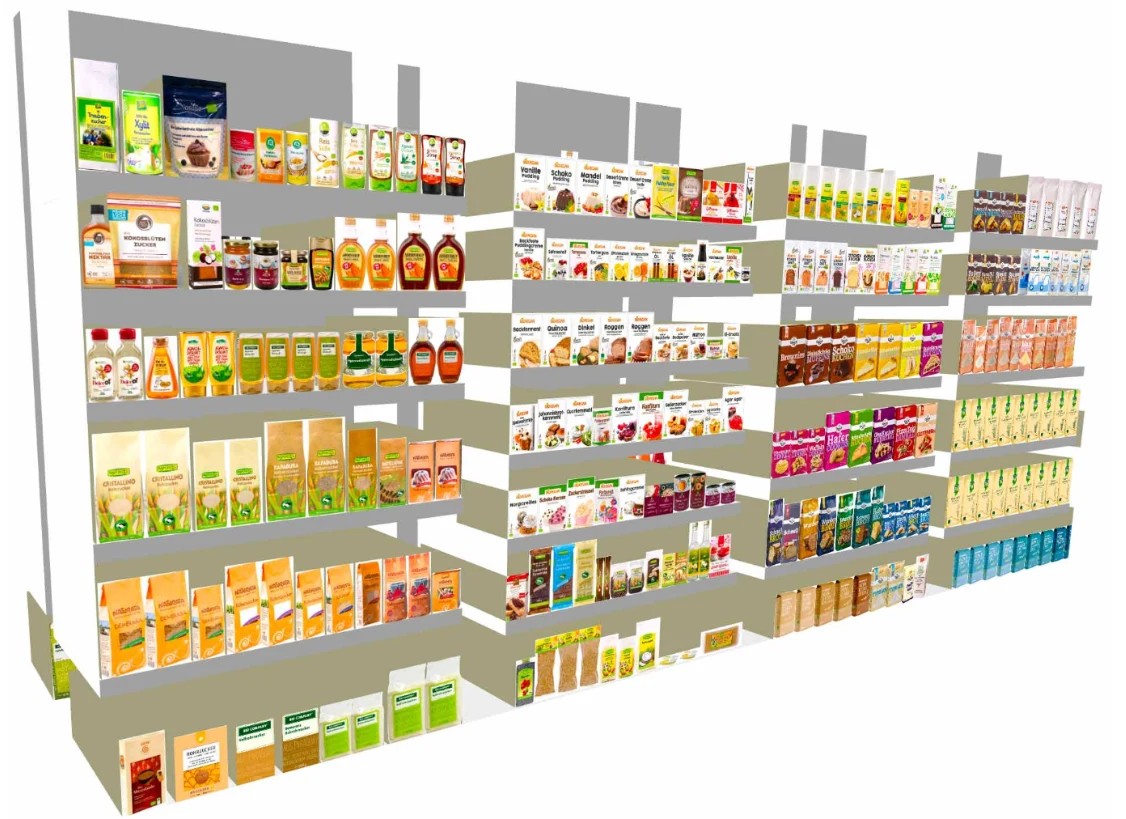
Quant is a planogram and retail space management platform developed by Quant Retail s.r.o. since 2003. It focuses on automatic store-specific planograms for chains whose stores differ in size and layout, and it combines shelf planning with floor planning in one multi-user application. Customers include Notino, Dr.Max, Do it Center, and BIO COMPANY.
Key features:
- Store-specific planograms generated automatically from user-defined templates
- Planogram rules that describe customer decision logic; AI arranges products by importance, sales, and available space
- Built-in store floor planning in Quant Desktop for macro space
- Quant Web: stores view the latest planograms and upload annotated photos of the actual shelf
- Data exchange via CSV/FTPS, REST API, or SQL replication
- Fixture support for shelving, gondolas, freezers, hanging systems, tables, and pallets
Pricing: Tiered plans for small retailers, multinational chains, and suppliers. The Retail Planning plan has no user limit, so there are no per-user license costs.
Pros and cons:
| ✅ Pros | ❌ Cons |
|---|---|
| Strong store-specific planogram automation | Planning runs in a desktop application |
| No per-user license fees on the Retail Planning plan | No native demand forecasting or replenishment |
| G2: 4.8/5 with 57 reviews | No dedicated mobile execution app (web access and photos) |
| Floor and shelf planning in one tool | Smaller presence outside Europe |
How it compares to NIQ Spaceman:
- ✅ Better in: automatic store-specific planograms for varied layouts, pricing without user limits, and strong G2 ratings
- ❌ Spaceman is stronger in: NIQ data and CPG collaboration, global presence, and enterprise references
Best for: Pharmacy, DIY, beauty, and specialty chains, mostly in Europe, that manage many store layouts and want planogram automation without per-seat licensing. Dr.Max Serbia, for example, reported a sales increase of more than 24% after implementation.
Bottom line: Quant is a practical Spaceman replacement for store-specific planogramming. It stays a space planning tool, so inventory and replenishment still need a separate system.
6. DotActiv: Best for Small Retailers and Suppliers on a Budget
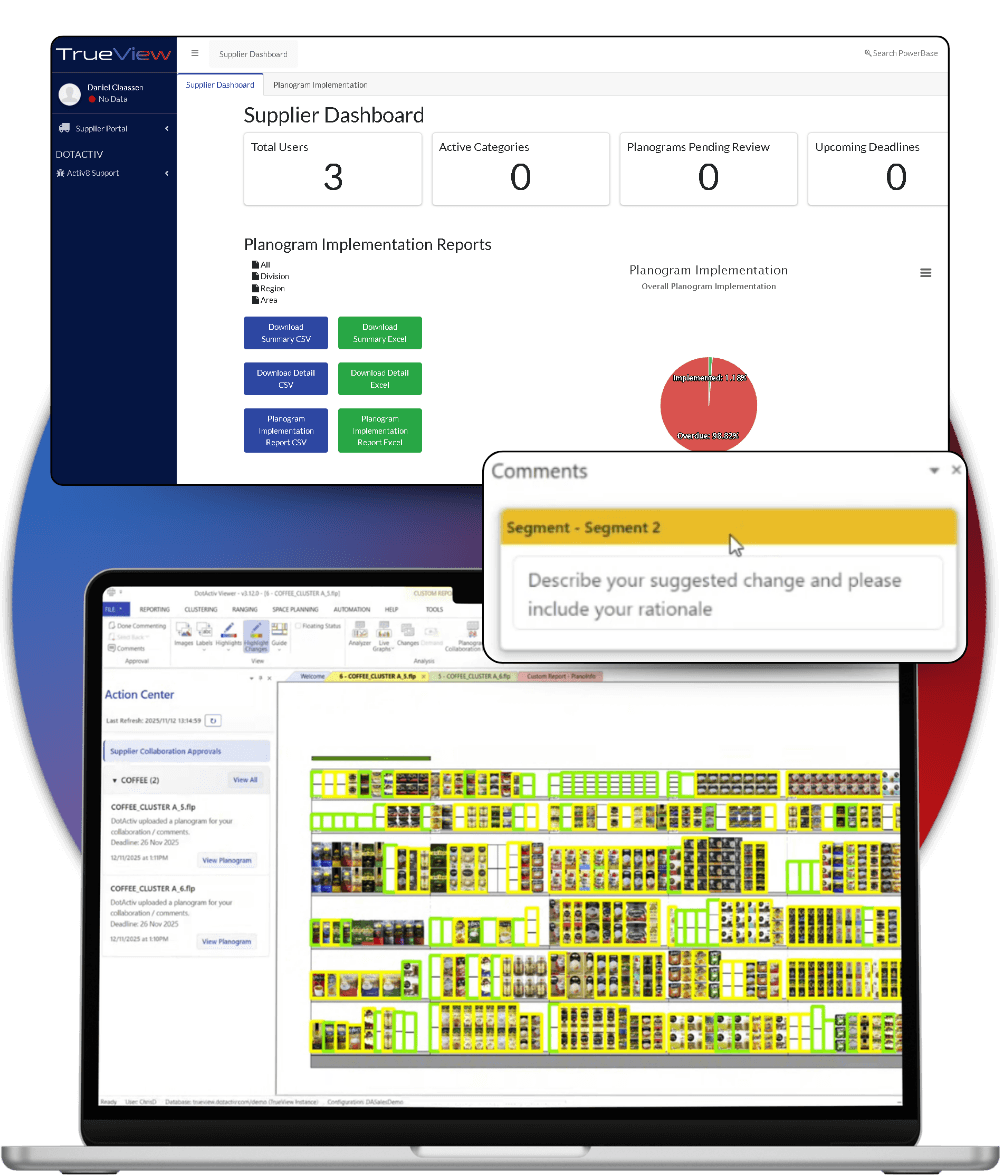
DotActiv is a South African category management software and services company. It offers planogram and space planning software with published pricing, plus an option to outsource category planning work to its own team. That makes it one of the most affordable options among software like NIQ Spaceman for smaller retailers and suppliers.
Key features:
- AI planogram generation (Nova planograms) and the Lola AI assistant
- Planogram reporting and retail analytics
- Database integration, assortment, and cluster maintenance (Pro tier)
- Assortment and cluster optimization plus floor planning (Enterprise tiers)
- TrueView with image recognition for compliance checks (available with higher license counts)
- Full Category Planning Services: DotActiv builds the plans, your team keeps sign-off
Pricing: Per license per year: Free ($0, limited to 40 SKUs), Lite ($800), Pro ($2,000), Enterprise ($4,500), and Enterprise AI ($7,500, by quote). A free 14-day trial is available, and there are no mandatory setup fees.
Pros and cons:
| ✅ Pros | ❌ Cons |
|---|---|
| Transparent, published pricing with a free tier | Still priced per license |
| Optional outsourced category planning services | Full functionality depends on database integration that takes a few weeks |
| Training included in every plan | Image recognition is tied to higher license counts |
| Free tier and low entry price | No native demand forecasting or replenishment |
How it compares to NIQ Spaceman:
- ✅ Better in: published pricing, a free entry tier, and outsourced planning help
- ❌ Spaceman is stronger in: enterprise scale, NIQ data integration, and a larger global customer base
Best for: Small and independent retailers and suppliers that need professional planograms without an enterprise budget. For a detailed comparison, see LEAFIO AI vs DotActiv.
Bottom line: DotActiv is a cost-effective Spaceman alternative for small teams. As the chain grows, per-license costs and the lack of inventory integration become more noticeable.
7. One Door: Best for Visual Merchandising in Specialty and Non-Food Retail
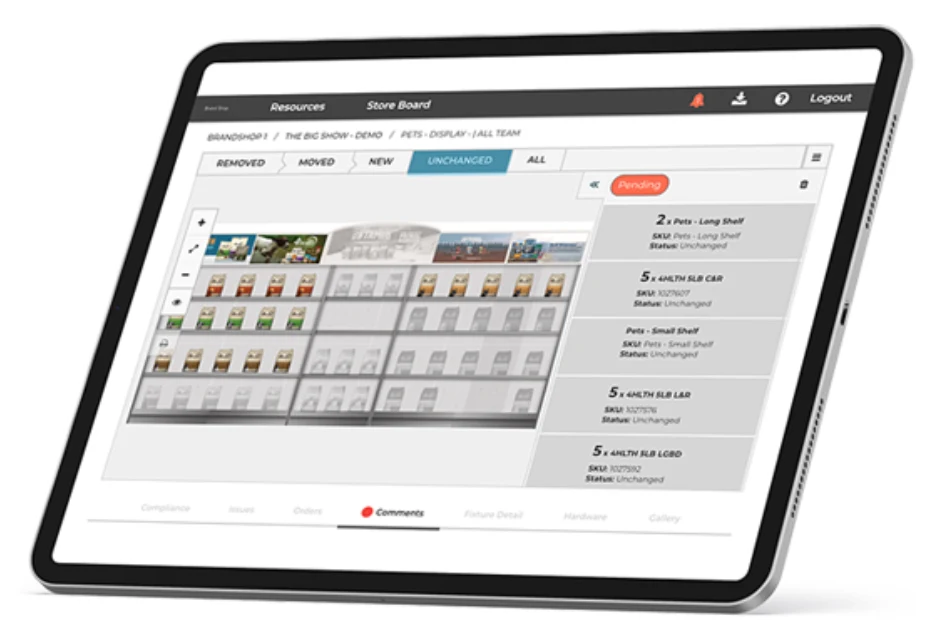
One Door is a cloud-based visual merchandising platform that runs the process from HQ planning to the store floor. It is built for retailers where displays, fixtures, and marketing messages matter as much as SKU facings. Customers include Best Buy, Telstra, Pandora, Metro, and Comcast.
Key features:
- Store Planning: allocates products, displays, and messaging to each store
- Studio: builds and tests display concepts with 3D or VR imagery
- Store Assistant: mobile-first instructions for store teams
- Compliance (Image IQ): AI image recognition checks planogram execution in each store
- Insights: AI surfaces sales trends and execution gaps across the fleet
Pricing: Custom pricing.
Pros and cons:
| ✅ Pros | ❌ Cons |
|---|---|
| Strong visual merchandising and display planning | Less focused on high-SKU grocery shelf optimization |
| Mobile store execution and AI compliance in one cloud platform | No demand forecasting or replenishment |
| Vendor-reported 10%+ improvement in store compliance | Pricing is not public |
| G2: 4.4/5 with 14 reviews; SOC 2 Type II | Best fit for specialty formats only |
How it compares to NIQ Spaceman:
- ✅ Better in: visual merchandising, store communication, and cloud-based execution
- ❌ Spaceman is stronger in: data-driven shelf space allocation for FMCG categories and CPG collaboration
Best for: Specialty retailers in telecom, electronics, jewelry, optical, and furniture that manage displays and campaigns across many stores.
Bottom line: One Door is the right Spaceman alternative when the challenge is visual merchandising execution. Grocery and pharmacy chains will need deeper shelf analytics.
8. PlanoHero: Best for Small Chains Looking for a Lightweight Cloud Planogram Tool
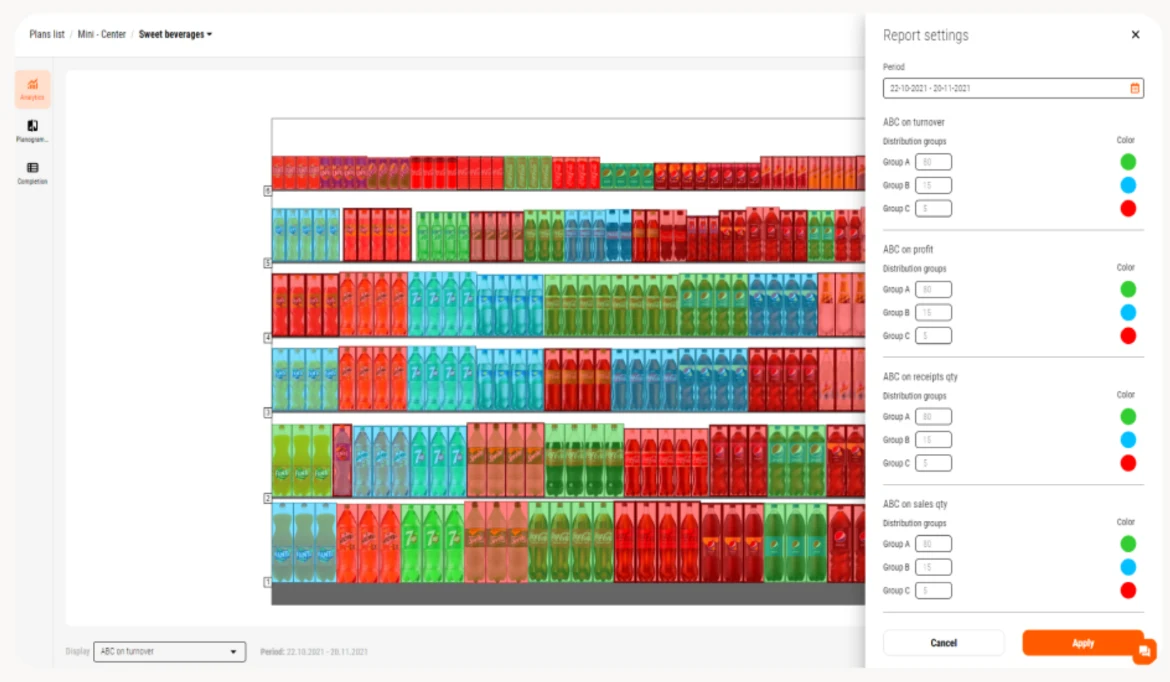
PlanoHero is a cloud planogram and merchandising automation tool developed by Datawiz.io and launched in 2017. It entered the US market in January 2026 and serves supermarkets, pharmacies, electronics, fashion, FMCG, and distributors.
Key features:
- Fixture library and store plan building
- Planogram creation and editing
- AI layout rules that generate shelf layouts automatically
- Planogram distribution to store teams
- Effectiveness analysis of compliance, stock levels, and sales impact
- Wizora AI Assistant for insights and recommendations
- ERP and POS integration options
Pricing: Custom pricing, not published.
Pros and cons:
| ✅ Pros | ❌ Cons |
|---|---|
| Simple cloud-based planogram workflow | Small review base (G2: 4.8/5 with 3 reviews) |
| AI layout rules and an AI assistant | Limited enterprise track record in the US |
| Store plans and planograms in one tool | No native forecasting or replenishment |
How it compares to NIQ Spaceman:
- ✅ Better in: cloud access and a short setup for small teams
- ❌ Spaceman is stronger in: enterprise scale, advanced automation, and NIQ data integration
Best for: Small and mid-size chains that want to move off manual or spreadsheet-based planograms quickly.
Bottom line: PlanoHero is an entry-level Spaceman alternative for planogramming. Retailers that also want inventory and assortment decisions on the same data should look at LEAFIO AI.
How to Choose the Right NIQ Spaceman Alternative
The right Spaceman replacement depends on who you are on the shelf, how many stores you plan for, and how far you want planograms to reach into operations. Work through these questions:
- Are you a retailer or a CPG manufacturer? Retailers planning their own stores should prioritize retail-native platforms like LEAFIO AI, RELEX, or Quant. Manufacturers acting as category captains will get more from SymphonyAI CINDE or Spaceman itself.
- Should planograms drive replenishment? If shelf capacity must update order quantities automatically, choose a platform with native forecasting and replenishment: LEAFIO AI, RELEX, or Blue Yonder.
- How many stores and layouts do you manage? Under 1,000 stores with many formats: LEAFIO AI or Quant. Global enterprise networks with an existing supply chain suite: Blue Yonder or RELEX.
- Who needs access? If buyers, category managers, and store teams all need the system, avoid per-seat licensing. LEAFIO AI and Quant's Retail Planning plan don't charge per user.
- How will you check compliance in stores? Look for a mobile app with planogram tasks and AI image recognition. LEAFIO AI, One Door, Blue Yonder, and SymphonyAI offer this natively; DotActiv offers image recognition as an add-on.
- What is your budget and timeline? For a fast, low-cost start, DotActiv and PlanoHero are entry-level options. For a connected platform without an enterprise project, LEAFIO AI typically runs a store-cluster pilot within a few weeks.
- Can you test with your own data? Ask each vendor to generate planograms for one category on your data. LEAFIO AI offers a data-driven simulation before you commit.
How to Plan a Migration from NIQ Spaceman
Whichever alternative you choose, a move off Spaceman follows the same four steps:
- Inventory what you use
List the Spaceman modules, planogram counts, and store clusters your team maintains today, and note which tasks already run outside Spaceman: forecasting, store communication, and compliance checks. - Export the planogram library and master data
Export current planograms, fixtures, and product dimensions, and pull 12–24 months of sales history from your ERP or POS so the new tool's automation rules work on real performance data. - Pilot one category in one store cluster
Ask each shortlisted vendor to rebuild a category on your data, then compare sales per meter, out-of-stocks, and planner hours against the Spaceman version. - Plan the store rollout and the license exit
Train store teams on the new mobile workflow, and finish the pilot before your Spaceman license renewal date so the decision isn't rushed.
For the LEAFIO-specific migration path and timelines, see our LEAFIO AI vs NIQ Spaceman comparison.
See your own category rebuilt before you commit: LEAFIO AI runs a data-driven simulation on your planograms and sales history. Request a simulation →
FAQ
What are the best alternatives to NIQ Spaceman?
The best NIQ Spaceman alternatives in 2026 are LEAFIO AI, Blue Yonder, RELEX Solutions, SymphonyAI (CINDE), Quant, DotActiv, One Door, and PlanoHero. LEAFIO AI is the strongest fit for mid-size retail chains that want planograms connected to inventory and store execution. Blue Yonder and RELEX suit large enterprises, while DotActiv and PlanoHero are entry-level options.
Who are NielsenIQ Spaceman's main competitors?
Spaceman's main competitors in space planning are Blue Yonder Space Planning, RELEX Solutions, SymphonyAI, Quant, and DotActiv. For retailers that want shelf planning, replenishment, and store execution in one platform, LEAFIO AI is the most direct NielsenIQ Spaceman competitor.
How do NIQ Spaceman alternatives compare on pricing?
DotActiv publishes per-license prices, from a free tier to $7,500 per year. Quant's Retail Planning plan has no user limit. LEAFIO AI charges a one-time implementation fee plus a subscription scaled by store count and SKU volume, with no per-seat fee. Blue Yonder, RELEX, SymphonyAI, One Door, and PlanoHero quote custom prices. NIQ doesn't publish Spaceman prices; it is licensed per user and per module.
Which Spaceman alternatives are cloud-based?
LEAFIO AI, RELEX Solutions, Blue Yonder, One Door, and PlanoHero run as cloud platforms with web or mobile access for store teams. Quant plans in a desktop application and shares planograms with stores through Quant Web. DotActiv is downloaded and licensed per user, with optional database hosting. Spaceman's Professional design environment is desktop-first, and NIQ announced NIQ-managed Azure hosting in October 2026.
Does NIQ Spaceman use AI?
Yes, increasingly. Spaceman Automation generates rules-based planograms, the TETRIS add-on (2024) uses AI to extract merchandising rules from existing planograms, and in October 2026 NIQ announced Optiq conversational AI and AI-powered compliance measurement. Availability dates and pricing for the new features were not published.
Is there a free alternative to Spaceman?
DotActiv offers a free tier limited to 40 SKUs and one segment, plus a 14-day trial of its paid plans. Free tools work for single categories, but multi-store chains usually need automation, store-specific planograms, and compliance tracking that only paid platforms provide.
Which Spaceman alternative connects planograms to replenishment?
LEAFIO AI, RELEX Solutions, and Blue Yonder connect space planning to forecasting and replenishment. LEAFIO AI is the most accessible of the three for mid-size chains, because it can start with one module and pilot on a store cluster within a few weeks.


Have a question?

Jack Larson
Retail Optimization Expert