
This comprehensive guide offers strategic insights into optimizing hardware merchandising and DIY retail display while integrating effective DIY inventory management systems.
You'll discover specialized solutions for DIY retailers designed to boost customer satisfaction and drive sales. Transform your retail environment with our actionable tips that ensure your store meets and exceeds shopper expectations.
Key Takeaways
Merchandising in hardware retail needs tailored approaches to guide complex buying decisions.
Displays must educate customers.
Seasonal assortments drive relevance.
Signage helps simplify product choices.
Organized layouts reduce search time.
Data helps refine category strategies.
Top 5 proven strategies to improve hardware merchandising
#5: Maximize Cross-Selling with Strategic Product Placement
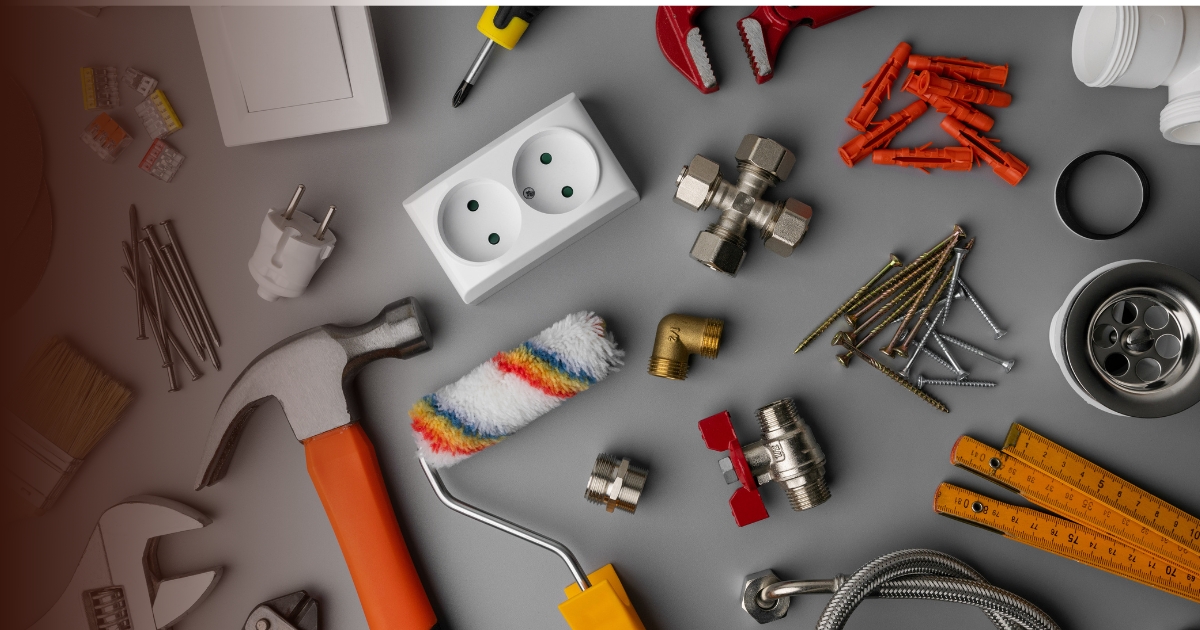
A person comes to a DIY store to buy several basic commodities, such as paint. It's important to place all associated goods nearby: brushes, rollers, masking tape. First, this is more convenient for the customer, since they don’t have to wander around the store searching for a roller or a brush. Secondly, it is an additional incentive to buy a related product. Think about what the customer might need and create effective merchandising.
#4: Empower Customers with Accessible Information
No price tag is a good reason to walk past a product instead of putting it in the cart. This might not be so crucial for a grocery store, since we have an approximate idea of how much bread or milk costs, but for DIY it is unforgivable. The customer often does not know how much the paint or plaster costs. The number of manufacturers in this category is huge, and the price is the easiest and most reliable guideline.

In order not to overload the space with signs, but to provide complete information about the goods, you can use scanners and QR codes. Scanners on the sales floor provide clarification of the price and other parameters of the goods. Thus, you do not need a consultant's help. The customer brings the goods to the device and sees the information on the screen. The same principle goes for codes, only you have to use your gadget or merchandising application.
#3: Simplify Navigation to Enhance Shopping Experience
Making the space of a large sales floor understandable for the visitor is one of the most important tasks for a retailer. The goods display plan at the entrance, signs, clear division into zones – all this helps the customer quickly find what they need, which will give them a positive user experience.
Imagine that at the entrance you can download an application using a QR code, then set a shopping list in it, and the application itself will lead the customer to the proper shelf. This concept is perfect for building materials stores, where it can be difficult for a person to navigate.
#2: Prioritize Shopper Comfort for Increased Engagement
First, it is necessary to provide the customer with baskets and trolleys to carry their purchases. Secondly, do not forget to organize wide aisles between the shelves so that it is convenient for the customers to examine the goods.
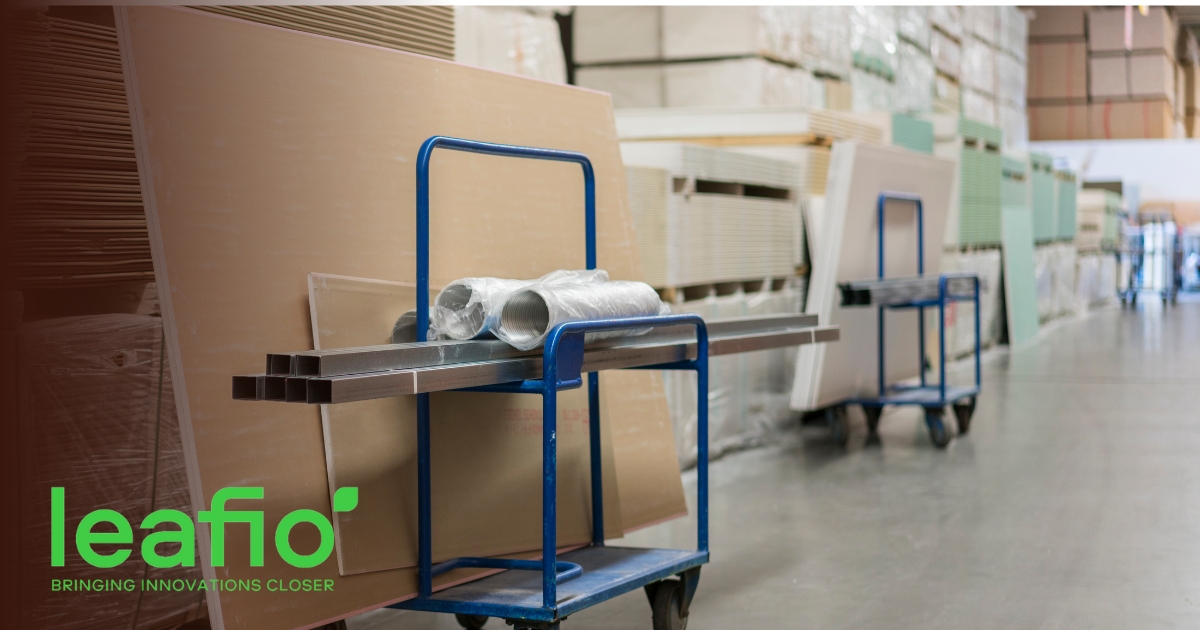
No matter how much you would like to make a beautiful combination out of finishing materials, you'd better not do this, as the store visitors might be afraid to take something from it. But the display of building materials should demonstrate the product in full. At the same time, the buyer should be able to get everything they need.
#1: Boost Sales with Strategic Impulse Purchase Placement
There is always room for impulse purchases in hardware stores. Seasonal display works very well in areas with high customer traffic. In winter, this can be an island with snow shovels and snow salt for the cold season. In autumn - brooms for fallen leaves, in spring - gardening accessories. Before the holidays, you can set up a rack with gift ideas.
Products that are purchased in the emotion of the moment should be noticeable. They can be placed near the cash registers so that in long queues the buyer does not have to wait in vain, but can choose a couple more products to buy.
Hardware merchandising challenges in a DIY retail
In DIY chains, the main challenge with hardware merchandising is properly displaying large items and various small goods. As a result, different types of shelving are used, including conventional shelves and rods for industrial carpet rolls.
In a large store, the lower shelves are filled with products for customers, and the upper shelves are for storage. With this type of hardware store layout, it is necessary to provide carts for the self-transportation of goods.


But for a retailer, it is important not only to choose an advantageous location of goods on the sales floor, but also to manage the display using planograms to control their implementation.
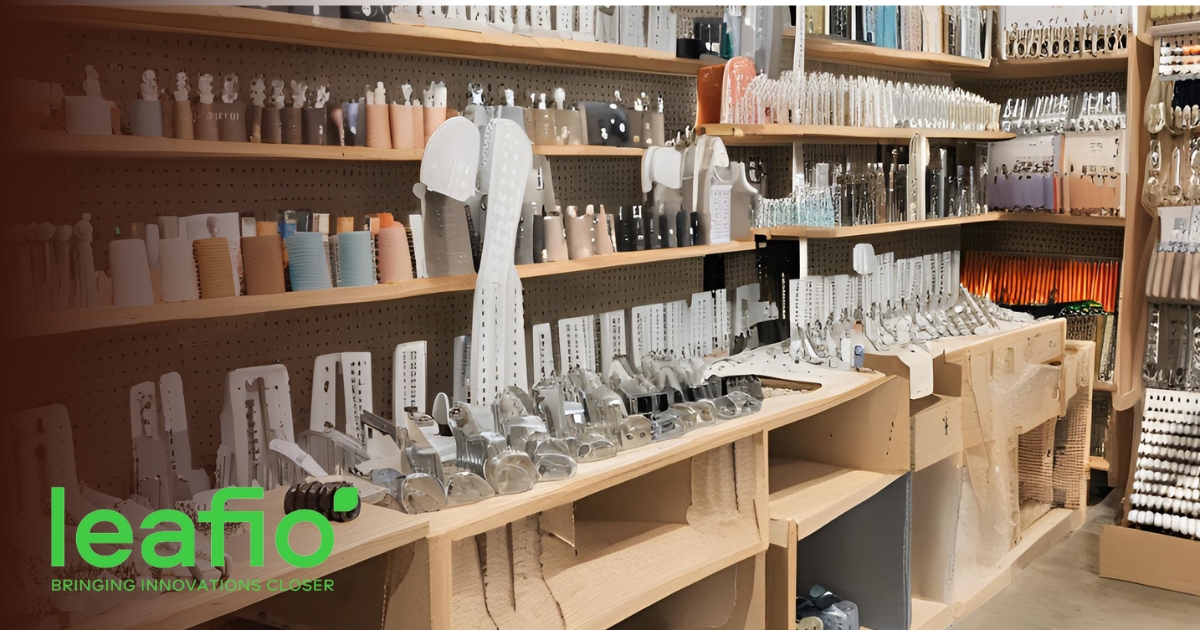
Merchandising of oversized products is a piece of cake. The display of goods, the length of which is much greater than the width, assumes their location vertically, at some angle to the floor. Thus, it is easier to demonstrate the product to the buyer and avoid the integrity of packing violations or contamination of the goods.
It is also possible to display one sample of each product on the shelves and leave the rest in the warehouse. This method should be applied to very expensive, piece-rate goods or overall products.
Overcome challenges with LEAFIO AI store-specific planogram software
Elevate your hardware store's efficiency with LEAFIO AI store-specific planogram software, a cutting-edge solution tailored for merchandising management. This sophisticated software streamlines the creation of detailed planograms that accurately reflect sample products and full-size inventory, ensuring that every item—from 30 cm laminate samples to 2 m boards—is displayed effectively.

With LEAFIO, you can leverage a comprehensive equipment kit and customizable templates suitable for a variety of products, including household goods and building materials.
Plus, the cloud-based AI-powered visual merchandising tool automates the distribution and implementation control of hardware planograms across your DIY retail chain, enhancing consistency and operational excellence.


Have a question?

Jack Larson
Retail Optimization Expert