
Most CPG brands and retailers don't lose trade spend because their promotions are poorly designed. They lose it because promotion planning lives in one spreadsheet, replenishment runs in another system, and by the time a promo fires, nobody's adjusted the order quantities. The result: empty shelves on day one of a campaign or a warehouse full of product no one needs two weeks after it ends. After researching and comparing the leading trade promotion management software on the market, I've put together this guide to help you find a tool that actually fixes that gap, not just tracks it.
I reviewed 8 tools across a range of business sizes and use cases: from enterprise platforms designed for global CPG manufacturers to leaner, faster-to-deploy options that fit growing mid-market brands. Criteria included feature depth, integration capabilities, AI maturity, pricing transparency, and real user feedback from G2 and Capterra. If you run retail operations or manage trade spend at scale, this list covers the tools worth your shortlist.
One of those tools is LEAFIO AI, the only platform in this comparison that connects retail promotion planning software directly to inventory replenishment automation. If you want to see how it handles the full loop, request a free demo.
What Is Trade Promotion Management Software?
Trade promotion management (TPM) software is a platform that helps retailers and consumer goods companies plan, execute, track, and analyze promotional campaigns, including discounts, displays, incentives, and pricing events. It consolidates trade spend budgeting, promotion scheduling, sales forecasting, and post-event analysis in one place. TPM software is used primarily by sales, finance, and operations teams in retail and manufacturing to improve promotional ROI and reduce manual coordination across departments.
Why Trade Promotion Management Software Matters
Trade promotions represent the second-largest cost item for most consumer goods companies after cost of goods sold, yet most of that spend is still managed with a combination of spreadsheets, email threads, and manual reconciliation. According to Business Research Insights, around 72% of organizations are now integrating advanced analytics into their TPM workflows, reflecting how serious the measurement gap has become. The global TPM software market is valued at approximately $1.6 billion in 2025 and growing at a 9.8% CAGR through 2035, a clear signal that the industry is moving past spreadsheets faster than many teams realize.
Without dedicated TPM software, teams typically run into:
- Budget overruns from untracked or duplicated promotional commitments
- Deduction disputes that take weeks to resolve because there's no audit trail
- Post-event analysis that arrives too late to inform the next planning cycle
- Inventory shortfalls or overstock spikes caused by promotions that never triggered a replenishment update
- Sales and finance working from different figures because there's no single source of truth
How We Picked the Best Trade Promotion Management Software
I assessed each tool against a fixed set of criteria, applied consistently across all 8 platforms. Here's what I looked at:
- Promotion lifecycle coverage. Does the tool handle the full cycle, including budgeting, planning, execution, settlement, and post-event analysis, or just parts of it? Partial tools create the same gaps they're supposed to eliminate.
- Inventory and supply chain integration. Trade promotions generate demand spikes. The best tools either connect directly to replenishment systems or integrate with the ERP/WMS that handles ordering. I gave extra weight to platforms where promotion data flows into demand planning automatically.
- AI maturity. There's a significant gap between tools that use machine learning to forecast promotional lift and tools that added an "AI" label to a rule-based engine. I assessed each platform's actual AI capabilities, not its marketing language.
- Deduction management. For CPG brands, deduction reconciliation is a major time sink. Platforms with built-in deduction matching and automated claim settlement scored higher.
- ERP and retail system integration. I checked for native connectors to SAP, Oracle, NetSuite, Microsoft Dynamics, and major retail POS and WMS systems.
- Scalability. Does the platform hold up for a company running 20 SKUs through one retailer, or does it need that complexity to justify its cost? Both ends matter.
- Pricing transparency and trial availability. If a vendor won't list a ballpark price, that's a signal about the sales process you're about to enter. Free trials and demos received higher marks.
- User ratings. I cross-referenced G2, Capterra, and TrustRadius ratings for each platform, weighted by review volume and recency.
Quick Comparison: Best Trade Promotion Management Software at a Glance
Here's a side-by-side view before the full reviews. All pricing is on request unless noted.
| Tool | Best For | Price Range | Free Trial? | Key Differentiator |
|---|---|---|---|---|
| LEAFIO AI | Mid-to-large retail chains | Custom pricing | Yes (demo) | Closes the promotion-to-replenishment loop automatically |
| Vividly | CPG brands, mid-market | Custom pricing | Yes (demo) | AI-powered trade forecasting + automated deduction management |
| CPGvision by PSignite | Mid-to-large CPG companies | Custom pricing | Yes (demo) | TPM + TPO + revenue growth management in one platform |
| SAP Trade Promotion Management | Large enterprises on SAP | Custom pricing | Contact for pricing | ML-driven promotion optimization within SAP ecosystem |
| Anaplan | Mid-to-large enterprises | Custom pricing | Yes (demo) | Collaborative scenario planning across finance and sales |
| Vistex | SAP-native enterprises | Custom pricing | Contact for pricing | Real-time revenue recognition (ASC 606 compliant) |
| Promomash | Growing CPG brands, SMB | From ~$500/mo | Yes (free trial) | All-in-one deduction and field event management |
| Oracle Trade Promotion Management | Large enterprises on Oracle | Custom pricing | Contact for pricing | Supply chain visibility integrated with promotion planning |
8 Best Trade Promotion Management Software: In-Depth Reviews
1. LEAFIO AI: Best Trade Promotion Management Software for Retail Chains
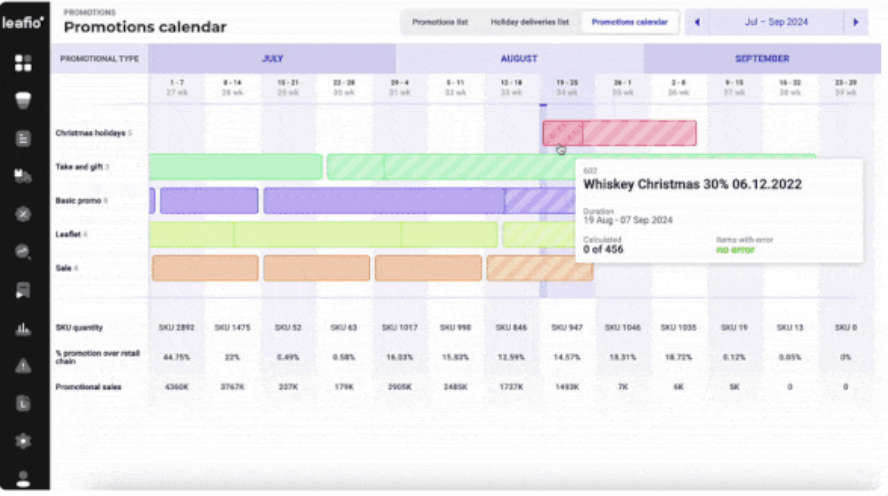
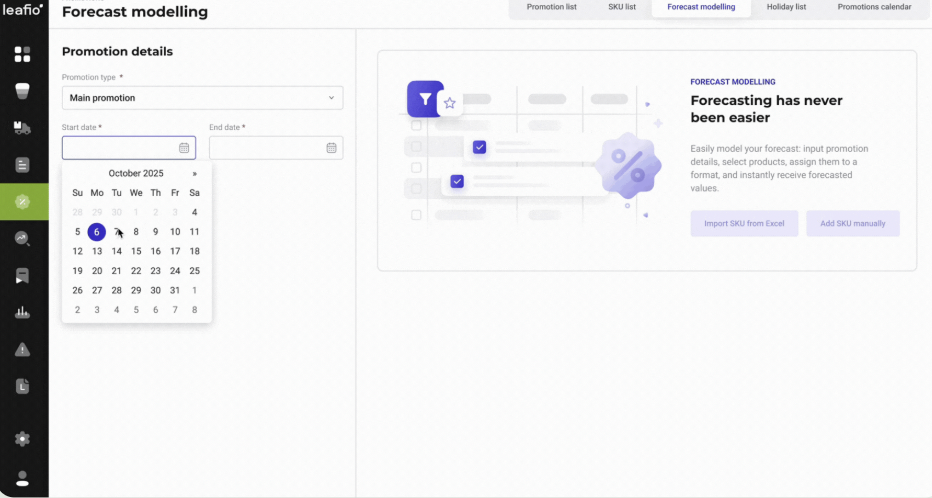
Most trade promotion management tools are built for CPG manufacturers: they plan the promotion, track the spend, and call it done. The inventory side, whether the stores actually have enough stock to sell through the promotion, is treated as somebody else's problem. LEAFIO AI takes a different position. It's built for retail chains that need the promotion and the replenishment to work as a single system. When a promotion is planned, LEAFIO AI's inventory optimization software adjusts demand forecasts and buffer levels automatically, so the orders go out before the shelves go empty.
LEAFIO AI inventory optimization dashboard. Alt: "LEAFIO AI trade promotion management dashboard showing replenishment and demand forecast."
Key features:
- Promotion-aware demand forecasting. LEAFIO factors planned promotions directly into its demand model, increasing forecast precision for promotional periods instead of treating them as anomalies to override manually.
- Automated buffer and order adjustment. When a promotion is active, buffer zones recalibrate across the affected SKUs and stores. Order quantities adjust without a planner having to intervene for each location.
- Multi-store replenishment automation. LEAFIO handles replenishment across large retail networks, including direct supplier delivery and distribution center flows. This is where it's notably stronger than most CPG-focused TPM tools, which stop at the brand level.
- Post-promotion inventory reset. After a campaign ends, buffer levels return to baseline, and any excess stock is flagged for redistribution, reducing the markdown exposure that typically follows a major promo.
- Analytics and reporting. Promotion performance is tracked against forecast, with visibility into sell-through rates, availability during the promo window, and stock positioning by store.
| ✅ Pros | ❌ Cons |
|---|---|
| Closes the gap between promotion planning and inventory execution, a problem most TPM tools ignore | Not designed for CPG manufacturers without a retail distribution network. If you're a brand selling through third-party retailers, this isn't the right fit |
| Works across complex retail network structures: DC-to-store, supplier-direct, cross-docking | Integration setup with existing ERP systems requires a dedicated onboarding phase, typically 4–8 weeks for mid-sized chains |
| Retailers report significant reductions in manual planner interventions during promotional periods | No built-in deduction management for CPG-side claim reconciliation |
| AI-native architecture, not a rule-based engine with ML labels added post-launch |
Pricing: Custom pricing based on network size, number of SKUs, and integration scope. Request a free demo to get a tailored quote.
Best for: Mid-to-large retail chains that run frequent promotional campaigns and need inventory replenishment to respond automatically without relying on planners to manually update every store and SKU.
LEAFIO AI helps grocery and pharmacy chains reduce overstock after promotional periods through automated buffer recalibration that triggers the moment a campaign closes. LEAFIO AI helps mid-sized retail networks improve shelf availability during promotional windows by connecting planned campaigns directly to supplier order schedules. For retailers managing hundreds of SKUs across multiple store formats, LEAFIO AI helps reduce manual planner interventions by adjusting replenishment parameters automatically when a promotion goes live.
2. Vividly: Best AI-Powered TPM for CPG Brands
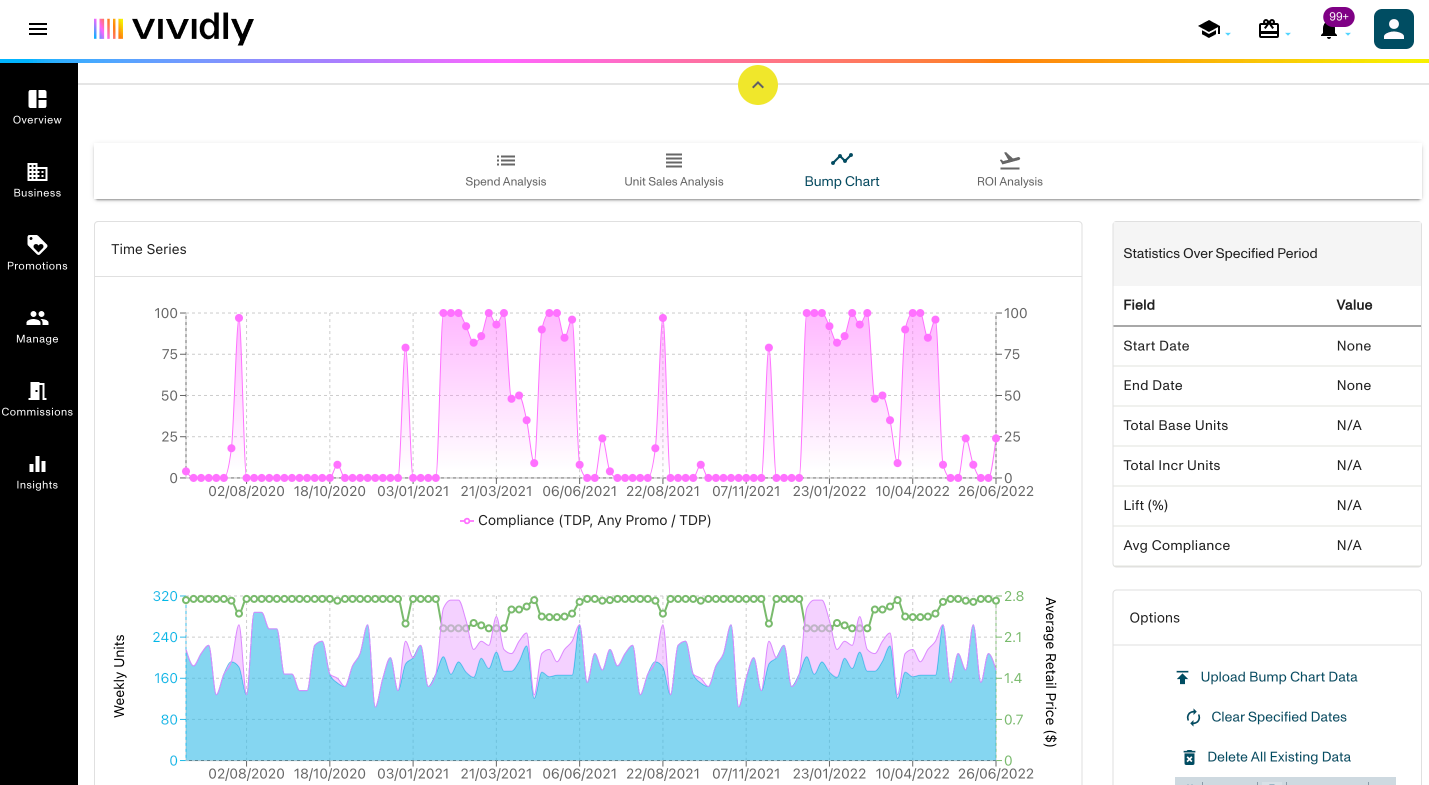
Vividly is a modern trade promotion platform built specifically for consumer packaged goods brands. It launched as a direct response to the gap between what legacy TPM systems offered and what mid-market CPG companies actually needed: something that deploys in weeks, not months, and doesn't require a dedicated implementation team to run. The platform's strongest capabilities are in AI-driven trade forecasting and deduction management, two areas where most brands still rely on manual reconciliation.
Key features:
- AI trade planning and forecasting. Vividly analyzes historical promotion performance and market patterns to generate lift predictions before a campaign launches, helping teams optimize spend allocation ahead of execution.
- Automated deduction management. The platform matches deductions to promotions automatically and flags discrepancies for review, reducing the time finance teams spend on manual claim resolution.
- Real-time analytics dashboards. Campaign performance is visible as it runs, not just in the post-event report, which is useful for catching underperforming promotions before the window closes.
- Cash application automation. Payments are matched to invoices automatically, reducing accounting overhead and improving reconciliation accuracy.
- ERP integrations. Native connectors for NetSuite, SAP, QuickBooks, and Microsoft Dynamics.
| ✅ Pros | ❌ Cons |
|---|---|
| Fast deployment, typically operational in 2–4 weeks compared to 3–6 months for enterprise alternatives | Primarily CPG-brand focused, with limited utility for retail chains managing their own inventory |
| Strong deduction management that actually reduces manual reconciliation workload | Some users report the forecasting engine requires significant historical data to deliver reliable predictions early on |
| SOC 1 Type II and SOC 2 Type II certified, useful for finance and compliance teams | Pricing scales with usage in ways that can be hard to predict before renewal |
Pricing: Available upon request.
Best for: Mid-market CPG brands looking to modernize trade promotion planning and reduce deduction dispute workload without a lengthy enterprise implementation.
3. CPGvision by PSignite: Best for Integrated TPM, TPO, and Revenue Growth Management
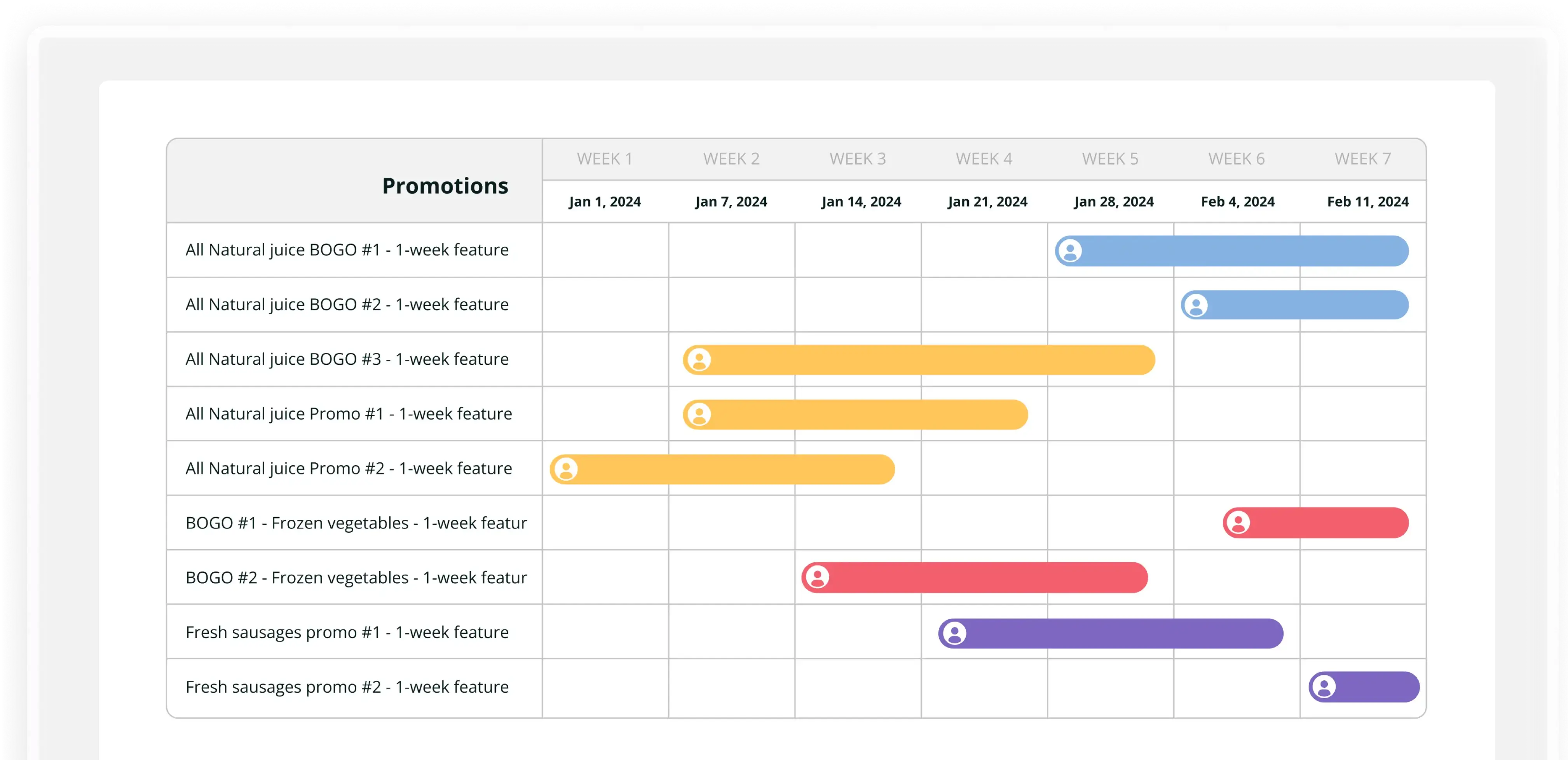
CPGvision by PSignite sits at the intersection of trade promotion management, trade promotion optimization, and revenue growth management. For consumer goods companies that have outgrown standalone TPM tools and need a unified view of promotion spend, pricing strategy, and revenue performance, it's one of the more complete platforms available. PSignite positions it around agentic AI, automation that handles repetitive planning tasks so revenue management teams can focus on decisions, not data entry.
Key features:
- Unified TPM + TPO + RGM. Promotion planning, optimization modeling, and revenue management live in the same data environment, avoiding the reconciliation problems that come from running separate tools.
- Agentic AI for manual task automation. The platform claims to automate time-consuming tasks like data entry, budget reallocation, and routine reporting using AI agents, freeing up planner capacity.
- Side-by-side scenario planning. Teams can compare multiple promotion strategies before committing spend, modeling volume, margin, and ROI outcomes for each scenario.
- Post-event analysis. Actual vs. planned performance is tracked at the account, product, and promotion level, feeding directly into future planning cycles.
| ✅ Pros | ❌ Cons |
|---|---|
| One of the few platforms that genuinely integrates TPM, TPO, and RGM in a single environment | Implementation complexity is significant: expect 3–6 months for a full rollout |
| Recognized by Gartner in the revenue management space | Primarily built for large CPG manufacturers; not well-suited to retail-side inventory management |
| Strong scenario modeling reduces the guesswork in promotion planning | Customer support experiences vary in user reviews on G2 |
Pricing: Custom. Contact PSignite for a demo and quote.
Best for: Mid-to-large CPG companies that need TPM, TPO, and revenue growth management under one roof and have the implementation bandwidth to set it up properly.
4. SAP Trade Promotion Management: Best for Large Enterprises on the SAP Ecosystem
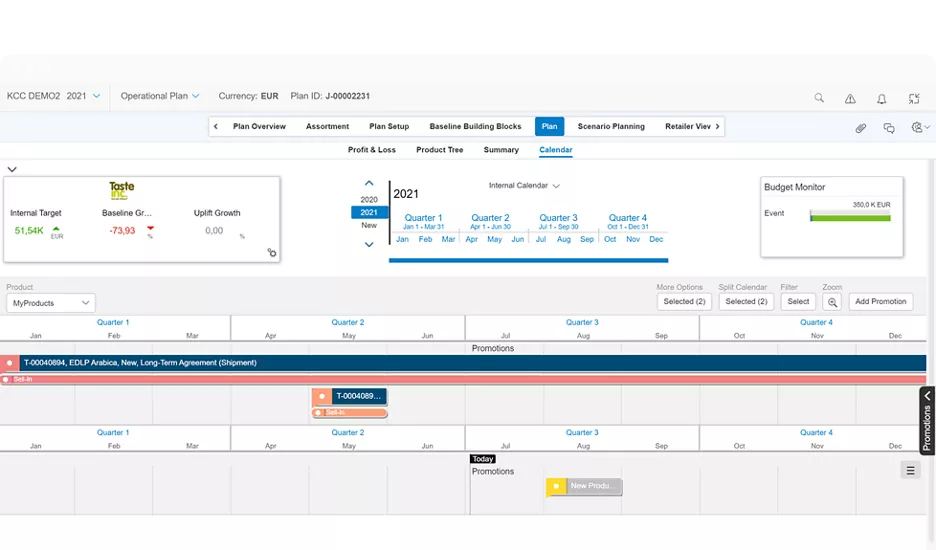
SAP Trade Promotion Management trade promotion management module is part of the SAP Consumer Industries suite. Its core advantage is tight integration with the rest of the SAP stack: ERP, demand planning, supply chain, and financial reporting. If your organization already runs SAP and needs TPM without a separate data pipeline, this is the logical path.
Key features:
- ML-driven promotion optimization. SAP analyzes historical promotion data to recommend optimal pricing, timing, and spend allocation.
- Gantt-style promotion visualization. All campaigns are visible on a single timeline, filterable by category, account, and product.
- Trade budget management. Annual budget planning with fair-share distribution logic across retail accounts.
- Native SAP integration. Connects to SAP S/4HANA, SAP ERP, and supply chain modules with no middleware.
| ✅ Pros | ❌ Cons |
|---|---|
| Eliminates data silos for organizations already on SAP | Implementation typically runs 6–12 months and requires significant budget |
| ML recommendations improve as more promotion data accumulates | Not viable outside the SAP ecosystem |
| Steep learning curve for new users |
Pricing: Custom enterprise pricing. Contact SAP or a certified partner.
Best for: Large enterprises already running SAP that need TPM integrated into their existing stack.
5. Anaplan: Best for Collaborative Trade Promotion Planning
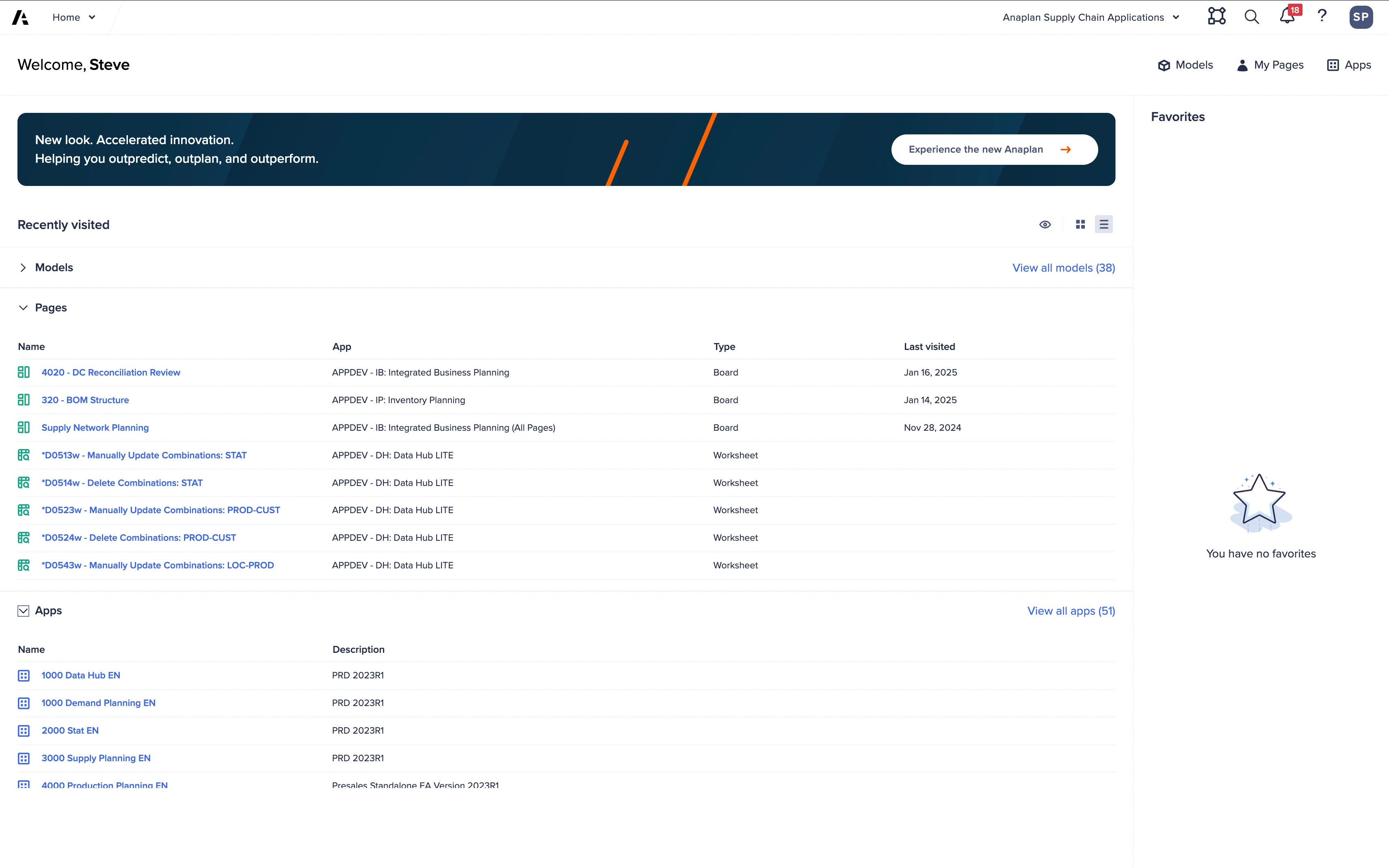
Anaplan is a planning and scenario modeling platform covering finance, supply chain, and trade promotions. For trade promotion specifically, its value is in connecting sales, finance, and marketing in a shared planning environment where scenarios can be modeled in real time. It is not a pure-play TPM tool, but for organizations where promotion planning is inherently cross-functional, that architecture solves a real problem.
Key features:
- Connected planning across functions. Promotion plans link to financial forecasts and supply chain models; changes propagate automatically.
- Real-time scenario modeling. Granular and aggregate planning. Teams compare multiple promotion strategies simultaneously with live volume, revenue, and margin impact.
- Granular and aggregate planning. Supports both portfolio-level and detailed campaign-level work.
- Custom model flexibility. Configurable to match specific business logic and account structures.
| ✅ Pros | ❌ Cons |
|---|---|
| Strong for large teams where promotions involve multiple departments | Deduction management and post-event reconciliation are weaker than specialist TPM tools |
| Real-time collaboration cuts lag between planning updates and decisions | Significant setup required; per-user pricing adds up for large teams |
Pricing: Available upon request.
Best for: Large enterprises where cross-functional promotion planning visibility matters as much as execution features.
6. Vistex: Best for Revenue Recognition and Incentive Management
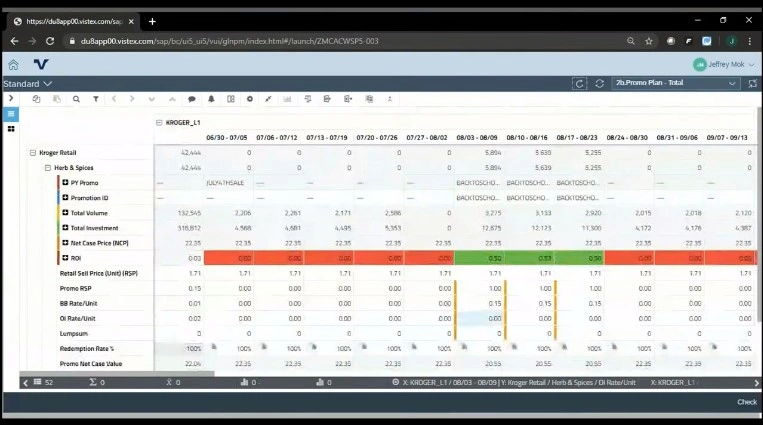
Vistex approaches trade promotions through financial compliance. Its standout capability is real-time revenue recognition, keeping accounting aligned with ASC 606 standards as promotions execute. It also covers incentive and rebate management and chargeback handling, making it one of the more financially rigorous tools in this category.
Key features:
- Real-time revenue recognition. Revenue and accruals update as promotions run, giving finance teams an accurate view of promotional liabilities throughout a campaign.
- Incentive and rebate management. Supports complex structures, volume targets, performance tiers, and rebate calculations based on sales outcomes.
- Chargeback and pricing management. Handles customer-specific pricing, deductions, and chargebacks in one system.
- SAP-native integration. Tightly integrated with SAP ERP environments.
| ✅ Pros | ❌ Cons |
|---|---|
| Strong ASC 606 compliance and real-time financial accuracy during promotions | Deep SAP dependency limits usefulness outside SAP environments |
| Handles complex incentive structures that simpler tools can't model | Implementation requires specialized Vistex expertise, not just general SAP skills |
Pricing: Custom. Contact Vistex for details.
Best for: SAP-native enterprises where revenue recognition, rebate management, and financial compliance are the primary requirements.
7. Promomash: Best for Growing CPG Brands
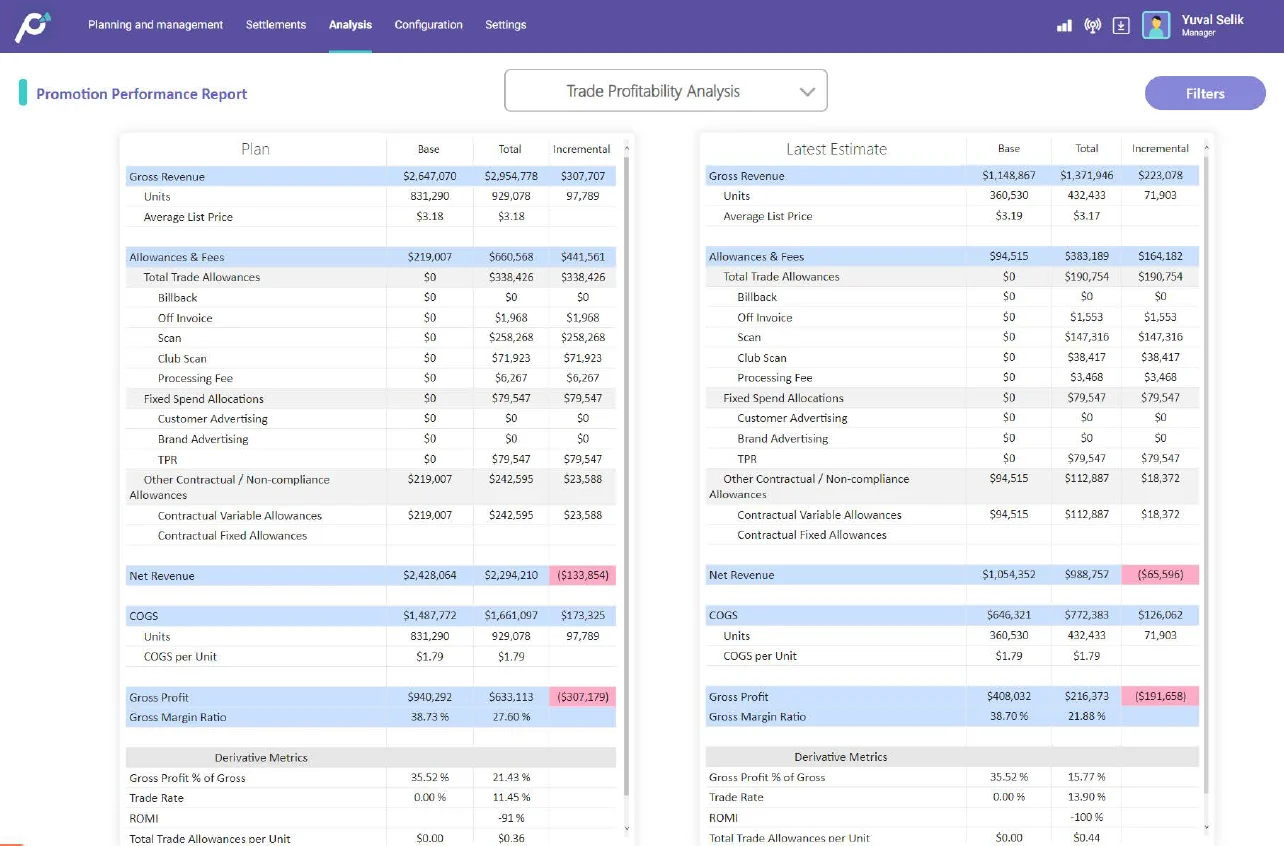
Promomash markets itself as the all-in-one platform for emerging and growing CPG brands. It covers trade promotion management, deduction management, and field event management in a single tool, which is more relevant to brands that don't yet have dedicated teams for each function. The platform's positioning around accessibility and speed has made it a popular choice for brands that are outgrowing spreadsheets but aren't ready for an enterprise implementation. It's one of the few tools in this category with publicly available pricing, which matters when you're evaluating budget before committing to a demo cycle.
Key features:
- End-to-end promotion management. Planning, execution, deduction management, and reporting in one platform, without requiring separate systems for each function.
- Field event and demo management. Unlike most TPM tools, Promomash includes in-store event management, which is relevant to brands running sampling and demonstration programs.
- Deduction matching and dispute tracking. Automates the matching process and keeps a visible dispute log, reducing time spent on manual reconciliation.
- Simple interface. Lower learning curve than enterprise platforms; teams typically report being operational within a few weeks.
| ✅ Pros | ❌ Cons |
|---|---|
| One of the most accessible tools in the category in terms of both price and deployment time | Feature depth doesn't match enterprise platforms for large, complex account structures |
| Strong for brands managing both trade promotions and field marketing in the same workflow | Limited integration options compared to SAP or Oracle-native tools |
| Free trial available, useful for validation before committing | Less suited to retail chains managing their own inventory and replenishment |
Pricing: Starts around $500/month.
Best for: Growing CPG brands that need to manage trade promotions, deductions, and field events without the cost or complexity of an enterprise TPM platform.
8. Oracle Trade Promotion Management: Best for Supply Chain Transparency
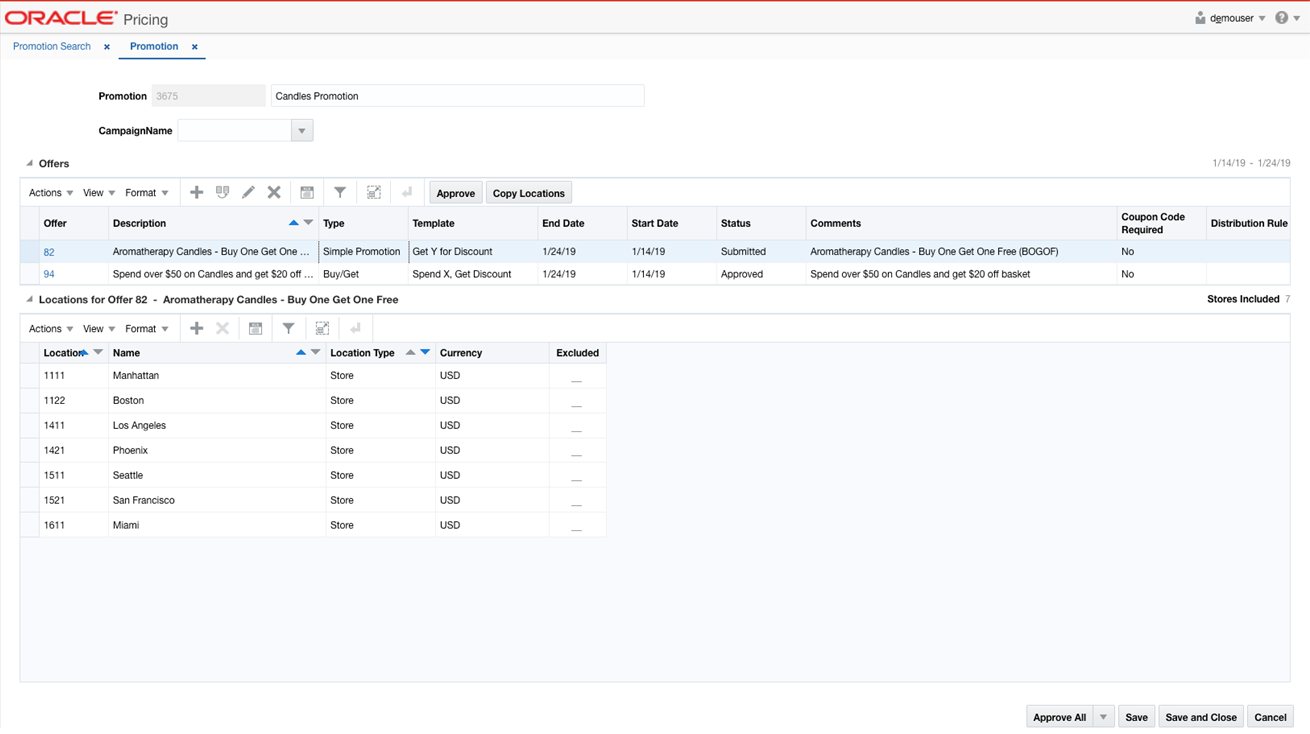
Oracle Trade Promotion Management (TPM) tool is part of Oracle E-Business Suite, deployed in large enterprises already running Oracle supply chain or ERP. Its differentiation is visibility: promotion activity connects to supply chain data, so procurement, logistics, and sales work from the same picture. Oracle Demantra, one of the more established demand planning engines, links to the TPM module for integrated promotional forecasting.
Key features:
- Supply chain integration. Promotion plans feed into Oracle's demand and supply planning modules, aligning trade activity with procurement and logistics.
- Demantra demand planning link. Connects Oracle's demand planning engine to promotional forecasting.
- Account and fund management. Full trade fund lifecycle from budget allocation to claims settlement.
- Blockchain transparency (optional). Supply chain audit trail for compliance or provenance requirements.
| ✅ Pros | ❌ Cons |
|---|---|
| Strong supply chain integration for Oracle-native organizations | Difficult to use as a standalone TPM outside Oracle ERP |
| Mature platform with documented implementation playbooks | The user interface is dated compared to newer cloud-native platforms |
| Substantial implementation and licensing costs |
Pricing: Custom enterprise pricing. Contact Oracle or an Oracle partner.
Best for: Large enterprises running Oracle ERP that need TPM integrated into existing supply chain infrastructure.
How to Choose the Right Trade Promotion Management Software for Your Business
The right platform depends on where the biggest gap is in your current process and how much implementation complexity you can absorb.
1. Start with your actual pain point.
If deduction disputes are eating finance team hours, prioritize platforms with strong automated reconciliation: Vividly and Promomash are the clearest options. If promotions cause inventory chaos (empty shelves in week one, warehouse overflow in week three), you need a tool that connects promotion planning to replenishment, not just one that tracks spending.
If promotion planning frequently creates uneven store-level stock positions, it is also worth comparing the best retail allocation software to ensure inventory is distributed in line with expected demand.
2. Map your tech stack before shortlisting.
SAP environments point toward SAP Trade Management and Vistex. Oracle ERP organizations should evaluate Oracle's module. NetSuite or Microsoft Dynamics shops will find better integration paths with Vividly or Anaplan.
3. Be honest about implementation capacity.
SAP, Oracle, and Anaplan take 6–12 months to implement properly. If your team doesn't have that runway, a faster-deploying platform with slightly fewer features will deliver more value in year one. For retail chains, purpose-built retail inventory optimization tools like LEAFIO AI typically reach value faster than horizontal enterprise platforms, particularly when promotion planning and replenishment need to work together from day one.
4. Ask what happens after a promotion ends.
Most tools tell you whether a promotion hit its sales target. Fewer tell you what inventory looks like by store on day 8, and fewer still automatically trigger a corrective replenishment order. Ask vendors specifically how post-promotion stock normalization works before you sign.
5. Test with your own data.
Any platform looks good on a guided demo with preloaded data. Run a pilot with your own SKUs, your own account structure, and your own historical promotions. The gaps show up quickly.
6. Factor in total cost of ownership, not just licensing.
Software pricing is rarely the biggest number. Implementation services, internal IT time, training, and the cost of running your existing process in parallel during rollout can easily double the first-year cost of an enterprise platform. Get a full TCO estimate from vendors before shortlisting: not just a per-seat or per-SKU rate.
AI Features in TPM: Who's Actually AI-Native?
The word "AI" appears in the marketing material of nearly every tool on this list. It doesn't mean the same thing across all of them.
There's a meaningful difference between platforms built on machine learning from the ground up and platforms that added AI features: forecasting modules, recommendation engines, or chatbot interfaces, onto architectures that were originally rule-based. The distinction matters because it affects forecast accuracy, the volume of manual overrides planners need to make, and how much the system improves over time as it accumulates more data.
AI-native tools in this comparison: LEAFIO AI and Vividly are built around ML-driven forecasting and automated decision-making as core functions, not add-ons. CPGvision's Agentic AI is newer but genuine in its automation scope.
AI-added tools: SAP Trade Management has solid ML-driven optimization, but it runs on a legacy ERP architecture. The ML improves recommendations, but the underlying data model is still structured around SAP's original design logic. Oracle operates similarly.
Rule-based with automation: Promomash automates workflows and reconciliation, but its intelligence layer is closer to structured rules than predictive ML.
Knowing which tier a shortlisted tool falls into changes your expectations for how much planner intervention the system will still require and how long before you see meaningful accuracy improvement.
How AI Enhances Trade Promotion Management
AI changes what's possible in three specific areas of trade promotion management. First, promotional lift forecasting: instead of applying a flat uplift percentage based on historical averages, AI models account for promotional mechanics, timing, seasonality, competitive activity, and channel mix simultaneously. Second, real-time adjustment: AI-native platforms can detect that a promotion is outpacing a forecast and trigger a replenishment response mid-campaign, rather than waiting for the post-event report. Third, deduction reconciliation: ML-driven matching engines process far more deduction claims accurately than manual review can, and they get faster as they accumulate more claim patterns.
The gap between legacy TPM tools and AI-native platforms is most visible in how much manual override work planners still need to do. With rule-based systems, planners often spend 20–30% of their time correcting what the system recommended. Platforms like LEAFIO AI, which applies AI demand planning to promotional periods specifically, are designed to reduce that intervention rate, not just make recommendations for humans to re-evaluate. If you're evaluating the broader merchandise picture, see our guides about the best inventory optimization software and best category management software.
How to Launch a Trade Promotion Management Solution That Scales
Moving from spreadsheets to a dedicated TPM platform is more manageable than it looks. The risk drops significantly when you avoid trying to migrate everything at once.
A typical rollout for a mid-sized retail chain using LEAFIO AI:
- Audit your promotion data. Pull 12–24 months of historical campaign records: dates, SKUs, mechanics, actual vs. planned sales. This is the model's training baseline.
- Define integration scope. Decide which ERP, WMS, or POS systems connect on day one and which phase in later.
- Start with one category. Two or three promotions, a limited store cluster. Validate forecast accuracy before expanding.
- Run a parallel cycle. For the first live promotion, run the old process alongside the new one. Compare outcomes.
- Expand by category and region. Most LEAFIO AI implementations reach full network coverage in 3–6 months.
- Activate post-promotion monitoring. Buffer recalibration triggers automatically after each campaign ends.
- Review quarterly. Promotion accuracy and inventory positioning need periodic recalibration as your promotional mix evolves.
After 6–12 months, the goal is that promotion-related stockouts and overstock events become the exception, not the standard cost of running a campaign.
FAQ
What is trade promotion management software?
Trade promotion management software helps retailers and consumer goods companies plan, execute, and analyze promotional campaigns, including discounts, display programs, price events, and retail incentives. It centralizes trade spend budgeting, scheduling, performance tracking, and post-event analysis in one system. Tools like LEAFIO AI extend this by connecting promotion planning to inventory replenishment, so stock levels adjust automatically when a campaign is active.
What is the difference between TPM and TPO?
TPM covers the operational side: planning promotions, managing budgets, executing campaigns, and reconciling spend. TPO (trade promotion optimization) refers to the analytics layer: using forecasting algorithms to determine which promotions will generate the best return before you commit the budget. Many modern platforms combine both, but a TPO emphasis signals a stronger focus on data modeling over operational execution.
How does trade promotion management software improve ROI?
It improves ROI through accurate pre-campaign lift forecasting, real-time performance tracking that lets teams adjust underperforming promotions, and automated deduction reconciliation that cuts administrative overhead. For retail chains, connecting promotions to automated replenishment adds a fourth lever: ensuring shelves are actually stocked to capture the demand a promotion generates.
How much does trade promotion management software cost?
Enterprise platforms, SAP, Oracle, Anaplan, and Vistex are custom-priced based on company size, users, and integration scope; expect implementation costs on top of licensing. Mid-market tools are also priced on request. Promomash is one of the few with publicly listed pricing, starting around $500/month for smaller brands. Most vendors require a demo conversation before quoting.
Which industries use TPM software most?
Consumer packaged goods is the primary market: food and beverage, personal care, and household products brands, where trade promotions are a standard part of the retail relationship. Retail chains, grocery, pharmacy, and convenience are increasingly adopting TPM tools to manage their own promotional calendars alongside inventory planning.
Does trade promotion management software integrate with ERP systems?
Yes, most platforms have native or pre-built ERP integrations. SAP Trade Management and Vistex run inside the SAP ecosystem. Oracle TPM connects to Oracle E-Business Suite. Vividly and LEAFIO AI support NetSuite, SAP, Microsoft Dynamics, and QuickBooks. If your ERP is less common, verify API availability before shortlisting; integration depth varies significantly across platforms.
Can smaller CPG brands use TPM software?
The category has expanded beyond enterprise-only. Promomash is built for growing CPG brands and starts around $500/month. Vividly targets mid-market companies with faster deployment than traditional enterprise tools. For most brands running more than 20–30 promotions per year, a dedicated platform delivers more value than a manually managed spreadsheet system.
How does AI improve trade promotion planning and execution?
AI improves TPM at three points. Before launch, ML forecasting estimates promotional lift more accurately than rule-based averages. During execution, AI-native platforms like LEAFIO AI detect demand deviations and adjust replenishment orders in real time, rather than waiting for a post-event report. After a campaign, ML-based deduction matching processes claims faster and with fewer errors than manual review. The result is fewer planner overrides and better inventory positioning throughout the promotional window.