
Category managers rarely lose ground because they lack data. They lose it because the wrong products hold shelf space too long, stores cluster incorrectly, and nobody catches assortment drift until a quarterly review shows the damage. Category management software is supposed to close that gap, but not all tools do it the same way, and the differences matter.
We reviewed 8 category management software platforms to help retail chains and CPG teams find the right fit. The list covers tools built for different scales and workflows: from AI-driven scenario simulation for CPG manufacturers to full-cycle category and space planning for multi-format grocery chains. We evaluated assortment analytics depth, store clustering capabilities, planogram integration, AI functionality (real versus marketed), ERP compatibility, and pricing accessibility.
One tool worth flagging upfront: LEAFIO AI's assortment planning tool is built for retail teams that need category management to connect directly to inventory decisions. Its AI-driven assortment matrix, automatic store clustering, and strategy automation make it a strong fit for chains managing wide, fast-changing SKU portfolios. If that describes your operation, it deserves a close look.
What Is Category Management Software?
Category management software is a platform that helps retailers and CPG teams plan, analyze, and optimize their product assortment by category. It uses sales data, shopper behavior, and market trends to guide decisions about which products belong in each store, how they should be grouped, and how space should be allocated across the assortment. Modern platforms add store clustering, AI-driven scenario modeling, planogram generation, and integration with inventory and replenishment systems. If your priority is the SKU-level mix rather than the shelf strategy, see our roundup of the best assortment planning software.
Why Category Management Software Matters
Most category problems look manageable until you try to fix them across 100 stores. A category manager making manual assortment decisions for a wide SKU portfolio cannot account for every store cluster, local demand pattern, or supplier-driven range change at the speed retail actually moves. The result is shelf performance that declines quietly, not dramatically.
The market reflects this urgency. According to Spherical Insights, the global retail category management software market was valued at $2.01 billion in 2025 and is projected to reach $5.97 billion by 2035, growing at a CAGR of 11.5%. Adoption is accelerating because manual category work at chain scale simply does not produce consistent results.
Without dedicated category management software, retail operations typically run into a predictable set of problems:
- Assortment matrices stay static for months after range changes have already happened
- Store clustering is done once and never updated, so stores with different demand patterns receive identical assortments
- Category managers spend most of their time pulling data from multiple systems rather than acting on it
- Slow movers hold shelf space in segments where faster alternatives would improve GMROI
- No structured process connects assortment decisions to planogram updates or replenishment logic
How We Picked the Best Category Management Software
I evaluated each platform using its documentation, demo materials, and user reviews on G2 and Capterra. The goal was to cut through marketing copy and assess what each tool actually does for retail category teams in day-to-day use. Here is what drove my evaluation:
- Assortment analytics depth. Can the platform identify underperforming SKUs, track category share, and generate GMROI reports without needing a custom BI tool on top? I prioritized systems with built-in analytics that a category manager can access without IT support.
- Store clustering logic. Generic chain-wide assortments are a baseline, not a strategy. I looked at whether each tool supports automatic store grouping based on sales behavior, format, and local demand, and whether those clusters update dynamically.
- AI functionality: genuine vs. labeled. Many tools describe themselves as AI-powered but rely on rule-based logic. I assessed where the AI actually sits: in the recommendation engine, in the scenario modeling, or only in a dashboard layer on top of static data.
- Planogram and space integration. A category decision that does not flow into a shelf layout is only half a decision. I checked whether each tool connects assortment planning to planogram creation or space management directly.
- ERP and POS compatibility. Category software pulling from stale exports is a liability. I verified SAP, Oracle, and common retail POS integration options for each platform.
- Pricing and accessibility. For mid-market teams, entry-level pricing and demo availability matter. For enterprise buyers, I noted implementation timelines and support depth.
- Scalability for multi-store networks. A tool that works well for 20 stores may become a bottleneck at 200. I considered how each platform handles range changes, cluster updates, and planogram distribution across large store networks.
Quick Comparison: Best Category Management Software at a Glance
Here is a snapshot of all eight tools before the full reviews.
Assortment Planning Software Comparison: At a Glance
| Tool | Best For | Price Range | Free Trial? | Key Feature |
|---|---|---|---|---|
| LEAFIO AI | Mid-to-large retail chains | Custom pricing | Yes (demo) | AI-driven assortment optimization + store clustering |
| DotActiv | Enterprise CPG category teams | From ~$800/year | Yes (free tier) | Category management + AI-assisted placement logic |
| HIVERY Curate | CPG teams needing scenario simulation | Contact for pricing | Demo only | ML-driven store-level scenario planning + planogram generation |
| Blue Yonder | Large enterprise retailers | Contact for pricing | Demo only | Assortment, space, and supply chain integration at scale |
| RELEX Solutions | Grocery & FMCG chains, 100+ stores | Contact for pricing | Demo only | Unified assortment + space + replenishment planning |
| Quant Retail | Mid-size retailers needing planogram + category | From €1,200/user/year | Yes (free trial) | Space planning + auto-generated planograms + ordering |
| SymphonyAI Retail/CPG | Retailers using AI for shelf analytics | Contact for pricing | Demo only | AI shelf intelligence + assortment recommendations |
| Spaceman by Trax | CPG teams in the NielsenIQ ecosystem | Contact for pricing | Demo only | Drag-and-drop planogramming + NielsenIQ data integration |
8 Best Category Management Software: In-Depth Reviews
1. LEAFIO AI: Best Category Management Software for AI-Driven Assortment Optimization
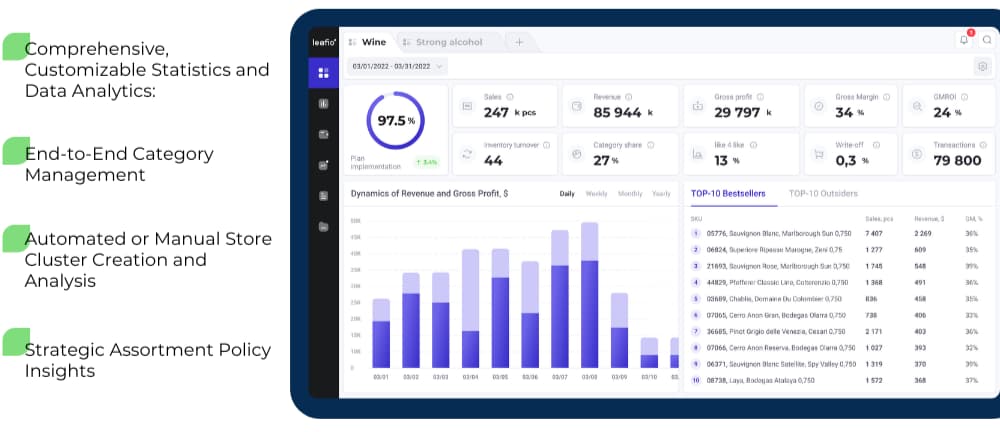
LEAFIO AI Assortment Performance is built for retail chains that need category management to do more than generate reports. The platform covers the full category workflow: assortment matrix planning, SKU performance analysis, automatic store clustering, strategy automation, and cross-category analytics, all from a single system. It is a strong fit for grocery and FMCG chains managing wide, fast-changing SKU portfolios where manual category updates create bottlenecks.
The Strategy Automation feature calculates the optimal number of items per assortment segment automatically, using sales data and user-defined financial targets. Category managers define the objective; the system generates a structured assortment plan for every segment built from sales data. That eliminates the cycle of rebuilding range plans manually every quarter.
LEAFIO AI Assortment Performance sits inside the LEAFIO AI Retail Platform, not as a standalone tool. It shares a data layer with inventory optimization software and planogram software. Assortment decisions flow directly into shelf planning and replenishment logic without manual data handoffs. A SKU removal updates the planogram and triggers a replenishment adjustment in the same workflow.
LEAFIO AI helps mid-to-large retail chains reduce assortment inefficiencies and improve category GMROI through AI-driven matrix planning and automatic store clustering.
Key Features:
- Strategy Automation. One-click generation of assortment strategies per segment. The system calculates optimal SKU counts based on sales and margin targets, replacing manual range planning with a repeatable process.
- Automatic store clustering. Intelligent grouping of stores by sales behavior and assortment parameters. Clusters update automatically, and different categories can use independent clustering logic.
- AI-driven assortment recommendations. Machine learning algorithms surface underperforming SKUs, identify range gaps, and flag new product performance against targets without manual reporting.
- Category analytics dashboard. Built-in visibility into revenue and gross profit dynamics, GMROI, write-off percentage, category share, and top and underperforming products across all stores.
- Native platform integration. Connects directly to LEAFIO inventory optimization and planogram modules. Assortment changes trigger downstream updates in shelf planning and replenishment.
LEAFIO AI: Pros and Cons
| ✅ Pros | ❌ Cons |
|---|---|
| End-to-end coverage: assortment planning, store clustering, strategy automation, and analytics in one system | Pricing available only through direct contact; no public tiers |
| Native integration with planogram and inventory modules eliminates manual data handoffs | Full implementation for a large multi-chain rollout takes several weeks |
| Scales to multi-format, multi-cluster retail networks without growing the category team | Primarily designed for retail; less suited to pure CPG supplier teams without a store network |
Pricing: Custom pricing based on chain size and module selection. Request a free demo at leafio.ai/assortment-performance.
Best for: Mid-to-large retail chains that need AI-driven assortment planning, automatic store clustering, and direct integration with inventory and shelf planning in a single platform.
2. DotActiv: Best for Enterprise CPG Category Management and Sales-Informed Layout Logic
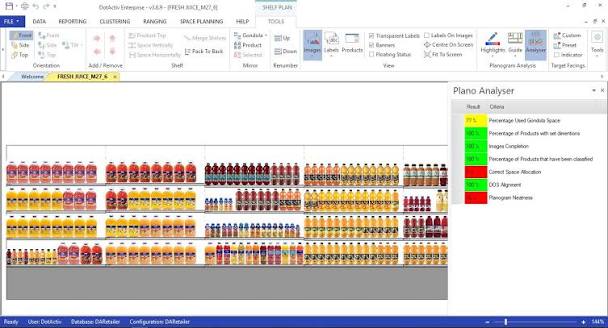
DotActiv is a South Africa-based category management platform that has expanded internationally. It combines planogram creation, cluster management, assortment planning, and retail analytics in a single tool. Recent AI-assisted placement logic through integrations with Gemini and OpenAI adds automation beyond rule-based planogram building. A free tier for up to 40 SKUs lets teams test before committing a budget.
Key Features:
- AI-assisted product placement based on sales performance and shopper psychology principles
- Auto Planogram Refresh updates layouts automatically when assortment data changes
- Store cluster management for localized planogram strategies across diverse store formats
- Approval workflows for managing planogram sign-off across category teams
- Advanced retail analytics with custom dashboards, configurable without IT support
- Photorealistic 3D shelf visualization for realistic previews before physical resets
DotActiv: Pros and Cons
| ✅ Pros | ❌ Cons |
|---|---|
| Free tier available for up to 40 SKUs, useful for initial evaluation | Advanced cluster management requires the Enterprise tier |
| Transparent public pricing starting at approximately $800/year | Mobile execution capabilities less developed than LEAFIO AI or RELEX |
| Category management and planogram tools in one system | Less suited to very large retail chains managing thousands of locations |
Pricing: Free tier available. Lite from approximately $800/year; Enterprise pricing on request. See dotactiv.com/pricing for current tiers.
Best for: Mid-sized retail chains and CPG category management teams that need planogram automation and category analytics with accessible entry-level pricing.
3. HIVERY Curate: Best for AI-Driven Store-Level Category Scenario Simulation
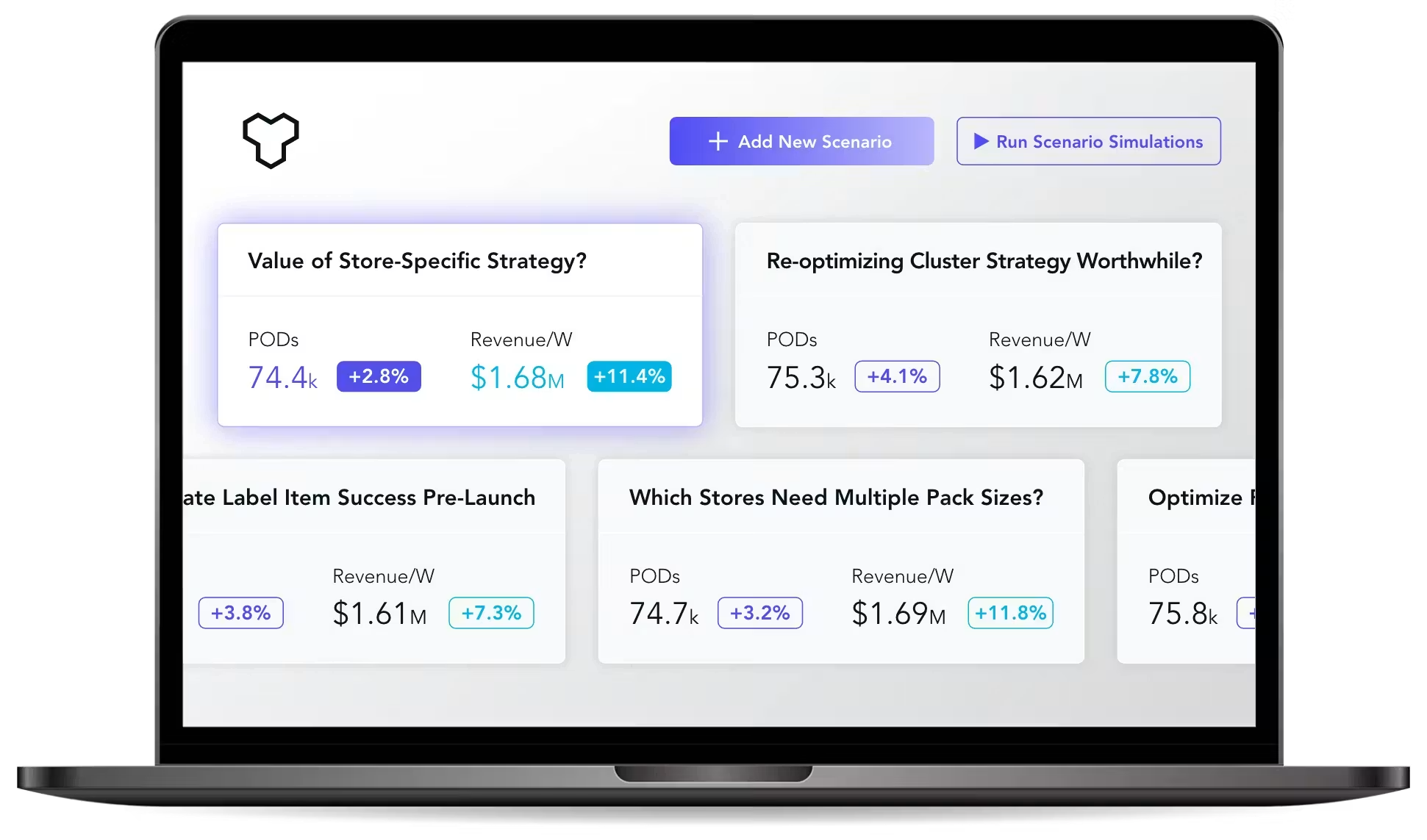
HIVERY Curate positions itself as the first true store-level strategy simulation and optimization solution for category management. It uses proprietary machine learning algorithms developed with CSIRO's Data61 to model how shopper demand transfers when SKUs are added or removed from a store's shelf. For CPG manufacturers entering buyer negotiations or running category reviews, that level of scenario modeling is difficult to replicate in traditional tools.
The core use case is rapid scenario simulation: a category manager can model dozens of assortment changes, including SKU rationalization, new product introductions, and space reallocation, and see projected financial impact before any physical change is made. HIVERY Curate also generates space-assortment-aware planograms at store level, so the scenario output flows directly into executable shelf layouts.
Key Features:
- Store-level scenario simulation: model SKU adds/removes with transferable and incremental demand modeling
- Space-assortment-aware planogram generation from approved category strategies
- ML-driven cannibalization modeling based on CSIRO Data61 algorithms
- Custom merchandising constraints and brand flow rules embedded in optimization logic
- Interactive digital planogram editing with real-time KPI impact visibility
HIVERY Curate: Pros and Cons
| ✅ Pros | ❌ Cons |
|---|---|
| Genuine store-level demand transferability modeling, not standard rule-based simulation | Primarily designed for CPG manufacturers; less suited to retailers managing their own estate end-to-end |
| Strong fit for CPG teams preparing for joint business planning and line review negotiations | No public pricing; requires a direct sales conversation |
| Reduces category analysis and planogram generation time by up to 80%, per HIVERY's own data | Less depth in inventory and replenishment integration than platform tools like LEAFIO AI or RELEX |
Pricing: Contact for pricing. See hivery.com for demo options.
Best for: CPG manufacturers and category advisory teams that need store-level scenario simulation and space-assortment-aware planogram generation to support buyer negotiations.
For teams comparing unified retail planning platforms, Relex Solutions alternatives can offer a different balance of implementation complexity, modularity, and category-management depth.
4. Blue Yonder: Best for Enterprise Retailers With Supply Chain Complexity
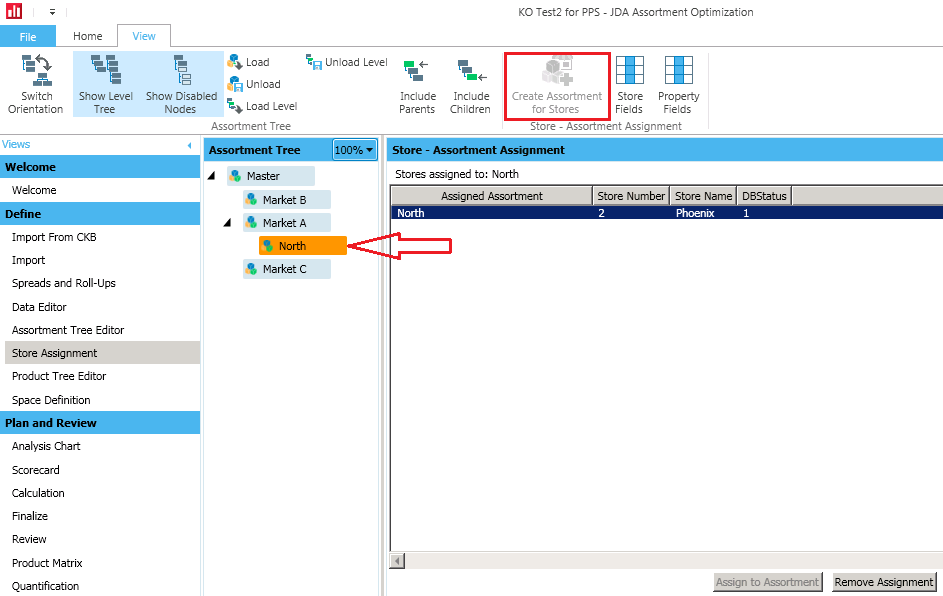
Blue Yonder (formerly JDA) is one of the most recognized platforms in enterprise retail planning. Its category management module connects assortment planning, pricing, and space management with demand forecasting and supply chain operations, making it a logical choice for retailers already embedded in the Blue Yonder ecosystem. The value is in the integration depth, not in any single module.
Key Features:
- Integrated assortment, pricing, and space planning connected to demand forecasting
- Automated planogram generation with intelligent store clustering across large networks
- Macro and micro space management with integrated floor planning
- Direct integration with Blue Yonder demand forecasting and supply chain planning suite
- Shelf-level analytics and space optimization recommendations
Blue Yonder: Pros and Cons
| ✅ Pros | ❌ Cons |
|---|---|
| Industry standard for large enterprise retailers; most enterprise category teams have worked with it | Only practical if already in the Blue Yonder ecosystem; significant switching cost otherwise |
| Handles multi-format store networks with diverse fixture libraries | Cost and implementation complexity make it inaccessible below enterprise scale |
| Deep integration with supply chain tools makes it a natural extension for existing Blue Yonder users | Training investment is significant and documentation can be limited for new users |
Pricing: Contact for pricing. No public tiers listed.
Best for: Large enterprise retailers with complex multi-format store networks where integration with an existing Blue Yonder supply chain environment is the primary requirement.
Retailers that need comparable enterprise capabilities without committing to the same ecosystem can also evaluate a Blue Yonder alternative based on implementation effort, integration requirements, and retail-specific functionality.
5. RELEX Solutions: Best for Unified Category and Supply Chain Planning
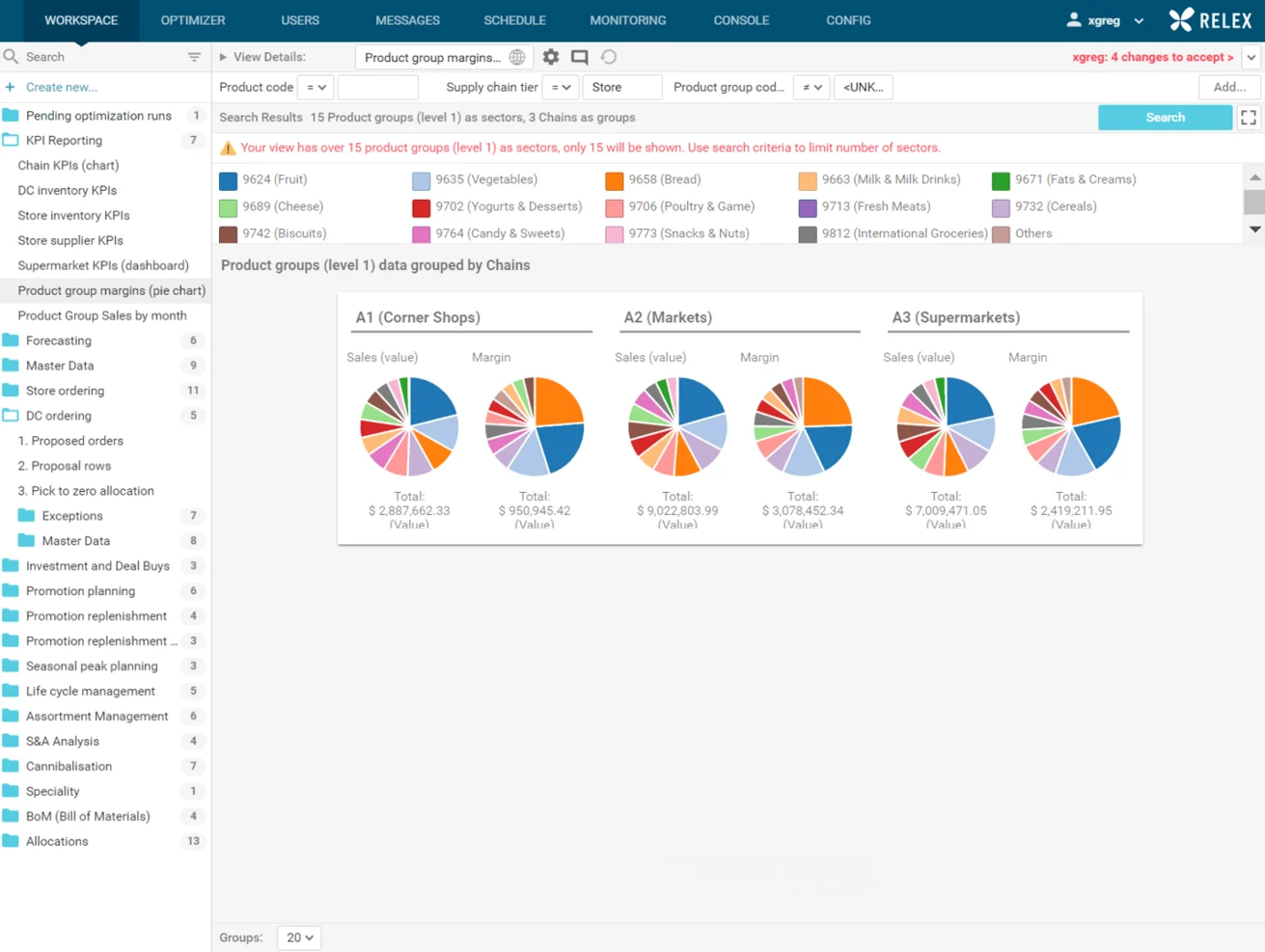
RELEX Solutions offers a unified retail planning platform where assortment and space management sit alongside forecasting, replenishment, and inventory. For large grocery and FMCG chains, the strength is that category decisions and replenishment decisions draw from the same data layer. A planogram change that affects shelf capacity flows directly into replenishment logic without a manual data handoff.
Key Features:
- Automated, locally optimized planogram generation for large store networks
- AI/ML-driven space optimization and assortment recommendations based on store-level demand
- Integrated with supply chain, inventory, and replenishment so shelf layouts reflect real stock positions
- RELEX Planogram Delivery pushes updates to store associates via mobile
- Store clustering and locally differentiated assortments without growing the category team
RELEX Solutions: Pros and Cons
| ✅ Pros | ❌ Cons |
|---|---|
| Unified platform: category, space, replenishment, and workforce planning share one data layer | RELEX does not publicly disclose standard pricing for its solutions. |
| Strong track record at enterprise scale in grocery and specialty retail | Implementation is a multi-month project requiring significant data maturity |
| Locally optimized assortments and planograms adapt to store-level demand, not chain averages | Space planning module is not available as a standalone purchase |
Pricing: RELEX does not publicly disclose standard pricing for its solutions. Pricing is typically provided on request and may vary depending on the modules, scope of deployment, number of locations, and other implementation requirements.
Best for: Large retailers running hundreds or thousands of stores who need unified category, space, and supply chain planning with locally differentiated assortments.
6. Quant Retail: Best for Mid-Size Retailers Combining Category Management and Planogramming
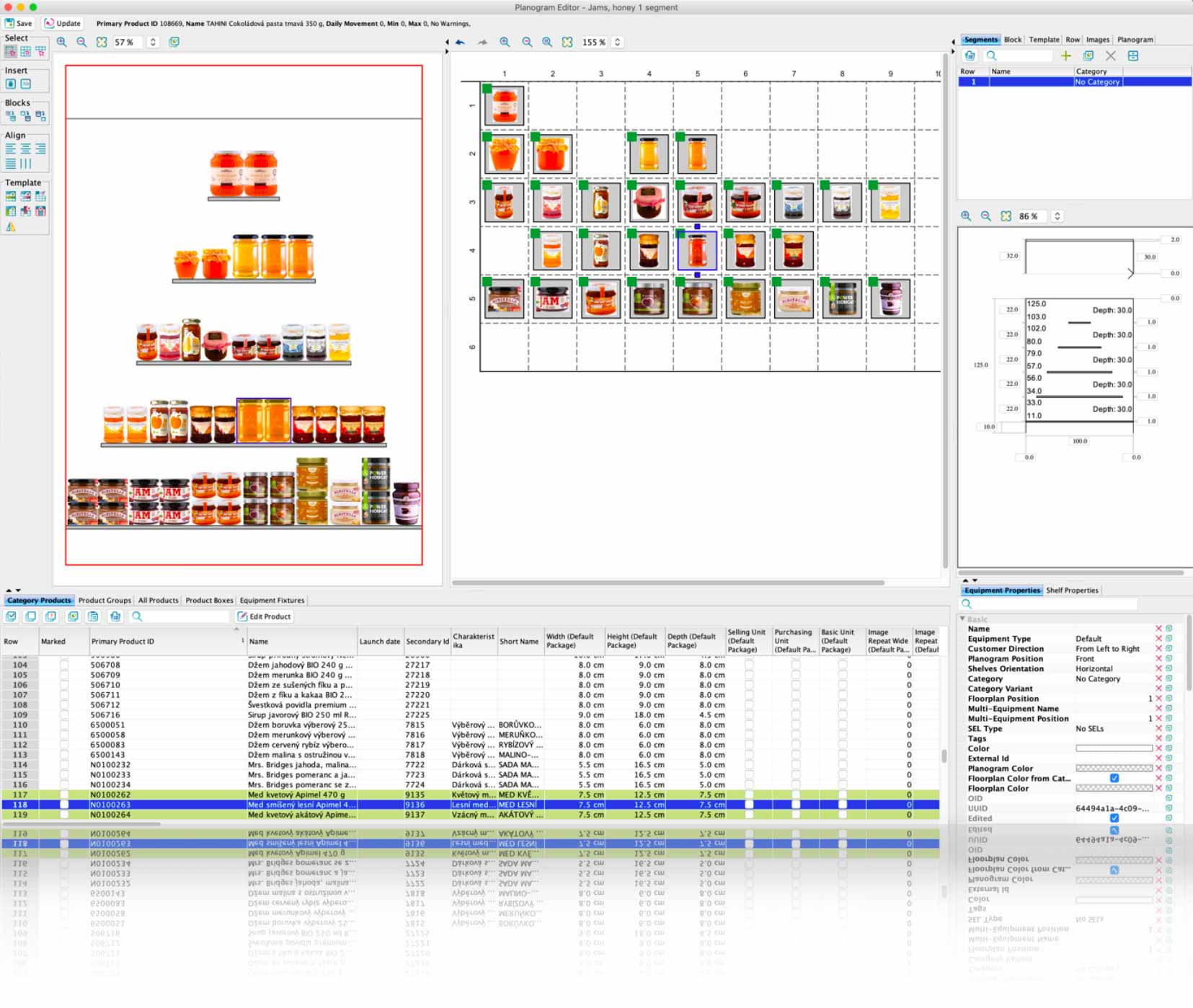
Quant Retail is a cloud-based platform covering floor space planning, planogram creation, category management, shelf edge labels, and semi-automatic ordering. It is rated 4.8/5 on G2 from 55 reviews, with reviewers consistently noting the combination of analytical depth and practical ease of use. For mid-size retailers who want category analytics alongside planogram management without enterprise-scale cost, Quant is one of the few tools that covers both meaningfully.
Key Features:
- Automatically generated, sales-optimized planograms based on user-defined templates
- Floor space planning with multi-layer layouts and fixture management
- Category management analytics including sales data access, performance reports, and custom reporting
- Shelf edge label creation integrated with planogram data
- Planogram distribution and compliance tracking via web-enabled devices
- Semi-automatic ordering integration with ERP systems
Quant Retail: Pros and Cons
| ✅ Pros | ❌ Cons |
|---|---|
| 4.8/5 on G2 with 55 reviews, strong real-world signal for a mid-market tool | Learning curve noted for space managers; initial onboarding requires time investment |
| Covers planogramming, category analytics, and space planning in one platform | ERP data transfer can be inconsistent depending on the system |
| Entry-level pricing from €1,200/user/year makes it accessible without enterprise budget | AI capabilities are more limited than LEAFIO AI or HIVERY Curate |
Pricing: Basic plan from €1,200/user/year. Free trial available. See quantretail.com for current tiers.
Best for: Mid-size retailers that need planogram creation and category management analytics in a single, accessible platform without enterprise-level investment.
7. SymphonyAI Retail/CPG: Best for AI-Powered Shelf Intelligence and Assortment Analytics
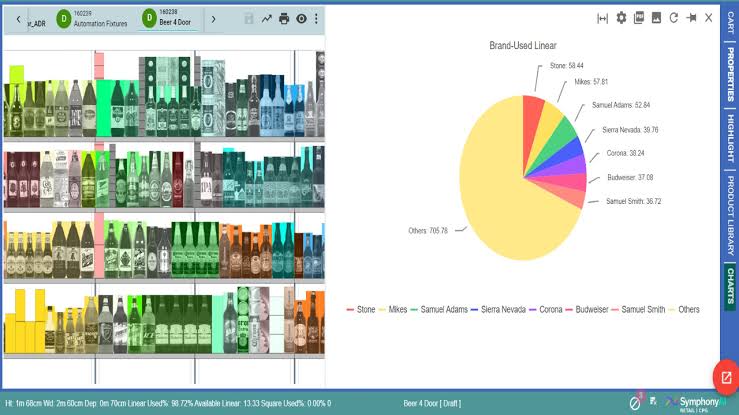
SymphonyAI Retail/CPG is an AI-driven retail platform covering demand forecasting, category management, shelf analytics, and merchandising intelligence. It targets retailers and CPG teams that want AI at the analytics and recommendation layer, rather than a manual category planning tool. On G2 it holds a 4.2/5 rating, with reviewers noting the analytics depth and AI-powered shelf insights.
Key Features:
- AI-powered shelf intelligence using image recognition and sales data
- Demand forecasting with AI-driven assortment recommendations
- Category performance analytics and KPI tracking
- Planogram compliance and execution monitoring
- Integration with major retail ERP and POS systems
SymphonyAI Retail/CPG: Pros and Cons
| ✅ Pros | ❌ Cons |
|---|---|
| AI capabilities embedded in the analytics layer, not just in reporting dashboards | No public pricing; requires a direct demo to get to numbers |
| Strong shelf intelligence for execution monitoring and compliance tracking | Less established in independent reviews compared to DotActiv, RELEX, or LEAFIO AI |
| Suitable for both retailer and CPG use cases | Full-platform adoption required to realize the AI integration benefits |
Pricing: Contact for pricing. Demo available through symphonyai.com/retail-cpg.
Best for: Retailers and CPG teams that need AI-powered shelf analytics and assortment recommendations with execution monitoring capabilities.
Retailers that want similar AI-driven assortment and shelf analytics with a different platform scope can also compare SymphonyAI competitors before committing to a full-platform rollout.
8. Spaceman by Trax: Best for CPG Teams in the NielsenIQ Ecosystem
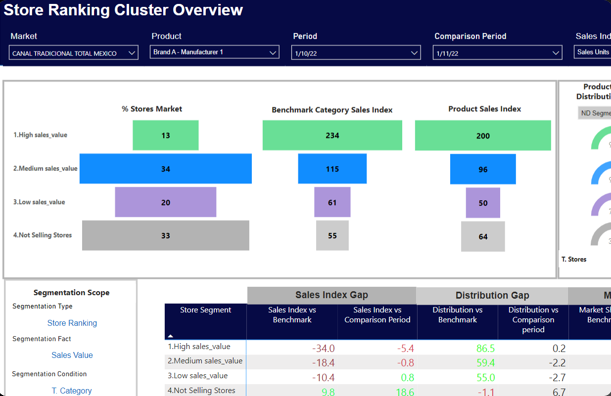
Spaceman has been a fixture in CPG category management for years. Now part of Trax's retail technology suite, it remains a solid choice for category teams working within the NielsenIQ data ecosystem. Its drag-and-drop interface is one of the faster options for building and distributing planograms, and the NielsenIQ data integration gives CPG teams access to market-level demand context without exporting files between systems.
Key Features:
- Drag-and-drop planogramming with rapid fixture modeling
- Cloud-based platform for designing, sharing, and distributing store layouts
- NielsenIQ market data integration for demand-informed planogram decisions
- Widely used in CPG category management and joint business planning workflows
Spaceman by Trax: Pros and Cons
| ✅ Pros | ❌ Cons |
|---|---|
| Familiar interface for teams already in the NielsenIQ data environment | Less suited for grocery retailers managing their own store estate independently |
| Fast planogram creation for experienced category managers | AI automation capabilities more limited than AI-native platforms |
| Well-established in CPG workflows with solid support infrastructure | Pricing and licensing complexity can vary significantly by use case |
Pricing: Contact for pricing. See traxretail.com for current details.
Best for: CPG category management teams already working within the Spaceman and NielsenIQ data ecosystem.
How to Choose the Right Category Management Software for Your Business
The tool that fits a 30-store grocery chain is not the same tool that fits a CPG manufacturer preparing for a line review. Before scheduling demos, it helps to be honest about a few things.
1. How many stores and SKUs are you managing? A category manager handling 2,000 SKUs across 50 stores has different needs than one managing 300 SKUs in 5 locations. Once you cross roughly 20 to 30 stores, manual or semi-automated tools create bottlenecks. Platforms like LEAFIO AI and RELEX are built for this scale. DotActiv and Quant Retail cover the middle ground effectively.
2. Do you need the full cycle or just part of it? Some teams already have planning tools and need compliance verification as a separate layer. Others need assortment planning, space management, planogram generation, and analytics all connected. A unified platform avoids the overhead of stitching systems together, but only if you actually use multiple modules.
3. What does your ERP or POS environment look like? Category software without live data stays static. Before evaluating features, confirm which ERP and POS systems each tool connects with. Most enterprise platforms handle SAP and Oracle. Smaller tools rely on flat file imports or API connectors, which work but add manual steps.
4. Does assortment planning need to flow into shelf execution? If your category decisions need to translate directly into store layouts, look for platforms where assortment and planogram software share a data layer. That connection is what prevents a range change from requiring a manual planogram rebuild across every store format.
5. How honest are you about your implementation capacity? Enterprise platforms like Blue Yonder and RELEX are powerful. They also take months to deploy and require data maturity to function well. A mid-market tool your team actually uses consistently is more valuable than an enterprise platform half-deployed after 18 months.
6. Where do you want to be in two years? If you are growing your store count or moving toward AI-driven category management, invest in a platform that scales with you. Switching category management tools mid-growth is expensive and disruptive.
LEAFIO AI helps retail chains cut category review cycle time while improving assortment quality, because the planning and execution layers share the same data.
AI Features in Category Management Software: What Is Actually AI-Native?
Most category management platforms now describe themselves as AI-powered. The label covers a wide range of implementations, from genuine machine learning embedded in the recommendation engine to a dashboard with "AI insights" layered on top of rule-based logic. The difference matters for category teams expecting real automation.
Rule-based tools automate workflows based on predefined conditions. An AI-native tool learns from outcomes and adjusts its recommendations as demand patterns, assortment changes, and store behavior evolve. You see the difference during range changes: a rule-based system applies the same logic regardless of outcome history; a machine learning system updates its recommendations based on what actually happened after previous changes.
Among the tools reviewed here, HIVERY Curate and LEAFIO AI Assortment Performance are genuinely AI-native at the recommendation and optimization layer. Blue Yonder and RELEX incorporate AI/ML at the forecasting layer. DotActiv added AI-assisted placement through third-party LLM integrations. The practical test for any vendor: ask where the model updates. If the answer is "in the reporting dashboard," the AI is a presentation layer, not a decision engine.
How AI Enhances Category Management Software
Traditional category management is slow by design. Range reviews happen quarterly. Store cluster assignments are revisited annually, if that. Retail demand does not wait for review cycles: a new competitor SKU, a seasonal shift, or a supplier discontinuation can make a category plan obsolete within weeks.
An AI-native platform detects shifts in category performance continuously, surfaces assortment gaps before they affect sales, and generates updated range recommendations without a manual analysis. Most legacy tools still rely on rule-based logic. The AI label in their marketing often describes sorting algorithms, not adaptive generation. Platforms built around machine learning from the ground up, like LEAFIO AI Assortment Performance, update category recommendations as conditions change rather than waiting for the next scheduled review.
How to Launch a Category Management Solution That Scales
Switching to dedicated category management software is more manageable than it looks when the rollout is sequenced correctly. For chains moving to LEAFIO AI, the typical process runs like this:
7. Connect ERP data feeds. Sales history, inventory, and master data are the foundation. Usually takes one to two weeks with the integration team.
8. Build the assortment matrix. Define category structures and segment logic based on your existing range.
9. Configure store clustering. Set clustering parameters per category. Let the system generate initial clusters, then adjust based on category manager review.
10. Run Strategy Automation on a pilot category. Prove the model on one category before expanding chain-wide.
11. Connect to planogram and replenishment workflows. Assortment decisions flow into shelf planning and replenishment through the integrated platform.
12. Review analytics after 60 days. Track GMROI and SKU turnover. Refine clustering rules based on outcomes.
Frequently Asked Questions
What is the best category management software in 2026?
The best category management software depends on your scale and workflow. For mid-to-large retail chains that need AI-driven assortment planning, automatic store clustering, and integration with inventory and shelf planning, LEAFIO AI Assortment Performance is the strongest option in this review. For enterprise retailers with complex supply chain requirements, Blue Yonder and RELEX Solutions are the established benchmarks. For CPG teams focused on scenario simulation and buyer negotiations, HIVERY Curate stands out.
What features should I look for in category management software?
The core features to evaluate are: assortment analytics depth (can it surface underperforming SKUs and calculate GMROI without a separate BI tool?), store clustering logic (does it adapt automatically to local demand?), AI capability (is the AI in the recommendation engine or only in the reporting layer?), planogram integration, and ERP or POS connectivity. For larger networks, also evaluate how quickly the platform can push range changes across hundreds of stores.
How much does category management software cost?
DotActiv has a free tier for up to 40 SKUs, with paid plans starting around $800/year. Quant Retail starts at €1,200/user/year. RELEX does not publicly disclose standard pricing for its solutions. Blue Yonder and LEAFIO AI use custom pricing based on chain size and module selection. HIVERY Curate, SymphonyAI, and Spaceman all require direct contact for pricing.
What is the difference between category management and planogram software?
Category management software handles the strategic layer: which products belong in each store, how they should be grouped, and what the optimal assortment looks like by cluster. Planogram software handles the execution layer: how those products are physically arranged on a shelf, with facing counts, shelf dimensions, and product images. Many modern platforms cover both, but the emphasis differs. LEAFIO AI, RELEX, and Blue Yonder cover both natively.
Is there free category management software available?
DotActiv offers a free tier limited to 40 SKUs on a single planogram, which is useful for testing but not for managing a real category at scale. Quant Retail and HIVERY Curate offer free trials. Most professional platforms require a paid subscription to access the analytics and clustering features that make the software useful for retail operations beyond a handful of stores.
How does AI improve category management?
AI primarily addresses three workflow problems in category management. First, speed: what takes a category manager several days to model manually can be automated in minutes when the system draws on live sales data. Second, local accuracy: AI-native platforms adapt assortment recommendations to store-specific demand rather than applying chain-wide averages. Third, continuous updating: instead of quarterly range reviews, the system surfaces assortment gaps as they emerge. LEAFIO AI and HIVERY Curate are the two tools in this review where AI is embedded in the recommendation engine, not just in the dashboard.
What category management software works best for small retail businesses?
For smaller retailers, DotActiv's free or Lite tier is a practical starting point for planogram creation and category analytics. Quant Retail at €1,200/user/year covers both planogramming and category management without requiring an enterprise budget. Both are accessible without lengthy onboarding. Teams managing more than 20 to 30 stores will likely outgrow entry-level tools as the need for automated clustering and range management increases.
How long does it take to implement category management software?
Implementation timelines range from days to several months depending on the platform and chain size. DotActiv and Quant Retail can be operational within days for smaller operations. LEAFIO AI typically takes two to four weeks to fully deploy across a mid-sized chain, including ERP integration and store clustering configuration. Enterprise platforms like RELEX and Blue Yonder usually require three to six months for full implementation.


Have a question?

Jack Larson
Retail Optimization Expert