


Retail stock management system is a crucial factor in maintaining profitability and customer satisfaction. According to research,43% of small businesses in the U.S. don’t track their inventory, leading to lost sales and excess stock issues. Given that stock is a crucial business asset, poor inventory control results in trillions of dollars in lost revenue worldwide due to stockouts and excess inventory.
Key Takeaways
Choosing the right stock system simplifies control and scales with growth.
Must fit business size & complexity.
Links forecasting to replenishment.
Delivers real-time inventory views.
Integrates with POS & online.
Improves turnover & cash flow.
Retailers who adopt advanced stock management techniques and software, such as inventory management applications, can enhance retail operations by automating tasks like reordering, forecasting demand, and improving customer service.
This guide provides insights into retail stock management, covering methods, auditing techniques, and the benefits of investing in modern inventory solutions.
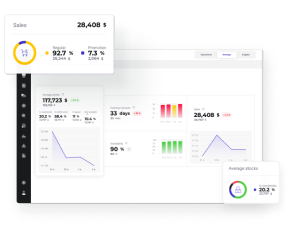
How Does Retail Inventory Management System Work?
Retail stock management is the backbone of any successful retail operation. It ensures that products are available when customers need them while avoiding excessive inventory that ties up capital. In essence, it balances supply and demand by tracking stock levels, sales trends, and replenishment needs. Inventory management software is a crucial tool for tracking product stock across various channels efficiently and accurately. An inventory tracking system plays a vital role in managing products, prices, and stock levels efficiently, optimizing sales through real-time updates and analytics.
Effective inventory management system involves a series of interconnected processes, including stock tracking, ordering, forecasting, and auditing. Retailers use a mix of technology and manual practices to optimize inventory flow and prevent losses due to overstocking, understocking, or shrinkage.
Retail Stock Management System Methods for Retailers
Retailers utilize various methods to manage their stock efficiently. These methods help businesses maintain optimal stock levels, reduce waste, and improve profitability. The right stock management method depends on the nature of the products, entire supply chain efficiency, sales channels, and business model. Inventory management features such as real-time reporting and automated updates help in tracking and managing product stock. Below are some widely used techniques:
First-In, First-Out (FIFO)
This method ensures that older stock is sold first, reducing the risk of spoilage and obsolescence. It is particularly crucial in industries with perishable goods, such as food and drogerie retail, where inventory needs to be refreshed regularly to maintain quality and demand.
Last-In, First-Out (LIFO)
Unlike FIFO, LIFO assumes that the most recently added stock is sold first. This method is beneficial for businesses operating in industries dealing with non-perishable goods, such as big-box and warehouse retailers, home improvement and hardware stores, as well as automotive parts and tire retailers. LIFO can help businesses reduce tax liabilities by reporting higher costs and lower profits during inflationary periods.
Just-in-Time (JIT)
JIT stock management minimizes storage costs by ordering stock only when it is needed. This method is highly efficient but requires precise demand forecasting and a highly reliable supply chain. Any disruption in the supply process can lead to stock shortages, impacting customer satisfaction and sales.
Dropshipping
In this model, retailers do not hold inventory themselves. Instead, when a customer places an order, the supplier ships the product directly to the customer. Dropshipping eliminates the need for large storage spaces and upfront retail inventory investment, making it an attractive option for e-commerce retailers and startups. However, it relies heavily on third-party suppliers' efficiency and reliability.
Economic Order Quantity (EOQ)
EOQ helps businesses determine the ideal order quantity that minimizes both ordering and carrying costs. By calculating the optimal inventory levels based on demand rates and holding costs, EOQ prevents overstocking and understocking, ensuring a balanced and cost-effective stock management system.
Each of these stock management methods has its advantages and potential drawbacks, and retailers often use a combination of techniques tailored to their specific operational needs.
Types of Retail Stocks
Retail stock typically falls into the following categories, each serving a distinct purpose in stock management:
- Cycle stock: This refers to the inventory that is regularly sold and replenished as part of normal business operations. It forms the core of a retailer’s stock and represents predictable demand patterns.
- Safety stock: Extra inventory kept as a precaution against unexpected demand spikes or supply chain disruptions. This ensures that customers can still make purchases even if supply issues arise.
- Seasonal stock: Retailers maintain seasonal stock to meet demand fluctuations tied to specific times of the year. Examples include winter apparel, holiday decorations, or back-to-school supplies. Proper forecasting is crucial to avoid excess unsold stock at the end of the season.
- Dead stock: Items that have not sold for a long period and no longer have demand. Dead stock can tie up capital and storage space, requiring markdowns, clearance sales, or alternative liquidation strategies to minimize losses.
- Consignment stock: This type of inventory remains supplier-owned until it is sold to the customer. It reduces the retailer’s financial risk but requires clear agreements with suppliers on pricing, returns, and payment terms.
Inventory systems play a crucial role in managing these different types of retail stock by improving accuracy in tracking stock levels, automating reordering processes, and enhancing customer service.
8 Steps for Establishing Effective Stock Management System
Effective stock management is essential for reducing waste, optimizing inventory levels, and ensuring customer satisfaction. Low stock alerts play a crucial role in maintaining optimal inventory levels and preventing stockouts by keeping businesses informed about their inventory status. Below are eight key steps to achieve efficient stock management:
1. Maintain Accurate Inventory Tracking System
Accurate retail inventory accounting records are critical for avoiding stock discrepancies and ensuring product availability. Implement RFID tags, barcodes, and automated tracking systems to reduce errors in asset tracking, improve stock visibility, and streamline operations. Regular audits should also be conducted to verify stock levels and ensure data accuracy.
2. Centralize Product Records
A single, unified inventory database ensures consistency in the way you track across multiple locations, warehouses, and online platforms. This minimizes the risk of miscommunication and errors, providing a clear overview of stock levels in real-time.
3. Integrate Sales Data with Inventory Data
By combining sales data with inventory tracking, retailers can identify sales trends, prevent overstocking or understocking, and improve demand forecasting. This integration enables retailers to make data-driven decisions for restocking and markdown strategies.
4. Standardize the Purchasing Process
Develop a structured procurement process that includes supplier selection, purchase order approvals, and inventory threshold alerts. This approach ensures that stock levels remain optimal while preventing unnecessary or duplicate purchases.
5. Establish Markdown and Promotion Strategies
To prevent inventory buildup, retailers should plan strategic discounts and promotions based on sales data and demand forecasts. Smart markdown strategies help clear slow-moving inventory without significantly impacting profitability.
6. Develop a Stock Receiving Procedure
An efficient receiving process ensures that incoming inventory is accurately counted, verified, and recorded. Implement a checklist for staff to inspect deliveries against purchase orders and ensure quality control before stock is added to inventory.
7. Implement a Returns Management System
A well-defined return policy allows retailers to process customer returns efficiently, minimizing financial losses and ensuring returned stock is properly accounted for in inventory. This also includes setting guidelines for restocking returned items and managing defective products.
8. Set Up a Dead Stock Management Plan
To avoid inventory stagnation, develop a proactive dead stock strategy. This can include clearance sales, bundling, supplier buy-backs, or liquidation to free up storage space and optimize working capital.
Inventory Ordering Techniques for Retailers
Effective inventory ordering is essential for maintaining the right stock levels, minimizing costs, and ensuring product availability. Retailers need to carefully choose their replenishment methods based on demand patterns, supplier reliability, and business model. Below are the key inventory ordering techniques that can help retailers optimize their stock management. Retail inventory management is a crucial strategy for enhancing efficiency in tracking, storing, and replenishing inventory.
Reorder Point Formula
The Reorder Point Formula determines the ideal time to reorder stock based on lead time and demand. This method ensures that retailers place new orders before running out of stock, preventing potential sales loss and customer dissatisfaction.
How It Works:
- The reorder point is calculated using the formula:Reorder Point = (Average Daily Sales × Lead Time) + Safety Stock
- Lead time is the duration it takes for a new stock order to be delivered.
- Safety stock acts as a buffer in case of unexpected demand spikes or supply chain delays.
Benefits:
- Prevents stockouts and ensures product availability.
- Reduces the need for excessive stockpiling, optimizing storage space.
- Enhances cash flow by ordering stock only when necessary.
ABC Analysis
ABC analysis is a widely used inventory management technique that classifies products into three primary categories based on their contribution to revenue and the level of control required. Inventory management systems help in classifying and managing products based on their contribution to revenue.
How It Works:
- Category A – High-priority items that drive the majority of revenue (up to 80%). These products require stringent monitoring and management to prevent stockouts and optimize sales.
- Category B – Mid-tier products that contribute up to 20% of revenue. While they don’t require as much attention as Category A items, they still need regular oversight to ensure availability and profitability.
- Category C – Low-priority items that account for around 5% of revenue. These products require minimal management effort but should still be monitored to avoid unnecessary storage costs.
In practice, businesses may use more than three categories (e.g. ABCD), customizing the classification based on their specific industry and operational needs.
Benefits:
- Helps prioritize stock management efforts on high-value items.
- Improves ordering efficiency by ensuring stock investment aligns with profitability.
- Reduces waste by preventing overstocking of low-priority products.
Vendor-Managed Inventory (VMI)
Vendor-Managed Inventory (VMI) is a collaborative approach where suppliers take responsibility for monitoring and replenishing stock based on real-time sales data and agreed-upon inventory levels. For businesses seeking simplicity in tracking inventory, a standalone inventory management system can be an advantageous option, providing essential tracking capabilities without the complexities of integrating with other systems.
How It Works:
- Retailers share inventory and sales data with suppliers.
- Suppliers analyze the data and determine optimal restocking schedules.
- Orders are placed automatically when inventory levels drop below agreed thresholds.
Benefits:
- Reduces the retailer’s administrative burden and stock management costs.
- Ensures a steady supply of products without frequent manual intervention.
- Strengthens supplier-retailer relationships by improving demand forecasting and order accuracy.
By implementing these inventory ordering techniques, retailers can optimize stock levels, reduce costs, and enhance customer satisfaction. Selecting the right approach depends on business size, product type, and supplier relationships, making stock management a crucial component of retail success.
Stock Accounting Techniques for Retailers
Accurate stock accounting is essential for maintaining financial accuracy, tax compliance, and inventory valuation. Different accounting methods provide retailers with the tools to track inventory movements, assess inventory costs, and report financial data accurately. Below are the key stock accounting techniques that retailers use to manage their inventory effectively. Retailers can also utilize retail inventory management software to assist in tracking and managing stock across multiple channels.
Perpetual Stock System
The Perpetual Inventory System continuously updates stock records in real-time based on incoming and outgoing transactions. This method leverages technology such as barcoding, RFID tracking, and automated point-of-sale (POS) systems to provide up-to-the-minute inventory status.
How It Works:
- Every sale, purchase, or return is recorded instantly in the inventory management system.
- The system provides real-time insights into stock levels and discrepancies.
- Automated tracking ensures minimal human errors and discrepancies.
Benefits:
- Provides accurate, real-time inventory tracking.
- Reduces the need for frequent manual stock counts.
- Helps retailers make informed purchasing and restocking decisions based on current stock levels.
- Minimizes stock discrepancies and theft by maintaining precise transaction records.
Periodic Stock System
The Periodic Stock System involves manual stock counts at regular intervals rather than continuous tracking. This approach is more traditional and is often used by smaller retailers that do not have advanced inventory tracking systems.
How It Works:
- Physical stock counts are conducted at set intervals (e.g., weekly, monthly, or quarterly).
- Adjustments are made based on the difference between the beginning and ending inventory levels.
- Cost of goods sold (COGS) is calculated at the end of each accounting period.
Benefits:
- Simple and cost-effective for small businesses with low inventory turnover.
- Does not require advanced technology or software.
- Helps detect inventory shrinkage and losses during periodic checks.
Drawbacks:
- Less accurate due to gaps between stock counts.
- Higher risk of stock discrepancies and potential stockouts.
- More time-consuming compared to automated systems.
Weighted Average Cost (WAC) Method
The Weighted Average Cost (WAC) Method calculates inventory value by averaging the cost of all purchased stock. This technique provides a balanced approach to inventory valuation, particularly when inventory costs fluctuate over time.
How It Works:
- The cost of inventory is determined by dividing the total cost of goods available by the total number of units.
- Each unit is assigned the same weighted average cost, simplifying valuation.
- WAC is frequently used in industries where stock prices vary, such as electronics, retail fashion, and grocery stores.
Formula:
WAC = (Total Cost of Goods Available for Sale) ÷ (Total Units Available for Sale)
Benefits:
- Smooths out fluctuations in stock costs over time.
- Simplifies accounting processes by applying a uniform cost to all inventory items.
- Reduces the impact of price volatility, making financial reporting more stable.
Drawbacks: Inventory Shrinkage
- May not accurately track actual costs.
- Can lead to discrepancies when prices rise or fall significantly.
- Less effective for businesses that need precise inventory cost tracking per unit.
By implementing the right stock accounting technique, retailers can ensure accurate financial reporting, optimal inventory valuation, and effective cost management. Selecting the most suitable method depends on business size, inventory turnover, and regulatory requirements.
Why You Should Invest in a Retail Stock Management Software
As mentioned at the beginning, some retailers still pay little attention to inventory tracking. Others rely on Excel spreadsheets or ERP (enterprise resource planning) systems to manage stock records and replenishment. Meanwhile, the most progressive retail businesses have opted for retail inventory management software as a solution to improve inventory accuracy and reduce stock discrepancies. A retail inventory management system is also crucial for saving time, reducing manual errors, and enhancing decision-making in merchandising, making it essential for retailers of all sizes to optimize their inventory management.
These tools allow them to:
- Improve inventory accuracy and reduce stock discrepancies by up to 90%.
- Cut down overstocking and understocking, improving cash flow.
- Reduce shrinkage through better tracking and automated reordering.
- Enhance customer satisfaction by ensuring products are always in stock.
Ready to Transform Your Retail Stock Management?
One of the most effective solutions available is LEAFIO Inventory Optimization. LEAFIO uses AI-driven technology to automate replenishment, enhance supply chain management, and optimize stock levels based on accurate demand forecasting.
If you're looking for a comprehensive stock management solution that aligns with modern retail challenges, LEAFIO Inventory Optimization can help you take control of your stock and drive profitability.
What is retail stock management?
Retail stock management involves overseeing inventory levels, ordering, and storage to ensure product availability while minimizing costs.
What are the 4 types of inventory management system?
The 4 types are: perpetual, periodic, just-in-time (JIT), and dropshipping.
How to keep track of retail inventory?
Retail inventory is tracked using methods like manual counts, barcode scanners, and inventory management software.
What is a POS system for retail inventory?
A POS system for retail inventory integrates sales data with stock levels, providing real-time inventory updates.
How to create a stock control system?
Creating a stock control system involves setting up procedures for tracking, ordering, and receiving inventory, often using software.
What is the most commonly used inventory system?
Perpetual inventory systems are most commonly used due to their real-time tracking capabilities.
What is the ABC of inventory management system?
The ABC of inventory management categorizes items by value and importance, focusing control on high-value items.
How do you organize retail inventory?
Retail inventory is organized by location, category, and sales velocity, ensuring efficient retrieval and management.
How to manage stock in a small business?
Small business stock management involves utilizing simple inventory tracking methods, forecasting demand, and optimizing storage.
What are the three stock control systems?
The three stock control systems are: perpetual, periodic, and just-in-time (JIT).
How to create a stock database?
A stock database is created using spreadsheet software or dedicated inventory management systems to record and track inventory data.
How to manage inventory in a retail store?
Retail store inventory management involves tracking sales, receiving shipments, and conducting regular stock audits.
What is SRT in retail?
SRT in retail typically refers to "Sell Through Rate," which measures the percentage of inventory sold within a specific period.
What is EOQ?
EOQ (Economic Order Quantity) is a calculation that determines the optimal order quantity to minimize inventory costs.
What does SFS mean retail?
SFS in retail means "Ship From Store," a fulfillment method where online orders are shipped from physical store locations.
How to better keep track of inventory?
Better inventory tracking involves implementing barcode systems, using inventory management software, and conducting regular audits.
What is FIFO?
FIFO (First-In, First-Out) is an inventory valuation method where the oldest inventory is sold first.