


According to Linnworks’ "The Effortless Economy" study, 9/10 of customers prefer retailers that offer a convenient experience. 46% of buyers prioritize convenience over price when choosing a retailer. They expect to be able to buy or order a product in the channel they choose. To meet these expectations, retailers should keep track of what is sold on their channels and follow a distinct merchandising plan. This is where automation comes in. Implementing an automated inventory management system can help your retail chain increase profitability and streamline workflow. This is crucial for effective merchandise planning.
In this article, we will delve into the features and benefits of automated inventory management systems. You will learn about the latest trends and gain insights on how to automate inventory management with the best solutions in the market.
Key Takeaways
Automation cuts errors and costs, and keeps inventory aligned with real demand.
Reduces manual entry risks.
Enables real-time tracking.
Frees staff for strategic tasks.
Links sales with replenishment.
Boosts customer satisfaction by avoiding stockouts.
What is an Automated Inventory Management System?
An automated inventory management system software is a solution designed to track, manage, and optimize inventory levels, processes, and data in real-time without manual intervention. Inventory management automation is an essential tool for small and medium businesses to take their workflow to the next level. The system allows retailers to manage their inventory online with minimal effort and error.
The automated inventory system includes many options:
- Automated suppliers’ order generation;
- Automatic replenishment of stocks;
- Keeping accurate records of inventory balances;
- Consolidated reporting of several POS in your chain;
- Purchase orders handling;
- Notification of the inventory management issues.
The software solves the problems that arise with a manual approach.
That is why using an IMS system for inventory management process makes it possible to increase the efficiency of the entire business performance.
What are the 2 types of inventory management systems?
Companies choose different stock management strategies based on their objectives and needs. Some use a manual approach. This method may be suitable for small companies with simple processes. However, automated inventory management system software determines optimal inventory levels based on various factors. Let's take a closer look at both options.
Type #1: Manual Inventory Management
Most small businesses manage inventory with a standard spreadsheet (e.g. Excel) where the manager lists the inventory items purchased and their available quantities. To maintain order, it is enough to add the relevant inventory data analytics to the table every day after the goods have been received and the orders have been fulfilled.
This goes on for some time until an error occurs. Either the number of orders increases, and the table already contains several thousand lines, or the manager forgets to update the data several times and it turns out that the goods are no longer in stock. However, a manual management system has its advantages:
- Low process costs;
- You can do inventory management day in, day out.
Disadvantages:
- You must constantly update the data manually. This is time consuming and inefficient;
- Any error leads to data inconsistencies;
- It is not suitable for companies with thousands of SKUs;
- Manual inventory control does not allow you to track theft or other losses.
Type #2: Automated Inventory Management
Retailers using automated inventory management software can optimize a significant part of the supply chain. The obvious benefits of implementing automated tool inventory control tracking system include:
- Time savings. The system reduces the resources required to implement different parts of the supply chain: ordering goods, inventory management and forecasting;
- Reducing the number of errors to a minimum does not critically affect the result. An automated inventory management tool eliminates the human error;
- It provides real time tracking, allowing you to respond to changes in a timely manner and avoid stock-outs, especially during periods of active sales;
- Increase the efficiency of inventory management process. As your business grows, an automated inventory tracking system will help you manage multiple stores.
Some of the disadvantages are:
- The cost of software, hardware and staff training. In such cases, the best solution would be to integrate SaaS services that run on regular PCs and mobile devices;
- The complexity of implementing some automated systems. It takes time to study the peculiarities of the retailer's work, test on certain categories, and only then - full integration;
- Time spent on staff training. This is a necessity and cannot be avoided. However, you can choose a system that is easy to learn.
How AI-based automated IMS work in 2025?
Inventory management has been revolutionized by the introduction of artificial intelligence (AI). In 2025, AI-based systems will offer sophisticated solutions that go beyond basic inventory automation. Let's look at how this works, using LEAFIO Inventory Optimization as an example:
- The automated inventory system collects data from various sources, including sales figures, ERP systems, warehouse management systems and even external market data.
- AI algorithms analyze past sales data, seasonal trends, and other relevant factors to predict future demand for each product.
- Based on forecast demand, the system can automatically trigger orders to replenish stock before it reaches critical levels.
- AI can analyze various factors such as product popularity, storage costs and lead times to suggest optimal inventory levels for each product.
- An automated promotion planning software with AI streamlines promo planning and enhances execution, offering precise inventory management and comprehensive analytics.
How to Choose an Automated Inventory Management System? - 3 Criteria to Look for in IMS Software
When choosing the most effective IMS system, you should focus on its operability, affordability, and range of key features and options.
The best inventory management software analyses business processes and inventory KPIs and then makes recommendations for restocking and channel allocation.
With efficient restocking, your business operations can maximize sales opportunities, prevent shortages, and avoid empty shelves that usually result in lost profit and customer dissatisfaction.
Inventory transfer
Modern automated inventory software must track inventory movements at all locations with detailed records, including current movements, completed movements and associated costs. This is done using barcode scanner app for inventory or RFID technology.
The system should help to strategically allocate inventory based on demand forecasts, product seasonality, and specific location factors.
Automated reorder
Automated inventory management software considers historical data, lead times, supplier schedules, and seasonal variations to determine optimal reorder points for each product.
The system should be able to automatically select suppliers based on pre-defined criteria (e.g. price, quality, location, lead time) to ensure competitive pricing and uninterrupted supply.
There should be the ability to adjust inventory levels to mitigate supply chain disruptions and avoid out-of-stocks.
Order periods in a store
The inventory management software should allow you to set up ordering periods for different product categories, brands, or suppliers. The system should consider lead times, minimum order quantities, and delivery schedules. Demand forecasting models should be available to generate order proposals based on relevant historical data and trends. Workflow automation will be useful for managers to review and approve orders, considering budget constraints and product availability.
Seamless integration with accounting systems will be required to automatically record sales and update inventory counts, eliminating manual data entry and potential errors.
Additional considerations:
- Choose automated inventory management software that can adapt as your business grows.
- Look for an interface that is intuitive and easy to use for staff at all levels of technical expertise.
- When automating inventory management, evaluate the initial purchase price, implementation costs, ongoing licensing fees, maintenance requirements, and potential ROI.

Key Benefits of Automated Inventory Management
Automation streamlines inventory processes, saving time and effort compared to manual methods. Tasks such as inventory tracking, reordering, and cycle counting can be performed more quickly and accurately.
With an automated inventory management solution, companies can set reorder points and receive automated inventory alerts when stock levels fall below pre-determined thresholds.
Minimizing shortages and avoiding excessive stocks, optimizing physical labor, inventory automation - all this saves retailers money. Improved inventory accuracy reduces the risk of lost sales due to inaccurate inventory.
Accurate and efficient inventory management automation means better customer service. Companies can fulfil orders promptly, provide accurate product availability information and minimize backorders.

Trends to Watch in Inventory Management Automation
Here are some key trends to watch in 2025 and beyond:
1. Machine Learning
Artificial intelligence algorithms analyze large data sets to predict demand and optimize inventory levels. Machine learning forecasting enhances the replenishment process and enables the management of multiple channels concurrently. AI assists in making decisions regarding inventory calculation, order generation, and supplier selection.
2. Cloud-based Solutions
Cloud-based inventory management systems offer easy scalability to meet evolving business needs and remote access for real-time data insights. Cloud computing platforms integrate inventory data across multiple sales channels to ensure a consistent customer experience. Cloud-based systems facilitate collaboration between departments and suppliers, improving visibility across the supply chain.
3. Focus on sustainability
Companies are utilizing inventory automation to minimize excess inventory, reducing waste and environmental impact. Blockchain technology can track suppliers' sustainability practices, promoting responsible sourcing and compliance with environmental regulations. By staying ahead of these trends and implementing relevant solutions, businesses can achieve efficient, cost-effective and sustainable inventory automation management practices, contributing to a more resilient and successful future.
Requesting the Best AI-driven Automated Inventory Systems for Your Retail Chain
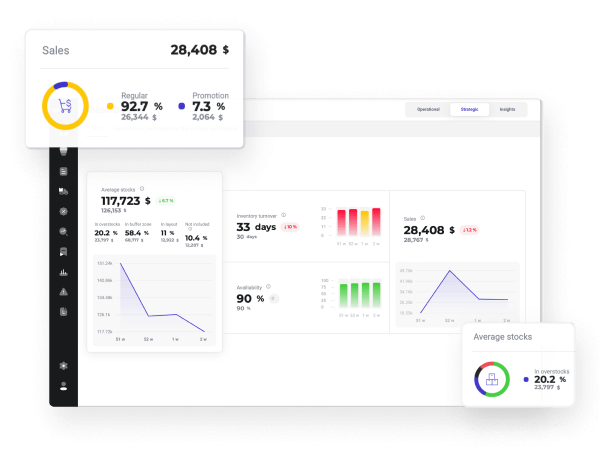
LEAFIO Inventory Optimization is a cutting-edge AI-driven automated inventory tracking system revolutionizing the way you manage your retail chain's inventory. The solution ensures every aspect of the order lifecycle is handled effortlessly.
LEAFIO Inventory Optimization works precisely and simplifies processes. Demand forecasting ensures product availability at an optimal level. LEAFIO AI automates the processes of forming and sending orders, freeing up staff time. Automating inventory management with the LEAFIO AI Retail Platform, you can establish a clear workflow that simplifies management processes at all levels.


With LEAFIO AI's accurate demand calculation, watch your turnover soar as surplus inventories are minimized and product availability is maximized.
Do you want to know how to power automate inventory management? Request a demo of LEAFIO Inventory Optimization today and experience the transformative power of AI-driven inventory automation management firsthand!
Automated Inventory Management System FAQ
What companies use automated inventory management?
Many companies in a variety of industries use automated inventory tracking systems to streamline processes and improve efficiency. Retail: Walmart, Amazon, Target, Nike. Food and Beverage: PepsiCo, Nestle, Unilever, Kraft Heinz. As businesses aim to enhance efficiency and competitiveness, auto inventory management systems are becoming increasingly crucial.
What is AI based inventory management?
AI inventory management process uses machine learning to predict demand, automate tasks and optimize stock levels. It can prevent stock shortages, lower costs, and increase efficiency. Consider this tool as a highly capable assistant for your retail business, using your data to make intelligent decisions.


Have a question?

Kristi Miller
Retail optimization expert