The best Kinaxis alternatives are LEAFIO AI, Blue Yonder, RELEX Solutions, and o9 Solutions, platforms that cover supply chain planning without Kinaxis's enterprise pricing and 6–18-month deployment timelines. If you're a retailer with 50–500 stores, these tools deliver faster time-to-value at a fraction of the cost. I've compared the top Kinaxis competitors across deployment speed, retail-specific features, and total cost of ownership to help you find the right fit.
Kinaxis (RapidResponse / Maestro) is an enterprise supply chain planning platform built for manufacturers — think aerospace, automotive, hi-tech, and chemical companies. It handles S&OP, demand sensing, and scenario simulation for global production networks. Pricing runs $200K–$2M+ per year, with 6–18 months of implementation typically requiring a systems integrator. It's a serious tool for serious manufacturing operations.
The problem? Kinaxis wasn't designed for retail. If you need planogram management, fresh/perishables algorithms, store-level execution, or mobile merchandising, you won't find them here. This guide compares 8 top alternatives to Kinaxis, with a focus on retail-native platforms that deliver faster time-to-value.
How I Picked the Best Kinaxis Alternatives
I evaluated each tool against criteria that actually matter for retail operations, not manufacturing plant floors.
- Retail-specific functionality — planogram management, fresh/perishables support, store-level execution, assortment analytics
- Time-to-deployment — how quickly a retailer with 50–500 stores can go live
- TCO for mid-market retail — total cost including implementation, licensing, and internal team overhead
- SI-partner independence — can the retail team manage the system without external consultants?
- G2 ratings and review volume from verified retail users
- AI/ML capabilities specific to retail demand forecasting
- Integration readiness with retail ERPs: SAP, Oracle, 1C
Retailers should also compare AI-powered demand forecasting tools built for seasonal demand, promotions, and SKU-level volatility rather than long-horizon manufacturing forecasts.
Here's how the top options stack up:
| Solution | Best for | Price range | Free trial? | Key difference vs Kinaxis |
|---|---|---|---|---|
| Leafio AI | Mid-market retail (grocery, pharma, fashion) 50–500 stores | Custom / demo | ✅ Demo | Retail-native: inventory + planogram + merchandising in one platform; 4–6 week deployment |
| Blue Yonder | Large enterprise, manufacturing & distribution | $500K+ | ❌ | End-to-end SC coverage; requires SI partner, 12–24 mo implementation |
| o9 Solutions | Enterprise IBP, global supply chain | Custom | ❌ | Modern UI, flexible data model; not retail-specific |
| RELEX Solutions | Mid-market/enterprise retail & grocery | Custom | ✅ Demo | Strong retail forecasting & fresh; complex config, costly |
| SAP IBP | Enterprise (SAP ecosystem) | $1M+ | ❌ | Deep SAP integration; needs SAP consultants |
| Anaplan | Enterprise connected planning / S&OP | Custom | ❌ | Highly flexible; not pure SC tool, heavy to configure |
| ToolsGroup | Mid-market SC planning with retail DNA | Custom | ✅ Demo | Probabilistic forecasting; older UI, less brand awareness |
| SymphonyAI | Enterprise retail/CPG, grocery-specific AI | Custom | ❌ | Grocery AI & category mgmt; enterprise-only, long implementation |
Why Consider Alternatives to Kinaxis?
1. Built for Manufacturing, Not Retail
Kinaxis was engineered around bills of materials, production scheduling, and manufacturing network optimization. It doesn't include planogram management, mobile merchandising tools, or fresh/perishables algorithms. A grocery chain managing 200 stores and 40,000 SKUs needs very different capabilities than a jet engine manufacturer. If retail store execution is your reality, Kinaxis's architecture works against you from day one.
The right retail supply chain management software should connect forecasting and replenishment with store-level execution instead of treating planning as an isolated process.
For retailers in this segment, inventory optimization platforms mid-market retail teams can deploy quickly are often a better fit than manufacturing-first enterprise suites.
2. Enterprise Pricing Out of Reach for Mid-Market
At $200K–$2M+ per year — plus SI-partner fees — Kinaxis carries a TCO that's 3–5x higher than retail-native alternatives for a retailer with 50–500 stores. That's a budget that could fund your entire merchandising team. Software like Leafio AI or ToolsGroup delivers comparable planning capabilities at a fraction of that cost.
3. 6–18 Month Deployment Is Too Slow
Retail moves fast. Seasonal demand swings, promotions, and supplier disruptions don't wait 12 months for a platform to go live. Retail-native platforms like Leafio AI deploy in 4–6 weeks. RELEX typically takes 3–6 months. Even the slower retail alternatives finish before Kinaxis's implementation gets into its second phase.
4. Requires Expensive SI Partners
Kinaxis implementations require certified systems integrators. Your internal team can't configure or maintain the system without specialized consultants — who charge enterprise day rates. That dependency adds ongoing cost and slows every operational change. A good Kinaxis replacement should let your category managers and planners drive the tool themselves.
5. No Native Planogram or Merchandising Tools
Retail inventory planning doesn't end at the warehouse. You need shelf space optimization, planogram compliance tracking, and field execution tools. Kinaxis offers none of these. Retailers end up stitching together separate planogram software, creating data gaps and manual reconciliation work.
6. Limited Fresh/Perishables Support
For grocery and pharmacy riteilery, managing products with 3–7 day shelf life requires specific algorithms. Kinaxis's demand sensing was built around long-horizon manufacturing forecasts — it doesn't handle short-lifecycle perishables well. This is a critical gap for any retailer running fresh categories.
Top 8 Alternatives to Kinaxis
1. LEAFIO AI
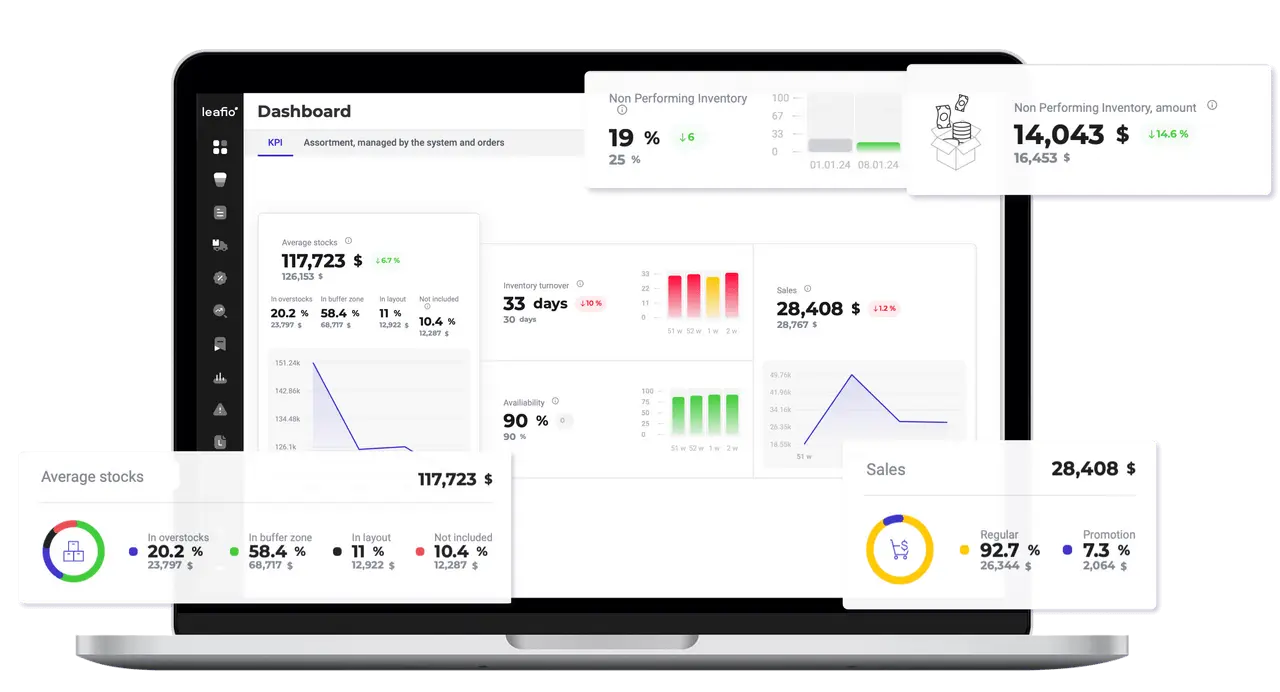
LEAFIO AI is a retail-native platform that covers inventory optimization, demand planning, automated replenishment, planogram management, and mobile merchandising in one product. It's built specifically for mid-market retailers with 50–1,000 stores across grocery, pharmacy, fashion, and specialty retail.
Leafio AI integrates with your existing ERP: SAP, Oracle, Dynamics 365, NetSuite, or a custom system without replacing it. The Leafio integration team manages the connection end-to-end: technical discovery, data mapping, test integration, and validation. Your IT team handles standard ERP exports and SFTP or API access. No external systems integrator is required, though clients who prefer to involve one are welcome to do so.
Key features:
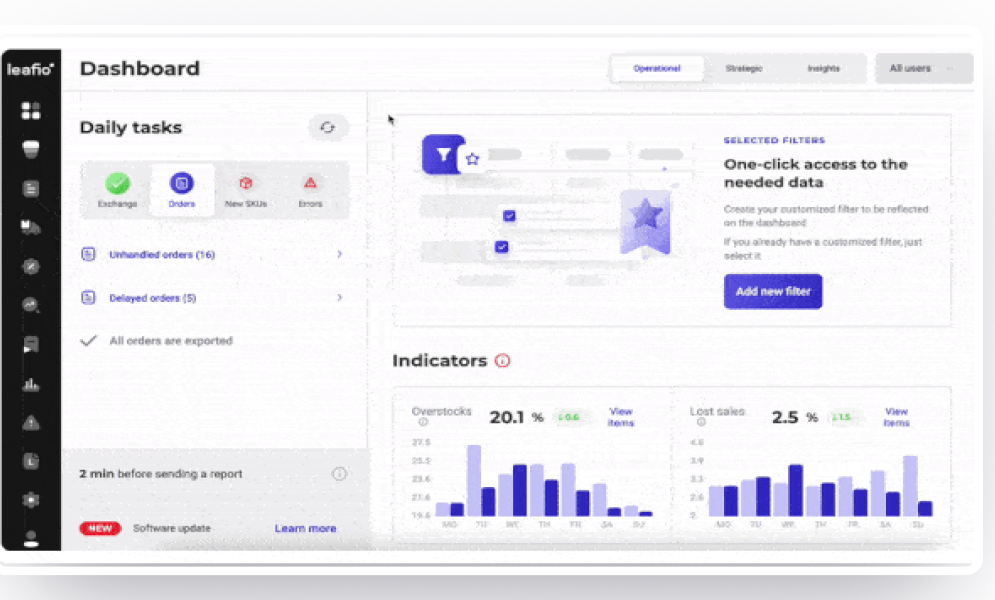
- AI-driven demand forecasting and inventory optimization across all store formats and categories
- Automated replenishment software with configurable safety buffers and supplier schedule support
- Demand planning with promotion modeling and seasonal adjustment algorithms
- Fresh/perishables-specific algorithms for categories with 3–14 day shelf life
- Planogram management with shelf efficiency analytics and compliance tracking
- Mobile merchandising app for field teams — real-time task management and compliance verification
- Store-level execution tools: assortment matrix, SKU clustering, space-to-sales analysis
- Pre-built ERP integrations: SAP, Oracle, 1C, and other retail systems
| ✅ Pros | ❌ Cons |
|---|---|
| Retail-native: inventory + planogram + merchandising in one platform | Not suitable for manufacturing or non-retail supply chains |
| 4–6 week deployment, no SI partner needed | Smaller brand footprint than enterprise players |
| 3–5x lower TCO vs Kinaxis for mid-market retail | Less suited for 1,000+ store global enterprise networks |
| Fresh/perishables support out of the box | Custom pricing requires a discovery call |
| Self-serve model — internal teams manage the system |
How it compares to Kinaxis:
- ✅ Better at: retail-specific features, time-to-value, TCO for 50–500 store retailers, fresh/perishables, planogram management, SI-independence
- ❌ Worse at: enterprise manufacturing supply chain planning, global multi-tier production network scenarios
Real results from LEAFIO AI customers:
- Retailers using LEAFIO AI report average stock reduction of 15–20% within the first two quarters after go-live
- Typical customers see up to 25% reduction in lost sales, with ROI achieved within 6 months of implementation
Show Image
Best for: Mid-market grocery, pharmacy, fashion, and specialty retailers with 50–500 stores who need a single platform for inventory and shelf management without a multi-month enterprise implementation project.
Bottom line: If you're a retailer evaluating Kinaxis alternatives, LEAFIO AI is the most direct replacement for your actual retail use cases. It's the only tool in this comparison that covers both inventory optimization and planogram management natively.
Ready to replace Kinaxis with a retail-native platform? LEAFIO AI deploys in 4–6 weeks with no SI partner required. See real retail results, not a demo script. Book a free demo →
2. Blue Yonder
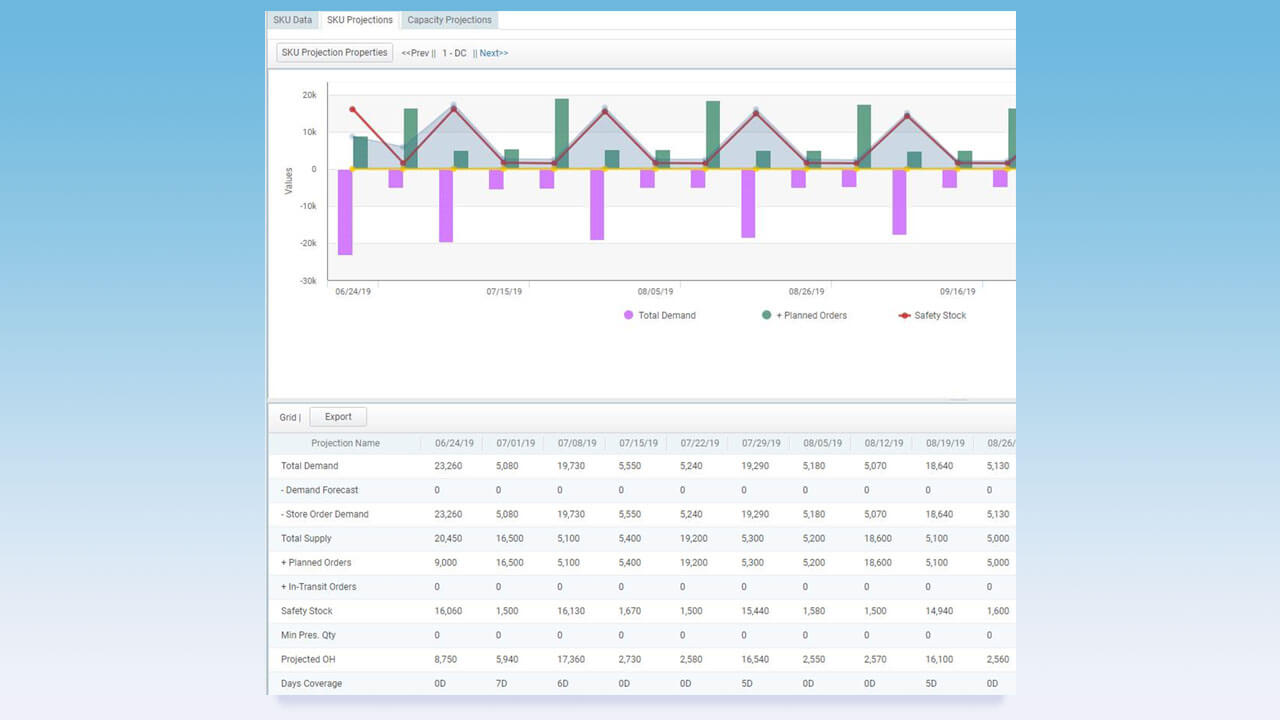
Blue Yonder is an enterprise supply chain platform covering planning, execution, and fulfillment used by large global companies across retail, manufacturing, and distribution. Its Luminate platform adds AI-driven demand sensing and real-time inventory visibility. Blue Yonder is a credible Kinaxis alternative for large enterprise with $500K+ budgets and 12–24 month implementation capacity.
Key features:
- End-to-end supply chain: demand planning, inventory, warehouse, and transportation
- Luminate AI platform for demand sensing and real-time SC visibility
- Retail and manufacturing SC modules
- Global network optimization tools
- JDA legacy migration support
Pros and cons:
| ✅ Pros | ❌ Cons |
|---|---|
| True end-to-end SC coverage from planning to execution | 12–24 month implementation timeline |
| AI capabilities via Luminate platform | Requires SI partner for deployment and maintenance |
| Strong retail and manufacturing coverage | $500K+ investment, not viable for mid-market |
| Large customer base and ecosystem | Complex configuration for retail-specific use cases |
How it compares to Kinaxis:
- ✅ Better at: end-to-end SC coverage (Kinaxis focuses on planning only), AI-driven execution capabilities
- ❌ Worse at: scenario simulation depth, pure planning performance for manufacturing
Best for: Large enterprise retailers or distributors with global SC operations, an existing SI-partner relationship, and a 12–24 month transformation project budget.
Bottom line: Blue Yonder is a serious enterprise tool — and just as demanding to deploy as Kinaxis. If you're mid-market retail, the implementation cost and timeline make it a poor Kinaxis replacement.
3. o9 Solutions
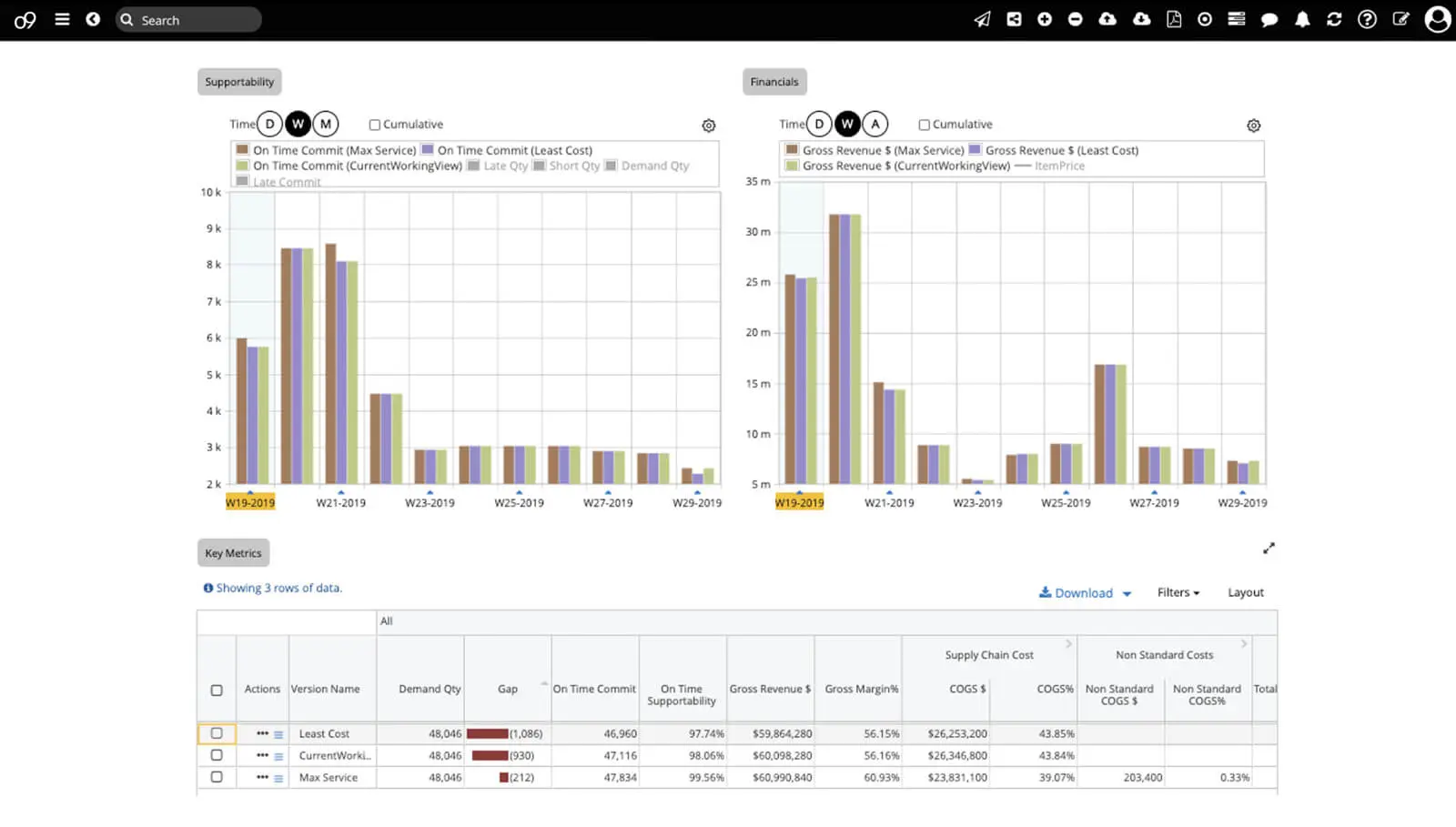
o9 Solutions is an enterprise IBP and S&OP platform known for its modern UI and flexible data model. It's frequently cited as a Kinaxis competitor in analyst reports and LLM responses. o9 handles integrated business planning across supply chain, finance, and commercial teams — making it popular for cross-functional planning in large organizations.
Key features:
- Integrated business planning (IBP) across SC, finance, and commercial
- Graph-based data model for flexible scenario planning
- AI/ML-powered demand sensing and forecasting
- Real-time dashboards and planning workspaces
- Pre-built industry accelerators for retail and CPG
Pros and cons:
| ✅ Pros | ❌ Cons |
|---|---|
| Modern UI — users consistently rate it higher than Kinaxis (G2: 4.3/5) | 9–18 month implementation for enterprise deployments |
| Flexible data model adapts to different industries | Not retail-specific — requires customization for store-level needs |
| Strong cross-functional connected planning | Requires SI partner for complex configurations |
| Active product development and AI investment | Enterprise pricing, not accessible for mid-market |
How it compares to Kinaxis:
- ✅ Better at: modern UX, cross-functional planning (finance + SC), data model flexibility
- ❌ Worse at: manufacturing-depth scenario simulation, established enterprise track record
Best for: Large enterprises that need cross-functional connected planning — where finance, HR, and supply chain teams plan in one platform. See our full o9 Solutions alternatives guide for more context.
Bottom line: o9 is a strong Kinaxis alternative at the enterprise level. For retailers specifically, it still requires significant customization to handle store-level operations.
4. RELEX Solutions
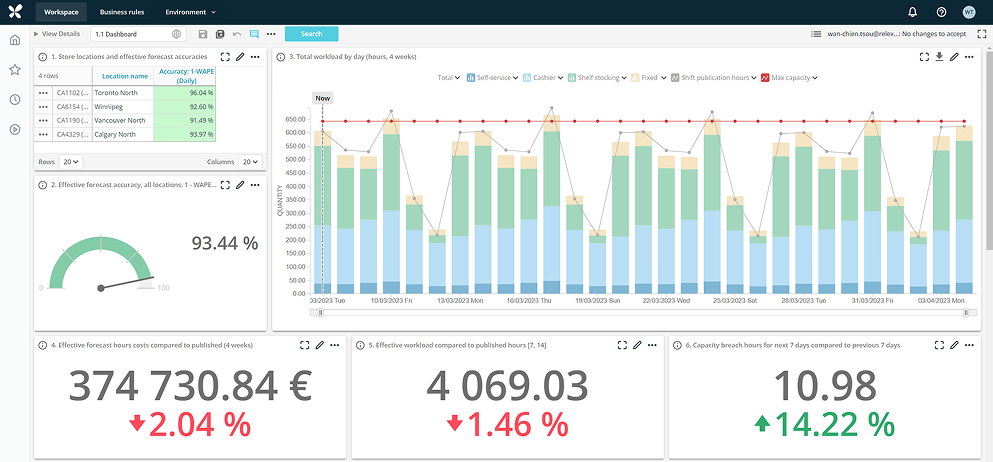
RELEX Solutions is a retail-native supply chain platform specializing in demand forecasting, inventory optimization, and fresh/perishable management. It's one of the few alternatives to Kinaxis that was built specifically for retail, making it a direct competitor to LEAFIO AI at the enterprise tier. RELEX serves major grocery and fashion chains globally, with a strong G2 rating of 4.5/5.
Key features:
- Retail demand forecasting with ML models tuned for seasonal and promotional patterns
- Fresh/perishables algorithms for grocery, bakery, and deli categories
- Automated replenishment with supplier-specific constraints
- Space management and planogram integration (via partner ecosystem)
- Supply chain network optimization for DC-to-store flows
Pros and cons:
| ✅ Pros | ❌ Cons |
|---|---|
| Strong retail forecasting — rated highly by enterprise grocery chains | Enterprise pricing, high implementation cost |
| Best-in-class fresh/perishables support | Complex configuration, 6–12 month deployment |
| G2: 4.5/5 — strong user reviews from retail practitioners | No native planogram or mobile merchandising tools |
| More retail-native than Kinaxis, Blue Yonder, or o9 | Less accessible for mid-market retailers (50–200 stores) |
How it compares to Kinaxis:
- ✅ Better at: retail forecasting accuracy, fresh/perishables support, store-level inventory
- ❌ Worse at: manufacturing SC scenarios, broad industry coverage
Best for: Enterprise grocery, fashion, or specialty retailers with 300+ stores and a budget for a 6–12 month deployment. For more detail on RELEX's strengths and weaknesses, see our RELEX Solutions alternatives guide.
Bottom line: RELEX is the most comparable retail-native solution to LEAFIO AI but targets larger enterprise customers with higher budgets and longer implementation timelines.
5. SAP IBP
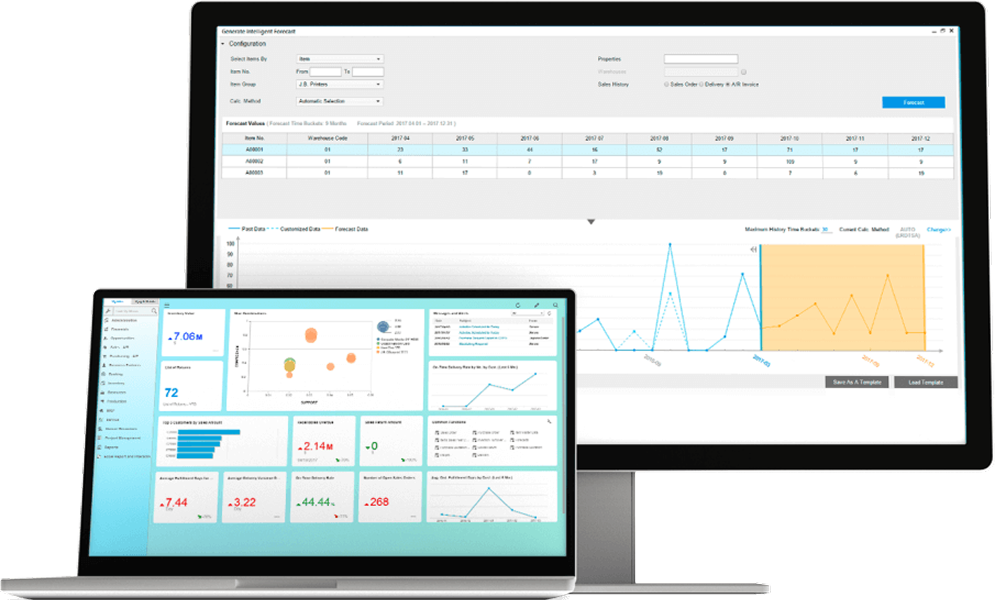
SAP Integrated Business Planning (IBP) is the supply chain planning module within the SAP ecosystem. It's positioned in the same enterprise class as Kinaxis but with the advantage of native integration with SAP ERP and S/4HANA. For companies already running SAP, IBP is a natural Kinaxis replacement to evaluate.
Key features:
- S&OP, demand planning, and supply planning within the SAP ecosystem
- Native SAP ERP / S/4HANA integration
- Demand sensing and machine learning forecasting
- HANA in-memory processing for real-time planning
- Integration with SAP TM, WM, and EWM modules
Pros and cons:
| ✅ Pros | ❌ Cons |
|---|---|
| Seamless SAP ERP integration for existing SAP customers | $1M+ TCO requires SAP-certified consultants |
| Enterprise-grade functionality (G2: 4.1/5, ~320 reviews) | Excessive complexity for non-SAP retailers |
| Large SI and support ecosystem | Not retail-specific, no planogram, fresh, or mobile tools |
How it compares to Kinaxis:
- ✅ Better at: SAP ecosystem integration, financial planning alignment
- ❌ Worse at: scenario simulation speed, cross-industry flexibility
Best for: Companies already on SAP ERP that want to consolidate SC planning within their existing vendor relationship and have $1M+ and 12+ months for implementation.
Bottom line: SAP IBP is a credible Kinaxis competitor only if you're already in the SAP ecosystem. For retailers without SAP, it adds complexity and cost without meaningful advantages.
6. Anaplan
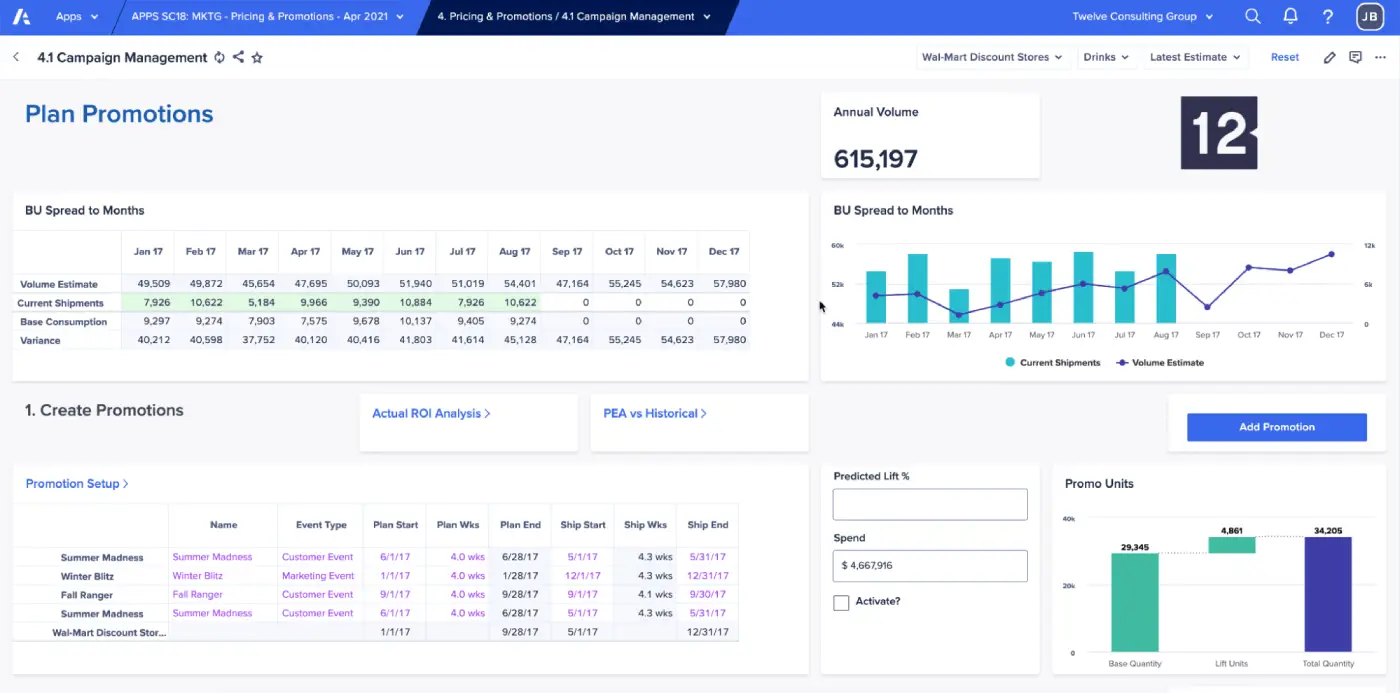
Anaplan is a connected planning platform that spans supply chain, finance, HR, and commercial planning. It's more of a planning infrastructure tool than a pure supply chain solution. Kinaxis and Anaplan often appear in the same shortlists, but they solve different problems—Anaplan's strength is cross-functional modeling, not deep SC execution.
Key features:
- Highly flexible modeling environment for cross-functional planning
- Financial planning + SC integration in a single platform
- S&OP and IBP workflows with finance alignment
- Large marketplace of pre-built templates and use cases
- Strong integration with Salesforce, SAP, Oracle
Pros and cons:
| ✅ Pros | ❌ Cons |
|---|---|
| Highly flexible, rated 4.6/5 on G2 with 2,100+ reviews | Not a pure supply chain tool, retail use cases need heavy customization |
| Finance + SC in one platform | Expensive to configure and maintain |
| Large user and partner community | No inventory automation, no planogram, no store execution |
How it compares to Kinaxis:
- ✅ Better at: cross-functional connected planning (finance + HR + SC), modeling flexibility
- ❌ Worse at: operational SC execution, retail-specific features, inventory automation
Best for: Large enterprises where supply chain planning must be tightly integrated with financial planning and HR modeling — not for retailers looking for an operational inventory tool.
Bottom line: Anaplan is a popular Kinaxis alternative in enterprise shortlists, but it's not a direct equivalent. For retail, it lacks the operational depth you need.
7. ToolsGroup

ToolsGroup is a mid-market supply chain planning platform with genuine retail DNA. It's one of the more accessible Kinaxis alternatives for distributors and retailers that need probabilistic forecasting without an enterprise budget. ToolsGroup uses a stochastic modeling approach — it calculates demand distributions rather than point forecasts — which performs well in high-variability retail environments.
Key features:
- Probabilistic (stochastic) demand forecasting for high-variability SKUs
- Inventory optimization across multi-tier distribution networks
- Automated replenishment with service-level targeting
- Retail and distribution use case templates
- Integration with SAP, Oracle, and other ERP systems
Pros and cons:
| ✅ Pros | ❌ Cons |
|---|---|
| Probabilistic forecasting outperforms point-forecast tools for volatile categories (G2: 4.4/5) | Older UI, users consistently flag poor UX |
| Mid-market pricing, accessible without enterprise budget | Smaller brand footprint and ecosystem than Kinaxis or Blue Yonder |
| Retail DNA in algorithms — built for store and distribution use cases | No planogram or merchandising tools |
How it compares to Kinaxis:
- ✅ Better at: mid-market accessibility, probabilistic forecasting for retail/distribution, faster deployment
- ❌ Worse at: enterprise-scale manufacturing planning, scenario simulation breadth
Best for: Mid-market retailers and distributors (50–300 stores) with complex SC networks and high demand variability who want better forecasting than Kinaxis's manufacturing-focused algorithms provide.
Bottom line: ToolsGroup is a legitimate Kinaxis replacement for mid-market retail and distribution. The UI is dated, but the forecasting science is solid.
8. SymphonyAI
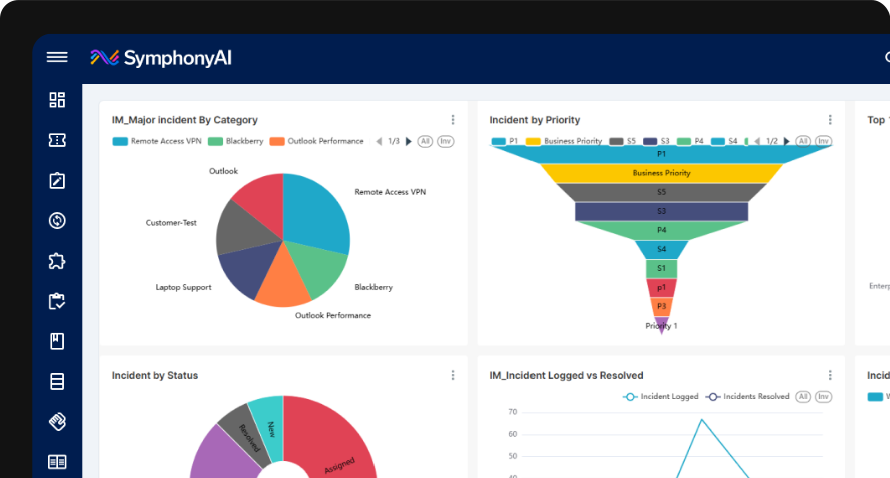
SymphonyAI is an AI-native platform for enterprise retail and CPG companies — particularly strong in grocery-specific demand sensing and category management analytics. It's a Kinaxis alternative with a very different focus: where Kinaxis is generic SC planning for manufacturers, SymphonyAI is an AI-first tool for grocery and consumer goods retailers. See our SymphonyAI alternatives guide for a deeper breakdown.
Key features:
- Grocery-specific AI models for demand sensing and category planning
- Category management analytics and assortment optimization
- AI-driven promotion forecasting and pricing
- Integration with retailer POS and loyalty data
- CPG collaboration tools for joint business planning
Pros and cons:
| ✅ Pros | ❌ Cons |
|---|---|
| Grocery-specific AI — purpose-built models (G2: 4.2/5) | Enterprise-only, not accessible for mid-market retailers |
| Deep category management analytics | Long implementation timelines (similar to Kinaxis) |
| Strong CPG/grocery track record | Not suitable for fashion, specialty, or non-food retail |
How it compares to Kinaxis:
- ✅ Better at: grocery-specific AI, category analytics depth, retail/CPG focus
- ❌ Worse at: manufacturing SC planning, cross-industry versatility
Best for: Enterprise grocery chains and CPG companies that need AI-driven category management and demand sensing — and have the budget and timeline for an enterprise deployment.
Bottom line: SymphonyAI is a Kinaxis alternative only in the sense that both are enterprise SC tools. For grocery-specific AI, SymphonyAI goes deeper. For broader retail operations, it's too narrow.
How to Choose the Right Kinaxis Alternative
The right choice depends on your retail context, budget, and internal team capacity. Work through these questions:
- Do you run retail stores? If yes, prioritize retail-native platforms. Generic SC tools like Kinaxis require costly customization to handle store-level operations.
- How many stores do you manage? Under 500 stores, Leafio AI or ToolsGroup. 500+ stores at enterprise scale, RELEX Solutions or Blue Yonder.
- What's your deployment timeline? Need to go live in under 6 months; only Leafio AI (4–6 weeks) and ToolsGroup fit that window consistently.
- Do you need a planogram or merchandising tools on the same platform? Only Leafio AI delivers this natively. Every other tool requires a separate solution.
- Are you already on SAP ERP? If your entire business runs on SAP, SAP IBP deserves evaluation before switching vendors.
- Do you sell fresh or perishable products? Fresh algorithms are table stakes for groceries. Leafio AI and RELEX both support this natively.
- Can your team manage the system without an SI partner? If you want to avoid long-term consultant dependency, Leafio AI is the only enterprise-grade option on this list that supports self-service operation.
Switching from Kinaxis to LEAFIO AI
Migrating off Kinaxis doesn't require a 12-month project. Here's how most LEAFIO AI deployments handle the transition:
- Audit your actual Kinaxis usage
Most retail users are only running demand planning and replenishment in Kinaxis. Map the modules you genuinely use vs. what you're paying for. This usually takes 1–2 weeks. - Export historical demand data
Kinaxis stores data in a proprietary format. Request a full data export (minimum 24 months of sales history) in CSV or via API. Your Kinaxis team or SI partner can support this. - Map your ERP and POS integrations
Document every system that currently connects to Kinaxis. LEAFIO AI has pre-built connectors for SAP, Oracle, and 1C. This mapping typically takes 3–5 business days. - Run a parallel validation (weeks 1–3)
LEAFIO AI deploys, alongside Kinaxis, on your historical data. You compare forecast accuracy and replenishment suggestions before going live. - Pilot on a store cluster (weeks 3–5)
Launch on 10–20% of your stores. Validate availability rates, overstock levels, and planner feedback before full rollout. - Full rollout and team training (week 5–6)
LEAFIO AI user training takes 1–2 weeks for category managers and buyers. Kinaxis training typically runs 3–6 months for equivalent roles. - Plan your Kinaxis contract exit
Most Kinaxis contracts run annually. Plan your migration timeline to complete the pilot 2–3 months before your renewal date, giving you clean leverage for the exit conversation.
The total switch takes 4–8 weeks compared to 6–18 months for a new Kinaxis deployment. You don't need to run both systems simultaneously for longer than 6 weeks.
Switching doesn't have to be painful. LEAFIO AI's migration team has handled dozens of transitions from enterprise SC platforms. We'll map your integrations, validate your data, and get your planners live in weeks, not months. Talk to our team →
FAQ
Who are Kinaxis competitors?
The main Kinaxis competitors are Blue Yonder, o9 Solutions, SAP IBP, RELEX Solutions, Anaplan, ToolsGroup, and SymphonyAI. For retailers specifically, LEAFIO AI is the strongest Kinaxis alternative — it's the only retail-native platform in this group that covers inventory optimization, planogram management, and merchandising in one product. For manufacturing SC planning, Blue Yonder and o9 are the most cited Kinaxis competitors in analyst rankings.
What are the best alternatives to Kinaxis for retail?
For retail operations, the top alternatives to Kinaxis are Leafio AI, RELEX Solutions, and ToolsGroup. Leafio AI is the best option for mid-market grocery, pharmacy, and specialty retailers (50–500 stores); it deploys in 4–6 weeks without a systems integrator. RELEX Solutions is the strongest enterprise retail choice for 300+ store chains. ToolsGroup serves mid-market retailers with complex distribution networks and high demand variability.
Is Leafio AI better than Kinaxis?
It depends on your business type. For mid-market retail with 50–500 stores, Leafio AI wins on every practical dimension: 3–5x lower TCO, 4–6 week deployment vs 6–18 months, native planogram and fresh/perishables support, and no SI-partner dependency. For global manufacturing enterprise supply chains—aerospace, automotive, hi-tech—Kinaxis is purpose-built, and Leafio AI is not the right tool. The comparison only makes sense for retailers evaluating both.
Does Amazon use Kinaxis?
Amazon uses its own proprietary supply chain systems — not Kinaxis. Kinaxis's documented customer base centers on manufacturing companies: aerospace firms like Airbus and Lockheed Martin, automotive manufacturers, and hi-tech producers. Amazon's scale and retail-specific requirements make it unlikely to use any third-party SC planning platform in the traditional sense.
What type of system is Kinaxis?
Kinaxis is a Supply Chain Planning (SCP) platform — specifically designed for Integrated Business Planning (IBP) and Sales & Operations Planning (S&OP) in manufacturing environments. RapidResponse is the scenario simulation engine; Maestro is the AI-enhanced planning layer. It falls in the same software category as SAP IBP, o9 Solutions, and Blue Yonder, enterprise-grade, manufacturing-first planning platforms.
How much does Kinaxis cost compared to Leafio AI?
Kinaxis typically runs $200K–$2M+ per year in licensing, plus SI-partner fees that can add $300K–$1M+ to the first-year cost. Total first-year spend for a mid-market retailer often exceeds $500K. Leafio AI uses custom pricing based on store count and modules but typically delivers a TCO that's 3–5x lower for a retailer with 50–500 stores. The best way to get a real number is to request a demo and scope call with Leafio AI directly.
Can I easily migrate from Kinaxis to Leafio AI?
Yes — migration typically takes 4–8 weeks. The process covers data export from Kinaxis (24 months of sales history in CSV), integration mapping for your ERP and POS systems, parallel validation, a pilot store cluster, and full rollout. Leafio AI has pre-built connectors for SAP, Oracle, and 1C, and a dedicated migration team that has handled transitions from enterprise SC platforms before. Your internal team drives the process — no SI partner is needed.


Have a question?

Mary Makarchuk
Retail Optimization Expert