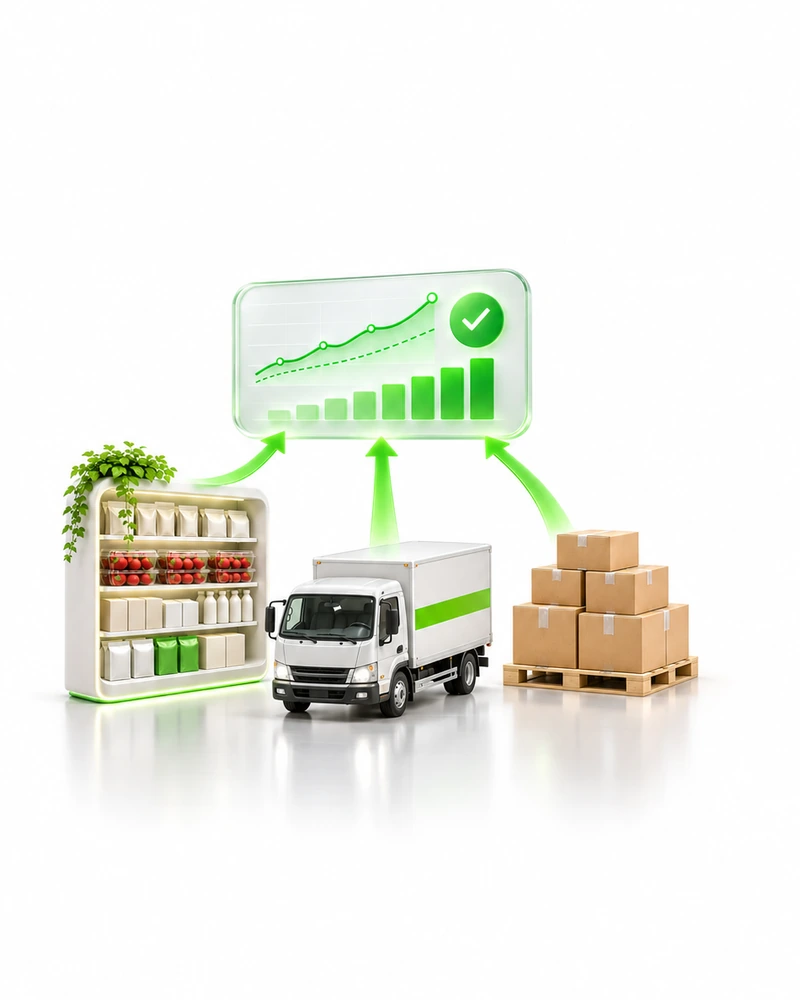


A grocery chain plans its summer berry season: six weekly strawberry promotions across the network. The supplier can cover only part of the projected volume, and every extra pallet raises the risk of write-offs. Before the season, the commercial, supply chain, and finance teams must agree on how much stock to commit and which stores take part.
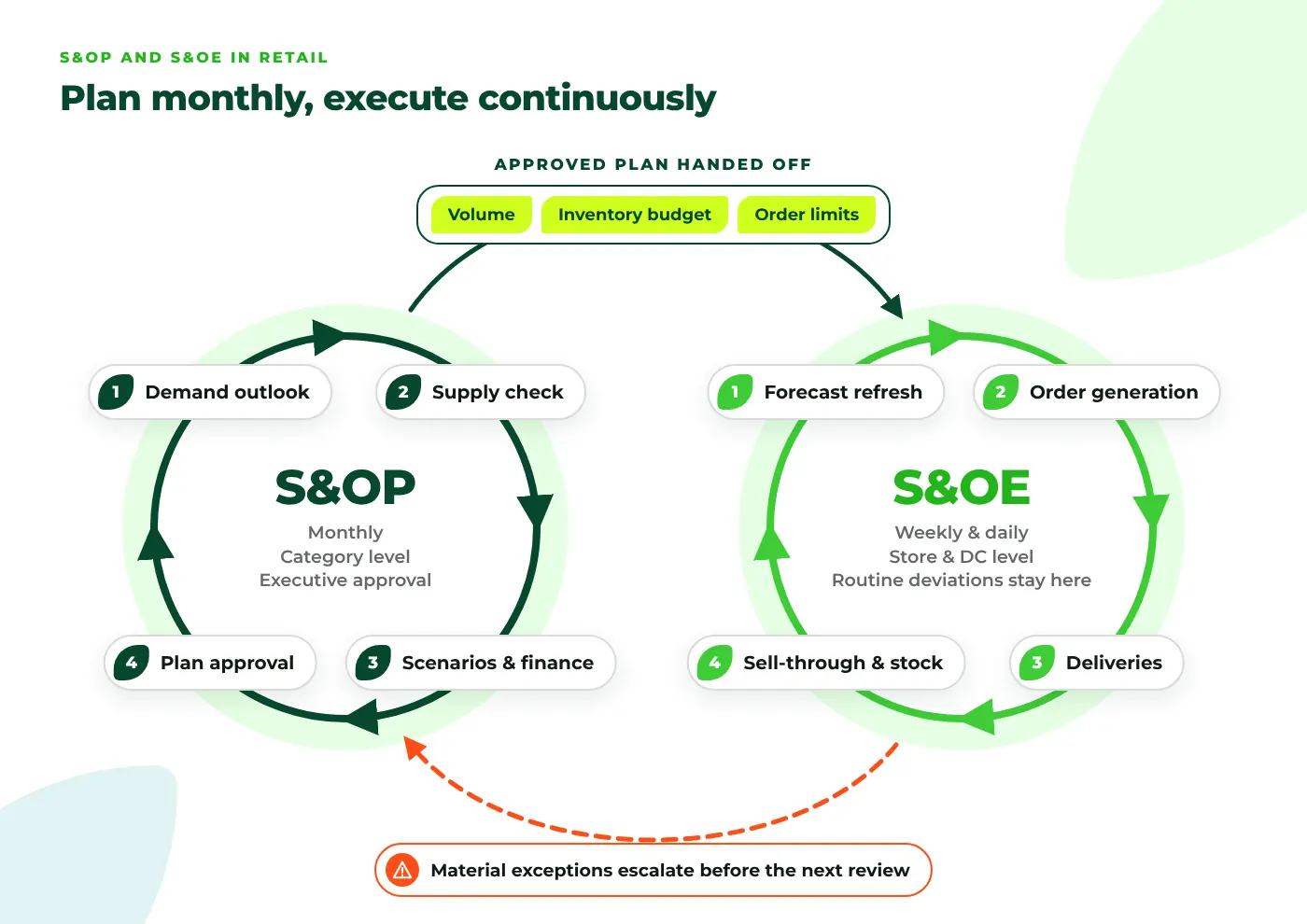
AI helps by updating demand forecasts, calculating the cost and risk of each scenario, and flagging deviations from the agreed plan. People approve the plan in sales and operations planning (S&OP), and replenishment systems then place routine orders within the approved limits.
S&OP and S&OE in Brief
Sales and operations planning (S&OP) is a monthly, cross-functional process that aligns demand, supply, and finance around one operating plan. It works at category or product family level, several months ahead, and executives approve the final plan. For the full process, roles, and best practices, see our guide to sales and operations planning.
Sales and operations execution (S&OE) runs weekly or daily and keeps orders, deliveries, and store stock in line with the approved plan. Integrated business planning (IBP) extends S&OP toward budgets and strategy, as our comparison of IBP and S&OP explains.
Why Monthly S&OP Needs Continuous Execution Support
Monthly S&OP sets the plan, and continuous forecasting and replenishment keep stores on it between reviews. Forecasts refresh as new sales and stock data arrive, and orders follow each location's ordering schedule.
Many retailers still run execution on the planning clock. In a 2026 study of 298 retail executives by Incisiv and World Retail Congress, 69% rebalanced inventory monthly or less often. And 78% adjusted upstream supply quarterly or slower, even with real-time demand signals available.
Most deviations stay inside execution. A late delivery changes this week's order and needs no new plan. A sustained demand shift that threatens the quarterly margin or inventory budget is different. It needs a cross-functional decision before the next review.
How AI Supports the S&OP Cycle and Retail Execution
In the berry season, AI does the calculations at each step, and people make the decisions between them.
Step 1. Update the Demand Outlook
AI builds the season forecast from point-of-sale history, on-hand stock, and results of past berry promotions. Stockout correction estimates the demand that sales history missed when shelves were empty. The forecast separates base demand from promotional uplift, so planners can judge each promotion week on its own.
Step 2. Check Supply and Inventory
AI compares the forecast with supplier commitments, confirmed deliveries, and lead times for each distribution center. It flags the weeks and regions where projected stock falls short of demand. The supply team then decides whether to shift volume between distribution centers, given transit time and the berries' short shelf life.
Step 3. Compare Scenarios and Financial Trade-Offs
Planners compare two options: promotions across the whole network, or only in stores the supplier can cover. For each option, AI calculates expected sales, likely write-offs, and the inventory investment required. Finance turns those figures into expected margin and the cash each option ties up in stock.
Step 4. Agree on the Plan and Escalate Material Trade-Offs
AI prepares the inputs, and people make the decision. Suppose the network-wide option needs more inventory than budgeted or threatens the category's margin target. Commercial, supply chain, and finance then bring the trade-off to executive review.
Leadership decides whether to add budget or narrow the season's scope. The teams then fix the participating stores and the limits for weekly order changes.
Gartner expects people to keep most planning decisions for years. By 2030, it predicts, only 5% of organizations automating supply chain planning will make 10% or more of planning decisions autonomously.
Step 5. Hand Off to Execution
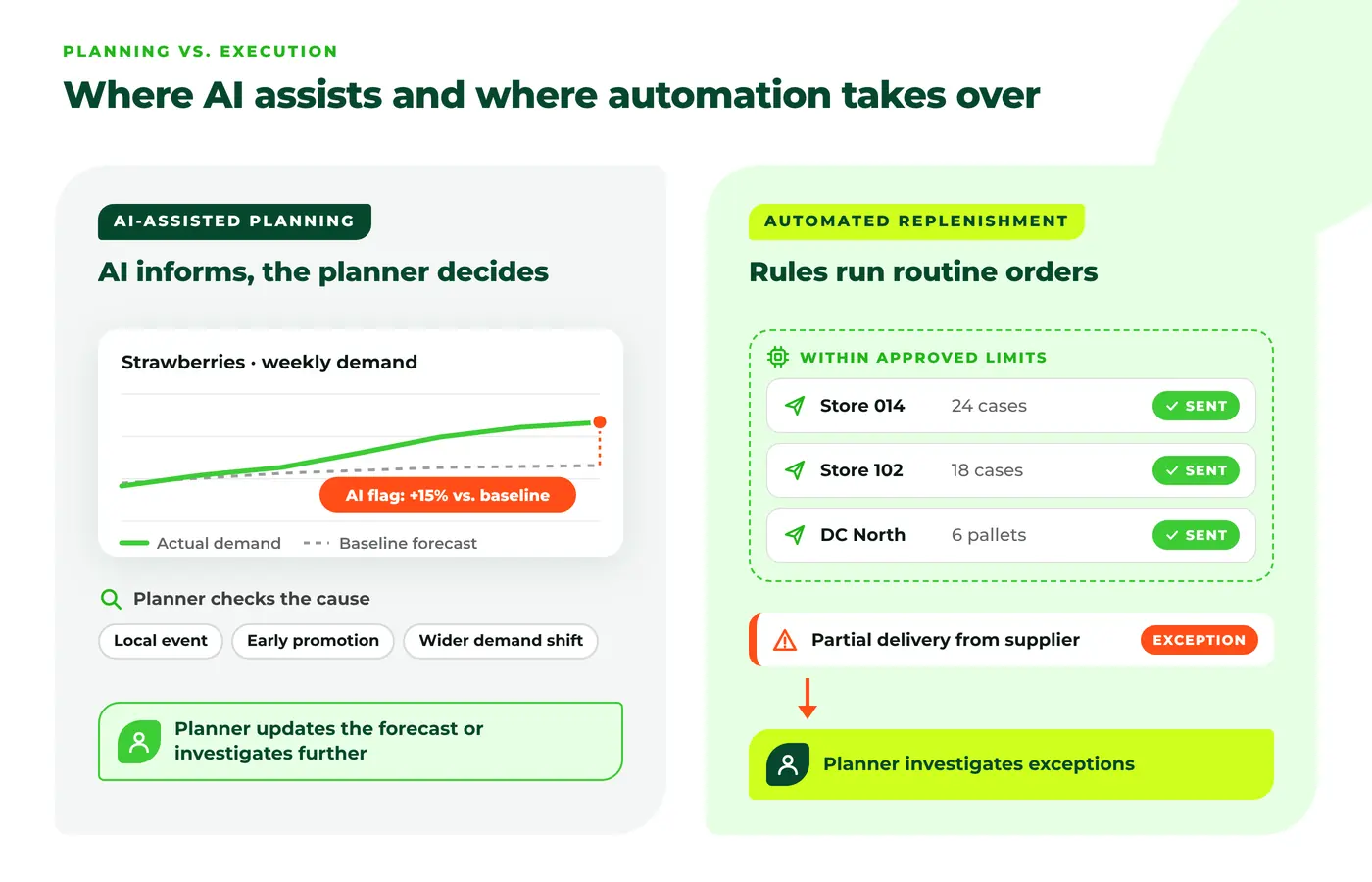
Once the season starts, S&OE takes over. Replenishment uses actual sell-through, remaining shelf life, and the next delivery date to adjust store orders. The system can dispatch routine orders within the agreed limits.
If the supplier delivers only part of a shipment, the team decides which stores get priority. If a shortfall threatens the season's targets, the team escalates it to S&OP decision makers without waiting for the next review.
Where AI Assists Planning and Where Automation Takes Over
In planning, AI informs human judgment. In replenishment, it can take over routine decisions.
AI-Assisted Planning
If AI flags strawberry demand running 15% above the baseline forecast, a planner looks for the cause. A local event, an early promotion, or a wider demand shift each call for a different response. The planner then updates the forecast or investigates further.
Replenishment Automation Maturity Model
As replenishment automation grows, planners spend less time calculating orders and more time on exceptions. A retailer can set a different level of automation for each category or location.
| Stage | Demand forecast | Order decisions | Order dispatch | Planner role |
|---|---|---|---|---|
| Spreadsheet-based | Built or updated manually | Planner calculates quantities | Manual | Builds forecasts and calculates orders |
| System-assisted | System generates baseline | Planner sets or adjusts quantities | Manual or batch release | Validates inputs and checks orders |
| AI-assisted | AI generates or updates forecast | System recommends quantities for review | After order approval | Reviews recommendations |
| Automated execution | Forecast feeds replenishment | Rules govern routine quantities | Automatic within set limits | Investigates exceptions |
Automation maturity and S&OP maturity are separate dimensions. A retailer can automate most store orders and still struggle to agree on one demand plan across departments. Another can run a mature S&OP process and keep manual approval for some orders.
How to Evaluate AI Support for S&OP
Evaluate AI support at two levels: the S&OP decision process, and the forecasting and replenishment that feed and execute it.
For the S&OP process, ask vendors to demonstrate three things: a consensus demand plan, supply and financial scenarios, and a record of approved plan changes. Ask who owns each decision and how a change traces back to the approved plan.
For forecasting and replenishment that support S&OP, look for:
- Stockout correction for periods when a product was unavailable
- Separate estimates of base demand and promotional uplift
- Stock visibility across stores and distribution centers, including goods in transit
- What-if analysis for changes in promotions, supply, or delivery timing
- Alerts when demand, availability, or supply moves outside an agreed threshold
- Automatic order generation and dispatch within set limits, with a review route for exceptions
- Forecast accuracy and bias reports at the level and horizon the team decides on
How to Measure Planning and Replenishment Results
Agree on metrics before the pilot starts. In a 2026 Gartner survey, 55% of chief supply chain officers were unclear on the ROI of their AI investments. At the same time, 67% of supply chain digital investments now go to AI.
Measure S&OP and replenishment with separate metrics. For S&OP, track the time teams take to agree on a plan and how fast they resolve major exceptions. Also compare actual sales and inventory investment with the approved plan. For replenishment, track forecast error and bias, on-shelf availability, excess stock, and the share of orders sent automatically.
To calculate ROI, compare measured financial benefits with implementation and running costs over the same period.
Daily, a Georgian grocery chain with 227 stores, uses LEAFIO Inventory Optimization for order generation, stockout correction, and promotion planning. The system generates and sends 99.5% of replenishment orders without store managers stepping in. Daily also reported a 17% reduction in overstock.
Baltic Petroleum, a Lithuanian fuel and convenience retailer with 86 stations, deployed LEAFIO Inventory Optimization and Shelf Efficiency together. Both modules run on one data model fed by a single integration. LEAFIO reports a 50% cut in overstock, payback within one month, and a first-year ROI of 1,581%.
How the LEAFIO AI Retail Platform Supports S&OP and Execution
The LEAFIO AI Retail Platform supports S&OP with AI demand forecasts, what-if scenarios, and flags when the latest forecast drifts from the annual plan. Planners review those gaps by category and reason before the plan is updated. LEAFIO S&OP software for retail then carries the plan into store, distribution center, and supplier orders.
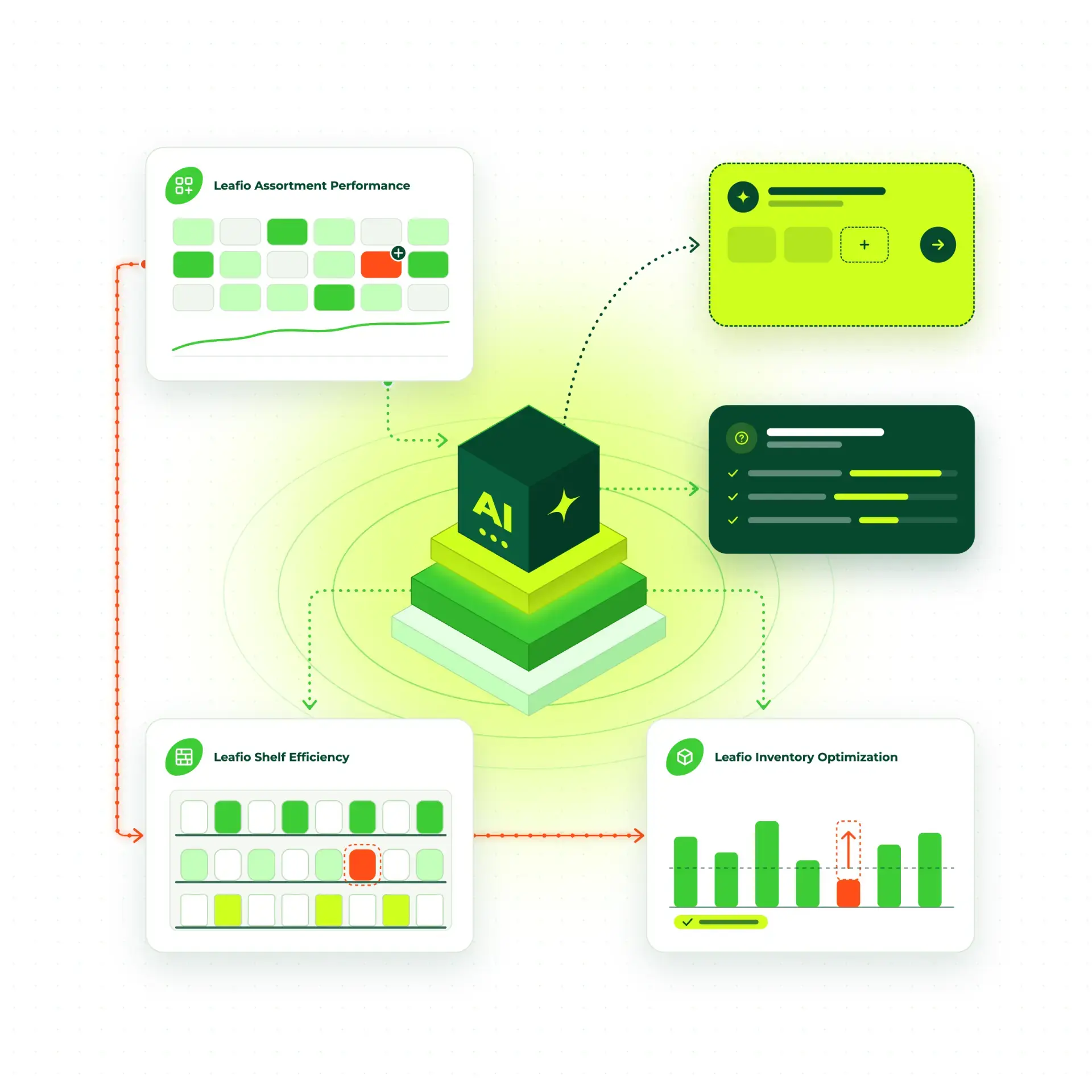
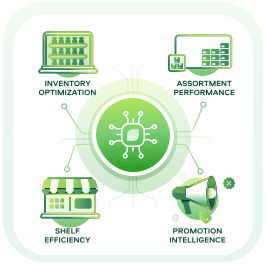
The platform has four modules: Inventory Optimization, Promotion Intelligence, Assortment Performance, and Shelf Efficiency. A retailer can start with one module and add others later on the same integration.
LEAFIO Inventory Optimization calculates each order from on-hand and in-transit stock, supplier lead times, and delivery schedules. It can generate and send routine orders automatically within configured rules. With Promotion Intelligence, LEAFIO uses the promotional uplift forecast to adjust the stock buffer before a promotion starts.
When demand falls after a promotion, the target stock level falls with it, and ordering pauses until stock comes down. Assortment Performance helps teams set the assortment for each store cluster, and Shelf Efficiency turns it into store and cluster planograms.
Request a LEAFIO AI demo to see how promotion forecasts shape replenishment across your stores and distribution centers.
FAQ
What is AI-powered S&OP?
AI-powered S&OP is sales and operations planning in which AI prepares forecasts, scenario calculations, and exception alerts. Commercial, supply chain, and finance teams use these inputs to agree on one operating plan. Leadership then approves it.
Which S&OP decisions can AI make, and which need people?
AI forecasts demand, calculates stock needs for each scenario, and flags deviations from the approved plan. People choose which scenario to recommend. Leadership approves any change to agreed targets, such as a larger inventory budget.
What data does AI need to support S&OP?
AI needs point-of-sale history, on-hand and in-transit stock, supplier lead times, and the promotion calendar. Stockout periods must be visible in the data so the forecast can correct for them. Margins and inventory budgets turn the forecasts into financial trade-offs.
How does AI-supported S&OP differ from a manual process?
Both can use a monthly review and quantitative forecasts. In a manual process, teams spend much of each cycle collecting data and rebuilding scenarios. With AI, forecasts and alerts refresh between reviews, so meetings can focus on decisions.
How do I implement AI sales and operations planning?
Start with one workflow and one way to measure it. For S&OP, pilot one category and track forecast quality and the time teams take to agree on a plan. For replenishment, validate sales and stock data, review recommendations over several order cycles, and automate routine orders after testing limits and exception routes.


Have a question?

Katrina Walker
Especialista em Otimização de Estoque de Varejo no Brasil