

The cloud-based inventory management systems are transforming the retail industry. Cloud inventory management software is revolutionizing the way businesses handle their stock with real-time inventory tracking. Gone are the days of clunky spreadsheets and manual processes. As your business grows, so does the complexity of managing inventory effectively. Cloud-based systems offer a powerful solution to optimize stock control, streamline operations, and free up valuable time and resources.
Key Takeaways
Selecting the right inventory management system is crucial for efficiency, scalability, and accuracy in inventory operations.
Choosing the right inventory management system is critical.
Systems should be scalable to grow with the business.
Integration with other retail tools improves efficiency.
Real-time tracking ensures product availability.
Automation reduces human error and improves accuracy.
Imagine having real-time visibility of your inventory, automated ordering, and reduced risk of costly errors. With a cloud-based system, you can gain a competitive edge, improve customer satisfaction, and drive business growth.
Automated inventory management further enhances efficiency by reducing manual intervention and minimizing errors.
But with a multitude of options available, selecting the right system can be challenging. This guide will help you navigate the key features to consider, ensuring you find the perfect cloud-based inventory management system to meet your unique business needs.
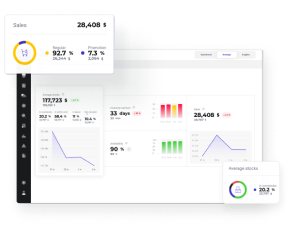
Inventory management system and retail business
In retail business financial performance is determined by the magnitude of an operating cycle, the time lag influenced by inventory turnover rate and business credit (in other words, extended payment to suppliers). The greater this gap is, the more funds are available for operational activity and development. Effective inventory optimization can significantly enhance this process.
Business credit (or extended, deferred payment) is given to reputable market players, so it depends on your company’s market value and the ability of your employees to communicate with vendors and suppliers.
Inventory turnover rate is the primary indicator of inventory management effectiveness. Inventory turnover is calculated based on the stock and sales data for a certain period of time showing the number of days/month until the next restock. Inventory turnover is also influenced by product matrix, assortment performance and of course, inventory management instruments used.
Effective inventory control is crucial for enhancing operational efficiency, reducing errors, and supporting real-time visibility and tracking across multiple sales channels and locations.
So, an inventory management system software is a set of retail business processes that are designed to keep a certain level of assortment matrix availability to serve customer demand. These business processes are:
- replenishment of store and central warehouse inventory. Including the goods of regular demand, promotional, seasonal products (taking into account all retailers and suppliers SC restrictions);
- analysis of inventory key performance indicators;
- response to emerging problems;
Inventory accuracy is essential for maintaining optimal stock levels and meeting customer expectations.
Knowledge in the field of cloud inventory management can support decision-making for job seekers and companies alike.
Let’s imagine a retailer operating 30 stores with an average of 5,000 SKUs. It means, we have to manage and control 150 000 items, each having its own demand, supply and category performance. To calculate restock quantities, each item, its demand and sales shall be analyzed.
This explains the need for an automated inventory management system that does all the calculations and analysis and presents the final “product” to the manager who now has time to devote his time to an analytical and strategic activity, work with KPIs and development.
Functions to pay attention to when choosing a new or upgrading a current inventory management system:
- Generating correct order quantities for restocking, for each SKU in each store.
- Demand tracking and analysis, consistent with seasonal/holiday/sales demand spikes.
- Practical and user-friendly analytics for key inventory performance indicators.
How to reach your business goals?
What is cloud-based inventory management?
In today’s rapidly changing business landscape, efficient inventory management is paramount. Cloud-based inventory management refers to utilizing software applications hosted on remote servers and accessed via the internet to manage and track inventory levels, orders, and sales data in real-time, ensuring better inventory visibility.
Unlike traditional systems that rely on local servers and manual updates, cloud-based solutions offer businesses the flexibility to manage their inventory from anywhere, at any time, providing unparalleled control. This real-time accessibility ensures businesses can quickly respond to changes in demand, supply chain disruptions, and other market dynamics. Furthermore, cloud-based systems offer advanced features like inventory forecasting, aiding businesses in predicting future inventory needs and optimizing stock levels, making them an indispensable tool for modern businesses.
Cloud-based inventory management software leverages cloud computing to manage and track inventory levels, orders, and shipments. This type of software allows businesses to access their inventory data from any location, at any time, and on any device with an internet connection, and includes powerful inventory analytics features.
By providing a centralized platform, it simplifies the management of inventory across multiple locations, sales channels, and warehouses. Inventory automation further enhances efficiency by automating routine tasks and reducing manual errors. Whether in the office, at home, or on the go, businesses can stay on top of their inventory management tasks.
This capability to track inventory in real-time is crucial for swiftly responding to changes in demand, supply chain disruptions, and other market dynamics. This makes cloud-based inventory management an invaluable tool for modern businesses.
Benefits of cloud-based inventory management
In today's fast-paced business world, staying on top of your inventory is crucial for success. Cloud-based inventory management offers a powerful solution, providing numerous advantages over traditional methods. Here's a look at the key benefits:
- Real-Time Visibility: Gain a complete and up-to-the-minute view of your inventory levels, locations, and movements, enabling better decision-making and faster responses to demand fluctuations. This real-time data eliminates guesswork and provides accurate insights for optimizing stock.
- Accessibility from Anywhere: Manage your inventory from any location with an internet connection, empowering you and your team to stay connected and in control, even on the go. This flexibility streamlines operations and improves responsiveness.
- Reduced Costs: Eliminate the need for expensive on-site servers and IT infrastructure, lowering upfront costs and ongoing maintenance expenses. Cloud-based solutions also reduce manual data entry, minimizing errors and saving valuable time.
- Improved Accuracy: Automate inventory tracking and updates, minimizing manual errors and ensuring data accuracy. This leads to more reliable inventory counts, fewer stockouts, and reduced waste.
- Scalability and Flexibility: Easily scale your inventory management system as your business grows, adapting to changing needs without significant investment or disruption. Cloud solutions offer the flexibility to adjust resources as needed.
Additionally, cloud-based systems can result in significant cost savings by eliminating the need for expensive on-premise hardware and reducing manual labor.
Must-have features of an inventory management system:

1. High level of automation & quality UI/UX.
A quality inventory management system software can create customized priority task lists for each user. The user can track current levels of target inventory, have order and delivery schedules at hand, and have access to practical customized reports on overstock inventory, deficit, delayed deliveries, etc. What is more, the system can quickly react to the probable errors and promptly send the notification to the user.
Usability and intuitive interface determine the effectiveness of the whole system. Employees of all levels shall be able to read and understand data, as well as quickly learn to work with a system.
2. Adding value to a company's financial performance.
How can an online inventory management system contribute to profit-making?
- by automated inventory tracking and restock calculation for each SKU in each store, by live inventory count and refreshing with the latest demand change, delivery schedule, packaging alterations, etc;
- by automated restock and reship within the company’s supply chain, assigning and sending orders to suppliers, warehouses, stores, cross-docking;
- by customizing restock quantities for the stores and distribution centers by analyzing seasonal demand, low-selling, perishable, promotional goods demand spikes.
Each product category is unique. When calculating restock and tracking metrics, the inventory management system shall analyze product features. For example, if you are selling dry goods, your inventory system has to manage:
- average daily demand;
- seasonal demand;
- planned promotions and sales;
- supplier reputation and reliability.
If you are selling fresh goods, you have to add these 3:
- day-by-day demand spikes, depending on the day of the week;
- targeting and merchandising, availability of goods on the shelves for targeted customers;
- expiration dates.
The online inventory management system shall adapt its metrics to all its factors and have a fully customizable buildable algorithm to fit each business's needs and adapt to its goals.
For example, when a system forms an order to be sent to the main warehouse the algorithm shall include the following metrics:
- sales demand for each store;
- promo and sales activities for each store;
- seasonal demand;
- DC sales;
- other factors that may influence the order within a delivery leg.
3. Extra functionality for order forming and restocking:
- Optimizing order quantities (order cost, weight, pallets, product quantities). The system calculates and analyzes input and real-time data and corrects order quantities (increases if the supplier, for example, has a minimum order requirement and decreases, if there are any budget limitations on the outgoing orders).
- Splitting the orders to fit logistics requirements (vehicle carrying capacity/number of vehicles etc.).
- Using substitute products when making an order (substitutes are similar/interchangeable products that are simultaneously present in the assortment matrix).
- Keeping track of substitute products (if one of the products is already present in the assortment matrix and the client does not feel the difference and does not have any preference).
- Working with alternative additional suppliers.
4. Promotions and seasonal inventory management:
- Automated order calculations and restocking to respond to sales after the promotional/seasonal period is over.
- Analyzing seasonal demand metrics (this component varies depending on product/store/month/week/season).
- Analyzing holiday season logistics lags (Sometimes during high- or holiday season suppliers are not able to fulfill and deliver the orders. The system automatically keeps a record of such periods and sends your orders before such periods start. As a result, you are prepared and you do not have to place orders during the busy high season).
- Preparing for a promotion/sales season. The system automatically calculates inventory needed to respond to the promotion demand level.
- Real-time promotion demand tracking and correcting promotions. Flexible approach to promotion planning and management can help to pause/stop promotion campaigns for certain products if they are not being sold effectively.
- Accurate real-time demand tracking. The system analyzes sales data during promotion and corrects inventory levels accordingly.
- Keeping track of promotional additional supplier placements for different products.
- Mastering inventory levels at the end of a promotion (this functionality can be applied to any sales event, promotion campaign and manage in-out goods).
- Visual data representation and analytics. Data is presented clearly to compare and analyze sales and demand for each promotion/each product.
5. Troubleshooting and performance metrics control: Software often includes alerts for low stock levels to prevent stockouts
- Low Stock Alerts: Prevents stockouts and ensures customer demand is met.
- Real-Time Monitoring: Avoids overstocking and understocking, minimizing costs and lost sales.
- Proactive Planning: Facilitates timely reordering for a smooth supply chain.
- Key Metric Analytics: Provides a comprehensive view of performance metrics (out-of-stock, overstock, inventory turnover, availability, costs, sales).
- Inventory Transparency: Essential for efficient operations.
- Actionable Insights: Highlights urgent tasks, like adjusting inventory for promotions.
6. Data control and transparency:
- Possibility to generate a list of overstock or understock, review order history and order movement, for each item in the warehouse in seconds to quickly react to any changes.
- Logging of changes made by users to the system.
7. Real-time analytics: Cloud inventory management systems provide detailed reporting and analytics
Flexible reporting tool to quickly and efficiently analyze lost sales, overstock, inventory availability and turnover, with the data filters for each warehouse, responsible employee, product type.
- System Integration: Connects with other business systems for streamlined workflows.
- Detailed Reporting & Analytics: Tracks inventory, monitors stock, and analyzes sales trends.
- Scalability: Adapts to business growth without performance issues.
- Actionable Insights: Identifies areas for improvement and optimizes operations.
- Data-Driven Decisions: Enables quick responses to market changes and customer demands.
- Demand Forecasting: Helps predict future needs.
- Multi-Location Management: Supports businesses with multiple warehouses or locations.
- Supplier Performance Reports: Tracks supplier reliability and order fulfillment.
- Inventory Turnover & Availability Reporting: Provides key metrics on inventory performance.
- Like-for-Like Metrics: Enables comparison over time.
- Specialized Reporting: Offers tools for fresh products, promotions, etc.
- User Activity Tracking: Monitors changes made by each user.
8. Cross-platform integration and flexibility:
- You can use the system to log in from any device from anywhere in the world!
- Flexible settings, that can be adapted to any business needs very quickly. You do not have to invest in hard code changes and additional programming. Flexibility is a new must-have of the 2020s.
- Easy and smooth integration with any reporting system.
- High operating speed.
Choosing and implementing the right cloud-based inventory management software
Choosing the right cloud-based inventory management software and making an informed inventory software selection is crucial for optimizing your inventory management process. A successful implementation requires careful planning and execution. Here's a breakdown of the key steps:
- Understanding Current Processes: Begin by thoroughly analyzing your existing inventory management workflows. Document how inventory is received, stored, tracked, and used. This provides a baseline for identifying areas needing improvement.
- Identifying Pain Points and Areas for Improvement: Pinpoint inefficiencies, bottlenecks, and challenges in your current inventory processes. Where are the biggest pain points? What processes are slow, error-prone, or costly? Understanding these issues will guide your software selection.
- Choosing the Right Cloud-Based Inventory Management Software: Based on your process analysis and identified pain points, research and select a cloud-based inventory management system that aligns with your specific needs, budget, and long-term goals. Consider factors like scalability, integration capabilities, and user-friendliness.
- Implementing the Software: This phase involves preparing and formatting your inventory data, configuring the system to meet your specific needs, conducting a pilot run to identify and resolve any issues, providing thorough user training, and finally launching the system while closely monitoring its performance and making any necessary adjustments for optimal use.
Cloud-based inventory software: Key considerations
Choosing cloud inventory software requires careful consideration of key factors to ensure it meets your business needs. Prioritize robust capabilities for tracking and managing inventory across multiple locations, which is essential for businesses with complex supply chains. Order management and fulfillment capabilities are also crucial, ensuring efficient handling of orders from various sales channels and timely, accurate processing. Scalability and flexibility are important, allowing the software to grow with your business and adapt to changing needs.
Integration with other business systems, such as accounting and CRM, is another critical factor for a seamless flow of information and enhanced efficiency. Consider the user interface, customer support, and pricing model. A user-friendly interface and comprehensive support can make a significant difference in the successful implementation and ongoing use of the software. By carefully evaluating these factors, you can select a cloud-based inventory solution that empowers your business for success.
Cloud-based inventory management FAQ
What is a cloud-based inventory management system?
A cloud-based inventory management system is software that allows businesses to track and manage their inventory levels, orders, and suppliers in real-time using a remote server. It offers accessibility from anywhere with an internet connection, eliminating the limitations of traditional on-premises systems.
Is LEAFIO Inventory Optimization cloud-based?
Yes, LEAFIO Inventory Optimization is a cloud-based inventory management system. This means it can be accessed from any device with an internet connection, offering flexibility and scalability for businesses of all sizes.
What are the benefits of inventory management system?
Inventory management systems offer numerous benefits, including improved inventory accuracy, reduced carrying costs, increased efficiency, better forecasting, streamlined order fulfillment, and enhanced customer satisfaction.
How to choose a cloud based inventory management software for retail?
When choosing a cloud-based inventory management software for retail, consider factors like ease of use, scalability, integration with existing systems, features specific to retail (e.g., POS integration, omnichannel management), and pricing.


Have a question?

Ben Starynskii
AI-driven retail transformation expert