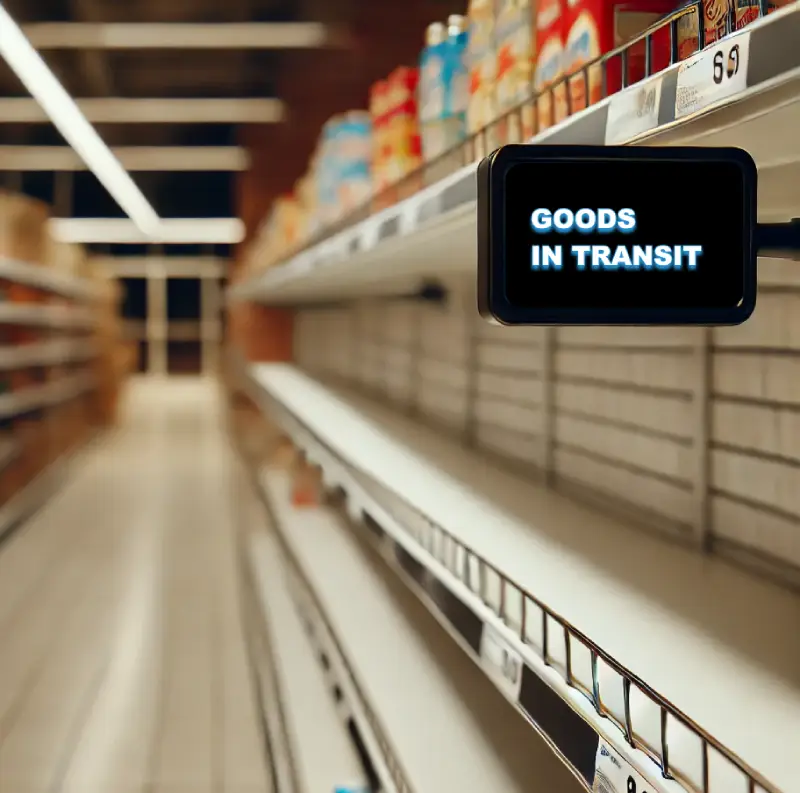


According to the Consumer Products Industry Outlook Research by Deloitte, nine out of ten executives identified supply chain challenges as the biggest threat to growth in the consumer electronics sector. Additionally, six out of ten executives reported issues with labor shortages and rising inflation as current challenges, highlighting the significant impact of global supply chains on this sector.
These concerns underline the need for efficient management of electronics inventory, a critical aspect of supply chain operations, especially within large networks. Retailers face various consumer electronics supply chain challenges, including manual ordering, unbalanced inventory, and a lack of real-time inventory data. These issues tend to compound, resulting in lost sales, frozen capital, and high operating costs burdened with routine tasks.
This article explores the unique aspects of electronics supply chain disruptions and highlights how specialized consumer electronics software can help overcome related inventory management challenges.
Key Takeaways
Consumer electronics retailers face significant challenges in managing supply chains effectively. These challenges include disruptions, the need for better stock management, and the increasing importance of AI-driven solutions to optimize logistics and inventory. The following key points outline the key strategies and innovations needed to tackle these issues.
Consumer electronics face supply chain disruption.
Retailers must manage stock efficiently.
Forecasting demand with AI is key.
Automation optimizes logistics.
AI tools help ensure inventory availability.
Major 6 consumer electronics supply chain challenges in 2025
In 2025, the electronics industry faces complex challenges in managing high import volumes and extended lead times, while keeping up with rapid technological advancements and fluctuating demand patterns. Coupled with the rise of omnichannel sales channels, this necessitates agile forecasting methods to remain competitive.
Challenge #6: High import volumes and extended lead times
Consumer electronics retailers typically operate through distributors or as direct importers, mainly sourcing from China and other Asian countries known for their large production capacities and competitive pricing. Large companies with the resources to import equipment independently often encounter significant consumer electronics supply chain challenges. For instance, extensive supply chains greatly complicate the delivery process.
Each product, whether a blender or a vacuum cleaner, faces many supply chain obstacles en route—from clerical errors to global disruptions such as pandemics or wars. The challenge of managing supply chains that source from multiple locations adds another layer of complexity, emphasizing the need for diversification to mitigate risks and ensure continuity of operations.
According to a survey by IPC, a consumer electronics industry advocacy group, 69% of distributors have received notices from their suppliers about delivery delays averaging between three and six weeks. These delays have a domino effect, significantly impacting the profitability of many companies in the market.
Solution: Implement Long-term Forecasting with Risk-based Planning
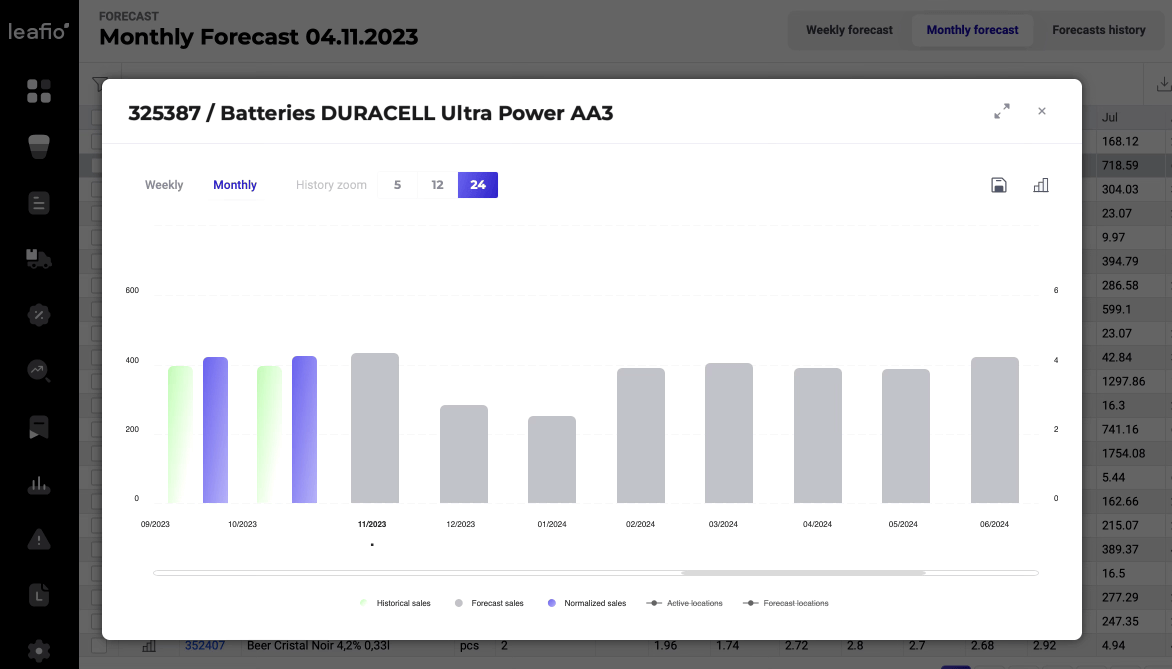
Global supply chain events are beyond the control of retailers and distributors, but they can enhance the stability of their interactions with new suppliers. Given the long supply chains in the electronics industry, forecasts should be projected for 3–6 months. Suppliers must receive detailed procurement plans for imports to function efficiently, as most base their production schedules on such information. For this strategy to be effective, the forecasts must be highly accurate.
Manufacturers may also benefit from receiving periodic updates to adjust their demand for electronic components and raw materials. For instance, the LEAFIO Inventory Optimization can update a six-month forecast, allowing for precise planning adjustments based on fluctuations in customer demand.
Long-term and medium-term forecasts in the LEAFIO AI-driven supply chain system enable accurate assessment of current and future needs for goods, considering specifics of supplier interactions, schedules for goods arrival, seasonal trends, and other factors. Additionally, a visual report for supplier interaction facilitates the planning process, making it as streamlined as possible. While managing such a vast array of variables can be daunting for even the most skilled workers, it’s a straightforward task for artificial intelligence software like LEAFIO AI.
Challenge #5: Rapid assortment rotation
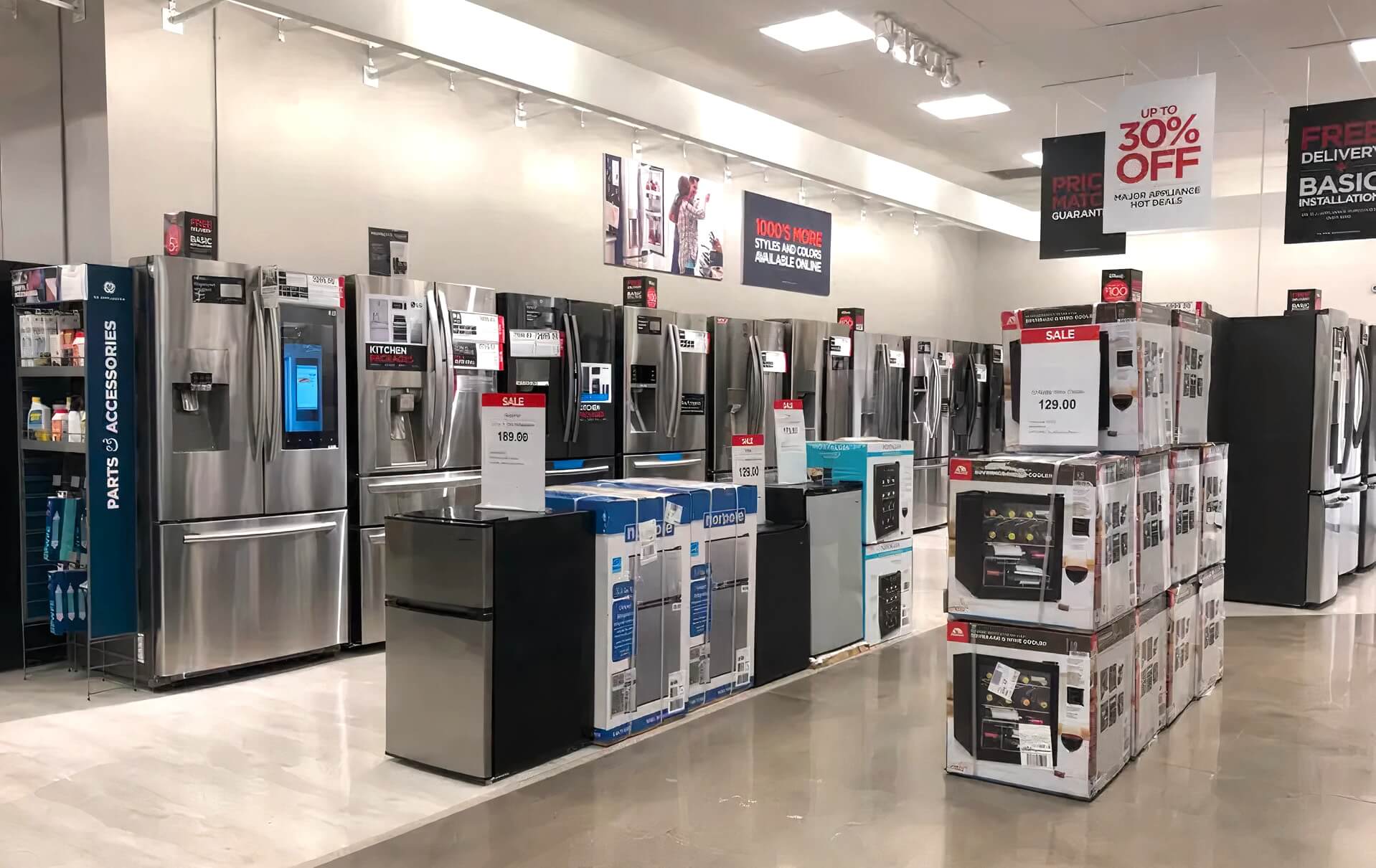
In sectors like fashion, toys, and consumer electronics a high turnover in product assortments necessitates sophisticated supply chain operations. Consumer electronics, in particular, are subject to rapid technological advancements, resulting in notably shorter product life cycles. Today, retailers must continuously update their electronics inventory with the latest models to maintain a competitive edge and meet customer demands, ensuring they stock only what is necessary to adapt to these rapid changes.
Previously, electronic products such as microwaves or TVs enjoyed several years of profitable shelf life. Today, their life cycles can be as short as six months to a year, making unsold stock quickly outdated and financially burdensome, especially for slow-moving, high-value items.
To address the swift evolution of product features within the same category, it’s crucial for electronics manufacturers and retailers to efficiently manage transitions from older models to new ones. This involves introducing suitable analogs and substitutes without disrupting sales. Managing a complex assortment matrix of interconnected product families and SKUs presents significant challenges. Ineffective transitions can result in lost sales and excessive surplus, escalating storage costs.
Solution: Streamlining with Advanced Inventory Optimization Software
Modern platforms, like LEAFIO AI, utilize multi-stage forecasting algorithms to accurately assess demand and manage inventory for all levels of distribution. These AI-powered tools aid in phasing out older models and smoothly integrating new ones, keeping the supply chain free from outdated inventory thanks to new technologies.
By automating the order processes and balancing inventory across product families, LEAFIO Inventory Optimization ensures timely replenishment and operational efficiency across the supply chain, ultimately saving time and reducing costs.
Challenge #4: Demand fluctuations in the consumer electronic retailers
Various challenges in supply chain management in the electronics industry such as seasonality, promotions, weekends, and holidays cause changes in consumer demand patterns. In the consumer electronics segment retailers also experience demand fluctuations between weekends and weekdays. This variability must be considered, as deliveries to stores usually occur several times a week, especially in chains with numerous outlets. Given the high cost of goods, maintaining a high level of availability across all categories regularly may not always be advisable.
This volatility makes it challenging to predict the necessary products and quantities for specific periods, often leading to an excessive accumulation of goods in the warehouse, increased storage costs, and losses due to inventory obsolescence. Conversely, an insufficient stock can alienate customers and reduce sales. Effective supply chain management requires accurate methods and tools for demand planning and flexibility in responding to demand changes.
Solution: Enhance the accuracy of short-term forecasting based on previous sales.
To enhance forecast accuracy and meet customer demand, LEAFIO AI calculates day-of-the-week coefficients for each SKU and storage location. These intra-week seasonality coefficients, computed using machine learning algorithms, benefit electronics retailers by allowing them to maintain higher inventory levels on weekends when electronics demand typically peaks.
For instance, a major chain of electronics stores utilizing LEAFIO delivers goods daily from a central warehouse. With precise day-of-the-week forecasting, they can adjust inventory levels according to projected daily sales, preventing excess stock during periods of low demand. This high forecast accuracy ensures that inventory meets customer needs, reducing overstocks, optimizing inventory usage, and minimizing write-offs.
Challenge #3: Balancing inventory in omnichannel sales
Although the vast majority of customers choose and buy consumer electronics offline, more and more customers are turning to online stores for their purchases every year. According to Statista, in 2025, online sales will account for 31.4% of the total revenue in this market.
There is also a share of shoppers who choose products online and then go to an offline store: there they may choose another product or place an order online after checking it out in the store.
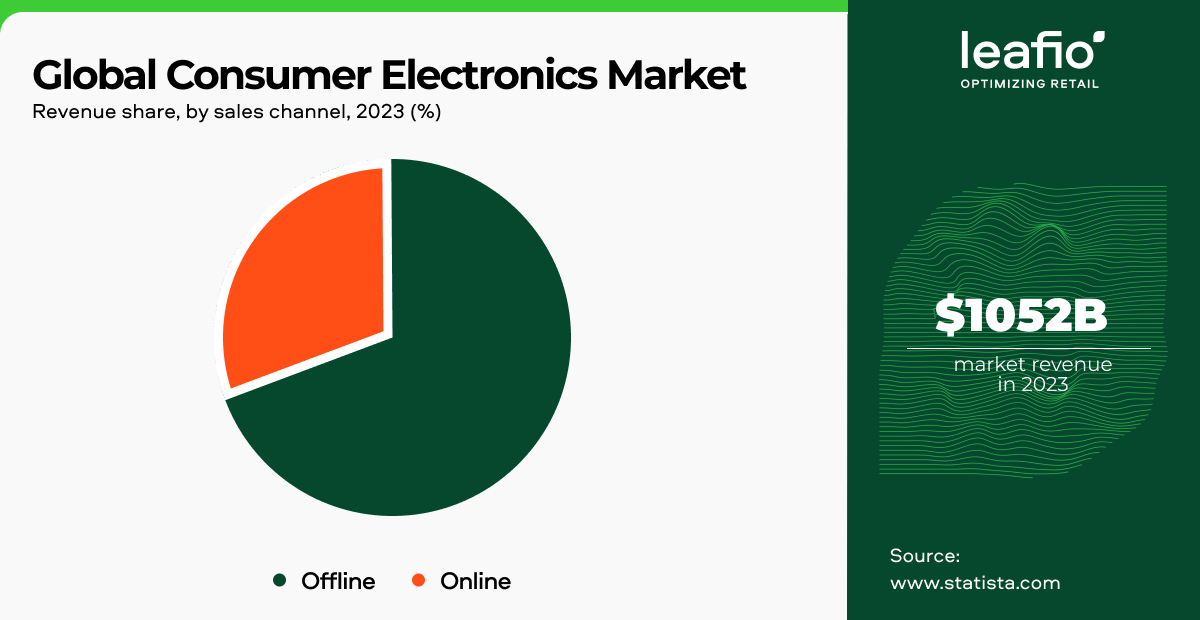
Omnichannel inventory management requires a variety of delivery options. In practice, it is not an easy task to manage such a complicated movement of goods. The retailer still has to record orders across all channels and maintain the availability of goods at an acceptable level both in warehouses and in stores. After all, if the desired SKU is out of stock and the customer cannot receive their goods in a timely manner, both sales and customer loyalty will be lost.
Solution: Automate the ordering process and increase its accuracy by 10–30%, which will help ensure high availability of goods and increase customer loyalty.
The automation process can be implemented with the help of tools that use artificial intelligence to improve the accuracy of orders and demand forecasts across different sales channels. For example, LEAFIO calculates how many SKUs to order according to your supplier's schedule, store location, lead time, and demand forecast.
The system analyzes demand at all levels of supply and automatically orders the goods at the right time. Even goods on order and show samples in stores are taken into account. For example, if a product receives a pre-order status, the system automatically records it and places an additional order.
Challenge #2: Reserved goods and frozen capital
All store chains that allow placing reservations on goods face the problem of having a certain number of goods unavailable for sale but not yet sold. This is frozen capital, when funds are invested in goods without generating profit. This problem becomes especially relevant in the context of volatile demand, when goods remain in the warehouse for longer periods of time, waiting for their buyer.
Frozen capital affects the company's financials. Money that could be invested in other promising assets or business improvements remains unavailable. In addition, it can lead to increased costs for storage and maintenance of goods, as well as the supply chain risk of inventory depreciation.
Solution: Develop a tailored strategy for working with reserved goods that accounts for volatile demand and maximizes capital turnover.
Such a strategy may include improving demand forecasting systems, developing flexible supply models, and actively removing obsolete or slow-moving items from inventory.
The LEAFIO Inventory Optimization solution provides several options for working with reserved goods, the choice of which depends on the specifics of business processes in the network. If there are certain reserved products, you can enter the data into the system, which will automatically add this quantity to the next order outside of the regular need. It is also possible to reserve a product for a customer in a central warehouse so that it is not automatically distributed across the network.
In addition, LEAFIO AI always takes a holistic approach to improving its customers' business. At the first stage of implementation, the team analyzes the existing processes in detail and provides recommendations on how to customize and improve the efficiency of business processes. If there is a pre-existing reservation system, we take a process approach to this issue, setting up business processes in the reservation so that they are properly coordinated with the replenishment of goods.
Challenge #1: Complexity of coordinating a vast array of promo campaigns across multiple channels
Consumer electronics chains are active in promotional activities, often tailored to new products in their assortments. Promotional campaigns overlap and are supported by various means, from in-store displays to TV commercials and billboards. At the same time, the suppliers themselves promote their products for sale in the chain's stores without the retailer's direct involvement. The variety and large number of promo campaigns complicates the process of controlling the company's promotional activities.
The larger the chain, the more difficult it is to collect reliable information on all promotional channels. However, having accurate data is the key to correctly analyzing campaign effectiveness and planning purchases based on it. Problems with data quality can lead to incorrect assessment of results and forecasting errors. This may result in the procurement department not providing enough goods or, conversely, in a significant excess of stock at the end of the campaign.
The solution: Systematize promotion campaigns, track the effectiveness of each campaign individually, and make clear forecasts based on the data.
Retailers can put current and future promotions in order using the following functions of the inventory management automation system:
- sales forecasting to create a plan for promo campaigns;
- calculation of the exact time of ordering at each point of the network to prepare for the start of the promotion;
- distribution of promotions by type and evaluation of the effectiveness of each type separately;
- fast and high-quality replenishment of stocks during promotional sales;
- efficient conduct and completion of promotions in accordance with the chosen strategy.

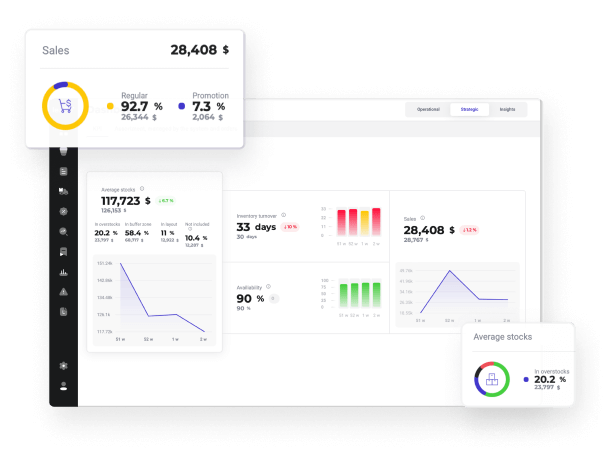
Thanks to the promotion planning solution, all promotional activities can be conveniently managed at the same time. Thus, the LEAFIO Promotion Intelligence solution provides a convenient promotional calendar with all past, current and future promotions, as well as key promotional indicators. The system allows you to divide promotions by type and mechanics and analyze them separately without confusion. Employees can clearly see for which products and categories the promotions are valid, which campaigns are carried out in combination with the supplier, and how the promotion is delivered to the user.
Conclusion
Consumer electronics retailers' inventory management automation is a stage of business evolution driven by the rapid development of the industry and its specifics. The use of specialized software helps to enhance supply chain resilience, allows you to maintain availability and increase the turnover of goods, and control the level of stocks at the optimal level, regardless of internal and external factors.
According to the Auburn University RFID Lab, the average inventory accuracy level for retailers in the United States is 65%. Increasing this figure by even just 3% results in an overall increase in sales of 1%. If a store improves its accuracy to 93% using a specialized system, the gross sales can go up by 9% without the need for any additional investment.
The results of more than 100 projects are clear, using the specialized LEAFIO Inventory Optimization solution achieves the following results: 8% increase in sales, 50% reduction in overstock, 30% increase in turnover, and 50% reduction in lost sales.