

An increasingly tangled web of product lines, price points, faster trend cycles, and shifting consumer tastes put all retailers today in a bind. Amid this complexity, the greatest pain point that merchandise financial planning addresses is the struggle to manage and align all these moving parts with overarching financial goals.
Machines, unlike people, don't struggle with complexity and can prevent costly missteps such as overstocking low-demand items or missing out on profitable sales opportunities because of inventory shortages. Software helps businesses manage budgets, inventories, and demand forecasts to support informed buying and allocation decisions with accurate data and a solid framework.
Key Takeaways
Financial planning in merchandising links inventory to profit goals.
Sets open-to-buy budgets.
Aligns sales targets by category.
Tracks forecast vs actual.
Adjusts to trends monthly.
Cuts markdown costs.
What is MFP?
Merchandise financial planning (MFP) is a strategic process through which retailers manage and optimize their inventory while minimizing costs. It integrates sales forecasting, margin analysis, and inventory planning to ensure that a retailer's product assortment aligns with market demand and financial goals. MFP solves the central problem of efficiently allocating resources across different product lines. Without planning, retailers risk over-investing in slow-moving items or under-investing in high-demand products. This misalignment can lead to inventory imbalances and ultimately affect profitability.
The Role of Merchandise Financial Planning in the Retail Industry
Businesses in the retail industry often face several common challenges, limiting the effectiveness of their merchandise financial planning system. The most common ones are accurately forecasting consumer demand, managing seasonal fluctuations, and balancing short-term sales objectives with long-term strategic goals.
Automated merchandise planning systems offer a solution by leveraging data analytics and machine learning to forecast trends, monitor inventory levels, and simulate various scenarios. Delegating the planning process to the more and more advanced data-analyzing machines removes human error from the equation and allows for swifter and more precise responses to market changes. This not only improves accuracy in demand forecasting but also enhances decision-making, allowing retailers to optimize inventory levels, maximize profitability, and improve overall operational efficiency and customer satisfaction.
What Does the Merchandise Financial Planning Process Look Like?
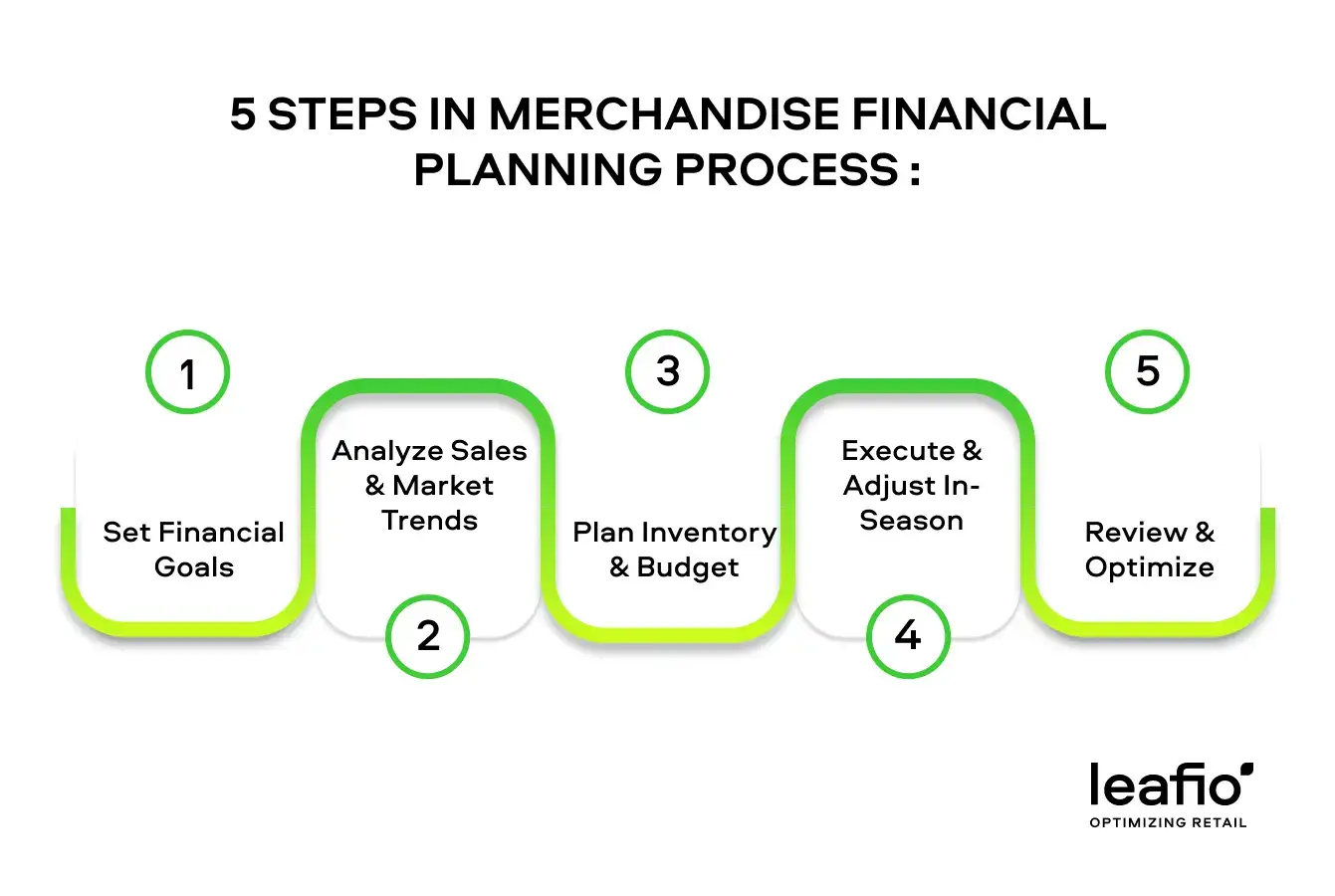
The merchandise financial planning process starts with understanding financial targets focused on sales, gross margin, and inventory turnover. Merchants analyze historical sales data to find patterns and forecast future trends, helping them create an assortment strategy that fits budget constraints and brand identity.
Planners then determine necessary inventory levels and timing to meet demand, guided by an open-to-buy budget that outlines spending limits for each category. Negotiations with suppliers ensure merchandise meets cost and quality standards. As the season progresses, merchandisers monitor sales, reorder popular items, adjust pricing strategies, cancel poor performers, or reallocate inventory as necessary. Then, at season’s end, the team evaluates sales and inventory data to adjust strategies for the next cycle. This cyclical process ensures retailers provide the right products at the right time, aligning customer demand with business goals.
What are the 7 elements of the merchandise planning process?
An effective merchandise financial planning system hinges on a robust, integrated data foundation. This foundation—built on comprehensive, real-time information about historical sales, current inventory levels, and market conditions—provides a transparent 360-degree view of stock movements. Such a clear view is critical because it enables accurate demand forecasting, enhances inventory analysis, and supports automated financial planning.
In essence, advanced merchandise financial planning software uses data to streamline forecasting, inventory management, and financial processes, reducing manual intervention and ensuring agile, profitable decision-making. Ultimately, the MFP process has seven elements that maximize performance:
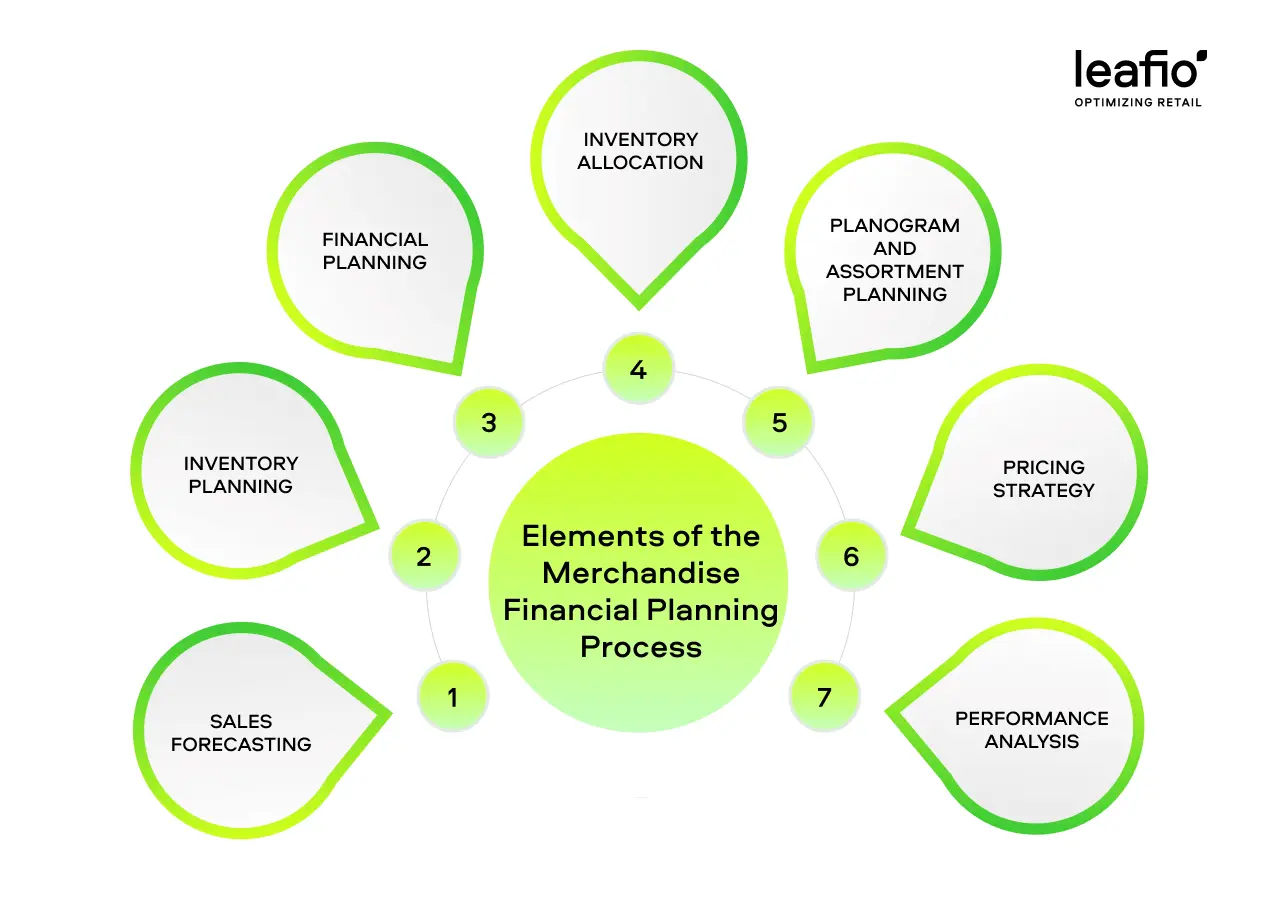
1. Sales Forecasting
Accurate sales forecasting requires comprehensive historical data, a keen analysis of market trends, and an understanding of seasonal fluctuations. Different software can use statistical systems of varying complexity to make predictions.
Some use simple rule-based models; however, a growing trend is to incorporate AI algorithms. Such systems use AI to analyze comprehensive historical sales data by filtering out irrelevant variables and assessing the non-linear impact of each factor. ML models further refine their predictions by monitoring forecast accuracy with customizable metrics, enabling data-driven adjustments, and applying demand variation coefficients for seasonal trends while using conditional orders to maintain a balanced inventory. These features allow the system to sift through large datasets, simulate various market scenarios, and dynamically update predictions as new data emerges, ultimately leading to more reliable and agile forecasting.
2. Inventory Planning
Effective inventory planning aligns stock levels with expected demand while reducing the risks of overstocking or stockouts. AI-powered systems like LEAFIO Inventory Optimization, facilitate this by providing visibility into inventory and accurately forecasting customer demand across channels. The system fully automates the replenishment process—from demand forecasting to order generation—by factoring in predictions, average daily usage (ADU), and available inventory levels, then automatically sending orders to suppliers. With comprehensive data at its core, the merchandise planning process becomes inherently transparent.
3. Financial Planning
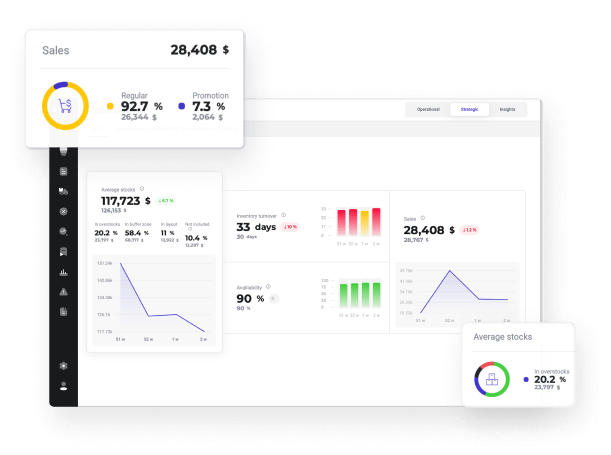
Accurate retail financial planning involves setting and monitoring budgets, margins, and profit targets aligned with overall business goals. This step demands detailed cost analysis, scenario planning, and robust financial modeling. Modern software integrates sales data, expenses, and demand forecast models to offer a holistic view of financial health. These tools assist in setting realistic financial targets and tracking performance against them, thus enabling proactive financial management.
Additionally, promotion management is a crucial piece of the broader merchandise financial planning puzzle, as promotions can dramatically influence both sales forecasts and margin outcomes. Retailers should integrate promotional strategies into their financial planning from the start, not as an afterthought. Without a link to financial targets, promotions can harm profit margins through excessive discounts or miss revenue opportunities by running campaigns incorrectly.
4. Inventory Allocation
Effective inventory allocation distributes goods strategically across locations based on demand and performance metrics. Executing this effectively requires grasping regional differences and specific trends of each store. Merchandise planning software aids this process by offering location-specific analytics and automated allocation algorithms that adjust in real time, ensuring that each channel receives an optimal stock level.
5. Planogram and Assortment Planning
Deep market analysis and consumer segmentation are crucial for successful assortment planning. Data analytics can help retailers highlight product trends, demand patterns, and customer behavior. These insights are invaluable when optimizing product ranges for maximum appeal and profitability.
When combined with planogram software, retailers gain an even more granular view of how these decisions will play out in-store. A planogram shows the optimal physical placement of merchandise on shelves and displays, helping retailers achieve consistent store layouts that reflect assortment priorities.
6. Pricing Strategy
Pricing strategy in retail is all about finding the sweet spot between profitability and competitiveness by continually monitoring various external and internal factors. In practice, that means retailers must keep an eye on competitor pricing, gauge consumer reaction to price changes, and stay aware of their own cost structures. When software solutions are added into the mix, they can integrate real-time market data—such as fluctuations in competitor prices or sudden shifts in demand—and use pricing algorithms to suggest or implement timely adjustments. These dynamic adjustments prevent retailers from missing out on potential revenue or being caught with prices that are out of step with the market.
7. Performance Analysis
Ongoing performance analysis is crucial for identifying success areas and improvement opportunities. Effective execution involves tracking key performance indicators and evaluating the impact of strategic decisions. For example, LEAFIO AI's merchandise planning software offers customizable dashboards and over 40 reports, allowing retailers to evaluate the health of the inventory management system, and adjust their merchandising strategies.
The LEAFIO AI Retail Platform provides invaluable support for merchandise planning. The inventory, planogram, and assortment management modules not only integrate with the retailer's system but also exchange data seamlessly. This ensures that the right products are available to fill the shelves with the optimal assortment when needed.
Conclusion
Merchandise financial planning is more than just a series of individual steps. It is actually a comprehensive framework that integrates data, forecasting, and strategic thinking to guide retailers toward profitable decisions that are often easy to miss when you are in the thick of it. In an era defined by rapidly changing consumer preferences, advanced software provides a critical layer of agility and precision, helping businesses anticipate trends and adapt their assortments accordingly. The synergy between robust data, smart technology, and human insight allows retailers to remain competitive in today’s marketplace and lay the groundwork for sustainable growth and innovation.
FAQ
1. What is the process of merchandise financial planning?
Merchandise financial planning involves analyzing sales data, forecasting demand, setting budgets, and managing inventory to maximize profitability. Retailers establish financial goals, optimize stock levels, and track performance to make data-driven adjustments throughout the season. This ensures they meet customer demand while maintaining financial efficiency.
2. What are the seven parts of a merchandise plan?
A merchandise plan includes sales forecasting to predict demand, inventory planning to maintain optimal stock levels, and open-to-buy (OTB) budgeting to control purchasing. Assortment planning ensures the right product mix, while pricing strategies balance competitiveness and profitability. Promotional planning aligns marketing with sales goals, and performance analysis helps refine future strategies based on real-time data.
3. What are the common mistakes in merchandise financial planning?
Common mistakes include inaccurate demand forecasting, leading to overstock or stockouts, and poor inventory management, which affects cash flow. A lack of flexibility makes it difficult to adapt to market changes while ignoring seasonality and trends results in misaligned assortments. Not leveraging data analytics can also lead to ineffective decision-making and lost opportunities.
4. What are the best practices for developing a merchandise plan?
Best practices include using data-driven forecasting, aligning inventory with demand, and regularly reviewing sales performance. Implementing AI and automation improves accuracy, while collaboration between merchandising, marketing, and operations ensures seamless execution. A flexible approach allows businesses to quickly adapt to market shifts and optimize profitability.


Have a question?

Jack Larson
Retail Optimization Expert