Supply stability is a crucial performance indicator for supply chains, and it is monitored using OTIF (acronym of On-Time In-Full) metric to track the precision and punctuality of deliveries.
Imagine On Time In Full (OTIF) as the pulse of your supply chain. A robust and steady pulse means every part of your operation syncs—from inventory management to replenishment—ensuring products reach your stores seamlessly and on time. But when OTIF falters, it's like a weak pulse, causing disruptions that can result in stockouts, lost sales, and dissatisfied customers. McKinsey points out that companies with excellent OTIF scores meet customer expectations and are skilled at managing supply chain disruptions. This is especially important in a post-pandemic world where supply chains face constant pressure to perform reliably.
What does OTIF stand for, why is it essential for supplier-to-retailer deliveries, and how to calculate and improve this metric as part of your OTIF supply chain improvement strategy?
Key Takeaways
OTIF measures reliability and directly impacts costs & customer trust.
Tracks orders delivered as promised.
Identifies supplier or logistics gaps.
Links to penalty or incentive contracts.
Improves supply chain agility.
Monitored continuously by category.
OTIF Meaning (On Time In Full): What Is It in the Supply Chain?
First things first, to understand the OTIF meaning in supply chain, think of it as a performance indicator that shows whether deliveries arrive exactly when expected and with the correct quantities. Understanding the OTIF full form helps differentiate it from other delivery metrics such as fill rate or lead time variance. It includes two key components: On-time delivery assesses whether orders arrive by the set date, and In-full delivery checks that the quantity received matches the amount ordered.
In the simplest terms, OTIF in the supply chain reflects the percentage of orders delivered on time and in the right amount without any discrepancies. Delivery on time in full is important for understanding how effectively a business fulfills its promises to customers and highlights areas for improvement.
Consider a scenario where a retailer orders 100 product units and expects delivery within five days. If the supplier delivers all 100 units on the fifth day, the order is considered on time and in full. However, if only 90 units are delivered on the fifth day or if the delivery is delayed, the OTIF score for that order will be lower, indicating that the supplier failed to meet the retailer's expectations.
OTIF in Supply Chain Is Essential for Efficient Delivery Management
On-Time In-Full (OTIF or DIFOT) performance indicator directly correlates with a company's capacity to fulfill orders accurately and punctually. A robust OTIF score signals that a supply chain operates smoothly, minimizing disruptions, curtailing expenses, and achieving maximum satisfaction. Here's why:
- Customer focus boosts On-time In-Full (OTIF) scores. Ensuring products are on shelves when needed builds trust and loyalty, prevents stockouts, and enhances customer satisfaction. Effective supplier-retailer collaboration and diligent OTIF metric management lead to satisfied customers who drive this process.
- Operational efficiency. Tracking OTIF can help identify issues and opportunities for improvement, leading to more efficient operations and less waste. It can also determine where the supply chain is slow and how to improve processes.
- A strong OTIF improves financial performance. It lowers costs by reducing stockouts, excess inventory, and the need for rushed shipments. Fulfilling orders correctly on the first try also avoids expensive mistakes and returns, boosting profitability.
OTIF Formula: How to Calculate
Calculating OTIF involves assessing both the timeliness and completeness of deliveries. Here's a breakdown of its aspects:
On-Time
On-time delivery measures whether an order arrives at the retailer's warehouse by the agreed-upon date. This aspect considers factors such as lead times, transit times, and potential supply chain delays. Ensuring on-time delivery requires effective coordination between suppliers, manufacturers, and logistics providers to minimize disruptions and meet delivery schedules.
If a supplier promises delivery within three days, and the order arrives on the second day, it is considered on time. However, if the delivery occurs on the fourth day, it would be late, negatively impacting the OTIF delivery performance.
In-Full
In-full delivery evaluates whether the quantity delivered matches the quantity ordered. This aspect ensures that retailers receive the complete order without shortages or discrepancies. In-full delivery requires accurate inventory management and order fulfillment processes to ensure all items are available and correctly packed for shipment.
When a retail chain orders 50 units of a product and all 50 units are delivered as expected, the order is delivered in full. If only 45 units are delivered, the order is incomplete, affecting the OTIF delivery performance.
OTIF Formula
The OTIF calculation involves dividing the number of orders delivered both on time and in full by the total number of orders placed.
In simple terms, On-Time Delivery (OT) measures whether your outgoing orders arrive on time.
The In-Full Delivery (IF) component checks whether the correct quantity arrived.
Evaluating both aspects together yields meaningful insight, assuming the orders are in good condition upon arrival.
The OTIF formula is straightforward:

OTIF KPI: How to Use for Measuring Supplier Performance
The OTIF KPI, a supply chain metric, allows companies to measure performance, establish benchmarks, and foster better collaboration, ultimately making the entire supply chain run more seamlessly.
For example, Walmart and Procter & Gamble are well-known supply chains that have successfully used OTIF KPIs to identify areas for improvement. Walmart improved its inventory management and logistics using OTIF dashboard, leading to a successful OTIF supply chain with reliable deliveries and increased customer satisfaction. Which, in turn, leads to profit for both the supplier and the retailer.
Therefore, the OTIF formula can assess supplier reliability and significantly contribute to broader business objectives.

What is a good OTIF score?
In a perfect world, suppliers would aim for a 100% OTIF score across their retailers' base. However, in reality, a solid OTIF benchmark to aim for is in the high 80% or perhaps 90% range. OTIF standards can be a moving target, as requirements vary across industries and individual retailers.
Given these high expectations, companies should focus on achieving the highest possible OTIF score and aim for consistent performance across suppliers.
OTIF Controlling Benefits
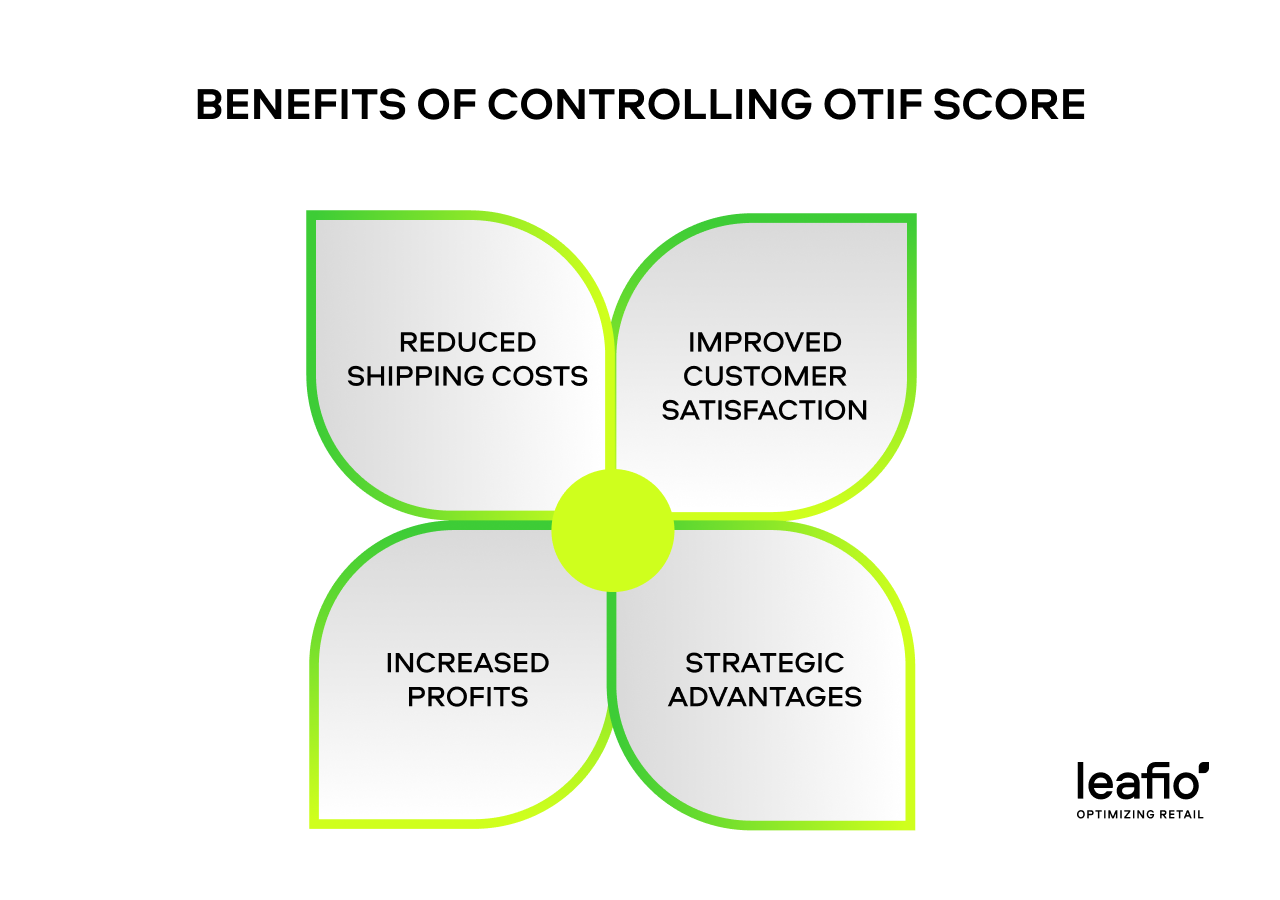
Here are some situations where a good OTIF score can be a game-changer:
Reduced shipping costs
The cases: your shipment arrived two weeks early, and now your warehouse is overflowing, and unexpected storage costs are mounting. Or perhaps you receive double the expected volume, requiring additional handling and logistics adjustments. The On-time In-full metric helps prevent these costly scenarios by ensuring accurate deliveries, optimizing inventory management, and minimizing the need for expensive expedited shipping. Maintaining a high OTIF score enables you to reduce unnecessary logistics expenses.
Improved customer satisfaction
What if half of your order goes missing or a delivery is late? Will you be able to stock the shelves before your customers go elsewhere? OTIF in the supply chain helps keep shoppers satisfied by ensuring they find what they need precisely when needed.
By monitoring the OTIF score, you can ensure your suppliers stay on their toes and that shelves are always stocked, keeping your customers coming back.
OTIF Performance Increases Profits
A high OTIF score does more than just ensure you meet delivery times. It also helps your bottom line by preventing both stockouts and excess inventory. Managing OTIF effectively means better control over your stock, which cuts down on extra costs and boosts your profits.
OTIF Improvement Offers Strategic Advantages
A high OTIF score positions companies ahead of the competition by enabling swifter responses to fluctuating markets. Moreover, OTIF aligns with sustainability goals through optimized delivery routes and waste reduction.
How to improve OTIF
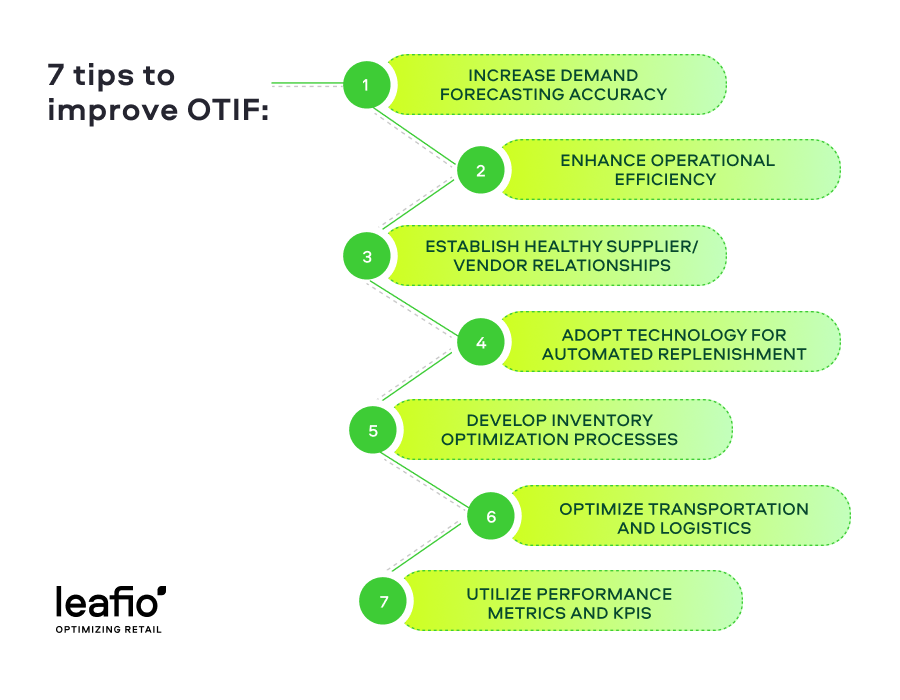
The following strategies can help you improve OTIF performance across your supply chain:
#1 Increase demand forecasting accuracy
- Leverage historical data: Analyze past sales data, seasonality, and trends to build more accurate forecasts.
- Incorporate external factors: Consider economic indicators, demographic data, and competitive analysis to refine your predictions.
- Utilize advanced analytics: Employ statistical modeling and machine learning to generate more precise forecasts.
- Continuously monitor and adjust: Regularly review and update forecasts based on real-time data to ensure accuracy.
One way to enhance demand forecasting and thereby provide OTIF improvement is to incorporate advanced technology. For example, LEAFIO AI's AI-powered Demand Planning software leverages advanced algorithms and machine learning to analyze vast amounts of data and generate highly accurate predictions. You can filter the data according to specific criteria, including the date range, to focus on the most relevant information. This flexibility allows you to pinpoint particular periods when the OTIF dashboard indicates effectiveness may need improvement.
#2 Enhance operational efficiency
- Optimize processes: Identify and eliminate inefficiencies in your supply chain processes.
- Automate tasks: Use technology to automate repetitive tasks and reduce the risk of human error.
- Enhance planning: Develop detailed sales plans and delivery schedules to ensure consistent supply and minimize stockouts.
- Optimize routes: Utilize transportation management systems, optimize delivery routes, and reduce transit times.
#3 Establish healthy supplier/vendor relationships
Tight relationships with suppliers and vendors really make a difference when you need those deliveries done right. Open communication and collaboration help align expectations, lead times, and quality standards, which are critical for maintaining a high OTIF score.
- Select reliable suppliers: Evaluate suppliers based on quality, supply chain delivery performance, and flexibility.
- Establish clear agreements: Develop detailed contracts outlining expectations and responsibilities.
- Conduct regular achievement evaluations: Monitor supplier performance and provide feedback.
- Collaborate on improvements: Work with suppliers to identify opportunities for improvement
For instance, the LEAFIO Inventory Optimization solution includes a detailed report that can display information by suppliers, warehouses, or individual orders. With automated dashboards, retailers can track Supplier OTIF in real time, seeing which vendors increase risk and which support stable, predictable inventory flows.
#4 Adopt technology for automated replenishment
As mentioned above, using automated systems helps minimize human errors and allows for faster adjustments to changes in demand.
- Set up inventory management systems: Utilize software to automate inventory processes and maintain optimal stock levels.
- Integrate ERP systems: Combine planning and execution into a single platform to enhance supply chain visibility.
- Apply analytics tools: Analyze your data to make informed decisions and boost OTIF performance.
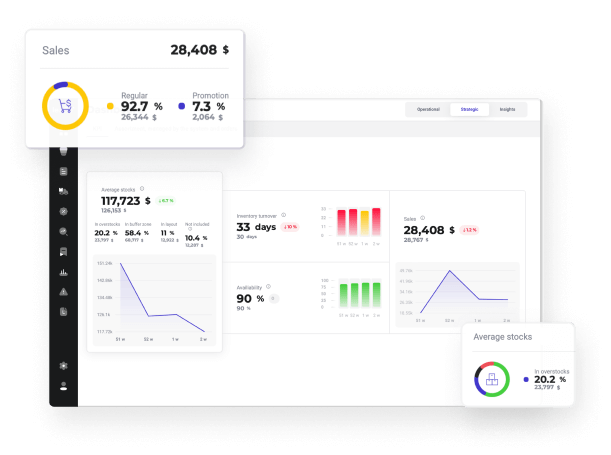
LEAFIO AI's Inventory Management solution offers various features designed to automate and optimize inventory processes. These include demand forecasting, automatic order generation and optimization, and advanced analytics, all of which help enhance OTIF performance across the supply chain.
#5 Develop inventory optimization processes
- Conduct ABC(D) and XYZ analysis: Categorize items based on value and turnover to determine optimal inventory levels and improve OTIF performance.
- Set minimum and maximum levels: Establish reorder points and safety stock levels to maintain consistent product availability.
- Implement buffer stock: Maintain buffer stock to account for unexpected demand fluctuations and ensure high OTIF scores.
LEAFIO AI's Automated Replenishment system optimizes order quantities and timing, ensuring that products are available when needed.
#6 Optimize Transportation and Logistics
- Select appropriate transportation modes: Choose the most suitable transportation mode for each shipment to optimize costs and delivery times.
- Optimize routes: Use route optimization software to minimize delivery times and costs and ensure timely deliveries.
- Monitor shipments in real-time: Track shipments to ensure on-time deliveries and prevent disruptions that could impact OTIF score.
LEAFIO AI’s TMS software delivers comprehensive analytics, enabling businesses to track logistics expenses, monitor key performance metrics, and customize dashboards to meet specific needs. This active oversight improves OTIF performance by streamlining the management of deliveries and operations.
#7 Utilize Performance Metrics and KPIs
- Define key effectivenessindicators: Identify metrics that measure OTIF performance, such as on-time delivery rate, order fill rate, and inventory turnover.
- Monitor efficiency regularly: Track KPIs to identify trends and improvement areas aligned with business objectives.
- Tie KPIs to business objectives: Ensure that KPIs align with overall business goals
LEAFIO AI's business intelligence for retail provides essential supply chain visibility, offering valuable insights into OTIF reports and overall supply chain efficiency. OTIF KPI can measure performance, such as on-time delivery rates and order accuracy. The module allows you to identify areas that need improvement.
Key takeaways: final thoughts on OTIF
Importance of OTIF: The OTIF (On-Time In-Full) metric is crucial for measuring supply chain efficiency, but achieving and maintaining a high OTIF score is challenging.
Comprehensive evaluation: Although no single KPI can fully capture performance, the OTIF report provides a powerful perspective for evaluating your supply chain's effectiveness, especially in assessing a supplier's ability to deliver on time and in full.
Need for analytical Insights: Without end-to-end supply chain, identifying issues becomes difficult, whether due to supplier failures or logistical breakdowns. Investing in supply chain visibility solutions like LEAFIO Inventory Optimization is essential for proactive problem-solving.
Continuous Improvement: Enhancing OTIF is not a one-time effort but an ongoing process that demands continuous monitoring and adjustments to maintain and improve supply chain effectiveness.
Request a demo with LEAFIO AI and take the first step towards your operational excellence.
FAQ
How is OTIF calculated?
The OTIF calculation is performed by calculating the percentage of orders that were both delivered on time and fulfilled entirely from the total number of orders. This OTIF formula provides a score that reflects the supplier's reliability in maintaining the necessary inventory levels at your warehouses and stores.
What is the difference between OTIF and OTD?
The difference between OTIF and OTD is that OTIF (On-Time In-Full) measures both timeliness and completeness of deliveries, ensuring orders arrive on time and in full, while OTD (On-Time Delivery) only tracks whether deliveries meet the expected delivery date, ignoring order completeness.
What is a good OTIF?
A score over 95% is generally considered a good OTIF score. It indicates that the supply chain is efficient and consistently meets retailers' expectations for timely and complete deliveries, but the ideal rate can vary from industry to industry.
Why is OTIF important?
OTIF, which stands for On-Time In-Full, directly influences operational efficiency and the company's financial success. Ensuring complete and on-schedule deliveries minimizes stockouts, boosts reliability, and improves the effectiveness of the entire distribution chain.
What are some common causes of low OTIF scores?
Common causes of low OTIF scores include poor demand forecasting, inefficient inventory management, unreliable supplier performance, logistical challenges, communication breakdowns, and outdated systems that hinder timely and complete deliveries.
What technologies can help improve OTIF performance?
Technologies that can improve OTIF performance include AI and machine learning for demand forecasting, inventory management systems, transportation management systems (TMS), IoT and real-time tracking, collaborative platforms for better communication, and automated replenishment systems.


Have a question?

Jack Larson
Retail Optimization Expert