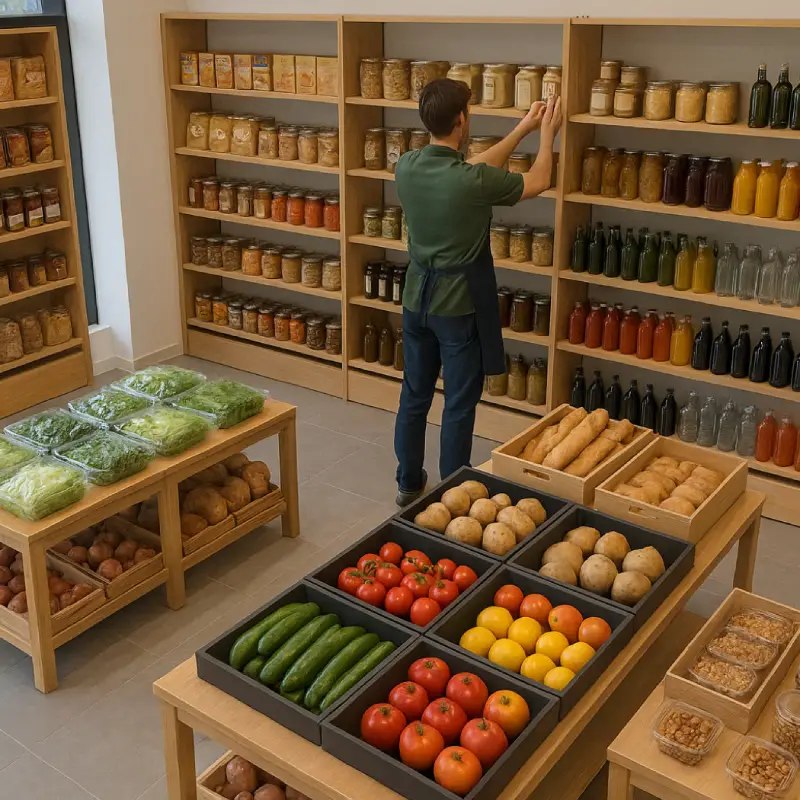


For decades, store owners have been relying on traditional retail product placement, but do the proven strategies like eye-level placement still work? What new retail settings are available to increase efficiency? Why is product placement important? Let's try to answer these questions and help you unlock the true potential of your shelves.
Key Takeaways
Strategic placement increases visibility and drives impulse purchases.
Use eye-level for key SKUs.
Place add-ons near main products.
Create decompression zones at entry.
Hot spots anchor high-margin goods.
Rotate placements to maintain interest.
The Psychology of Product Placement
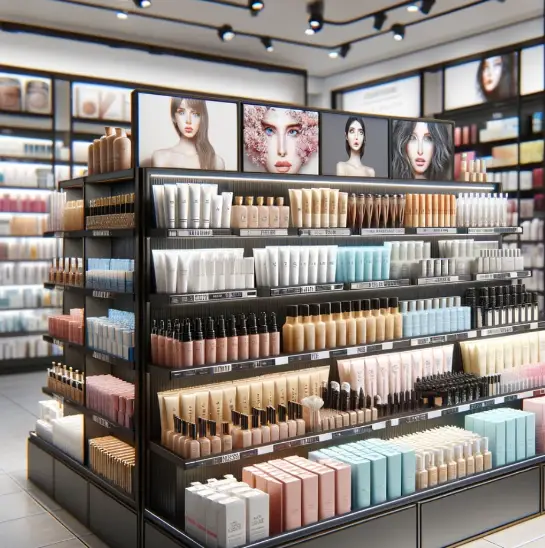
A good retail product placement strategy really works and imperceptibly influences customers' thoughts and decisions. Essential goods are nowadays placed at the end of the aisle, and stands with chocolates, chewing gum, and other trinkets are placed in the checkout area. The reasons why that is so are not secret. Context, convenient access, and visual cues encourage people to make the desired decisions, and in most cases, this happens on a subconscious level. To confirm this, let's take a look at classic but popular and effective in-store product placement strategies:
Eye level is buy level
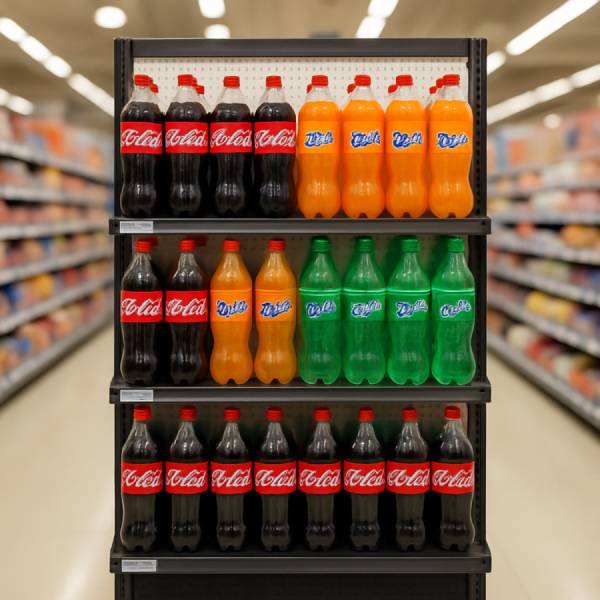
The idea is as old as time and as simple as possible: you buy what you can see. Therefore, products located at a height of 1.2–1.5 meters from the floor have the best chance of getting into customers' shopping carts. In particular, a product placed at eye level achieves a conversion rate of 5%, while the same product on the bottom shelf achieves only 2%. That's why this area is traditionally reserved for products with high margins or for top sellers. However, it's not all that simple. The layout strategy works only when based on specific data and after a thorough analysis of the assortment.
Impulse zones
Yes, we are talking about impulse purchases. To make sure it happens, retailers designate high-traffic areas in the sales floor plan and place products that customers did not plan to buy (but are ready to put them in their baskets). These are usually inexpensive products such as batteries or drinks. At the same time, analysis is also required here because the target market won't buy just anything: you need to predict what might interest them to increase your average check.
By the way, it's not only store shelves conveniently placed near cash registers that moonlight as impulse zones. End displays and promotional islands function similarly.
So, traditional strategies work. Why do you need something else?
Indeed, the classic variations of product placement in stores are still effective. But are they enough to maximize sales? No, not by a long shot. The fact is that modern retail is influenced by several factors:
- constant changes in trends, consumer preferences, and the competitive environment. What is effective today may not work tomorrow.
- Tens of thousands of items in the assortment. You need a clear understanding of which products deserve the best shelf space.
- differences in size, layout, customer demographics, regional demand, and even in stores of the same chain. One-size-fits-all approaches don't work in this environment.
- Hidden interrelationships between products that can lead to sales cannibalization or synergies (especially if there is a failing competing brand nearby).
It is intuitively impossible to take into account the impact of these factors. That's why data analytics is becoming relevant. Instead of guesswork, we need to make informed decisions based on specific indicators. That's what we'll talk about next.
The Role of Analytics in Effective Product Placement
Real effectiveness lies not just in tracking sales data, but in the ability to find non-obvious insights and make specific decisions based on them. Here's how it helps you find the best shelf space for each product.
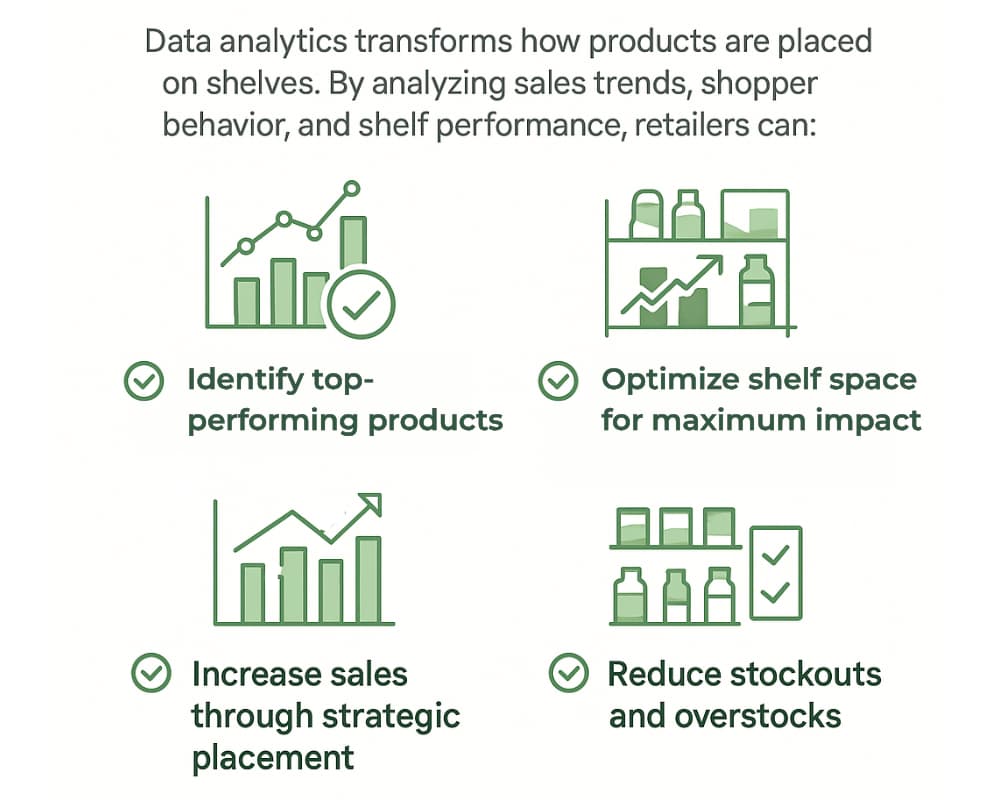
Shelf placement analysis shows what the eyes cannot see
So, let's start with an in-depth analysis of consumer behavior. Modern computer vision and smart shelf technologies are able to track shelf time and customer behavior with products placed at different levels and in different locations. This goes beyond standard receipt analysis.
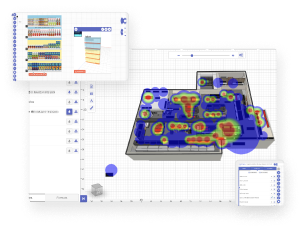
Heat maps + loyalty data = smart category coexistence
What happens if you combine data on hot and cold zones in the sales area and individual loyalty cards (bonus loyalty cards)? This will give you an understanding of the mission each customer comes to the store with. In fact, you will be able to trace their path and understand the logic of their decisions. Then, you can plan shelf placement so that merchandise placement increases profits and corresponds to the logic of customer behavior.
Behavioral analysis to develop live planograms
This practice probably came to the retail product placement industry from online marketing. It resembles the principle of interpreting ads according to the time of day. How does it work? You can use POS data to understand changes in buying behavior throughout the day. As a result, merchandisers maximize capacity and change the product mix in the impulse zones on a daily basis.
Predictive modeling for the introduction of new products
When introducing new items to store layouts, most retailers take the wait-and-see approach. However, deep data analysis allows you to build predictive models long before the introduction of a new product into the assortment.
A/B/C Testing: The Key to Data-Driven Optimization
Data analytics points to potential opportunities, but how do you test hypotheses and find the prime real estate for your goods? This is where multivariate testing really shines.
A/B/C Testing in retail is the application of different variants of planograms or layouts within a group of outlets and measuring the results. In this case:
- A - current or control layout.
- B - a new layout, where product X hits us in the eyes.
- C - a new display, where the order of subcategories in the section has been changed.
During the test period, you need to collect KPI data (it can be a sales boost, profit, etc.) for each store, and compare the results of options B and C with the control A. This is how you determine which configuration is the best.
- Analysis is important for product placement in retail stores:
- It eliminates subjectivity and helps to abandon assumptions;
- It is possible to measure how changes optimize sales;
- Cyclic testing helps to constantly improve the layout.
Clearly, such tests can't be done manually. Fortunately, there already are specialized solutions that make the life of merchandisers significantly easier.
Optimize Retail Space with LEAFIO AI Visual Merchandising Software
LEAFIO AI is a software platform for automating retail processes based on machine learning and artificial intelligence technologies.
One of the platform's tools is LEAFIO Shelf Efficiency, which is able to take data analysis and decision-making in merchandising to a new level. This is a truly great business opportunity:
- Integrate Visual Merchandising Software with your accounting system and other data sources. The program will analyze the effectiveness of each product on the shelf, visualize hot and cold zones.
- Generate planograms based on sales days, physical parameters of equipment and goods, as well as defined rules.
- Create different versions of planograms for A/B/C testing, assign them to specific points of sale, and view the results directly in the system.
- Get recommendations on product placement based on business goals, data, merchandising rules, etc.
- Track the compliance of the actual layout with the approved planograms using the mobile application.
LEAFIO AI's Visual Merchandising Software transforms product placement in retail stores from intuitive to scientific. Integrating the platform is the first step towards increasing store efficiency.
Key Takeaways
- Classic placement strategies will continue to work, but they are not enough to maximize efficiency in a competitive environment.
- In-depth data analysis allows you to go beyond and understand the logic of customer visits and optimize the placement of goods.
- Analytics helps to identify the effectiveness of specific areas on the shelf, see micro-trends, and understand the impact of category adjacency.
- Before implementing solutions, it is better to conduct A/B/C testing to test the hypothesis.
- Modern software is able to collect data, analyze it, help with testing, and give recommendations on the best placement of goods.
FAQ
How does the placement of products in the grocery store affect how you buy your groceries?
Product placement influences purchases by making specific products more visible or by encouraging impulse purchases. Strategically, the right placement can be used to direct customers' attention, boost brand recognition, or encourage unplanned purchases.
How does product placement work?
It's a combination of careful planning and an understanding of customer psychology to increase product visibility. Zoning, shelf positioning, and proximity to other products all play a role here.


Have a question?

Jack Larson
Retail Optimization Expert