


MOQ meaning in supply chain directly refers to the Minimum Order Quantity, a fundamental constraint established by suppliers dictating the smallest amount (either in units or value) of a specific product they are willing to sell in a single transaction.
From an operational standpoint, suppliers implement MOQs primarily to ensure order processing and production runs are economically viable, effectively covering fixed costs associated with setup, administration, and handling, thus protecting their margins and managing production costs. Understanding this basic definition is essential, but for supply chain professionals seeking genuine optimization, it’s merely the entry point.
Mastering the nuances of MOQ goes far beyond acknowledging a supplier’s threshold; it involves a strategic comprehension of how these quantities impact everything from inventory holding costs and warehouse capacity to cash flow and potential stockout risks.
A truly expert approach involves analyzing the drivers behind a supplier’s MOQ and leveraging this insight to optimize ordering patterns, negotiate more favorable terms, or even influence product and network design.
How can you harness a deeper understanding of MOQs to move beyond simple compliance and achieve tangible improvements in cost-efficiency and supply chain resilience? By doing so, you can maximize profitability through better supplier relationships and stabilized supply chains. Let’s delve into the strategic implications and actionable insights.
Key Takeaways
Right MOQ protects profits and aligns purchases with demand.
Balances order costs vs holding costs.
Factors in supplier terms.
Considers forecast reliability.
Needs regular review by category.
Impacts cash flow directly.
What is the minimum order quantity (MOQ)?
Minimum Order Quantity (MOQ) is the smallest number of units a supplier can sell to a customer at once. Suppliers can set the MOQ in the number of units or the total value of the order.Minimum Order Quantity (MOQ) is the smallest number of units a supplier can sell to a customer at once. Suppliers can set the MOQ in the number of units or the total value of the order.
For example:
A company buys apples at $0.10 per unit. The supplier's minimum order quantity is 100 pcs. Therefore, the company will be able to order at least 100 units of products from this supplier, spending $10 per order. Meeting the MOQ allows the company to access bulk buying discounts, reducing overall production costs.
Supplier’s MOQ can also be expressed in the total cost of the order:
A company buys oranges at $0.40 per unit. The minimum order value of the supplier is $100. So, the company can order at least 250 units of products for the supplier to accept the order. Opting for a lower MOQ might result in a higher price per unit, impacting the overall cost efficiency.
For example:
A company buys apples at $0.10 per unit. The minimum order quantity of the supplier is 100 pcs. Therefore, the company will be able to order at least 100 units of products from this supplier, spending $10 per order.
Supplier’s MOQ can also be expressed in the total cost of the order:
A company buys oranges at $0.40 per unit. The minimum order value of the supplier is $100. So, the company can order at least 250 units of products for the supplier to accept the order.
Why do suppliers need MOQ?
Like any other company, suppliers seek to ensure that their operation is profitable. High minimum order quantities allow the supplier to sell the optimal number of units to make a profit and helps optimize the company’s workflow.
For example, a manufacturer sells ice cream in boxes, not units, to avoid additional costs of labor and delivery in parts. The minimum order quantity is going to be 20 pieces, that is, one box.
Additionally, low MOQs enable buyers to better manage cash flow by providing them the flexibility to adjust purchasing as market demands change.
For example, a manufacturer sells ice cream in boxes, not units, to avoid additional costs of labor and delivery in parts. The minimum order quantity is going to be 20 pieces, that is, one box.

What is high and low MOQ, and how does it affect inventory management?
Differences between a high and a low MOQ significantly impact your inventory, especially when it comes to managing excess inventory. You must consider the number of stock days, the frequency of orders, and the available space in the warehouse and compare it to the supplier's minimum order quantity.
Optimizing MOQ and using inventory management tools can help businesses maintain as much inventory as needed to meet customer demand while avoiding overstocking.
So let’s see what the difference is and which MOQ is better to choose for your business.
High Minimum Order Quantity
A higher MOQ implies a much larger inventory volume; therefore, the overall maintenance cost will increase because a large order volume will take up significantly more space in the warehouse, leading to higher costs for holding inventory.
Suppliers, in turn, also have to keep a large amount of stock to meet customer demand, but if they want to reduce costs and keep stock low, it will take more time to complete orders.
The benefit for the customer is that administrative costs are reduced as orders will need to be placed less frequently. There might be a possibility of getting a discount for a larger order. But you need to consider an increased risk of aging or spoilage of products. Suppliers must set MOQs that allow them to cover production and distribution expenses while still maintaining a healthy profit margin.
Low minimum order quantity
A lower MOQ allows you to store less, thus reducing warehousing costs. However, depending on customer needs, it may be necessary to place orders more frequently, which can lead to increased administrative and shipping costs.
Keeping the stock levels lower can put you at risk of shortages at the unexpected spike in demand. To be prepared, you must develop a strategy for inventory levels or buffer stock.
Nevertheless, low MOQ has its advantages. Less investment is necessary to reach the required minimum order quantity, and the risk of aging or deterioration of goods is significantly reduced.
Additionally, properly configured MOQs can help businesses cover customer acquisition costs, particularly through incentivizing higher spends in orders, which aligns with their operational and financial strategies.
The types of MOQ
Suppliers use MOQ to set certain restrictions. To work around those complications, it is customary to divide the minimum order quantity into simple and complex MOQs.
Constraints can be defined by one lower limit (minimum quantity or order amount) or several extra ones (shipping costs, materials, invoicing, accounting costs, etc.). Imposing a large quantity on customers could drive them away, despite potential discounts.
Additionally, internal constraints such as warehouse space play a significant role in determining the feasibility of the MOQs that a company can offer to its customers.
Simple MOQ
This type has only one rule, i.e., a single restriction. It can be a set minimum number of units or a minimum order amount.
For example:Let’s consider tableware production—it will not be profitable for the company to spend its resources to produce several units of a particular shape with a specific pattern. Therefore, they will need a minimum order size that will bring profit to the company.
Complex MOQ
A complex MOQ has two or more restrictions to the order. These can be a minimum quantity, minimum value, labor costs, procurement materials, administrative costs, etc.
In clothing production, ordering for a specific model, the supplier may request the manufacturer to fulfill several conditions for the minimum order: a certain number of units, minimum length of fabrics of different types and colors, additional consumables, labor costs, and minimum order amount.
How to calculate the minimum order quantity (MOQ)
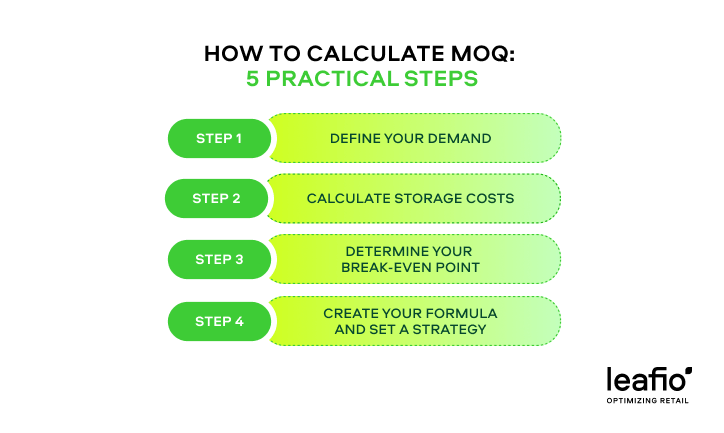
There is no single general formula for calculating MOQ since each company has a unique situation, varying across specific products or industries. Hence, it is necessary to create your formula based on the analysis of the data of a particular business. Analyzing historical sales data can provide insights into buying trends and customer demand patterns, helping to optimize MOQs.
Below we will describe the main points you should rely on to create the optimal MOQ for your business. Understanding market trends and supply chain conditions is crucial for effectively managing inventory and aligning production with demand.
1. Define your demand
To forecast demand you should take into account: type of product, competition, seasonal trends and other factors. It is necessary to understand how many units of product you are able to sell to break-even and profit and withstand market fluctuations, depending on different situations. Additionally, evaluating the inventory turnover rate can provide insights into how efficiently your inventory is being managed and how it aligns with demand.
Having data for forecasting stock level will help you respond to changes in demand in the future. Analyze sales forecasts on a weekly or daily basis to adjust the company’s volumes. Furthermore, understanding how to calculate MOQ (Minimum Order Quantity) by considering factors like production costs, demand, and supplier capabilities can optimize your cost efficiency.
It is also necessary to take into account the logistics and preparation of the product for shipment, which includes: shipment time, delivery time, cargo transit, logistics services, as well as possible force majeure situations and delays.
2. Calculate holding costs
The costs of storage and transportation of products can be very different. Some products require refrigeration, which in turn adds to the electricity cost. The nature of your products might require specialized storage conditions. It may be due to their awkward shape, large size or any other particularity.
Storing stocks for a long period of time can also increase costs, so it is always beneficial not to store stocks for too long. Setting cost-effective MOQs can help manage these expenses efficiently. All these points need to be taken into account when calculating MOQ. Effective communication with suppliers can also lead to reduced shipment costs, which ultimately benefits both the supplier and the buyer.
Related:Building an effective organizational structure for inventory management
3. Determine your break-even point
An equally important component is knowing your break-even point—a situation when the income exceeds the inventory costs.
Be sure to take into account all costs, including fixed and variable costs. For example, wages, materials, equipment maintenance costs, production, delivery, etc. Then you’ll be able to calculate how many units of a product you have to sell to cover the cost.
For example, you sold 10 units of products. Think about how much income this will bring compared to the costs of maintaining these products, as well as current and overhead costs? What if you sell 50 or 100 units?
Understanding cost efficiencies helps businesses make informed decisions about optimizing order sizes, reducing overhead costs, and enhancing profit margins while aligning inventory with market demand.
For example, you sold 10 units of products. Think about how much income this will bring compared to the costs of maintaining these products, as well as current and overhead costs? What if you sell 50 or 100 units?
4. Create your formula and set a strategy
The decisive step after collecting all the necessary data is to set the MOQ for each product in your assortment matrix, develop a strategy for further sales, and understand your inventory turnover.
To avoid unprofitable orders and minimize the risk of losing customers, you need to attract more customers using discounts and various tools. Additionally, managing purchase orders effectively can help navigate the constraints imposed by suppliers' MOQs, leading to optimized order sizes and reduced operational costs.
Introduce free shipping for customers who have reached a certain threshold order value. Encourage customers to spend more with discounts on bulk orders. Run a promotion campaign and sell off products that have been in stock for a long time to manage inventory more profitably.
Automatically Align Orders with Supplier MOQ for Streamlined Inventory
We live in the era of technology, optimization and automation of business processes. Calculations such as MOQ are not only cumbersome to conduct manually, but also risky as humans make errors. There are too many variables and factors: market conditions change, costs fluctuate, and demand constantly shifts.
It is possible to accurately manage inventory with smart inventory management software to improve your business efficiency. Platforms offer a variety of functionality and the use of analytics to make purchasing and inventory management easier.
Understanding cost efficiencies helps businesses make informed decisions about optimizing order sizes, reducing overhead costs, and enhancing profit margins while aligning inventory with market demand.
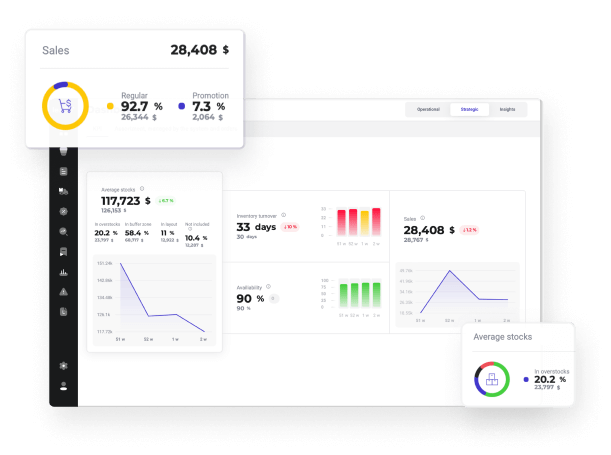
The LEAFIO AI Retail Platform provides retailers with comprehensive, agile, and adaptable inventory management software that helps them achieve margin and revenue development through inventory optimization, merchandising management and trade promotion forecasts.
We add value to the business by:
- increased sales;
- a rise in turnover;
- a discount on financial losses;
- effective implementation;
- more efficient replenishing;
- predicting trade promotion;
- merchandising administration.
We offer retail organizations full-cycle services, including business process consulting, software integration, staff training, piloting, and dedicated customer success at the most effective possible price.
The following are the most outcomes of using the LEAFIO AI Retail platform:
- 99 % customer satisfaction;
- 30% excess stock reduction;
- 10% higher sales;
- promotional inventory has been reduced by 25%.
Your staff may specialize in tasks that demand their experience and human intelligence, while the LEAFIO AI automatic replenishment system takes care of the mundane jobs.
What is EOQ and MOQ?
EOQ (Economic Order Quantity) is the buyer’s ideal order size to minimize their inventory costs, while MOQ (Minimum Order Quantity) is the minimum amount a supplier requires for an order.
How is moq calculated?
MOQ is set by the supplier based on their costs (like production setup and handling) and profit needs to ensure order viability, not typically calculated by a buyer’s formula.
What is the MOQ rule?
The MOQ rule is the supplier’s condition stipulating the minimum quantity or value that must be met or exceeded for an order to be accepted.
What is MOQ in supply chain?
In the supply chain, MOQ is the minimum purchase amount required by a supplier, influencing procurement decisions, inventory management, and cash flow.
What is the difference between moq and EOQ?
MOQ is a supplier-imposed minimum purchase requirement, whereas EOQ (economic order quantity) is a buyer-calculated optimal quantity to minimize their own total inventory-related costs.
How is minimum order quantity calculated?
Minimum order quantity is determined by the supplier analyzing their own operational costs, production minimums, and required profit margins per order.


Have a question?

Kristi Miller
Retail optimization expert
