


Retailers in the United States and Canada stand to lose $349 billion in sales per year due to inventory distortion (the combined cost of overstock and understock) according to an IHL Group study. No wonder that optimizing inventory management has become every retailer's priority today.
Inventory cost analysis is one of the most important elements in the process of fixing inventory distortion. It serves as a business navigational compass that guides retailers through the complexities of inventory management and brings the company back to maximum profitability.
In this article, we offer a complete guide that explores the main inventory cost categories, ways of measuring it, factors that influence the cost of inventory, and expert recommendations on possible cost reductions.
Key Takeaways
Managing inventory costs protects cash flow and long-term profitability.
Includes holding, ordering, and shrink costs.
Overstocks tie up working capital.
Efficient planning lowers expenses.
Tech cuts manual handling costs.
Metrics like carrying cost % help track.
What is inventory cost and why is it important?
Inventory costs include not only the cost of the goods themselves but also the costs tied up in storage and ordering. Why do you need to calculate and analyze total inventory costs and account for all factors? The higher the inventory costs are, the less money is made and every retailer should know what profit they are making.
Inventory cost analysis allows you to make informed data-based decisions on how to manage your inventory. For example, it helps determine how much inventory to keep in stock at any particular period of time, or whether to change suppliers.
The three main inventory cost categories
Inventory costs are further split into various categories, but the main three are ordering costs, holding costs, and costs associated with stock-outs. Understanding all types of inventory costs will help you to better understand the nuances of this issue and calculate the most accurate total costs.

1. Ordering costs
Even small orders produce costs. This includes purchase requisition, purchase orders and invoicing, labor costs, and fees for transportation and processing. Any accurate calculation requires keeping track of all of these costs even if they look marginal at first.
What order costs may include:
- Order processing costs (managers' time and payment for order entry systems).
- Transportation costs (freight and shipping costs).
- Labor and equipment used in receiving the order.
- Quality control of the received order.
2. Inventory carrying costs (holding costs)
Orders not only need to be fulfilled but also stored in the warehouse. Inventory carrying costs (or inventory holding costs) severely impact the company's profit. The more money a retailer spends on storing goods, the less profit it makes. It is very difficult to reduce inventory carrying costs using manual methods alone, which is why smart retailers use innovative software that accurately takes into account all the factors that affect inventory storage.
When calculating inventory carrying cost, consider the following:
- Capital expenditures related to inventory.
- Spoilage and obsolescence.
- Storage costs, including warehouse space rent, utilities, etc.
- Insurance premiums.
- Costs of paying for a specialized inventory management system.
Often, holding costs account for 20% to 30% of the total cost of inventory. This figure depends on many factors, which we will discuss below. The longer you hold on to products before selling them, the higher the costs will be.
3. Stock-out costs
Stock-out costs are potential sales lost due to stock shortages. For example, a customer saw that the product he needed was out of stock and bought it elsewhere. Another common case is when a customer ordered the last item left in stock, but it turned out to be defective. In both cases, the retailer lost the opportunity to sell the product and make a profit.
Stock-outs can lead to a variety of direct costs, such as:
- Expedited shipping costs
- Additional production costs
- Forced discounts for delayed orders
And indirect costs:
- Administrative costs for handling stock-outs
- Potential customer churn as a result of reduced loyalty
What is the total inventory cost formula?
The value of inventory depends on what factors a company includes in its inventory. Here are four steps to help you make your own calculations:
Step 1. Calculate total inventory value
There are three basic methods for calculating inventory value for your inventory cost formula:
1. First-In, First-Out (FIFO) Method
The FIFO method assumes the oldest inventory is sold first, so COGS (cost of goods sold) reflects older costs, and ending inventory reflects recent costs. This aligns COGS with current prices and increases profits during inflation due to lower COGS, but a retailer must understand that the goods that arrived earlier from the supplier may sometimes be cheaper than the newer ones.
2. Last-In, First-Out (LIFO) Method
The LIFO method works in the opposite way: the retailer assumes that the last purchased inventory is sold first. In this case, the cost of goods sold reflects the value of the most recent inventory purchases, while the ending inventory consists of older, cheaper goods. LIFO tends to lead to lower profits in periods of rising prices, as the cost of goods sold is based on higher, more recent costs.
3. Weighted Average Cost (WAC) Method
With the WAC method, the retailer calculates the weighted average cost by dividing the cost price by the number of available goods. In this way, the retailer can get a real picture of the available inventory – the average value between the newest and oldest products.
Step 2. Calculate each type of inventory costs
The inventory ordering cost formula is:
Ordering costs = (Number of orders per period) × (Cost per order)
For example, your company places 30 orders per month. If your administrative costs are $40 per order, shipping costs are $90, and inspection costs are $35, then the total Cost per Order would be $165. So the monthly ordering cost is 165×30=$4,950.
To determine inventory carrying costs, first add up all the expenses — storage, transportation, insurance, taxes, shrinkage, etc.—over one year or month. Then divide those by total inventory value and multiply the number by 100 for a percentage. This is the simple inventory carrying costs formula (inventory holding costs formula).
To measure stock-out costs:
Stock-out costs = Total Stockouts / Total Sales ×100
For example, if a retailer experiences 8 stock-outs during a period with 400 total sales, stock-out costs will be 2%. This means 2% of total sales were affected by stockouts, leading to potential lost revenue or customer dissatisfaction.
Step 3. Sum it up
To calculate inventory costs for a year or a month, you need to add up the costs of each category and actual inventory value. For example, our inventory value is $100,000. If the ordering costs are $12,000, the holding costs are $20,000, and the stock-out costs equate to $10,000, the total inventory cost comes to an impressive $142,000:
| Inventory Value | $100,000 |
|---|---|
| Ordering Costs | $12,000 |
| Carrying Costs | $20,000 |
| Stock-out Costs | $10,000 |
| Total Inventory Costs | $142,000 |
You must always remember that the higher this sum is, the less money you make.
Key factors influencing inventory costs

Let's take a closer look at the factors that can increase inventory costs and directly affect a company's profits.
1. Inventory turnover
The rate at which inventory is sold and replaced affects inventory costs. High turnover rates usually mean lower holding costs and fresher stock, while low turnover rates can lead to increased holding costs and higher risks of obsolescence and spoilage.
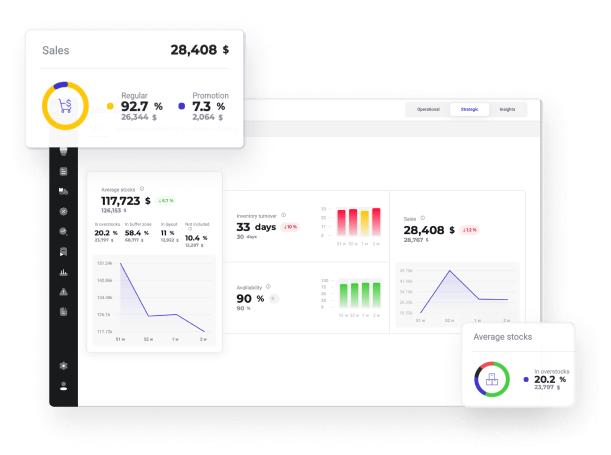
Specialized software can help you balance your inventory turnover rate. For example, LEAFIO Inventory Optimization has all the tools you need such as in-depth analytics, demand forecasting module, and procurement planning based on seasonality factors and market conditions.
According to the results of LEAFIO AI projects, the implementation of the LEAFIO Inventory Optimization system improves inventory turnover by an average of 30%.
2. Assortment complexity
SKU Proliferation increases storage costs by requiring more warehouse space and resources to accommodate a larger variety of products. Managing a wide range of SKUs also leads to higher expenses for inventory handling, organization, and maintaining slow-moving or obsolete items.
Studies show that only 18% of the assortment can generate 78% of the total profit. To reduce the cost of inefficient inventory in the face of assortment complexity, retailers may use the ABC analysis. For example, as part of the LEAFIO BI module, ABC analysis prioritizes SKUs based on known criteria and divides products into three categories:
- A – the most necessary SKUs that generate the highest revenue (up to 80%).
- B – less important SKUs that generate up to 20% of revenue.
- C – less important SKUs that bring in up to 5%.
3. Product lifecycle
Perishable products increase inventory costs due to the need for special storage conditions, such as refrigerated storage. Retailers working with such products must carefully control inventory turnover and track product life stages to minimize storage losses and avoid spoilage.
4. Supplier performance and collaboration
Inconsistent suppliers may force businesses to hold more safety stock to guard against delays, increasing holding costs. To regulate cooperation, you can use the LEAFIO Inventory Optimization solution, which allows you to transparently assess the reliability of each supplier. Graphs of the analytical module display information about orders by quantity and value, the supplier's share in purchases, and sales of the store or the entire store network.
5. Economic changes
External economic factors, such as inflation, interest rates, and market demand, cannot be ignored, as they all affect the value of inventory, especially in the long run. For example, rising electricity costs lead to higher warehouse storage costs.
6. Supply chain resilience
Imagine a supermarket chain relying on a single regional warehouse for fresh produce. When floods disrupt transportation routes, deliveries are delayed, leading to stockouts and increased spoilage. To compensate, the supermarket holds excess perishable inventory, raising waste and storage costs.
Obviously, an unstable supply chain is vulnerable to disruption, which can lead to increased inventory costs, lost sales, and damage to the brand's reputation. Only by optimizing the supply chain, for example, with multiple warehouse locations and dynamic rerouting capabilities, as in the case of a supermarket, a retailer can ensure timely delivery and minimize costs.
Machine learning-based software can provide retailers with important insights on how to manage their processes to increase supply chain resilience by categorizing and analyzing data based on each step in the supply chain.
7. Storage and warehousing efficiency
Storage and warehousing efficiency impacts inventory costs by increasing expenses when space utilization and organization are suboptimal. Inefficient layouts, poor tracking systems, or underused storage capacities result in higher operational costs and delays in managing inventory effectively.
Retailers may enhance the storage and warehousing efficiency by relying on automated inventory management tools that optimize stock levels, reduce excess inventory, and improve space utilization.
Expert tips to reduce inventory costs
Below, we share effective methods and strategies to help your business reduce inventory costs.
1. Implement advanced demand planning and forecasting
Specialized software based on machine learning allows retailers to accurately estimate demand and calculate the required amount of inventory when managing deliveries to all warehouses and stores of the chain.
For example, one of LEAFIO's customers, a large chain of grocery stores, delivers goods from a central warehouse on a daily basis. Advanced algorithms that automatically apply weekday-related coefficients enable the maintenance of optimal inventory levels by aligning stock with forecasted sales for specific days of the week. This approach helps prevent over-ordering during low-demand periods while ensuring adequate supply for higher-demand days.
2. “Empty warehouse” strategy
The “empty warehouse” strategy involves ordering goods accurately and organizing logistics in such a way as to maintain optimal inventory levels without the need to constantly store stock. This is especially relevant for stores that have a small central warehouse or store inventory directly on the premises (e.g., convenience stores).
To implement this strategy, you need a specialized software solution that can form a flexible supply chain, take into account demand forecasts, and ensure maximum availability for each SKU.
3. Optimize Economic Order Quantity (EOQ)
Economic Order Quantity (EOQ) is an essential concept that helps determine the optimal number of units to order, striking a balance between ordering costs and holding costs. This inventory management procedure allows retailers to efficiently manage their current inventory while keeping unnecessary spending under control.
4. Focus on cross-docking
Cross-docking is a logistics strategy where goods are received at a warehouse or DC and immediately transferred to outbound trucks. Cross-docking reduces inventory costs by minimizing or eliminating the need for long-term storage. Goods are transferred directly from inbound to outbound shipments, reducing warehousing expenses, carrying the cost of inventory, and the risk of inventory obsolescence.
5. Reduce dead stock and SLOB inventory
Dead or SLOB (Slow Moving and Obsolete) inventory creates significant problems for retailers because it takes up space in the warehouse. It also can lead to significant losses, as such goods often have to be thrown away or sold at discounts in forced sales.
Specialized systems can prevent the problem before it arises. For example, the LEAFIO Inventory Optimization solution helps you find redundant products, stop orders, gently remove them from the assortment, and look for better alternatives.
6. Automate inventory management processes
Use machine learning technologies to automate replenishment, tracking, and analysis. Using an automatic ordering system, you can automatically generate and send orders to external suppliers or your warehouse without any intervention from demand planners. Thanks to the automation system, you can also minimize the human error factor in the inventory process, which also significantly reduces inventory costs.
The LEAFIO Inventory Optimization solution helps you optimize ordering and delivery in the shortest possible time, resulting in lower inventory costs. The system has a powerful BI module with 40+ reports that include inventory costs, sales, overstocks, lost sales, and inventory turnover and service levels. These visual tools create transparency for every aspect of the replenishment process.
Key takeaways:
- Inventory cost analysis allows you to make informed data-based decisions on how to manage your inventory.
- Total inventory costs include ordering costs, carrying costs, and stock-out costs.
- To measure your total inventory cost you need to calculate inventory value and each type of cost: storage, warehouse rental, transportation, inventory management, ordering, etc. The formula will consist of those cost categories that are relevant to the company.
- Various factors influence inventory costs, including inventory turnover, assortment complexity, economic factors, supplier reliability, supply chain stability, and warehouse management efficiency.
- To reduce inventory costs and increase profits, use effective methods and strategies, such as the “empty warehouse” approach and implementing advanced demand forecasting.
- LEAFIO inventory management system, based on AI, will help you automate more processes and optimize storage costs.
Inventory cost FAQ:
What is included in inventory costs?
Inventory costs can be divided into three main components: ordering costs, carrying costs (holding costs), and stock-out costs. This includes freight or shipping costs, storage costs (warehouse space rent and utilities), inventory risk costs, unsold inventory, etc.
Why is it important to control the cost of inventory?
Cost control is an important part of inventory management that helps optimize company resources, reduce risks, and increase profits. Inventory cost analysis allows you to make informed, data-driven decisions to improve the quality of your inventory management.
What inventory management procedure helps a firm to control inventory costs?
Methods like Economic Order Quantity, which helps find a balance between holding costs and ordering costs, can streamline your operations while minimizing inventory costs.
How do you achieve a balance between the costs of carrying inventory and the risk of running out?
Achieving balance involves implementing precise demand forecasting, maintaining dynamic stock levels tailored to sales trends, and enhancing replenishment agility. By continuously analyzing supply chain performance and adjusting inventory policies to market conditions, retailers can effectively minimize carrying costs without compromising product availability or customer satisfaction.


Have a question?

Kristi Miller
Retail optimization expert


