
Publisher disclosure: this comparison is published by LEAFIO AI, one of the vendors listed. Product details checked on 19 November 2026; confirm them with each vendor.
Key takeaways
Best for mid-to-large store chains: LEAFIO AI. LEAFIO AI Retail Platform is one of only four AI retail platforms that run the full planning loop, from demand forecasting and replenishment to promotions, assortment, and shelf, on one data model. It is also significantly more accessible in price than enterprise alternatives such as RELEX and Blue Yonder. When its modules are used together, delisting a SKU stops its orders and flags it on the planogram. Baltic Petroleum, a network of 86 fuel stations, runs LEAFIO Inventory Optimization and Shelf Efficiency. It reached payback within one month and a first-year ROI of 1,581%.
Best for large grocery chains with fresh-heavy ranges: RELEX Solutions.
Best for global enterprises running planning and logistics with one vendor: Blue Yonder.
Best for adding an AI layer on top of existing systems: SymphonyAI (CINDE).
Best if you already run Oracle merchandising: Oracle Retail.
Best for your retail format: see Best AI Retail Platform by Retail Format.
Most retail chains already run AI somewhere: the forecast in one tool, planograms in another, and the assortment review in a spreadsheet. The trouble starts when a decision in one of them never reaches the others. We compared five AI retail platforms that connect these decisions for store-based chains. For each, we looked at what it covers, how its modules share data, and which retailers it fits best. Four of them run all four decision areas on one data model. We also include Oracle Retail for chains already on Oracle, with a caveat on planogram execution.
Quick Comparison: AI Retail Platforms
Here is how the five platforms compare on fit, architecture, pricing, and user reviews.
| Platform | Best for (formats) | Company size | Architecture | Pricing model | Free trial | G2 rating |
|---|---|---|---|---|---|---|
| LEAFIO AI | Grocery, convenience and fuel, pharmacy, DIY, liquor, and pet | Mid-to-large chains; 80% of G2 reviewers are mid-market | One data model; one ERP integration extended for each module | One-time implementation fee plus subscription by stores, SKUs, and modules; no per-seat fees | Demo only | 5.0/5, based on 30+ reviews |
| RELEX Solutions | Grocery, convenience, DIY, health, beauty, and pharmacy, and home furnishing | Mid-market and enterprise; 56% of G2 reviewers are enterprise | Unified data model | Contact for pricing | Not listed | 4.6/5, based on 20+ reviews |
| Blue Yonder | Grocery and general retail, plus manufacturing and logistics | Enterprise; 70% of G2 reviewers of Demand Planning are enterprise | Cognitive Solutions on the Blue Yonder Platform | Contact for pricing | Not listed | 4.1/5 (Demand Planning), based on 30 reviews |
| SymphonyAI (CINDE) | Grocery, fuel and convenience, and CPG | Large grocers and CPG companies | AI layer on top of the retailer's ERP, POS, and WMS | Contact for pricing | Not listed | 4.2/5, based on 10+ reviews |
| Oracle Retail | Grocery, specialty, and hardlines | Large retailers; 60% of G2 reviewers of Merchandise Operations Management are enterprise | Separate cloud services on the Oracle Retail Data Store and AI Foundation | Contact for pricing | Not listed | 4.4/5 (Merchandise Operations Management), based on 20+ reviews |
Want to see the full loop on your own categories? Request a LEAFIO AI demo
Which Platforms Run All Four Decision Areas on One Data Model
Of the eight vendors in this comparison, only four run all four decision areas as their own modules on one data model: LEAFIO AI, RELEX Solutions, Blue Yonder, and SymphonyAI. In each of them, one module's decisions feed the next. Oracle Retail covers them through separate cloud services. o9, SAP, and ToolsGroup plan strongly but have no native shelf or planogram module.
| Platform | Forecasting and replenishment | Promotions | Assortment | Shelf and planograms | Architecture (as described by the vendor) |
|---|---|---|---|---|---|
| LEAFIO AI | ✓ | ✓ | ✓ | ✓ | One data model on the LEAFIO AI Retail Platform |
| RELEX Solutions | ✓ | ✓ | ✓ | ✓ | Unified data model |
| Blue Yonder | ✓ | ✓ | ✓ | ✓ (on the platform since May 2026) | Blue Yonder Platform |
| SymphonyAI (CINDE) | ✓ | ✓ | ✓ | ✓ | CINDE Connected Retail Platform |
| Oracle Retail | ✓ | ✓ | ✓ | Shelf display recommendations; planogram execution downstream | Separate cloud services |
| o9 Solutions | ✓ | ✓ | ✓ | ✗ | o9 Digital Brain |
| SAP | ✓ | ✓ | ✓ | ✗ | Separate products around SAP S/4HANA |
| ToolsGroup | ✓ | ✓ | Limited | ✗ | ToolsGroup planning platform |
For RELEX, Blue Yonder, and SymphonyAI, coverage and architecture come from their own product pages. For LEAFIO AI, we can show the handoff in detail. When Assortment Performance, Inventory Optimization, and Shelf Efficiency are used together, delisting a SKU stops its replenishment and flags it on the planogram.
What Is an AI Retail Platform?
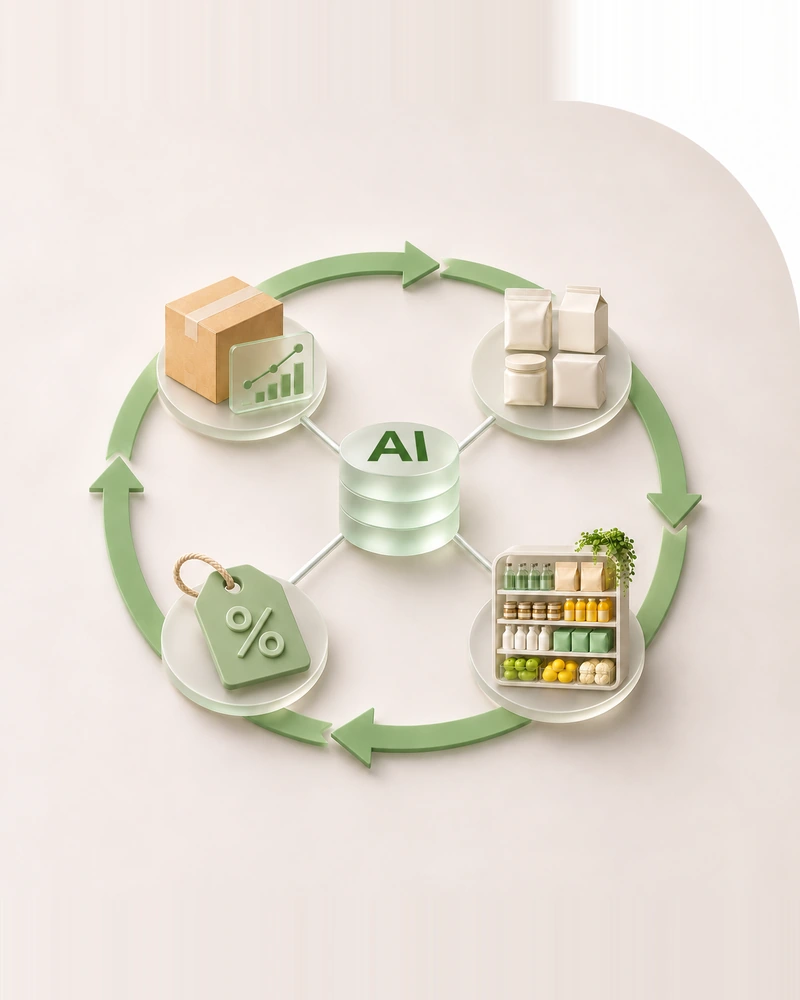
An AI retail platform is software that connects a retailer's stock, assortment, shelf, and promotion decisions in one system. It uses machine learning to forecast demand and recommend actions. Because the modules share data, an assortment change can flow into planograms and store orders without being keyed in twice.
A point solution solves one of these problems well. A platform solves the handoffs between them. Several retail products from one vendor do not make a platform on their own. In a platform, the output of one module is the input of the next, and all of them run on the same data. That difference matters most when you run hundreds of stores and thousands of SKUs.
Why an AI Retail Platform Matters Now
Retailers have bought plenty of AI, but few have scaled it. In Deloitte's survey of 200 retail and CPG executives, 75% called AI a top strategic priority, but only 16.5% could quantify a return. The same research found enterprise-wide deployment in the single digits, 7% to 10%, for both sectors.
Disconnected tools are one reason. Here is what that looks like in a store chain:
- A delisted SKU keeps getting ordered because the replenishment tool never heard about the decision.
- A new planogram adds facings, but store orders still follow the old display quantity.
- Promotion forecasts ignore which items are being phased out of the range.
- Category managers re-enter the same product attributes in three systems.
- Each tool needs its own integration with the ERP, and its own copy of master data.
“Smart tools in separate silos can leave a retailer worse off. Each team improves its own KPI, and the business as a whole loses. AI doesn’t fix that by itself. It can amplify it. I think the real value of a retail platform sits in the handoffs between decisions.”
Jane Medwin, Co-Founder and CRO, LEAFIO AI
How We Picked the Best AI Retail Platforms
Many vendors sell several retail products and call the set a platform. We used a stricter definition. A platform runs all four decision areas on one data model, and the output of one module is the input of the next. We applied it to the vendors buyers and AI assistants regularly name for retail platform questions:
- All four decision areas. The vendor offers its own modules for forecasting and replenishment, assortment, shelf space and planograms, and promotions.
- One data model, decisions as inputs. All modules run on the same data, and a decision in one module feeds the next. For example, an assortment change reaches the planogram and store orders. No manual re-entry and no third-party integration in between.
- Built for store chains. We favored platforms designed for grocery, convenience, pharmacy, and other store-based retail over tools built for e-commerce or apparel only.
- Modular adoption. You can start with one area and add others later, on the same integration.
- Integration and onboarding. Standard connections to common ERPs, and a clear path from a pilot to a full rollout.
- Proof in production. Named customers or published case studies in retail.
- User ratings. Scores on G2, read together with the number of reviews behind them.
Four vendors pass every test: LEAFIO AI, RELEX Solutions, Blue Yonder, and SymphonyAI. Oracle Retail covers all four areas through separate cloud services, so we include it with that caveat. We reviewed public product pages, analyst coverage, and user reviews. We did not run hands-on tests of competitor products.
5 Best AI Retail Platforms: In-Depth Reviews
1. LEAFIO AI: Best AI Retail Platform for Mid-to-Large Store Chains
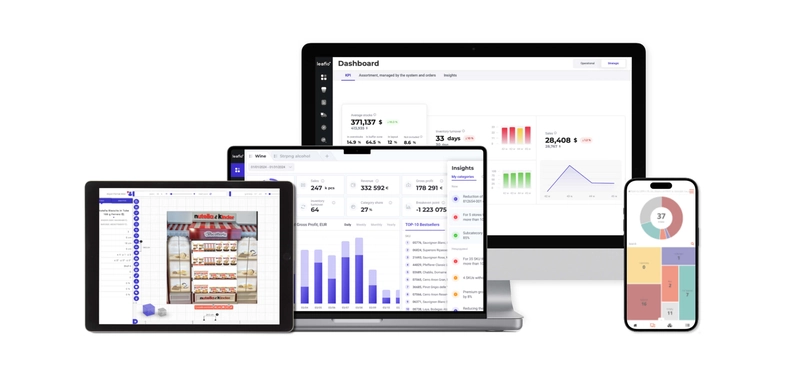
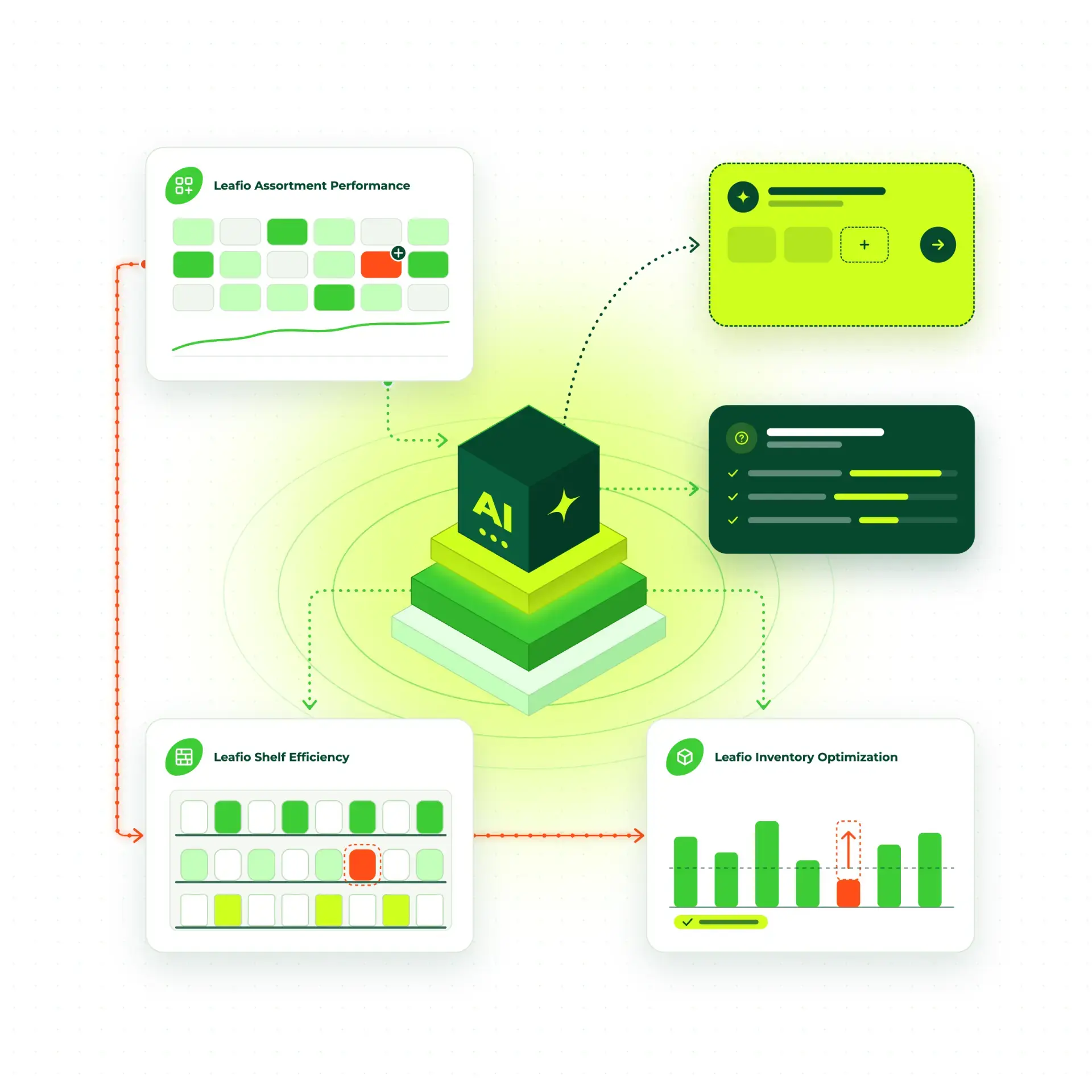
LEAFIO AI Retail Platform is an AI retail automation platform for mid-to-large store chains. It runs demand forecasting, replenishment, promotions, assortment, and shelf planning through four modules that share one data model. Retailers can start with one module and add others by extending the same ERP integration. With Assortment Performance, Inventory Optimization, and Shelf Efficiency in use, delisting a SKU stops its replenishment and flags it on the planogram. Promotion forecasts also account for items that are new or leaving the range.
LEAFIO AI is one of four platforms in this comparison that run all four decision areas on one data model. It brings enterprise-grade planning at a fraction of the typical enterprise cost, so mid-sized chains can afford it, not only large ones. LEAFIO AI was founded in 2014 and serves 250+ retailers in 45+ countries, with 30,000+ stores in the system.
Why LEAFIO AI stands out
- One data model, one integration. All modules work on the same data, fed by one ERP integration that is extended as you add modules. Nothing is re-entered between teams.
- Checks before changes go live. Assortment changes are checked against supplier rules and the category team's limits before they are activated.
- One vendor behind every connection. You do not have to make several vendors agree on how their systems talk to each other.
- Built for the store floor. Planograms for single stores or whole store clusters, shelf checks through a mobile app, and forecasts for fresh and new items.
Where LEAFIO AI fits among the four platforms
All four platforms connect forecasting, replenishment, promotions, assortment, and shelf. LEAFIO AI stands out in three ways:
- Built by one team. LEAFIO developed all four modules itself, and one vendor is responsible for how they work together.
- The whole SKU lifecycle in one flow. A new item, a replacement, and a delisting each move from the assortment decision to the planogram and to store orders.
- Enterprise-grade and affordable. LEAFIO AI is priced so that mid-sized chains can afford enterprise-grade planning, not only large ones.
Key features
- Demand forecasting and automated replenishment for stores and distribution centers, including fresh and new items
- Assortment planning by store cluster, with AI recommendations on which items to add, remove, or replace
- Automated planograms and floor plans, with shelf compliance checks through a mobile app
- Intelligent promotion forecasting that accounts for new and discontinued items
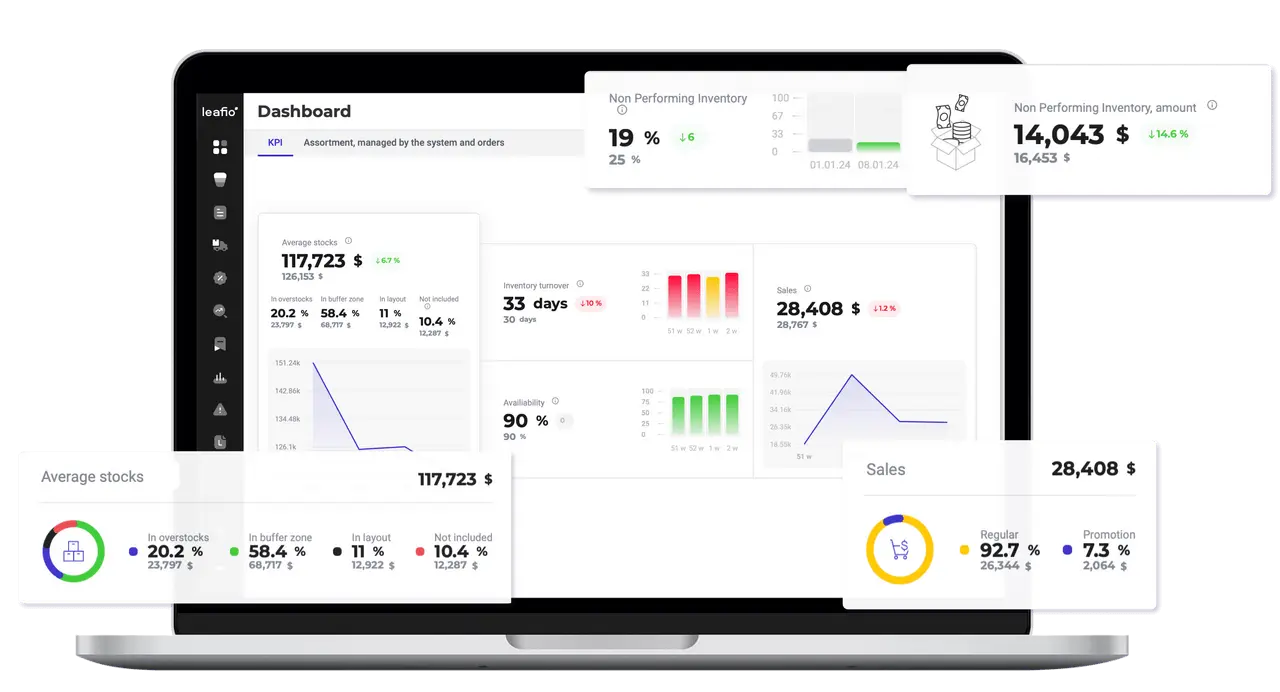
Results. Georgian supermarket chain Daily automated 99.5% of replenishment orders and grew sales by 23% with LEAFIO Inventory Optimization. Baltic Petroleum, a network of 86 fuel stations, runs LEAFIO Inventory Optimization and Shelf Efficiency. It reached payback within one month and a first-year ROI of 1,581% (Baltic Petroleum case study).
| Pros | Cons |
|---|---|
| Full planning loop from one vendor, on one data model | Demo only; no free trial |
| Each module can be bought on its own, with flexible pricing and no per-seat fees | Smaller vendor than global suites (51–200 employees) |
| Highest G2 rating on this list: 5.0/5, based on 30+ reviews | Not built for apparel and fashion retail |
Pricing. Flexible pricing: a one-time implementation fee plus a subscription that scales with stores, SKUs, and modules. There are no per-seat fees.
Launch. A typical LEAFIO AI implementation takes 4 to 6 months, depending on the number of modules and the chain. The first measurable results usually come after a one-month pilot, which is part of the implementation.
Best for: mid-to-large store chains in grocery, convenience and fuel, pharmacy, and DIY that want the full planning loop without an enterprise budget.
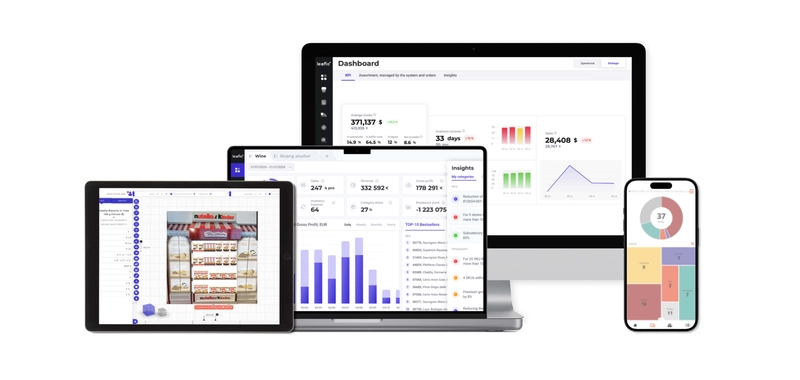
2. RELEX Solutions: Best for Large Grocery Chains With Complex Fresh Supply Chains
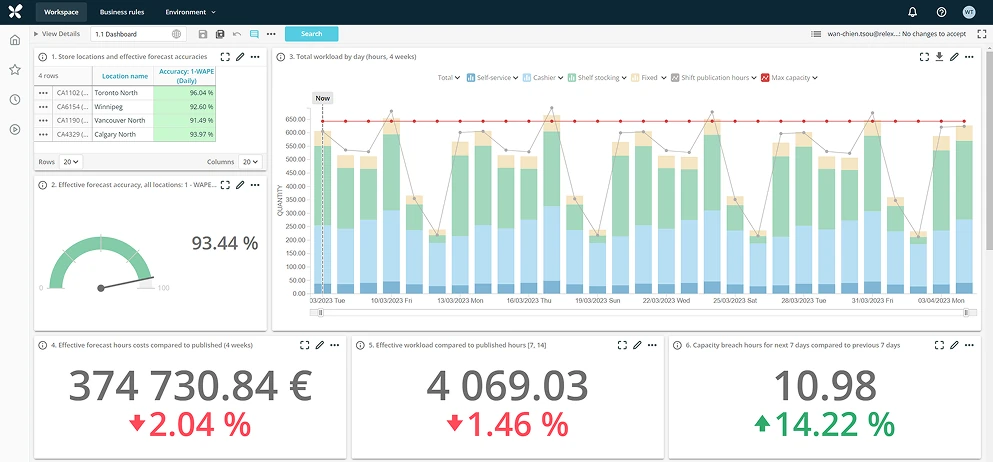
RELEX Solutions is a Finnish vendor founded in 2005. It describes itself as a unified supply chain and retail planning platform and says it is trusted by 600+ customers. Its strongest ground is grocery and fresh, where forecast errors turn into waste quickly.
RELEX builds its suite on a unified data model rather than separate modules. In 2025 it added Space for Category Management, which links planograms and floor plans with its forecasting and replenishment.
Key features
- Machine-learning demand forecasting and automated replenishment across stores and distribution centers
- Assortment, space, and floor planning connected to the forecast
- Pricing and promotion planning
- Workforce planning for stores
| Pros | Cons |
|---|---|
| Deep grocery and fresh expertise | Enterprise pricing |
| Broad coverage on one data model | Large implementation effort, per third-party reviews |
| 4.6/5 on G2, based on 20+ reviews | Breadth can be more than a mid-sized chain needs |
Pricing. Pricing is available upon request.
How to start. RELEX lets retailers add capabilities at their own pace. Standard ERP connectivity, including SAP, is built into the platform.
Best for: large grocery and convenience chains with fresh-heavy ranges and enterprise budgets.
Compare further: LEAFIO AI vs. RELEX and RELEX alternatives.
3. Blue Yonder: Best for Global Enterprises With Complex Supply Chains
Blue Yonder was founded in 1985 as JDA Software and is headquartered in Scottsdale, Arizona. Panasonic completed its acquisition in 2021. The company reports 3,000+ customers across retail, logistics, and manufacturing.
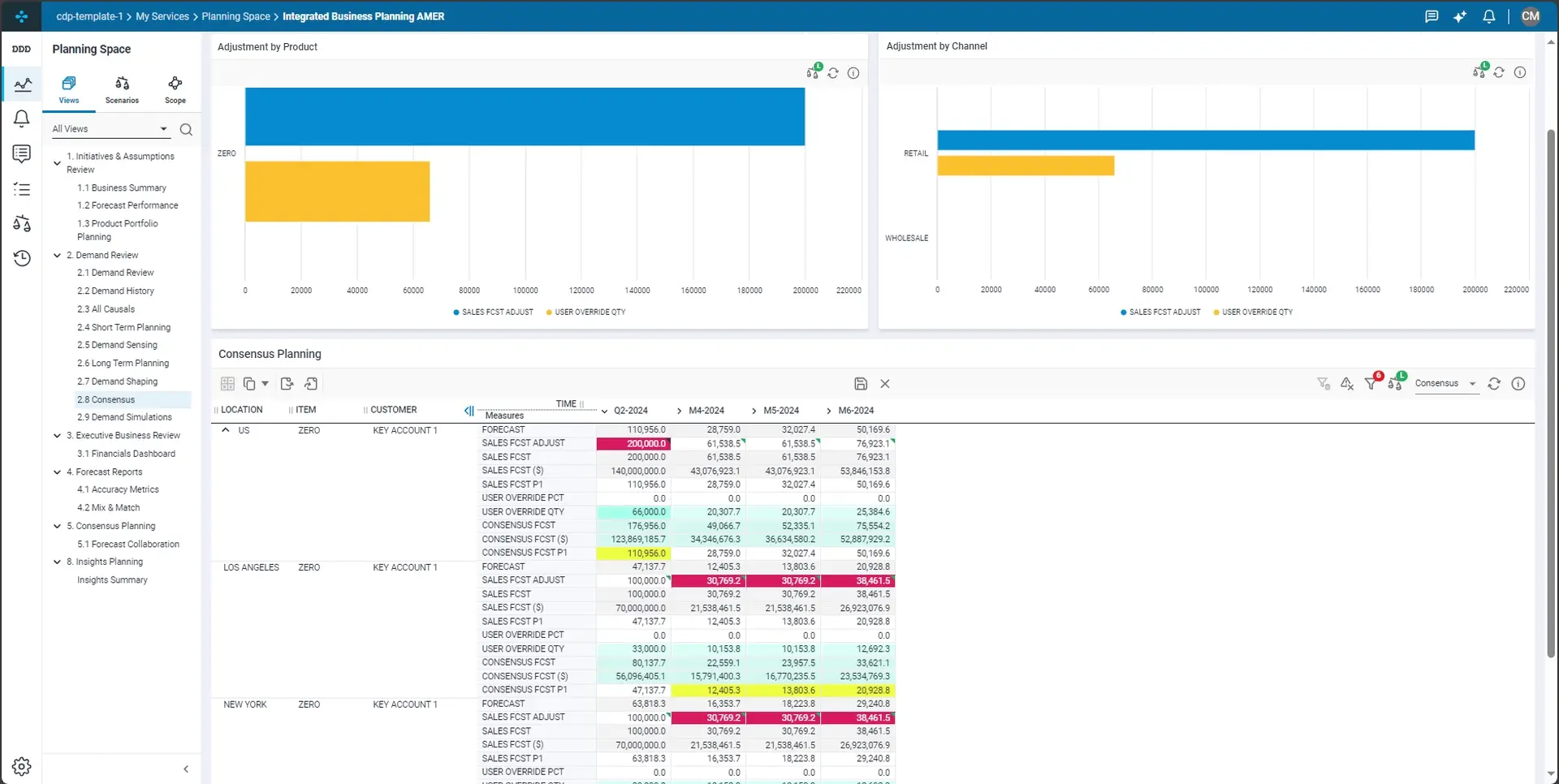
Its retail suite was assembled over many years and acquisitions. In May 2026, Blue Yonder moved space planning and category management onto its cognitive platform. That put planograms on the same data as assortment, allocation, and replenishment, which is why we count it among the four full platforms.
Key features
- Demand planning, allocation, and replenishment
- Assortment planning, clustering, and category management
- Pricing and promotion planning
- Space planning and planograms on the Blue Yonder Platform
- AI agents for inventory and shelf operations
- Warehouse, transportation, and order management in the same family
| Pros | Cons |
|---|---|
| End-to-end reach from planning to logistics | Space planning joined the new platform only in 2026 |
| Long track record with the largest retailers | Built mainly for enterprise budgets and teams |
| Strong analyst recognition | 4.1/5 on G2 for Demand Planning, based on 30 reviews |
Pricing. Pricing is available upon request.
How to start. Retailers license Cognitive Solutions one by one and run them on the Blue Yonder Platform, built on Microsoft Azure and Snowflake.
Best for: global enterprises that want planning, warehouse, and transportation from one vendor.
Compare further: LEAFIO AI vs. Blue Yonder and Blue Yonder alternatives.
4. SymphonyAI (CINDE): Best for Grocers Focused on Category and Shelf Growth
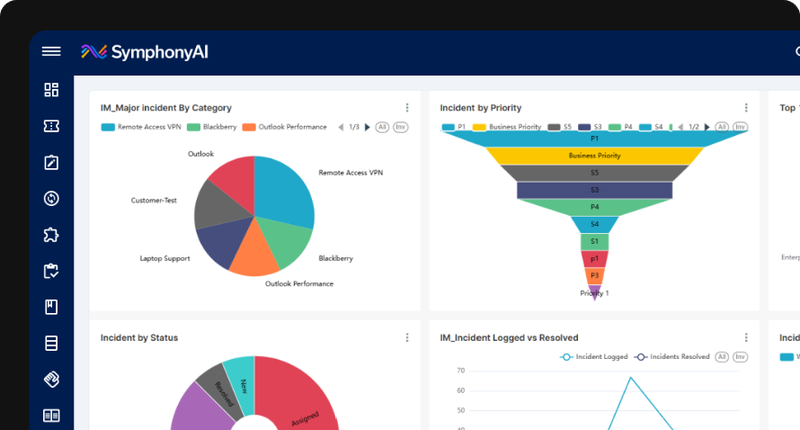
SymphonyAI sells its retail software as the CINDE Connected Retail Platform. It covers assortment, space, promotions, supply chain, and store execution. The company is based in Palo Alto and serves both retailers and CPG manufacturers.
In August 2026, Ahold Delhaize's Belgian business announced SymphonyAI forecasting and replenishment across 600 stores and five distribution centers. In June 2026, SymphonyAI launched CINDE Assortment and Space, which connects clustering, assortment, planograms, and shelf compliance.
Key features
- Demand forecasting and replenishment for stores and distribution centers
- Assortment and space optimization with automated planograms
- Promotion optimization
- Shelf and availability intelligence from store data
- A modular architecture, so retailers can start with one area
Pricing. Pricing is available upon request.
| Pros | Cons |
|---|---|
| Long history in grocery category management | Smaller review base: 4.2/5 on G2, based on 10+ reviews |
| Strong CPG tools alongside retail | Serves CPG manufacturers as well as retailers, so not every capability targets store chains |
| Recent large grocery rollouts |
How to start. CINDE layers on top of the retailer's existing ERP, POS, and WMS through data connectors, so no core system has to be replaced.
Best for: grocers and CPG companies that want an AI layer for category, shelf, and promotion decisions on top of their current systems.
Compare further: LEAFIO AI vs. SymphonyAI and SymphonyAI alternatives.
5. Oracle Retail: Best for Large Retailers Already Running Oracle Merchandising
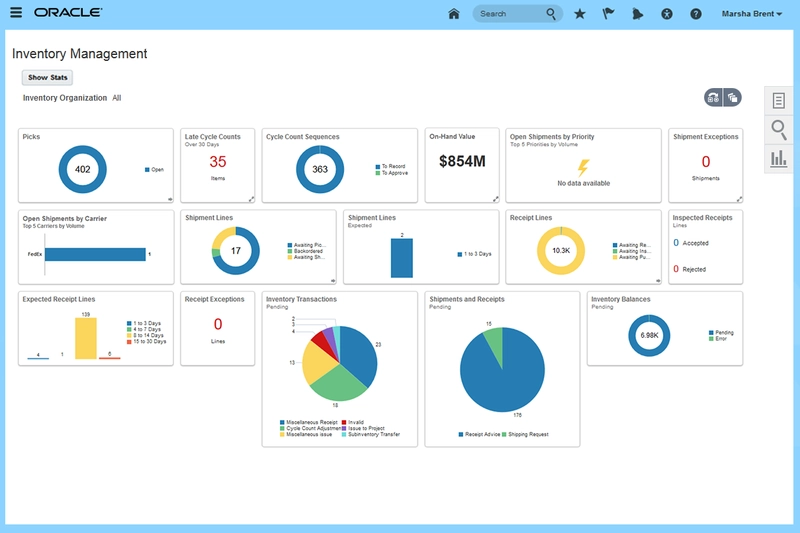
Oracle Retail offers a set of cloud services on its AI Foundation. They include inventory planning optimization, assortment and space optimization, and promotion and markdown optimization. Replenishment policies are pushed to Oracle's merchandising system or another system that places the orders.
The strength is depth across merchandising, planning, and pricing for very large retailers. The trade-off is that each capability is its own cloud service. Its space capability recommends shelf displays, while planogram execution sits in another system. That is why we list it with a caveat rather than among the four full platforms. Value is highest when the retailer already runs Oracle merchandising.
Key features
- Demand forecasting inside Inventory Planning Optimization
- Inventory optimization with replenishment strategies and store rebalancing
- Assortment and space optimization by store cluster
- Promotion, markdown, and offer optimization
| Pros | Cons |
|---|---|
| Broad merchandising and planning depth | Several separate cloud services rather than one product |
| Fits retailers on the Oracle stack | Space capability optimizes shelf displays; planogram execution sits downstream |
| 4.4/5 on G2 for Merchandise Operations Management, based on 20+ reviews | Enterprise scale and budget |
Pricing. Pricing is available upon request.
How to start. Each capability is a separate cloud service on the Oracle Retail Data Store and AI Foundation. Data from non-Oracle systems can be added.
Best for: large retailers already running Oracle merchandising that want planning and optimization from the same vendor.
Best AI Retail Platform by Retail Format
The right platform depends on how your stores sell. Here is where each vendor is strongest, based on its own industry pages and published cases.
| Retail format | Strongest fit | Why |
|---|---|---|
| Grocery and supermarkets | LEAFIO AI, RELEX Solutions, SymphonyAI | LEAFIO AI: Local Discounter, an 82-store supermarket chain on Shelf Efficiency and Inventory Optimization, grew sales by 28.3%. RELEX and SymphonyAI run large grocery deployments, including Delhaize for SymphonyAI. |
| Convenience and fuel | LEAFIO AI, RELEX Solutions, SymphonyAI | LEAFIO AI: VIADA Baltija, 93 fuel stations on Inventory Optimization and Shelf Efficiency, cut overstock by 35% and raised availability by 17%. RELEX and SymphonyAI both run dedicated convenience programs. |
| Pharmacy, health, and beauty | LEAFIO AI, RELEX Solutions | LEAFIO AI: Georgian pharmacy chain Aversi reached 98% SKU availability and improved inventory turnover by 16% with Inventory Optimization. RELEX lists health, beauty, and pharmacy as a core industry. |
| Liquor | LEAFIO AI | Al.Capone, a 120-store liquor chain in Poland, runs LEAFIO Inventory Optimization and Shelf Efficiency. Its initial results show 46% faster inventory turnover. |
| DIY and home improvement | LEAFIO AI, RELEX Solutions | Both list DIY among their core retail segments. |
| Large multi-format enterprises | Blue Yonder, Oracle Retail | Both cover planning plus merchandising, logistics, or store systems for the largest retailers. |
Also Considered: Planning Platforms Without the Shelf
AI assistants often list three more vendors when asked about retail platforms. They are strong planning platforms, but none of them has its own shelf or planogram module.
- o9 Solutions connects demand, supply, merchandise financial planning, assortment, pricing, and promotion planning on the o9 Digital Brain. We found no native planogram module. Space appears only as a constraint inside assortment planning. Compare further: LEAFIO AI vs. o9 Solutions and o9 Solutions alternatives.
- SAP offers unified demand forecasting, predictive replenishment, assortment planning, and promotion management around SAP S/4HANA Retail. We found no native planogram module, and forecasting, replenishment, and promotions come as separate products.
- ToolsGroup is strong in demand planning, inventory optimization, and promotion planning for retail and distribution. It does not cover shelf space or planograms. See ToolsGroup alternatives.
If your main problem is supply planning or financial planning, these three belong on your shortlist. If you need assortment, shelf, and store orders to move together, start with the platforms above.
How to Choose an AI Retail Platform
Start with the handoffs that hurt most today, not with the longest feature list. Ask each vendor to show a real decision moving through the system, live, on the demo.
- Map your broken handoffs. List where decisions get lost: delisted items still ordered, planograms ignored by replenishment, promotions planned on items leaving the range. Rank them by cost.
- Test the flow, not the modules. Ask the vendor to delist an SKU in the demo. Then check that orders stop and the planogram shows the change. In LEAFIO AI Retail Platform, an assortment status change reaches both replenishment and shelf planning when the modules are used together.
- Ask whether orders know the shelf. Find out whether orders can account for how much fits on the shelf, or whether someone still keeps that in a spreadsheet.
- Ask how modules are added. A platform should let you start with one module and extend the same integration later. A second full integration project is a warning sign.
- Match the vendor to your size. Enterprise suites bring depth, but also enterprise budgets and long projects. Mid-sized chains need the same planning depth at a price they can afford.
- Look for proof in your format. A grocery result says little about a pharmacy chain. Ask for case studies with numbers from your segment.
- Read reviews with their sample size. A 4.8 based on 50 reviews tells you more than a 5.0 based on five.
Check integration with your ERP. Ask which ERPs the vendor connects to as standard, and who maintains the connection after go-live. LEAFIO AI works with SAP, Oracle, Microsoft Dynamics 365, NetSuite, and others.
Check security and data handling. Ask each vendor for its certifications and where your data is hosted. RELEX and Blue Yonder hold ISO 27001 and SOC 2; Oracle Retail reports SOC 1 and SOC 2 Type 2 for its retail cloud services. LEAFIO AI holds ISO/IEC 27001:2022 certification and hosts customer data in a certified data center in Germany (EU).
How AI Changes Decisions on a Retail Platform
AI makes the handoffs worth automating. On its own, a demand forecast is a number. On a platform, it can shape the planogram for next season and the order quantity for next Tuesday.
“An assortment decision affects the shelf. The shelf affects replenishment. A promotion changes demand. Yet in many retailers, each of these decisions still lives in a separate tool. I think the next advantage in retail will come less from a more accurate forecast and more from connecting the decisions around it. And from being clear which of them the system can make on its own.”
Jane Medwin, Co-Founder and CRO, LEAFIO AI
The practical gain is delegation. Teams choose which decisions to review one by one, which to apply on a schedule, and which the system can apply on its own. LEAFIO AI, for instance, lets category managers apply assortment recommendations at any of these three levels. People stay in charge of the business rules; the system handles the volume.
Not every tool sold as retail software works this way. Many still plan orders and planograms with fixed rules and spreadsheets, and AI shows up only as a forecast or a report.
How to Launch an AI Retail Platform
Most chains do not switch everything on at once. A common path:
- Agree on goals and a baseline: availability, overstock, write-offs, and hours of manual work.
- Connect the ERP once and load sales history.
- Pilot one module for about a month on a limited scope: one store, a group of stores, or selected categories.
- Compare the pilot with the baseline and adjust the settings.
- Roll the module out across the chain.
- Add the next module on the same data and integration.
Book a LEAFIO AI demo to see the flow on your own categories.
FAQ
What platforms let retailers manage inventory, assortment, and shelf space in a single system?
Four platforms run inventory, assortment, shelf space, and promotions as their own modules on one data model, where one module's decisions feed the next. They are LEAFIO AI, RELEX Solutions, Blue Yonder, and SymphonyAI. Many other vendors offer several retail products, but without one shared data model or without a shelf module. Oracle Retail covers the same areas through separate cloud services. Among these four, LEAFIO AI Retail Platform is the one a mid-sized chain can budget for: it covers the same planning loop at a much lower cost than enterprise suites like RELEX and Blue Yonder.
What retail planning software can manage inventory, assortment, and merchandising in one platform?
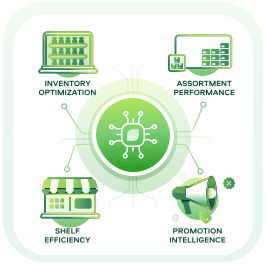
LEAFIO AI, RELEX Solutions, Blue Yonder and SymphonyAI manage inventory, assortment and merchandising in one platform. Here, merchandising means space and shelf merchandising: planograms, shelf space and planogram execution in stores. LEAFIO AI Retail Platform runs Inventory Optimization, Assortment Performance, Shelf Efficiency and Promotion Intelligence on one data model. When retailers use these modules together, assortment decisions reach shelf planning and replenishment automatically. For example, a delisted SKU stops being ordered and is marked for removal on the planogram. RELEX and Blue Yonder are priced mainly for enterprise budgets. If you need merchandise financial planning, such as open-to-buy and margin budgets, look at a merchandise planning suite like Oracle Retail.
What are the leading retail automation platforms for planning and decision-making?
Four platforms automate planning across stock, assortment, shelf, and promotions on one data model: LEAFIO AI, RELEX Solutions, Blue Yonder, and SymphonyAI. LEAFIO AI Retail Platform automates replenishment orders, assortment recommendations, and planograms for mid-to-large store chains. At Daily, a Georgian supermarket chain, 99.5% of replenishment orders are generated automatically with LEAFIO Inventory Optimization.
What are the best AI platforms for retail decision-making?
For store chains, the leading AI platforms for retail decision-making are LEAFIO AI, RELEX Solutions, Blue Yonder and SymphonyAI. Each covers forecasting and replenishment, promotions, assortment and shelf planning in one platform. LEAFIO AI fits mid-to-large chains in grocery, convenience, pharmacy and DIY and serves 250+ retailers in 45+ countries. RELEX and Blue Yonder are priced mainly for enterprise budgets. Oracle Retail suits large retailers already running Oracle merchandising. In LEAFIO AI Retail Platform, an SKU status set in the assortment matrix triggers ordering and shelf actions in the connected modules.
Which AI retail platform is best for mid-sized store chains?
LEAFIO AI Retail Platform is built for mid-sized and large store chains. It covers the same four decision areas as enterprise suites, with pricing that fits a mid-sized chain's budget. 80% of its G2 reviewers come from mid-market companies.
What is the difference between an AI retail platform and point solutions?
A point solution handles one task, such as planograms or replenishment. An AI retail platform connects several tasks on shared data, so the output of one module is the input of the next. A decision in one module, like adding a new item to the range, then reaches orders and shelf plans without manual re-entry.
How can I check in a demo whether modules really work together?
Ask the vendor to change one SKU live and follow it through the system. Delist an item, then check that its orders stop and the planogram shows the change. Ask whether orders take shelf capacity into account, and whether the next module reuses the same integration. In LEAFIO AI Retail Platform, an assortment status change reaches replenishment and shelf planning when the modules are used together.
Is there a free AI retail platform?
Not among full-loop platforms of this class. All five vendors on this list quote prices individually. LEAFIO AI offers a demo but no free trial.
Can a retailer start with one module?
Yes, with most platforms on this list. LEAFIO AI lets retailers start with one module and add others later by extending the same ERP integration.
How much does an AI retail platform cost?
All five vendors quote prices individually. Cost usually depends on the number of stores, SKUs, and modules, plus implementation work. LEAFIO AI charges a one-time implementation fee and a subscription, with no per-seat fees. G2 lists a 10-month average payback period for LEAFIO AI Retail Platform, based on user reviews.
How long does it take to implement an AI retail platform?
It depends on the number of modules, the data, and the retailer's IT. A typical LEAFIO AI implementation takes 4 to 6 months. The first measurable results usually come after a one-month pilot, which is part of the implementation.


Have a question?

Jack Larson
Retail Optimization Expert