
ERP (Enterprise Resource Planning) systems address several critical pains for retailers, streamlining operations across various functions. They integrate core retail business processes into a single system, including inventory management, supply chain operations, sales and customer relationship management, and service and financial management. As inventory is one of retail's key assets, it is critical to understand which tools will effectively manage this resource.
This article delves into ERP inventory management systems, exploring their essential features, capabilities, and limitations. Here, we explore opportunities for enhancing these systems through specialized stock management software and artificial intelligence algorithms. Discover how to maximize the potential of your ERP inventory system with this comprehensive guide by LEAFIO AI.
Key Takeaways
ERP systems integrate inventory into broader business processes for control.
Links stock to finance & sales.
Automates accounting impacts.
Needs careful retail customization.
Often paired with specialized IMS.
Centralizes reporting.
What is an ERP Inventory Management?
An ERP inventory management system, a key component of broader retail ERP software, streamlines ctock management by integrating with other business processes—purchasing, sales, finance, and supply chain operations.
Although functioning independently, each module within an ERP system is part of a cohesive platform, enabling seamless data sharing across departments for swift and precise calculations. This integrated approach is crucial for handling intricate inventory tasks organization-wide, leveraging real-time data for enhanced operational efficiency and decision-making.
ERP systems are pivotal for firms aiming to refine inventory management, boost overall operational effectiveness, and achieve customer satisfaction through accurate and timely order fulfilment, underscoring the importance of considering an ERP upgrade for continuous improvement.
5 Key Features of ERP Inventory Management System
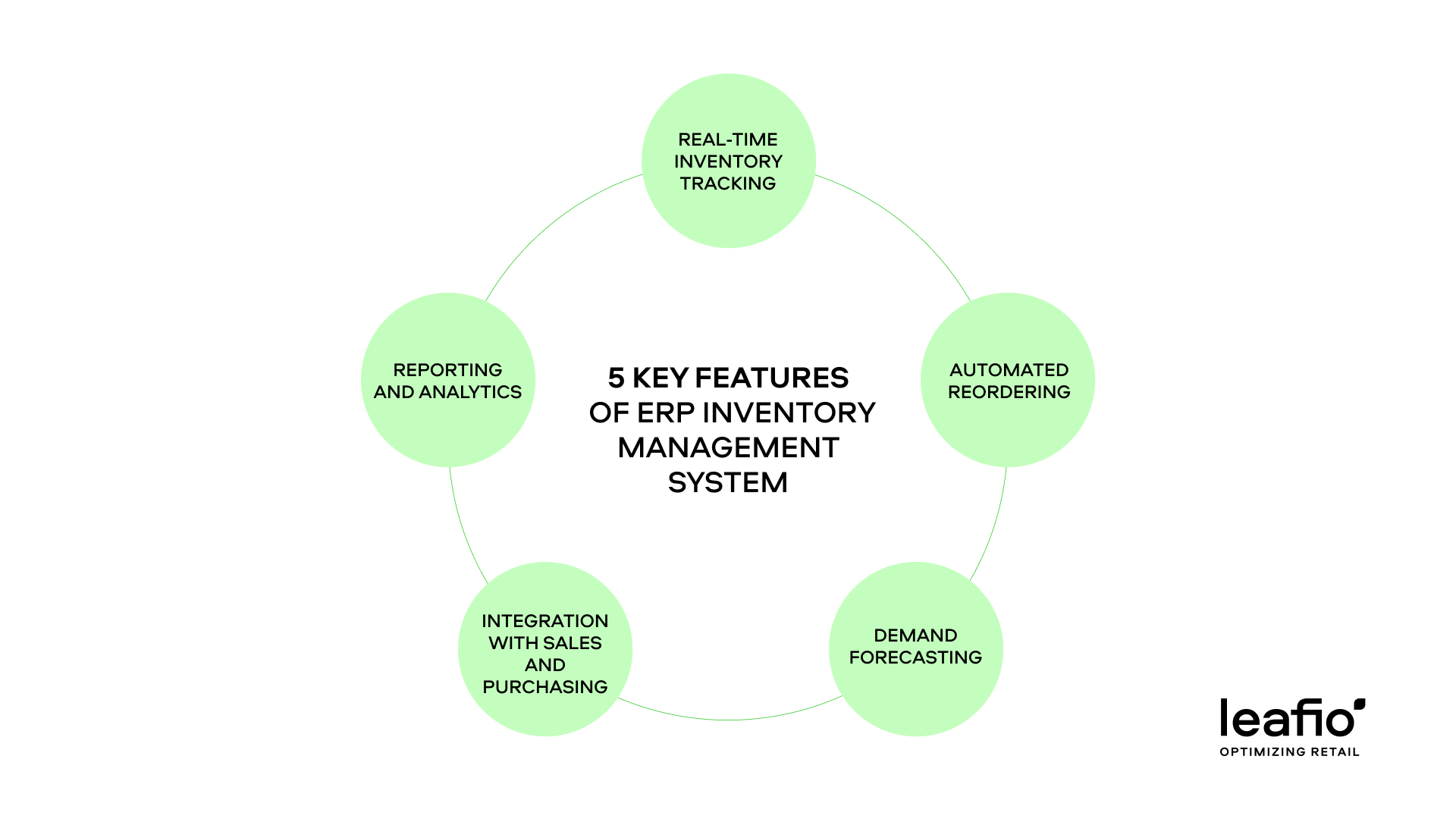
ERP Inventory Management Systems offer several key features that address the critical challenges in the retail business. Here are five essential features and how they solve major business pains:
#1: Real-Time Inventory Tracking
Real-Time Inventory Tracking is a vital part of modern enterprise resource planning systems, especially in retail. This feature lets a system instantly track and update stock levels as transactions are made across different sales channels and storage locations. The main problem it solves is the lack of accurate, current stock-level information.
Traditional inventory and stock management can cause differences between actual and recorded inventory levels due to delays or mistakes in data entry. These errors can cause missed sales, excess stock, and lowered customer satisfaction. Real-time tracking removes these problems by keeping inventory data current, leading to improved inventory planning, increased sales, and better customer service. This feature is fundamental for several reasons:
- Accuracy and Visibility: Real-time inventory tracking provides accurate and immediate visibility into stock levels, which is essential for managing inventory across multiple locations, whether they be physical stores, warehouses, or online platforms. This visibility helps retailers make informed decisions about stock replenishment, allocation, and markdowns.
- Enhanced Customer Satisfaction: By ensuring that retailers can avoid selling products that cannot be fulfilled due to stock discrepancies. This improves customer satisfaction by reducing the chances of order cancellations or delays.
- Efficiency and Cost Savings: This feature optimizes stock management by reducing the need for physical inventory counts and minimizing the risks of overstocking or understocking, which can be costly to retailers.
#2: Automated Reordering
Automated reordering in the supply chain transparency and an ERP inventory management system ensures proper stock levels of readily available popular products and reduces manual ordering risks. It streamlines buying processes, leading to efficient operations, fewer errors, better inventory balance, time-saving, and improved customer satisfaction.
It addresses the issue of excess inventory and insufficient stock in manual stock management, which is complex and risky. Automated reordering optimizes inventory using sales data, thereby minimizing risks.
The feature is represented in retail ERP system dashboards, displaying inventory levels, reorder points, and upcoming orders. Retailers can modify settings as needed, and the system sends alerts for automatic re-orders or when manual intervention is required, ensuring that stock management features and control alongside automation benefits.
#3: Demand Forecasting
Demand forecasting in an ERP inventory management solution uses historical sales data and market trends to anticipate product demand. Demand forecasting addresses the uncertainty in product demand, preventing inefficiencies and financial losses. It helps retailers determine optimal stock levels and timing, avoiding overstocking with associated high costs and markdowns or understocking that leads to lost sales. Predicting customer demand supports informed inventory decisions.
#4: Integration with Sales and Purchasing
In an ERP inventory management system, a sale automatically adjusts stocks, triggering alerts and purchase orders if the stock falls below thresholds. When a supplier fulfills a purchase order, the system updates the inventory, making new stock immediately available. This eliminates errors and gives a clear view of inventory status. Auto-adjusting inventory based on sales prevents excess inventory and understocking, reduces costs, and improves cash flow.
The integration simplifies procurement with auto-generated orders based on sales forecasts and inventory, streamlining inventory operations and aligning procurement with sales demand. It also enhances supplier relationships by sharing accurate forecasts and inventory needs, fostering collaboration, and enabling better terms and cost reductions.
#5: Reporting and Analytics
The primary purpose of the reporting and analytics module of a robust ERP system is to manage vast amounts of data to make informed business decisions. Retailers deal with countless data points—from sales transactions and customer interactions to inventory changes and supplier deliveries. Analyzing key inventory metrics is time-consuming and prone to errors, leading to suboptimal decisions. Reporting and analytics integration automates and simplifies this process, providing accurate, timely, and relevant insights.
The integration works by aggregating data from various sources within the ERP inventory management system—such as sales, inventory, customer, and purchase order management modules—and processing it through the system's analytics engine. The engine applies algorithms and statistical methods to identify trends, generate insights, and predict future patterns. These insights are then presented through the dashboard and reports, providing retailers with a powerful tool to guide strategic and operational decisions.
The integration capabilities of ERP systems are a cornerstone of their value, allowing them to work in concert with other business management tools such as CRM systems, e-commerce platforms, and supply chain management software. This ecosystem approach streamlines operations and provides a 360-degree view of the business, from customer interactions and online sales to inventory and the entire supply chain and logistics.
By offering a unified platform for data and processes, ERP systems enhance operational efficiency, improve decision-making, and enable a more responsive and customer-centric retail operation.
AI-driven Inventory Optimization Software vs Retail ERP Software
Standard retail ERP systems might not provide advanced AI-based features like enhanced data analysis, predictive analytics, and task automation. These features can optimize processes within a retail business. Integrating these capabilities through third-party solutions allows retailers to adopt new technologies without overhauling their systems. These solutions are often more customizable, benefiting retailers with distinctive needs or those operating in niche markets.
While upgrading a robust ERP inventory management system to solutions with advanced functionalities can be costly and complex, third-party solutions offer a more cost-effective and more straightforward alternative. They allow for adding specific capabilities without significant investments or complex implementation projects.
LEAFIO Inventory Optimization Tool
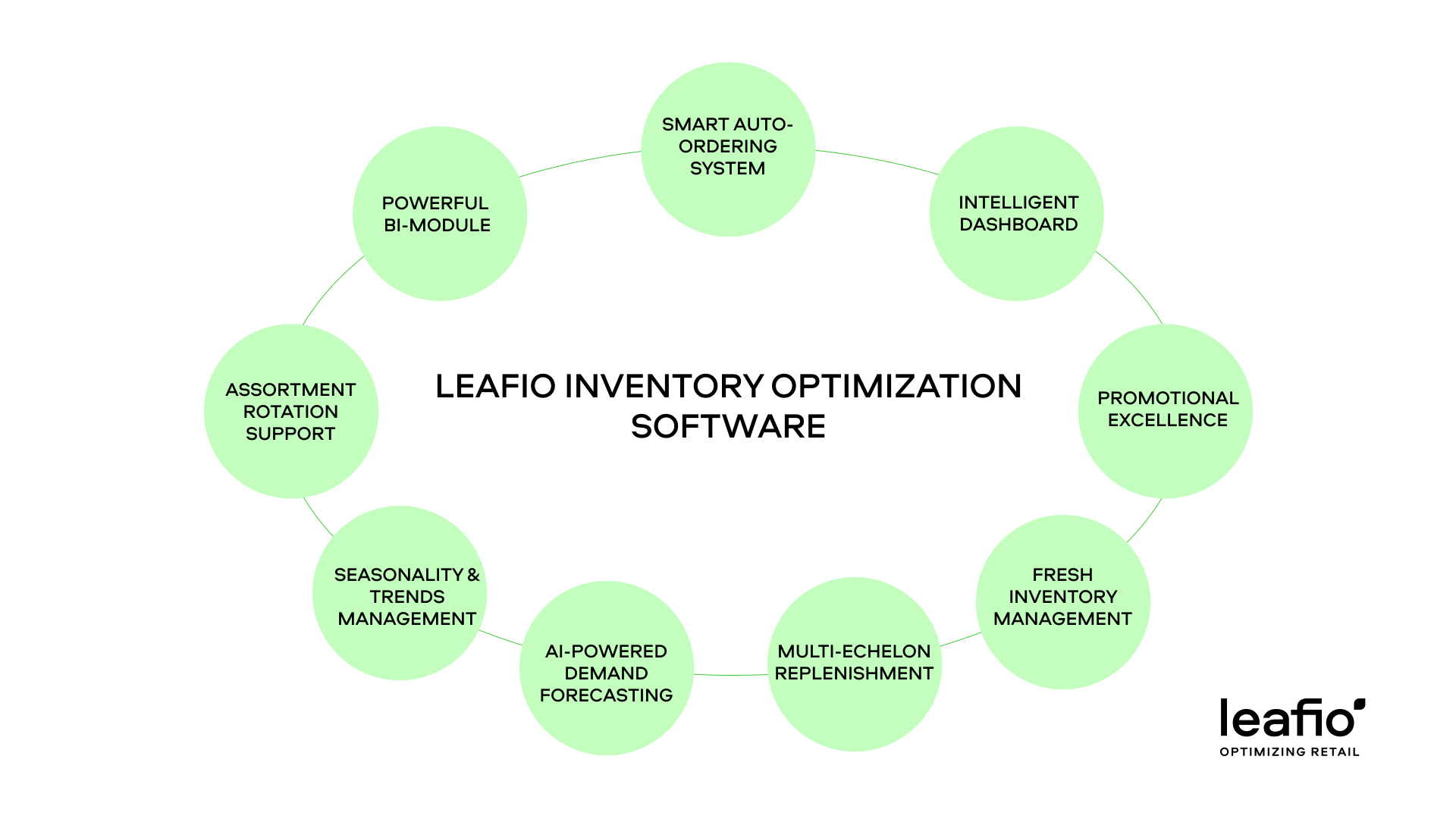
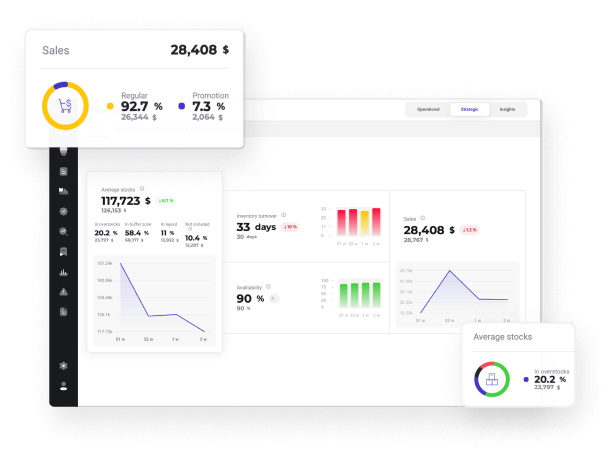
Inventory turnover optimisation software is a solution that can integrate with your existing resource planning system. It offers advanced inventory forecasting and analytics capabilities, transforming how businesses manage inventory and predict customer demands. This software solution uses complex AI algorithms and machine learning to enable data-driven decision-making, which can enhance accuracy and operational efficiency.
With LEAFIO Inventory Optimization, businesses can potentially reduce stockouts and overstock situations, optimize warehouse space, and increase sales. Implementing LEAFIO's solutions doesn't require significant system modifications, compared to installing a completely new ERP inventory management system. This can lead to lower operational costs, improved customer satisfaction, and increased profitability.
How Does an ERP System Help Improve Inventory Management?
Retail ERP systems significantly enhance inventory management over traditional spreadsheet methods by integrating inventory data with other business operations, providing real-time visibility, accuracy, and control.
Unlike spreadsheets, which are prone to human error and often lead to data silos, ERP systems ensure that key inventory metrics and information is updated across all channels instantly when sales are made, purchases are received, or stock levels change. This centralized approach facilitates better demand forecasting, reduces overstock and stockouts, and improves order fulfillment rates, increasing customer satisfaction.
However, while ERP systems cover the basic needs of inventory management, businesses seeking to maximize inventory efficiency and gain a competitive edge should consider specialized software like LEAFIO Inventory Optimization. This specialized approach ensures companies can reduce costs, optimize inventory levels, and better meet customer demands.
Best Practices for Improved Inventory Management in ERP
Improved stock management within an ERP inventory management system requires a strategic approach to leverage the full potential of the technology. Here are some best practices to consider:
Regular Data Audits
Ensure that inventory data within the ERP system is accurate and up-to-date through regular audits. This practice helps maintain the integrity of inventory records, leading to more reliable forecasting and planning.
Comprehensive Training
Provide comprehensive training for all users of a new system. Understanding how to use the system effectively ensures that inventory management techniques are optimized and that the data entered is accurate and meaningful.
Utilize Demand Forecasting Tools
Take advantage of the ERP's built-in demand forecasting tools to better predict future inventory needs. Accurate forecasting helps improve inventory turnover, reduce excess stock, obsolete inventory, and stockouts, and improve cash flow and customer satisfaction.
Implement Automated Reordering
Set up automated reordering points within the ERP to streamline the procurement process. Automation ensures timely inventory replenishment, minimizing manual intervention and reducing the risk of human error.
Integrate Supply Chain Management
Ensure your ERP inventory management is fully integrated with your supply chain operations. This integration provides a holistic view of the supply chain, from supplier to customer, enabling more efficient inventory control and logistics planning.
Leverage Analytics and Reporting
Regularly analyze inventory performance using the ERP’s analytics and reporting tools. These analyses can drive strategic decisions on inventory optimization, product placement, and promotion planning.
Synergize Your Existing ERP with AI-Based Software
The ultimate best practice is to enhance your ERP system by integrating it with AI-based inventory management software like LEAFIO AI. This synergy brings about a revolutionary approach to inventory management, offering advanced predictive analytics, machine learning for demand forecasting, and granular insights into inventory trends. AI-based solutions complement your ERP by addressing its limitations, providing more accurate and dynamic inventory optimization, ultimately leading to greater efficiency, reduced costs, and improved customer satisfaction.
Conclusion
In conclusion, an ERP inventory management system is a vital tool for retail businesses. It streamlines various business operations, provides real-time visibility into inventory status, and enhances decision-making with data-driven insights. Integrating inventory management with other areas, such as sales, purchasing, and supply chain, ensures alignment across different departments and optimizes overall business performance.
FAQ
What is ERP inventory management?
ERP inventory management software is a component of ERP systems that automates and streamlines inventory tracking, ordering, and forecasting. It integrates inventory data with other business functions, ensuring accurate stock levels, reducing overstock or shortages, and improving overall operational efficiency.
What is an ERP system in a warehouse?
In warehouses, ERP inventory management systems coordinate all aspects of warehouse management, including inventory tracking, receiving, picking, packing, and shipping. They optimize warehouse operations through real-time data integration, improving space utilization, reducing errors, and enhancing order management and fulfillment speed and accuracy.
What are the 4 types of inventory management systems?
The four types of inventory management systems are Perpetual Inventory System (continuously updates inventory records in real-time), Periodic Inventory System (updates inventory records at specific intervals), Barcode Inventory System (retailers can use mobile barcode scanner app for inventory tracking and management), RFID Inventory System (utilizes radio-frequency identification for automatic inventory tracking and data collection)
What are some examples of ERP systems?
Retail ERP systems vary widely, encompassing cloud-based solutions tailored for scalability and flexibility on-premise installations designed for robust data security and customization. These systems integrate various business processes, such as finance, HR, supply chain, and inventory management, into a cohesive operating platform.